
In industrial warehouse and manufacturing environments, managing parts and materials efficiently is vital. Many organisations follow lean manufacturing principles that emphasise just-in-time delivery of components to the production line. Cross-docking is a strategy that can streamline parts flows, and understanding the cross docking industrial warehouse benefits is key to deciding if it makes sense for a particular operation. When parts move quickly from receiving to production without sitting on shelves, all teams—from procurement and inventory managers to production and maintenance—must see the same information.
What is Cross-Docking?
Cross-docking is a logistics process where incoming shipments are unloaded from one vehicle and directly transferred to outbound vehicles with little or no storage in between. Instead of receiving goods and stocking them on shelves, cross-docking skips the warehousing step. In practice, goods arrive at a warehouse dock door, are quickly sorted or consolidated, and then loaded onto trucks or carts to continue their journey. The goal is to minimise handling and storage time.
Different forms of cross-docking are used depending on the operation.
- Continuous cross-docking (or flow-through) means goods move almost immediately from inbound to outbound areas, which is ideal for high-volume, high-demand items.
- Consolidation cross-docking combines smaller shipments from various suppliers into larger, full truckloads for departure.
- Deconsolidation does the reverse, splitting large incoming loads into smaller deliveries for different destinations.
In an industrial context, manufacturing cross-docking supports just-in-time production: components from suppliers bypass stockrooms and go directly to the assembly line based on scheduled production needs.
Cross-docking can be seen as an extension of lean manufacturing and just-in-time principles. By reducing or eliminating stockholding, companies cut overhead and can respond more quickly to demand. However, it requires precise coordination. Every receiving dock and every outgoing truck must operate on a tight schedule. The key is timing: inbound shipments must align perfectly with outbound schedules, creating a continuous flow of materials. When done correctly, cross-docking minimises lead times and provides production teams with the parts they need exactly when they need them.
Benefits of Cross-Docking for Industrial Operations

Cross-docking offers several significant benefits in an industrial warehouse setting. These include:
- Faster throughput and reduced lead times: By skipping intermediate storage, parts move swiftly from receiving to shipping. Production lines get components sooner, which speeds up assembly and reduces delays. In practice, inbound materials are unloaded and quickly turned around, so orders or production requirements are fulfilled much faster than with traditional warehousing. For example, what might take days of warehouse handling can sometimes be done in hours with cross-docking.
- Lower inventory and storage costs: With minimal dwell time, companies don’t need to stockpile large quantities of parts. This frees up capital tied in inventory and reduces space requirements. Less warehouse racking and storage space is needed, lowering real estate and utility costs. It also cuts costs related to inventory management, such as insurance, handling, and inventory carrying charges. Freed-up space can be repurposed for higher-value activities like assembly or quality testing.
- Reduced handling and labour: In a cross-dock operation, goods are handled fewer times. They are typically touched only when initially unloaded, sorted, and then reloaded for outbound transport. This reduces labour costs and lowers the chance of damage from repeated handling. Fewer internal moves mean staff can focus on more value-added tasks rather than repeatedly moving the same pallets. In effect, cross-docking creates a smoother flow with fewer touchpoints for each item.
- Optimised transportation: Cross-docking enables consolidation of shipments into fuller loads. For example, smaller inbound shipments from different suppliers can be combined into full truckloads heading to the same destination. This maximises truck utilisation and reduces freight costs. Centralised handling allows logistics planners to schedule vehicles more efficiently. Coordinating shipments at a single dock can also reduce transit times and carbon emissions by avoiding half-empty trucks.
- Greater supply chain agility: Moving inventory faster through the warehouse makes the whole supply chain more responsive. Businesses can adapt quickly to demand spikes or urgent orders because there is little backlog in storage. Cross-docking supports just-in-time production by syncing deliveries with production schedules. It simplifies handling of seasonal or promotional surges as well, since new shipments can be sorted and dispatched immediately to meet demand. Overall, a fast flow of goods keeps the operation nimble.
- Improved visibility and coordination: Effective cross-docking relies on real-time inventory information. When implemented properly, it forces organisations to adopt tighter tracking and communication. All stakeholders gain a clearer insight into stock status—knowing exactly which parts have arrived and which have departed. For example, a production planner can see in the system that a critical component is on an inbound truck, allowing them to plan the next shift. This unified visibility helps align procurement, production, and maintenance teams, reducing misunderstandings and last-minute rushes.
By leveraging these advantages, industrial operations can lean out non-essential steps and focus on high-value activities. However, these gains only materialise if cross-docking is implemented in the right circumstances with solid processes in place.
Challenges and Limitations
Cross-docking is not without its challenges. Key considerations include:
- Timing and synchronisation: Cross-docking depends on tight scheduling of inbound and outbound shipments. Delays to incoming trucks can cause outgoing trucks to sit idle, and vice versa. If shipments aren’t closely coordinated, bottlenecks occur. This makes the operation sensitive to disruptions (such as weather, traffic, or supplier delays). Even a small delay in one link of the chain can cascade into major hold-ups.
- Data accuracy and communication: With no buffer inventory, any errors in data or communication have immediate impact. A misplaced item, wrong label, or missing information can cause shipments to go astray. Reliable processes and real-time information are essential; otherwise, goods can be loaded incorrectly or lost in the shuffle. This means barcodes, part numbers, and destination codes must be verified as soon as inventory arrives.
- Limited flexibility: Cross-docking assumes items will not need extended storage. This means it is ill-suited for operations with high variability or frequent order changes. If customer requirements change suddenly, or if goods require extra processing (inspection, repackaging, customisation), cross-docking can become chaotic because there is no storage cushion. Companies must accept that some flexibility is traded for speed.
- Increased complexity: Running a cross-dock operation requires more planning and coordination. The facility layout, staffing, and equipment must support rapid flow. Warehouse staff need training to sort and load quickly. Managing a diverse product mix (heavy loads, fragile items, temperature-sensitive goods) in a fast-paced environment adds complexity and may necessitate specialised procedures or equipment. In short, cross-docking operations are inherently complex and must be carefully designed.
- Risk of damage or errors: Accelerated handling raises the risk of mistakes or damage. Fragile or perishable items moved quickly without pausing for inspection may suffer. Even normal goods may get mis-sorted if teams are rushing. Quality control measures must be in place despite the fast pace; otherwise, customer satisfaction can suffer if damaged or incorrect goods are shipped. Cross-docking tends to magnify any process weaknesses.
- Dependency on reliable partners: Cross-docking requires synchronisation between suppliers, carriers, and warehouse staff. If any partner fails to meet the schedule (a late supplier, a cancelled pickup), the entire operation is disrupted. Thus, companies typically only use cross-docking with trusted vendors and carriers who commit to precise timelines and data sharing (like advance shipping notices). The strategy adds strain to relationships if partners are not aligned.
- Not suitable for every inventory profile: Finally, businesses with predominantly slow-moving, customised, or unpredictable stock will not benefit from cross-docking. Such items often require extensive storage, kitting, or special handling. If lead times are very long or demand is erratic, traditional warehousing and safety stock may still be necessary. Cross-docking is most effective for standardised, high-turnover goods that fit predictable patterns.
When these challenges are carefully managed and mitigated, cross-docking can function smoothly. But the existence of these limitations means careful planning and the right conditions are key.
When to Implement Cross-Docking

Deciding whether to use cross-docking depends on several factors. It makes sense when:
- High throughput and stable volume: Cross-docking works best when the operation handles large, regular flows of goods. High-volume products or steady streams of materials are good candidates. For example, assembly-line components that arrive in predictable batches each day can be cross-docked efficiently. The more pallets that can be immediately turned around, the greater the efficiency gain.
- Time-sensitive or perishable items: Products that must move quickly (such as perishable food, some chemicals, or items needed just-in-time) benefit from minimal storage. In industries like food processing or retail, cross-docking ensures freshness and rapid replenishment. In manufacturing, it ensures that high-priority parts reach the line without delay.
- Pre-packaged shipments: When inbound deliveries are already consolidated by destination, they can be transferred immediately without repacking. Retail distribution often uses this approach: merchandise is packed by store at the vendor, then sent to a cross-dock terminal for direct loading. Similarly, suppliers might pack parts directly for a specific assembly line. Eliminating unpacking and repackaging saves time.
- Predictable demand patterns: Operations with stable, forecastable demand can plan cross-docking reliably. If production schedules are known in advance, procurement and logistics can align inbound shipments accordingly. In contrast, highly erratic demand makes cross-docking riskier due to frequent mismatches in timing. For example, if an unplanned rush order comes in, having no stock on hand can be problematic.
- Space constraints: If warehouse space is limited or expensive, moving goods rapidly in and out can mitigate storage shortages. Lean facilities with just-in-time philosophies may adopt cross-docking to avoid building large inventories. By flowing goods through the dock instead of into storage racks, valuable floor space is conserved.
- Strong supply chain coordination: Cross-docking works best when suppliers, carriers, and internal teams collaborate closely and share data. Reliable information flows (through EDI, cloud portals, or tight email coordination) are necessary to schedule arrivals and departures. When everyone knows the schedule and status, cross-docking becomes viable.
- Integrated visibility needs: Organisations that require end-to-end visibility often use cross-docking. The process forces teams to use a unified inventory platform, ensuring procurement, production, and shipping all have access to real-time data. In such cases, cross-docking can be part of an overall strategy of data transparency and operational alignment.
Conversely, avoid cross-docking in scenarios such as orders changing frequently on short notice, goods requiring extensive inspection or assembly before shipping, or when inventory is mostly slow-moving or made-to-order. In these cases, the lack of a storage buffer makes cross-docking more trouble than it’s worth.
Best Practices for Cross-Docking Operations
When implementing cross-docking, following industry best practices helps maximise gains and prevent problems. Key recommendations include:
- Optimize facility layout: Design the warehouse so that inbound docks are close to outbound docks. This might mean a U-shaped floorplan or straight-line flow. Plan dedicated staging areas for sorting. Use clear aisle markings and separate lanes for incoming and outgoing trucks to reduce confusion. An organised floorplan minimises travel time and helps workers route items efficiently from receiving to shipping. For example, colour-code zones on the floor or use signage to direct specific types of goods to specific docks.
- Synchronize transportation schedules: Coordinate all arrival and departure times. Use scheduling software or manual processes to align inbound shipments with outbound trucks. Assign dock appointments for both suppliers and carriers. If a truck arrives early or late, having a short-term holding or overflow bay can prevent congestion and keep the flow moving. Regularly communicate schedules with carriers so everyone knows exactly when each truck is due. Backup plans (like alternate carriers or routes) should be in place for unexpected delays.
- Use real-time tracking technology: Even without advanced IoT, implement barcode scanning for every pallet and container. Scan goods upon arrival and before loading to capture live data. This real-time tracking keeps all teams informed of inventory status. With immediate updates, operations managers can see exactly what’s on site and where, reducing errors. Accurate digital records mean the system instantly knows if an item has arrived, is in staging, or is being loaded, which prevents mistakes.
- Establish clear sorting procedures: Define how incoming goods will be grouped for loading. Use staging tables or racks labelled by destination or work order. When items are scanned, the system should immediately indicate the correct outbound bay or truck. A systematic sorting process – such as dedicated conveyors, sorting bins, or colour-coded pallets – minimises handling time and worker uncertainty. Clear procedures (documented in standard operating procedures) ensure everyone follows the same steps when prioritising and sorting shipments.
- Standardize packaging and labelling: Ensure incoming shipments have consistent labels and packing lists. Uniform labelling speeds up scanning and verification. Internally, require that moving units (like bins or pallets) are clearly tagged with part numbers and destination codes. For example, a supplier might be asked to pack parts for one assembly line on one pallet and label it accordingly, so workers know exactly where to put it. Standardisation reduces confusion and ensures that anyone handling the goods understands their destination.
- Train and empower staff: Cross-docking is fast-paced, so employees must know the process thoroughly. Provide role-specific training on workflows. Make sure dock operators, sorters, and loaders understand production schedules and quality requirements. Encourage a teamwork mindset: for instance, have receivers alert shippers immediately if they spot a discrepancy or damage. Empower employees to stop the line and flag issues (such as mismatches or damages) so they can be resolved quickly, rather than quietly passing on an error.
- Maintain open communication: Regularly update all stakeholders on schedules and exceptions. Daily planning meetings or communication boards can align procurement, logistics, and production teams. For example, if production schedules change, inform the warehouse immediately. Shared visibility through digital dashboards or messages helps everyone stay on the same page. Quick chats, a common group chat channel, or a simple whiteboard with updates can also keep the flow transparent. Good communication closes the loop between receiving, warehousing, and shipping.
- Monitor key metrics: Define and track KPIs to measure performance. Typical metrics include unload/load times, dock utilisation, on-time departures, and shipment accuracy. Review these numbers regularly to spot bottlenecks. For instance, if “dock-to-dispatch” times grow, investigate the cause (perhaps sorting is too slow). Continuous improvement driven by data will refine the cross-dock operation over time. Publicly displaying certain metrics can also motivate teams to hit their targets.
- Ensure inventory accuracy: Even though items move quickly, it’s crucial to maintain accurate records. Conduct frequent cycle counts of key parts to verify system stock levels. Reconcile any discrepancies immediately and find the root cause. Use a real-time inventory system that updates counts upon every scan. The more accurate the data, the smoother the cross-docking process will be, since each inbound shipment will automatically match what is expected.
- Plan for exceptions: Despite best efforts, delays or irregular shipments will happen. Keep contingency plans ready. For example, maintain a small buffer stock of critical components in case a scheduled delivery is late. Pre-identify alternative carriers or routes for emergencies. Have clear procedures for handling damaged or partial shipments. By preparing for the unexpected (such as having extra pallet staging space or backup forklifts), a single glitch is less likely to cascade into a major outage.
- Collaborate with suppliers: Work closely with vendors to prepare shipments in advance. If suppliers pack parts in production-ready kits and label them by destination, receiving becomes much faster. Share forecasts and docking schedules so suppliers know when to send shipments. The more aligned suppliers are (for example, delivering parts already sorted by assembly line), the easier it is to sustain cross-docking.
Combining these practices helps industrial warehouses operate cross-docking efficiently. Good planning, rigorous processes, and team coordination create a flow that keeps material moving smoothly through the facility.
Improving Parts and Inventory Visibility Across Departments

Cross-docking highlights how important it is for all departments to share the same inventory data. In a manufacturing environment, parts might be needed by maintenance crews, production lines, or project teams. To improve visibility and align teams, consider these strategies:
- Centralize inventory data: Use a single system where all departments record stock movements. Avoid isolated spreadsheets or separate databases for maintenance vs. production. When every part arrival, transfer, or issue is logged in one place, everyone shares the same view. For instance, if the maintenance team checks out a spare pump for repairs, production immediately sees that it’s no longer in inventory. A unified platform prevents communication gaps and duplicate efforts.
- Standardize part identification: Assign one unique code and description to each part. Eliminate duplicate entries and inconsistent naming that can arise when different teams label the same item differently. Use barcode labels tied to these unique IDs so scanning identifies the exact item. For example, a particular bearing might be known as “BRG-123” to the procurement team and “6108ZZ” to engineering; consolidating these to one code removes confusion. Standardized part IDs ensure that searches and reports always capture the correct stock counts.
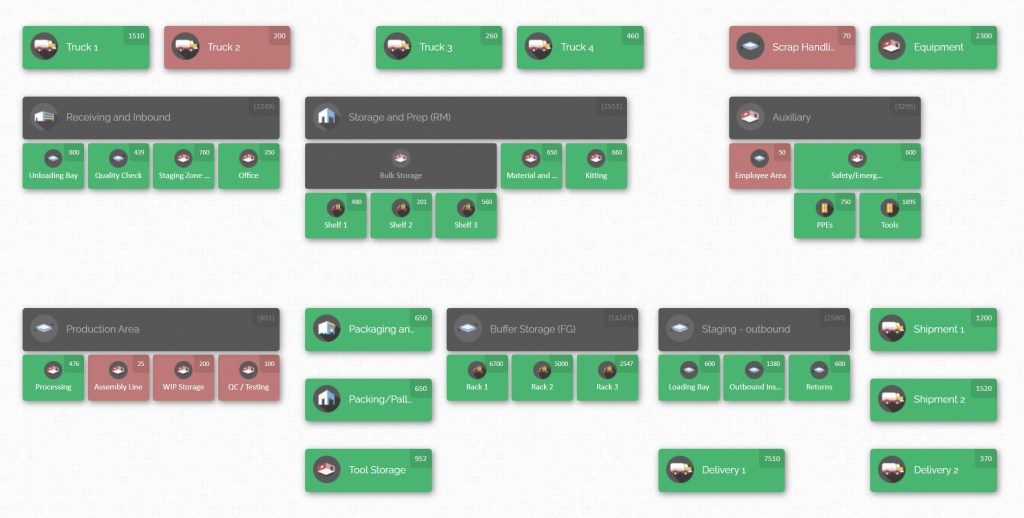
- Map all physical locations: Clearly define storage zones, aisles, shelves, and bins in the warehouse and storerooms. Assign exact locations to parts (for example, “Row A, Shelf 2, Bin 5”). Training staff to always return parts to the correct spot is easier when every location has a labelled code. A visual layout (like the inventory map earlier) helps staff find items quickly. The clearer the physical structure, the less time teams waste searching for parts. If large operations have multiple buildings or yards, map each one so no inventory is “out of sight.”
- Perform regular cycle counts: Instead of waiting for annual inventories, count parts on a rotating schedule. Have teams from different departments participate in counts, ideally in areas they frequently use. This shared counting responsibility increases accuracy and awareness. When inconsistencies are found, investigate and correct them immediately (for example, a mislabeled drawer might be fixed on the spot). Frequent counting builds confidence that the recorded inventory matches the actual stock.
- Use clear reorder signals: Implement simple reorder rules for parts. Set minimum stock levels or reorder points for each item based on usage history and lead times. When supplies dip below the threshold, an alert notifies the responsible staff. This can be done visually (Kanban cards on bins, for example) or through the inventory system sending emails. Make these signals visible across departments: if the production team marks a part as low, procurement is automatically notified to reorder before stockouts occur.
- Categorize by criticality: Perform an ABC or criticality analysis on spare parts. Label parts whose stockout would halt operations as “Critical A” and ensure they are always visible in the system with higher safety stock. Less critical items are “B” or “C” and can be replenished less urgently. This focus makes sure the most important parts get top attention. Teams will know, for instance, that a pump labeled A must never fall below a certain level, so it will always be flagged in inventory reports.
- Improve cross-team communication: Encourage collaboration between departments. Schedule regular coordination meetings or shared planning sessions. For example, maintenance can notify production of a major upcoming overhaul that requires parts, so production can plan around it. Use shared dashboards or chat channels for quick questions about inventory. The goal is to make inventory data a common topic rather than isolated in each department. When one team updates stock levels, others immediately hear about it.
- Maintain audit trails: Every inventory transaction should record who performed it, when, and why. If a part goes missing, any department can check the log to see who last handled it. Keeping a full history builds accountability and makes problem-solving easier. For example, if a critical fastener is unaccounted for, the audit trail might show that it was checked out by an engineer last week, so the search can start there.
- Utilize barcoding and scanning: Wherever possible, attach barcodes to parts and locations. Then, use handheld scanners to record transactions. This greatly reduces human error in data entry. If each department scans items as they move them, the inventory system stays in sync in real time. This automation provides accurate, up-to-date information for all teams.
- Track across multiple locations: If the operation spans multiple sites (warehouses, workshops, or field depots), link them in the same system. That way, parts are not “invisible” just because they’re in another building. Departments can see total stock and make transfers as needed. For example, if the main warehouse is out of a part, the system should show that a satellite location has it, so a transfer can avoid emergency purchasing.
- Foster an inventory-aware culture: Finally, make inventory accuracy and visibility part of the company culture. Educate teams on the impact of inaccurate stock (downtime, rush orders, wasted space). Recognize and reward people who maintain good records and help with counts. When everyone – from floor staff to managers – values reliable data, they are more likely to update the system consistently. Over time, this cultural shift means inventory becomes a strength rather than a headache.
All of the strategies above paint a picture of an integrated, data-driven warehouse process: goods flow in and out seamlessly, teams share a single source of inventory truth, and performance is continuously measured. Achieving this level of coordination often requires a digital solution to tie it all together. An advanced inventory management platform can centralise maps, tracking, and analytics. The section below outlines how CyberStockroom, for example, supports full parts visibility across departments, making it easier to apply the best practices described earlier.
Operational Metrics and KPIs
Measuring the right metrics helps organisations know if cross-docking and inventory strategies are working. Key performance indicators (KPIs) to track include:
- Dock-to-stock cycle time: The total time inventory spends in the warehouse from arrival to departure. Shorter cycle times indicate a more efficient flow. Aim to minimise the time between unloading and reloading. Monitor this regularly to identify delays in sorting or staging.
- Cross-docking ratio: The percentage of incoming goods that are transferred directly outbound versus those that end up being stored. A higher ratio means more inventory is being turned around without warehousing. For example, if 80 out of 100 pallets are shipped out immediately, the ratio is 80%. Increasing this ratio generally reduces storage costs.
- Throughput rate: How many units, cases, or pallets are processed per hour or per shift. Higher throughput suggests efficient operations, provided accuracy remains high. Track throughput by dock, shift, or SKU to ensure resources match demand. Sudden drops in throughput often indicate bottlenecks or staffing issues.
- Order accuracy and error rate: The percentage of shipments loaded correctly without mistakes. Errors (such as wrong items, quantities, or destinations) can be very costly in a cross-dock setting. Regularly audit a sample of shipments to compute accuracy. The goal is to keep the error rate extremely low, ideally below a few percent.
- On-time departure rate: The proportion of outbound shipments that leave on schedule. This reflects how well inbound and outbound coordination is working. A high on-time rate means customer or production schedules are being met. Investigate any late departures to identify root causes (such as delays in unloading or sorting).
- Dock utilization: How effectively dock doors and staff are used. For example, measure the percentage of time each dock bay is active unloading or loading. Balanced utilisation across docks avoids some being overworked while others sit idle. If one door is over-utilised, consider adjusting shifts or re-routing trucks to even the load.
- Inventory turnover: For the items frequently cross-docked, track how often they cycle through inventory (e.g. annual turnover rate). Faster turnover generally means leaner stock. Comparing turnover before and after implementing cross-docking for a SKU can show impact. Just be careful not to run so lean that you run out of stock.
- Stockout and fill rates: Monitor how often requested parts are unavailable (stockouts) and how often demand is fully satisfied from inventory (fill rate). High fill rates for critical parts indicate good visibility and stocking. Conversely, frequent stockouts suggest gaps in the process. These metrics directly tie to customer or production satisfaction.
- Cycle count accuracy: The result of regular cycle counts as a percentage of correct counts. This indicates the reliability of inventory data. For example, if 95% of counted items match the system records, the accuracy is high. Use these counts to maintain and improve data quality.
- Lead time variability: Track consistency of supplier lead times and inbound arrivals. Cross-docking relies on reliable delivery schedules, so high variability can disrupt flows. Measuring this over time identifies unstable suppliers or logistical issues that should be addressed.
- Labour and handling time: Evaluate how much time workers spend handling inventory per pallet or order. As cross-docking matures, handling time per pallet should decrease. Record labour hours for comparison against throughput to ensure productivity is rising.
- Internal satisfaction: Though qualitative, consider feedback from departments about material availability and delays. If maintenance and production teams report fewer stock issues and smoother flows, that indicates the strategy is paying off. Surveys or simple feedback sessions can capture this insight.
Tracking these KPIs over time allows continuous improvement. If a metric trends in the wrong direction, teams can investigate and adjust processes accordingly. A data-driven approach ensures cross-docking and inventory efforts continue to improve.
Enhancing Visibility and Alignment with CyberStockroom
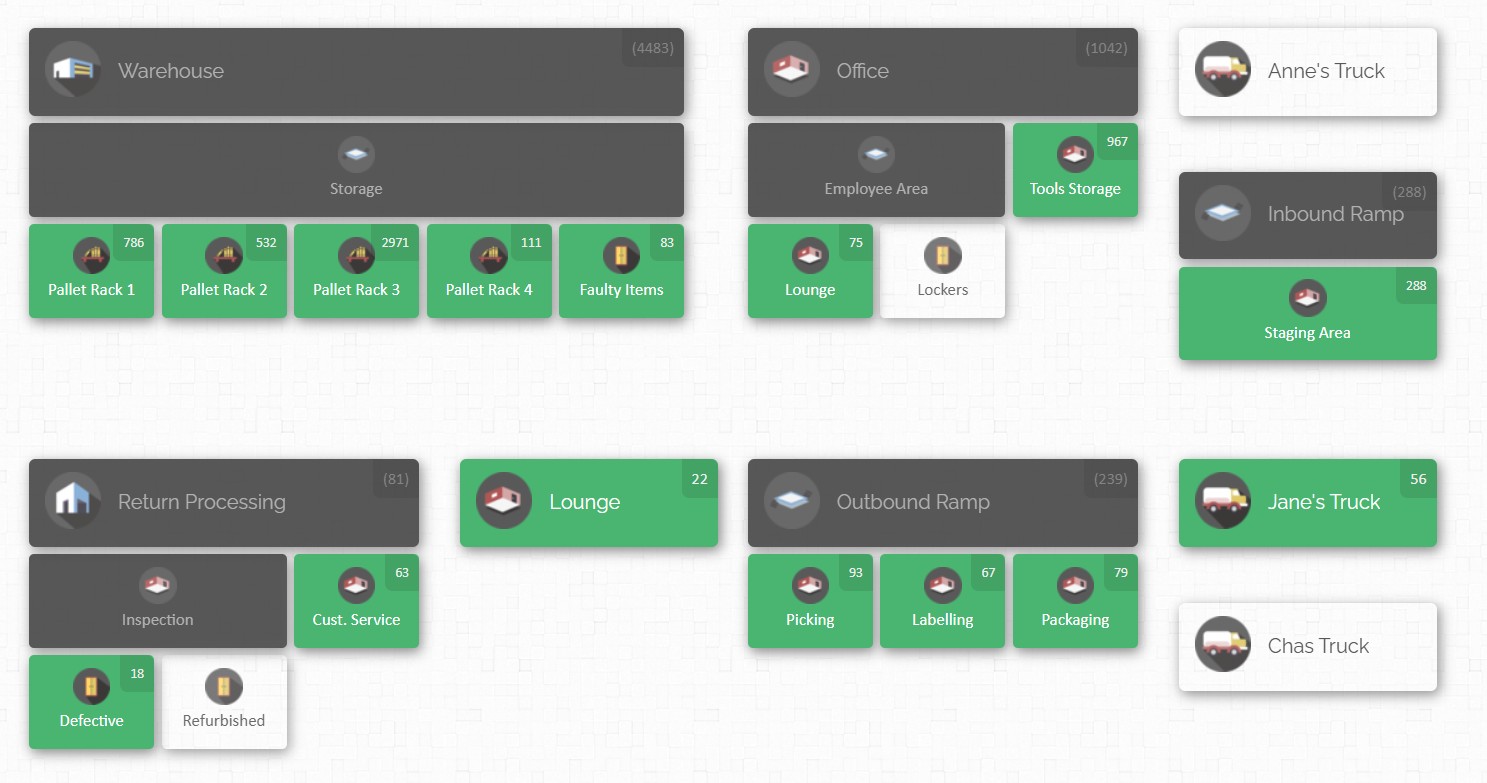
A modern inventory mapping solution can bring all these practices into reality.
Tools like CyberStockroom allow organisations to build such interactive maps for their entire inventory. Using a map-based approach, every rack, shelf, and bin in the warehouse is represented visually. Teams can click on any location to view its contents and quantities. Real-time updates mean that as items are moved or used, the map immediately reflects these changes for everyone to see.
CyberStockroom offers these capabilities:
- Interactive visual map: Build a detailed map of the entire operation—warehouses, rooms, aisles, shelves, bins, even vehicles or remote yards. Each part and storage slot is displayed on the map. This visual context lets everyone see at a glance where anything is stored and how much of it is on hand. It eliminates the guesswork of searching for items.

- Real-time multi-location tracking: As soon as inventory is received or moved, the map updates. If a technician transfers a part from the central storeroom to the maintenance garage, both teams see the change immediately. Real-time updates ensure every department is working with the same current data on stock levels and locations.
- Drag-and-drop transfers and scanning: Moving stock between locations can be done with a simple drag-and-drop on the map interface or by scanning barcodes. This instantly adjusts quantities without manual data entry. Cycle counting and stock taking become faster because the system knows exactly which bins to count and can compare actual counts to expected values.
- Cloud-based shared access: Because CyberStockroom is cloud-hosted, anyone with the right permissions can log in from any device. Procurement, production, and maintenance managers all see the same information. This shared access ensures alignment: for example, if production sees stock running low on a part, procurement can initiate a reorder while maintenance simultaneously sees the pending requisition.
- Detailed audit trails: Every inventory action is timestamped and logged with user details. When parts are moved or adjusted, the system records who did it and why. This traceability makes audits and accountability straightforward. If a discrepancy occurs, teams can review the log to trace exactly what happened and prevent future errors.
- Alerts and reporting: The system can generate automatic alerts for low stock or unusual patterns. Built-in reports provide insights into usage trends, slow-moving items, and stock age. This intelligence helps planners across departments make data-driven decisions.
- Adaptable workflows: The software allows each department to define its own sub-locations and naming conventions while staying on a unified map. For instance, an electrical workshop can map its tool cabinets and shelves within the main warehouse map. Each team sees inventory structured the way they work, yet it all links back to the central system. This bridges terminology gaps between departments.
- Easy data import: To get started, existing inventory records can be imported from spreadsheets or other systems. For example, a maintenance team can upload its spare parts list into the map in minutes. This jump-starts the process so that historical data is quickly reflected in the live system.

By bringing all locations and parts into one visual system, a platform like CyberStockroom transforms inventory management into a collaborative process. It ensures that cross-docking operations have the strong informational foundation needed to run smoothly. With real-time, location-level visibility, inventory accuracy naturally improves and teams spend less time searching for parts. Ultimately, this kind of system turns inventory from a scattered headache into a shared asset, giving each department confidence in what is available and where it is.
Conclusion
Cross-docking can deliver significant efficiency and cost benefits for industrial warehouse operations, but it must be carefully managed. By streamlining the flow of goods and minimising handling, companies can achieve faster throughput and lower inventory expenses. However, cross-docking only works effectively when all departments share a clear picture of inventory. Every stakeholder needs confidence in stock locations and quantities to avoid errors and delays.
This is why parts visibility is just as important as the cross-docking process itself. By unifying inventory data and mapping physical storage in one system, organisations ensure that procurement, production, and maintenance teams all work from the same real-time information. Eliminating silos—whether through standardised part IDs, shared dashboards, or a visual warehouse map—prevents duplicate orders and reduces downtime. In practice, combining robust cross-docking practices with a central inventory system greatly improves productivity and collaboration.
Ultimately, cross-docking makes sense for operations with the right conditions: predictable flows, high-volume parts, and time-sensitive demands. When implemented with strong planning and full visibility, it becomes a powerful strategy. Industrial warehouses that leverage both efficient cross-docking and complete inventory transparency can maintain lean operations, maximise throughput, and ensure that every team is aligned on what parts are available and where they are. This holistic approach helps companies deliver products faster while keeping costs and confusion to a minimum.









Leave a Reply