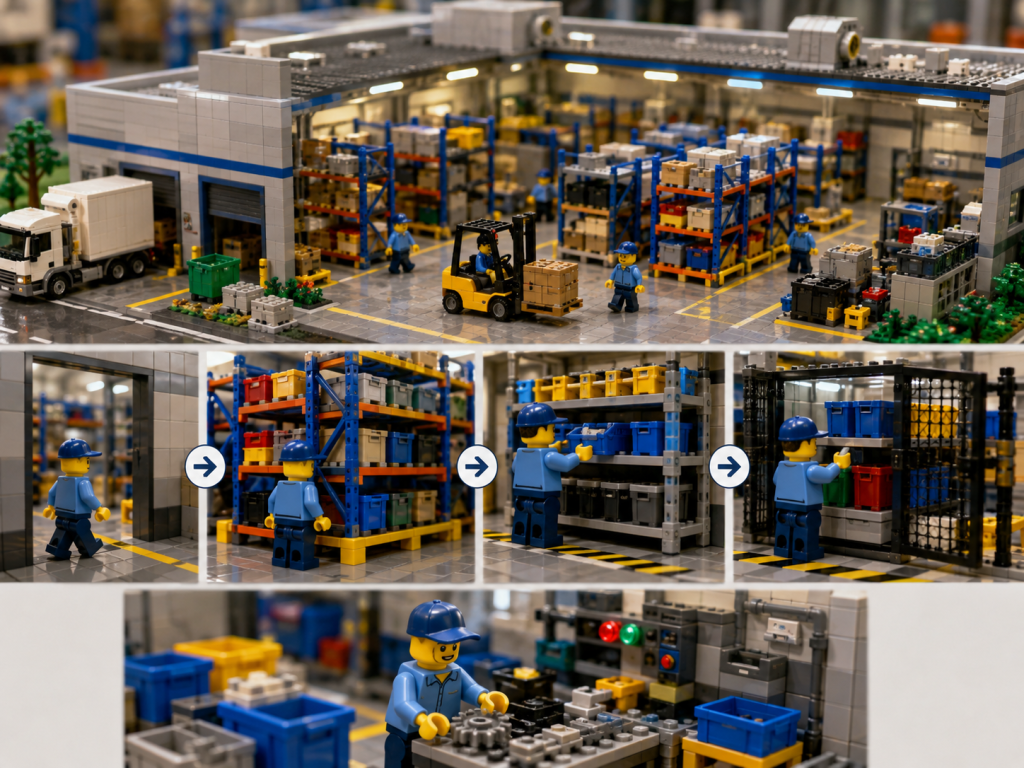
In most manufacturing environments, the phrase “we track inventory” sounds reassuring. It suggests order, control, and a level of confidence that the operation knows what it owns and how to use it. Yet that confidence often falls apart the moment someone asks a simple shop-floor question: Where is the part? Not what does the system say is on hand. Not what was received last week. Not what purchasing believes should be in stock. The real question is where the part is physically located, right now, within the operation.
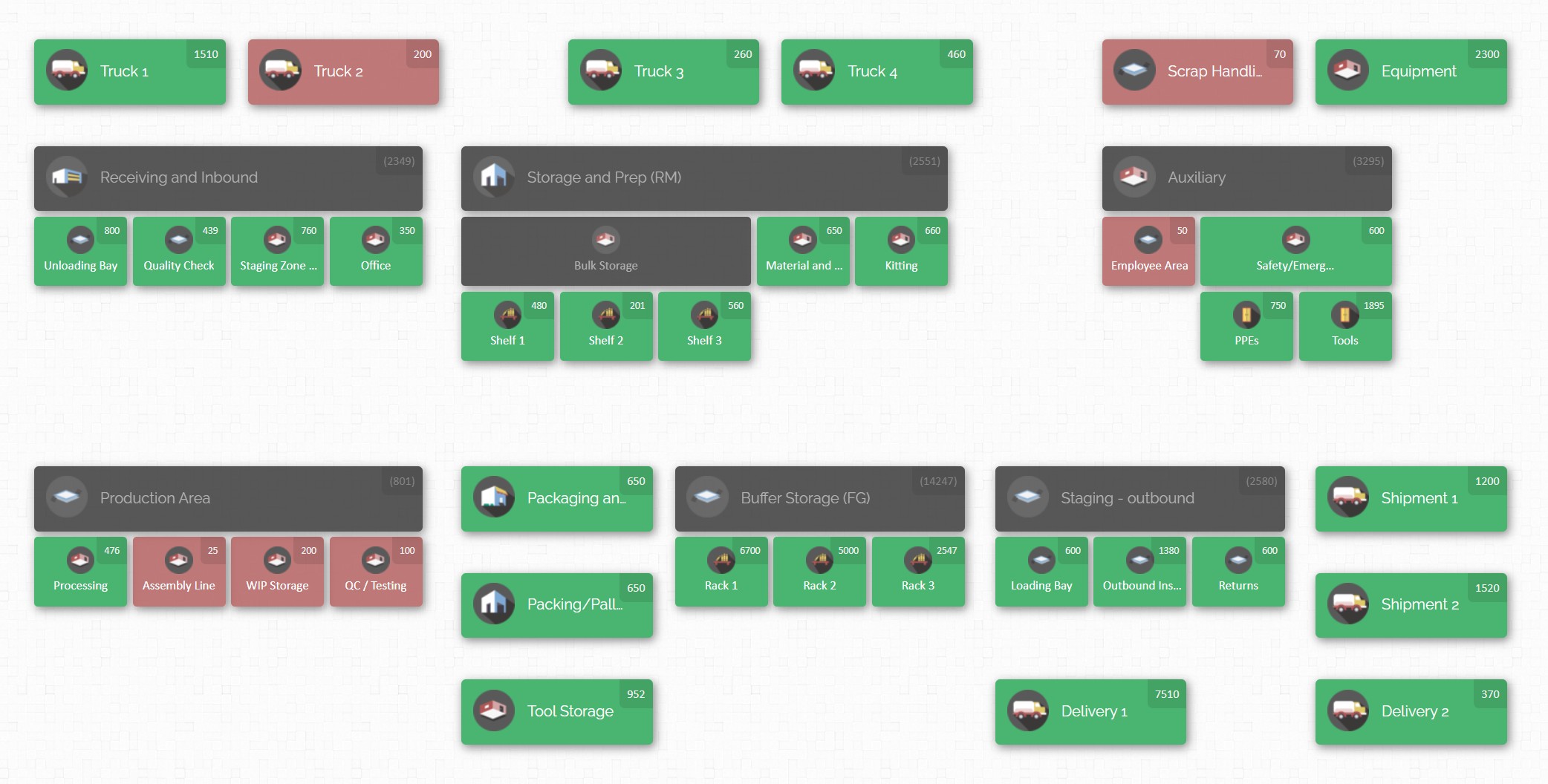
That distinction sits at the centre of the conversation around tracking parts vs knowing location manufacturing inventory. Many manufacturers are better at the first half than the second. They can record receipts, issues, and stock balances. They can show that a bearing, valve, cable reel, fastener kit, electrical component, seal, or spare motor exists somewhere in the business. What they cannot always do is identify whether that item is in receiving, in quarantine, in the main stockroom, in a department cage, staged for a job, sitting line-side, held by maintenance, moved to an overflow area, or misplaced during a transfer that never made it into the record properly.
That gap looks small on paper, but it becomes expensive in practice. It creates downtime that no one planned for. It forces supervisors to send people on part-hunting walks instead of value-adding work. It drives emergency orders for stock that is already on site. It leads to duplicate buying, inflated safety stock, mistrust between departments, and too many meetings about “inventory issues” that are really visibility issues. The business is not always short of parts. Quite often, it is short of certainty.
This is why manufacturing inventory visibility deserves more attention than it usually gets. The goal is not simply to count parts. The goal is to create a shared operational understanding of what is available, where it lives, and how it moves across departments. Once that becomes visible, inventory accuracy improves because the record reflects the physical world more closely. Operational efficiency improves because people spend less time looking. Cross-team alignment improves because purchasing, production, maintenance, stores, and finance stop working from competing versions of reality.
Manufacturers that make this shift stop treating inventory as an accounting category and start treating it as a flow of usable materials through the plant. That is the more practical way to think about the difference between tracking parts and knowing where they are. One tells you whether a part exists in the system. The other tells you whether your team can actually put its hands on it when the schedule, the line, or the maintenance job depends on it.
What tracking parts gets right and where it falls short
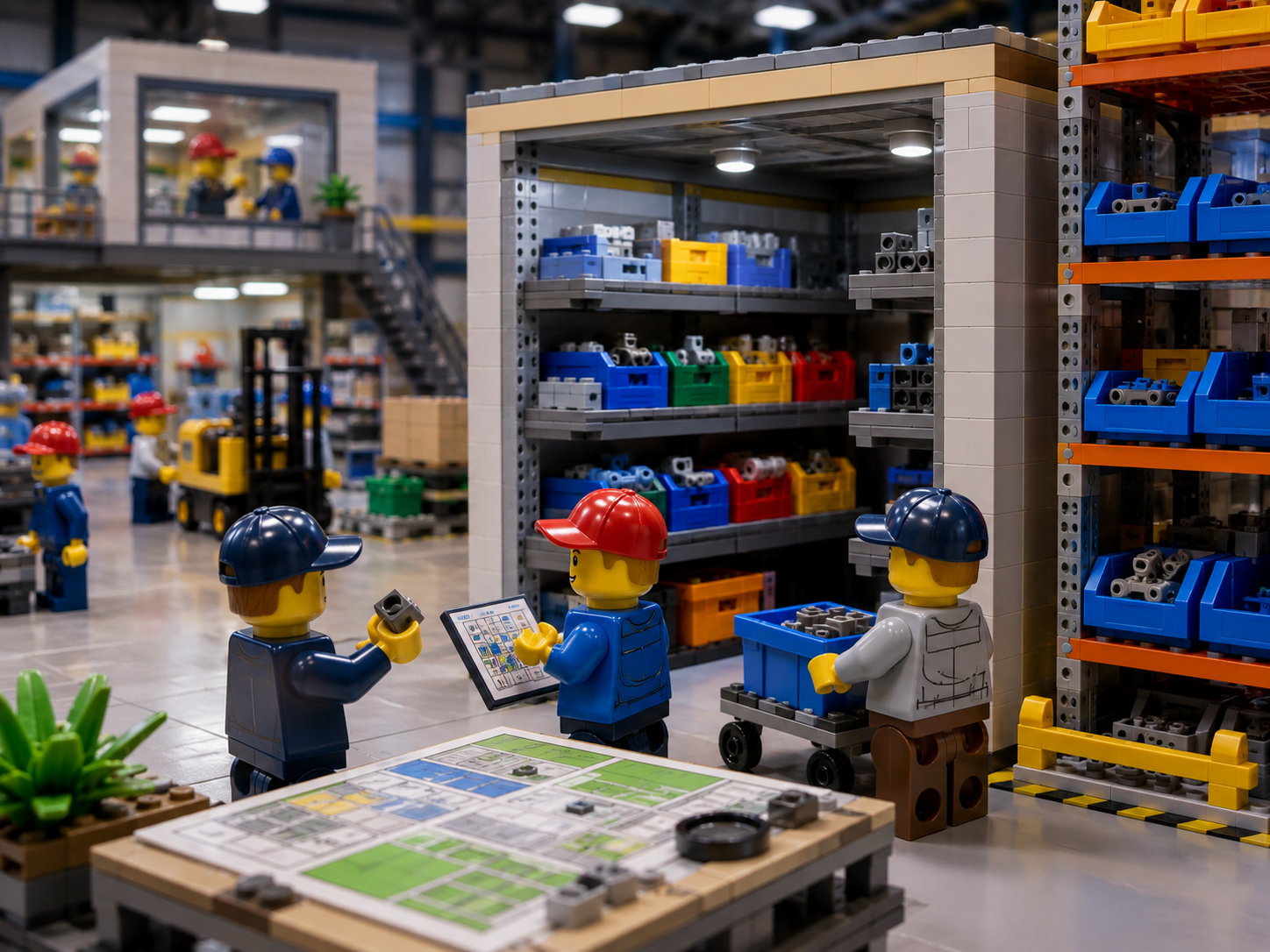
To understand the difference properly, it helps to give credit to traditional tracking before pointing out its limits. Tracking parts is not useless. It is necessary. Every manufacturer needs a reliable way to record receipts, stock levels, part identities, usage, and replenishment activity. Without that baseline, procurement becomes reactive, cycle counts become painful, and financial control weakens. Tracking is the foundation.
The problem is that tracking is often built around inventory as a number, while manufacturing works with inventory as a physical reality. The system may show that there are 120 units of a part on hand, but the production scheduler still needs to know whether they are available in the correct department, in the correct quantity, in the correct condition, and in the correct location to support today’s plan. A count without context can be misleading. It answers a database question while leaving the operational question unresolved.
This is where parts location tracking becomes the missing piece. In a typical manufacturing business, parts do not stay still. They arrive, get inspected, move into storage, get split into kits, get staged for jobs, get transferred between buildings, get held for quality checks, get drawn by maintenance, get returned partially used, and sometimes get parked in temporary areas that nobody intended to become permanent. A part can still be “in inventory” while being effectively unavailable to the team that needs it.
That is why broad location labels are often not enough. Saying a part is “in the warehouse” tells a planner very little. Which warehouse? Which room? Which bay? Which rack? Which shelf? Which bin? If the plant has multiple departments or buildings, the lack of precision gets worse. The item may be technically on site and still functionally invisible.
The real-world consequence is not just longer search time. It is a chain reaction of poor decisions. A maintenance technician cannot find a replacement component and raises an urgent request. Production assumes stock has run out and asks purchasing to expedite. Purchasing questions stores. Stores checks one area, not the overflow area where the part was placed yesterday. The conversation escalates. In the meantime, the line waits, labour is idle, and everybody feels that inventory is inaccurate. In truth, the business may have had stock all along. What it lacked was product and location tracking detailed enough to support action.
This is also why inventory disputes often become people problems. Production believes stores is disorganised. Stores believes production moves items without logging them. Maintenance believes purchasing underbuys. Purchasing believes engineering over-specifies. Finance sees variance. Leaders hear that “inventory is a mess.” Yet the root issue is frequently simpler: the company tracks transactions, but it does not create dependable location visibility at the same pace that the physical operation changes.
A second limitation of basic tracking is that it tends to treat all inventory movement as equally important, when in practice some movements carry more operational risk than others. Transfers between rooms, departments, and temporary staging zones are especially vulnerable to becoming invisible. So are partial issues, returns, substitutions, and materials held outside the normal storage path. When those movements are captured late, captured loosely, or not captured at all, the on-hand balance may still look reasonable while the location record quietly drifts away from reality.
A third limitation is that conventional inventory discussions often separate “warehouse control” from “department use,” even though most manufacturing problems sit precisely at that handoff point. The stores team may be accurate up to the issuing counter. After that, visibility can collapse. Parts enter kit carts, line-side stock, maintenance trolleys, fabrication cells, project laydown areas, or inspection holds. The system still says the part exists, but nobody can say with confidence where it is in the process. That is not a counting problem. It is a visibility problem.
The more complex the operation, the more damaging this gets. Multi-building factories, plants with separate production cells, operations with central stores plus departmental stock areas, and mixed environments that handle raw materials, consumables, MRO stock, and finished components all need more than quantity tracking. They need multi-location inventory management that matches the way work actually happens.
In other words, tracking parts tells you what should be true. Knowing where they are tells you what is operationally usable. The first is record keeping. The second is control.
Best practices for improving parts visibility across multiple departments
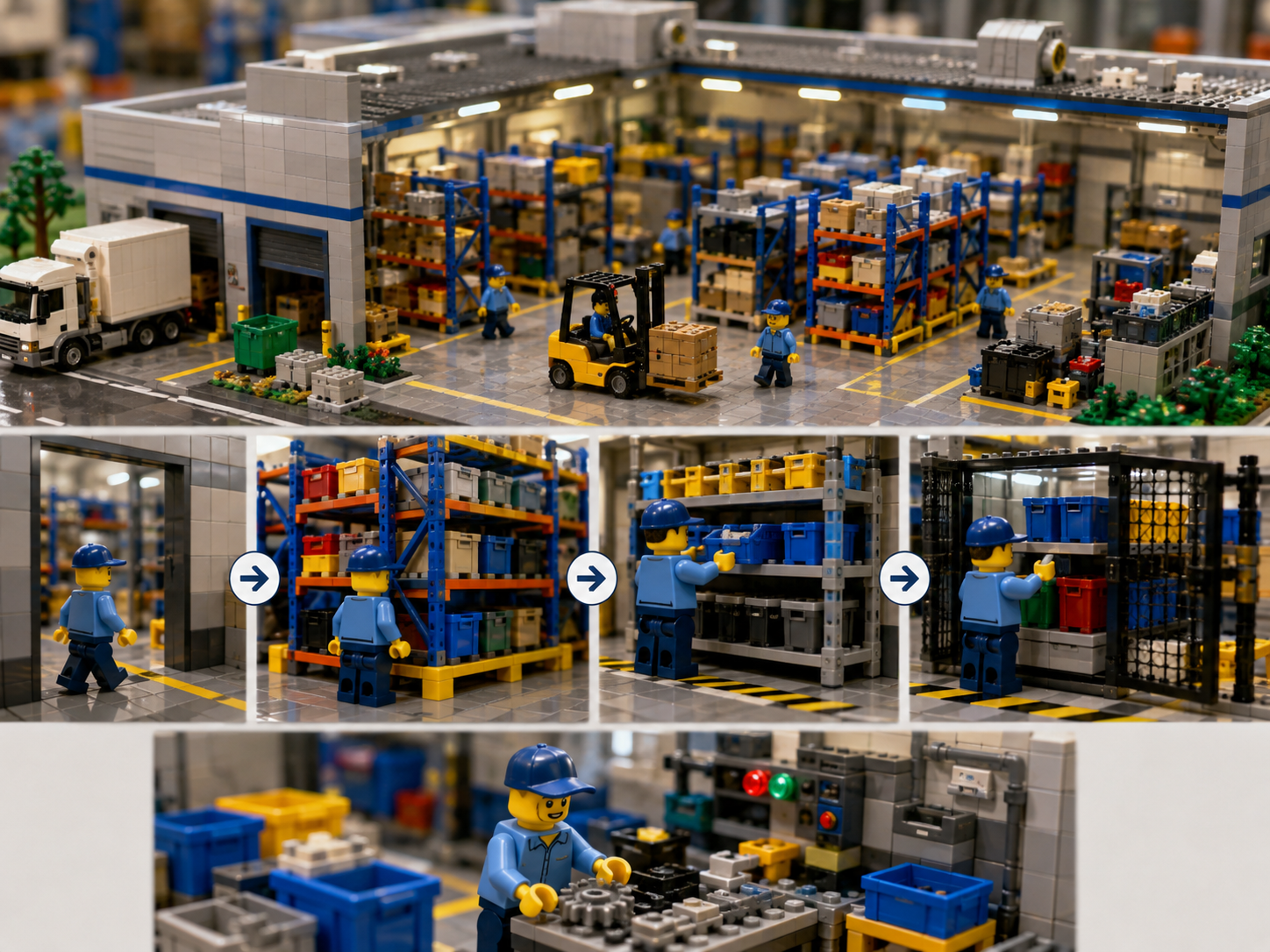
Once manufacturers recognise the difference between stock tracking and location visibility, the next question is what to do about it. The answer is not a single procedure or a single software screen. It is a set of operating disciplines that turn inventory from a static record into a shared, dependable picture of physical reality.
Start with a location hierarchy that reflects the plant as it actually works
Many manufacturers run into trouble because their location structure is too vague. A single warehouse code or a short list of stockrooms may be enough for finance, but it is not enough for operations. A more useful structure starts broad and gets progressively more specific: site, building, department, room, zone, rack, shelf, bin, cage, or work cell. When this hierarchy matches the physical world, teams can navigate the system in the same way they navigate the plant itself. That reduces interpretation, shortens search time, and makes warehouse bin location tracking more practical.
Separate item identity from item location
This sounds obvious, yet many inventory mistakes come from mixing the two. A product record should define what the part is. A location record should define where it is stored or staged. When those are treated as separate but linked pieces of information, stock can move without creating confusion about the part itself. This matters in manufacturing because the same item may appear in central stores, line-side replenishment zones, maintenance cages, and temporary project areas. Good product and location tracking keeps the item consistent while allowing the location to change cleanly.
Make movement capture part of the work, not an optional admin task
The inventory record will only stay accurate if physical moves are reflected quickly. That means each operational handoff, receiving to inspection, inspection to stores, stores to production, stores to maintenance, production to returns, or one department to another, needs a clear rule for when movement is recorded. If teams wait until the end of the shift, the end of the day, or “when someone has time,” the system lags behind reality and visibility erodes. Inventory control is strongest when updates happen as close as possible to the moment of movement.
Use barcode support to reduce ambiguity and speed routine transactions
Manual typing and memory-based entry create friction, and friction is where process breakdown begins. A barcode inventory management discipline makes it easier to identify both the part and the location quickly and accurately. That matters just as much for shelf labels, bins, and departmental locations as it does for the products themselves. When staff can validate the item and the destination in one routine action, location errors drop and stock movements are easier to trust. In practical terms, this is one of the most effective ways to raise inventory accuracy manufacturing teams can depend on.
Standardize naming conventions and the information attached to each product
Visibility is weakened when the same type of item appears under different names, part descriptions, abbreviations, or departmental nicknames. A plant may know a component by engineering code, buyer code, supplier description, and workshop slang all at once. That creates search failures, duplicate records, and bad picks. A cleaner naming structure, supported by useful product data, helps each department find the same item through the same record. This is where carefully chosen custom fields also matter. You may need fields for manufacturer, size, voltage, pressure class, material grade, compatibility, department ownership, maintenance criticality, or shelf-life category. The exact fields depend on the operation, but the principle is constant: the more clearly a product is defined, the easier it is to locate, verify, and use correctly.
Build visibility around departments, not just around the central store
A lot of manufacturing inventory work still assumes that “inventory visibility” begins and ends with the warehouse. In reality, parts move through receiving, inspection, raw material stores, kitting, fabrication, assembly, paint, maintenance, tool cribs, contractor staging, service stock, and returns. If the system only reflects one central stockroom well, the business will struggle everywhere else. Strong shop floor inventory control depends on a clear view across these handoff points. Each department does not need its own isolated inventory truth. It needs to contribute to one shared one.
Control temporary and transitional locations with the same discipline as permanent ones
Temporary areas become blind spots faster than almost anything else in manufacturing. Staging lanes, overflow racks, issue benches, quarantine shelves, hold areas, job carts, shutdown laydown zones, and project cages are often where visibility goes to die. These spaces feel temporary, so people treat them casually. Yet they can hold high-value, schedule-critical stock for days or weeks. If they are not defined and visible in the location structure, parts disappear into operational limbo. One of the simplest ways to improve spare parts visibility and material availability is to name these areas explicitly and treat them as real locations rather than informal holding places.
Use product transaction history to understand movement, not just balances
Counts matter, but movement history explains why counts change and why parts become hard to find. A useful transaction trail makes it possible to see when a part was received, transferred, issued, returned, or relocated. That kind of product transaction history inventory teams can review is vital for root-cause analysis. If a part is repeatedly hard to locate, the history may reveal recurring issues such as transfers to unofficial locations, incomplete returns, or poor staging discipline before shutdown work or large orders. The point is not to create paperwork for its own sake. The point is to make hidden process problems visible.
Use reporting to move from anecdote to management

Many plants know they have visibility issues because people complain, but complaint is a weak management system. Good reporting turns recurring friction into something measurable. Which locations show the most adjustments? Which departments create the most transfers? Which items are repeatedly searched for, short-issued, or written off? Which categories sit too long in temporary zones? Which parts are in stock overall but unavailable where they are needed? Reporting gives inventory leaders a way to spot patterns, prioritise corrective action, and discuss visibility with operations in concrete terms rather than vague frustration.
Do not ignore expiration-sensitive or time-sensitive stock
Not every manufacturing operation thinks of shelf-life as a major issue, but many plants handle products where age matters: adhesives, coatings, chemicals, lubricants, sealants, composites, PPE-related consumables, calibration materials, packaged maintenance items, or regulated stock. These items need more than quantity and location. They need expiration tracking so teams do not discover too late that available stock is technically unusable. Shelf-life control is part of visibility because “we have it” is not enough if “we can use it safely and compliantly” is no longer true.
Design cycle counting as a visibility discipline, not just a finance exercise.
Counting should not only confirm whether stock exists. It should test whether location accuracy holds up under day-to-day movement. Count by risk. Count by movement frequency. Count transitional areas. Count departments where issues and returns are common. Count items that repeatedly trigger emergency buys. When discrepancies appear, investigate the movement path, not only the balance correction. The deeper value of cycle counting is that it exposes where the process loses touch with the physical world.
Create one shared operating language across stores, production, maintenance, purchasing, and quality
This is the cultural part, and it is often the hardest. Cross-team alignment improves when departments stop treating inventory as somebody else’s responsibility. Stores may own the formal process, but visibility depends on every team that touches material. Production needs clean handoffs. Maintenance needs disciplined issues and returns. Purchasing needs accurate demand signals. Quality needs clear hold locations. Supervisors need stock staged where they expect it. Finance needs trustworthy records. The more each department understands that location accuracy is operational infrastructure, the less likely the business is to tolerate informal workarounds that undermine it.
Focus on retrieval speed as well as record accuracy
A plant can talk itself into believing inventory is under control because the book record is close enough at month-end. But the operational test is more demanding: can the team retrieve the right part, from the right place, at the right time, without a search expedition? That is the practical standard of real-time inventory visibility. It is not perfection. It is dependable access.
When these practices come together, the result is not merely cleaner data. It is a more predictable operation. Schedules hold more easily. Expediting drops. Department conflict softens. Inventory carrying decisions improve because hidden duplicates become easier to spot. Most important, the plant becomes faster at turning information into action.
How CyberStockroom Supports Multi-Department Parts Visibility
This is the point where technology needs to fit the operating problem rather than distract from it. If the goal is to improve tracking parts vs knowing location manufacturing inventory, the system has to support location-based control in a way that makes sense to the people who move, store, issue, and search for parts every day. That is where CyberStockroom fits naturally into the discussion.
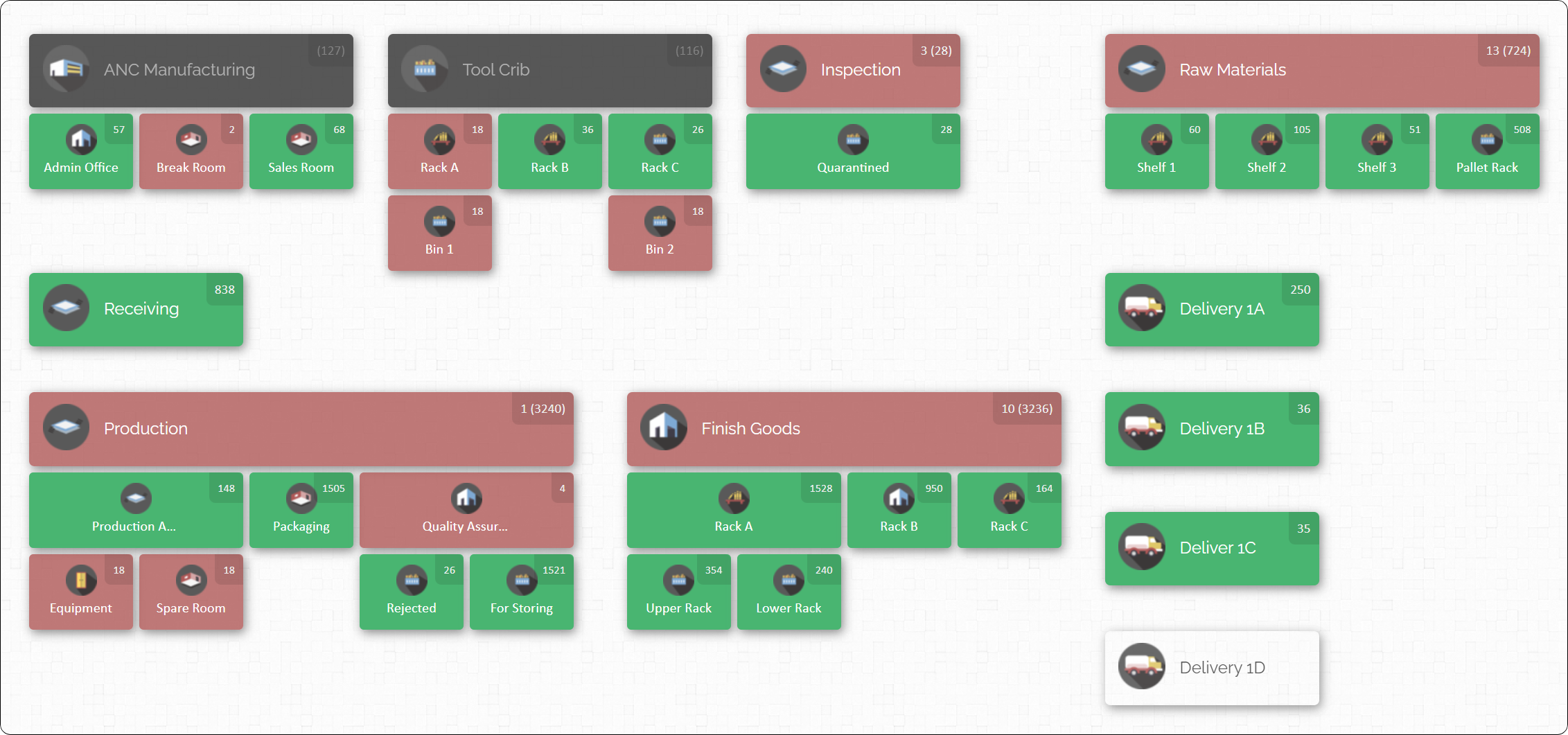
CyberStockroom enables teams to work from a visual map-based inventory tracking model rather than a flat list alone. In a manufacturing setting, that matters because physical layout is part of the problem. Parts exist in buildings, rooms, departmental stock areas, racks, bins, cages, and staging zones. A visual map makes those relationships easier to understand and easier to manage. Instead of treating the plant as a single abstract stock pool, the business can represent how inventory is actually distributed across the operation.
That is especially useful in factories where inventory responsibility is shared. Receiving may take first custody, quality may hold materials temporarily, stores may place them in central stock, production may stage them for scheduled work, and maintenance may keep critical spares in dedicated departmental locations. Without location-based visibility, every one of those handoffs becomes a chance for confusion. With CyberStockroom, the map can reflect multiple locations and sub-locations so departments are working from one structured view rather than several partial ones.
The practical value of real-time inventory visibility becomes obvious in those moments where manufacturing speed matters most. If a line supervisor needs to confirm whether a replacement part is in main stores, in an overflow room, or already staged near the cell, a real-time view helps reduce the lag between question and action. If maintenance needs to see whether a spare motor is still held in the maintenance crib or has been reassigned elsewhere, it should not have to rely on memory or chase three phone calls around the plant. A current view of stock by location supports faster decisions and fewer unnecessary escalations.
CyberStockroom also supports multi-location inventory management, which is more important than it first appears. In many manufacturing businesses, “multiple locations” does not just mean multiple sites. It can also mean multiple buildings within one site, multiple departments within one building, and multiple storage methods within one department. Raw material stores, WIP staging, tool cribs, spare parts rooms, quality hold areas, finished goods buffers, and project stock zones all count. If your operation spans several plants as well, the need for structure becomes even greater. Multi-location control helps inventory leaders avoid the classic problem of believing stock is available in the business while the actual user cannot access it where work is taking place.

The platform’s support for product and location tracking is central to solving this. You need to know both what the item is and where it sits in the operation. That combination is what makes inventory actionable. It is the difference between seeing a part in a database and understanding whether the part is in the exact area where a user can retrieve it. When people talk about “full visibility,” this is usually what they mean, even if they do not phrase it that way.
CyberStockroom’s barcode support strengthens that process by making products and locations easier to identify consistently. In a busy manufacturing environment, barcodes help reduce manual entry and support cleaner movement records. That is particularly valuable in receiving, issue points, internal transfers, and departmental stock updates, where the volume of small transactions can quickly create noise if teams rely on memory and typing. Barcode support also helps when multiple departments handle similar-looking parts or when location detail matters at the shelf and bin level rather than only at the room level.
Another feature that matters in a plant context is custom fields. Manufacturing operations almost never need exactly the same product detail from one department to the next. A universal part description is rarely enough. Stores may need supplier and category information. Maintenance may care about model compatibility or equipment association. Production may need material grade, size, or specification. Quality may need hold reason or inspection status. Some stock may need shelf-life data. Using custom fields allows the product record to reflect the information that actually supports retrieval, handling, and decision-making inside your business, not just generic labels that fail to distinguish one item from another.
That flexibility becomes a major advantage when the same broad stock category includes many operationally different items. Consider electrical components that share similar descriptions but vary by voltage, phase, enclosure rating, or mounting type. Or mechanical seals that differ by size, material, or application. Or consumables that look similar but belong to different departments. Custom fields improve identification, searching, and confidence. They reduce the chance that a team will find “a part” but not the right part.
CyberStockroom’s reporting capability then turns day-to-day inventory activity into management information. That is crucial if you want parts visibility to improve continuously rather than only during cleanup projects. Reporting helps leaders review stock by location, identify where inventory is concentrated, spot recurring movement patterns, and support discussions about stocking strategy, departmental allocation, and count discipline. In other words, reporting helps the business shift from reacting to inventory confusion after the fact to managing visibility in a more deliberate way.
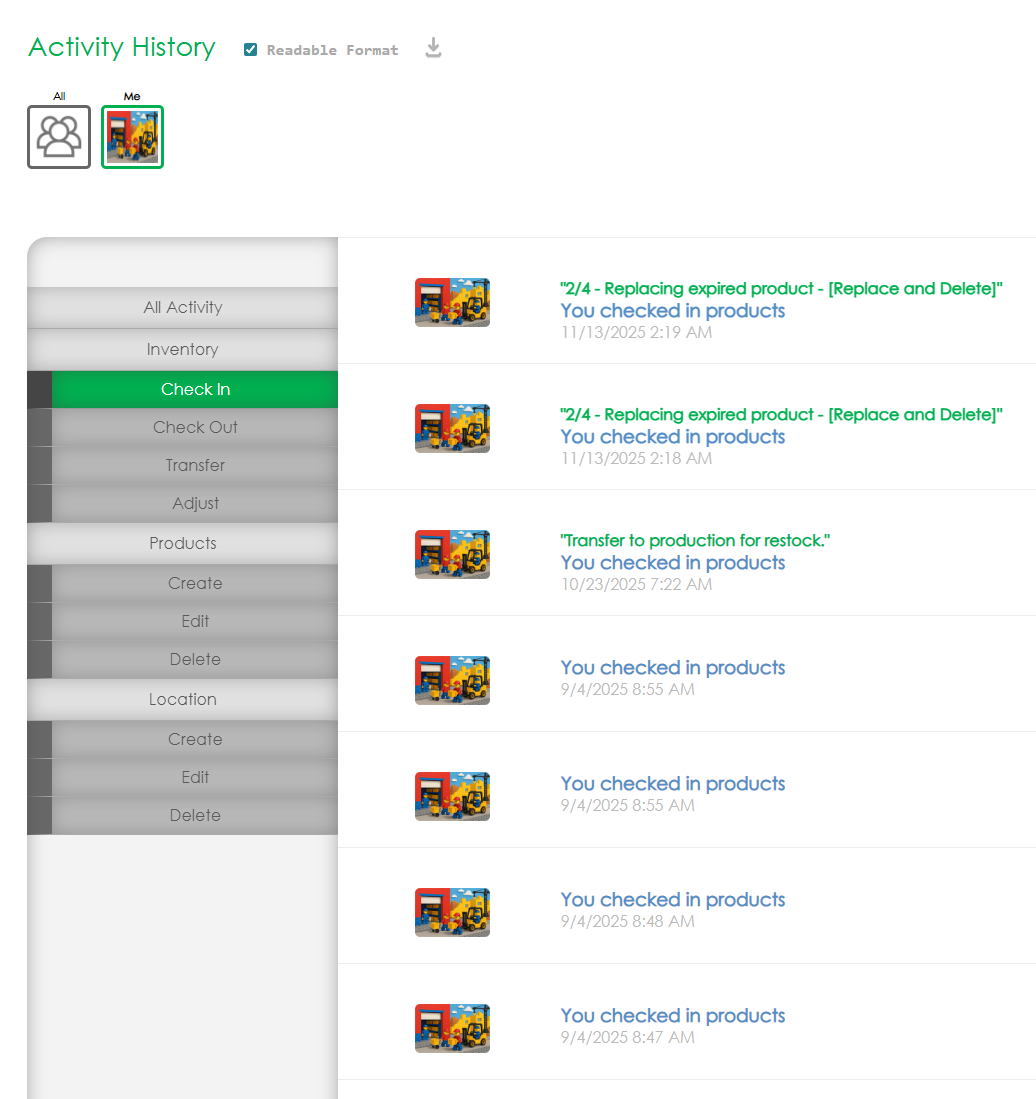
That closely connects to product transaction history, which is often underappreciated until a problem arises. In manufacturing, movement history matters because parts do not simply appear and disappear. They are received, moved, issued, returned, and reassigned. When a part becomes difficult to locate, transaction history provides the operational backstory. It helps answer questions such as: Was this item moved to a different area? Was it staged for a job that has not started yet? Was it returned to stock incorrectly? Is the same department repeatedly moving materials into unofficial spaces? A record of product transactions makes it easier to diagnose visibility failures and tighten the process where it actually breaks.
For departments that manage shelf-life-sensitive stock, CyberStockroom’s expiration tracking is also relevant. Manufacturing teams often think of expiration only in highly regulated sectors, but many plant environments handle items where age affects usability or compliance. Adhesives, sealants, coatings, chemicals, maintenance consumables, and time-sensitive materials all carry risk if the business only tracks quantity. Expiration tracking adds another level of practical control, helping teams distinguish between stock that exists and stock that is still fit for use.
The platform’s cloud-based inventory management model also supports cross-team visibility in a simple but important way: departments are looking at the same current environment rather than waiting for separate offline updates. In a manufacturing business, that shared view matters because delays in information quickly become delays in work. When receiving, stores, production, maintenance, quality, and leadership can all reference the same up-to-date inventory picture, alignment improves. Conversations become more factual. Disputes become easier to resolve. “I thought it was there” gets replaced by “here is where it is.”
Consider how this plays out in a realistic manufacturing scenario. A plant receives replacement gearboxes, fastener kits, lubricants, and electrical spares for upcoming maintenance work. Some items go to central stores, some to a maintenance area, some to a shutdown staging zone, and some remain under inspection hold. At the same time, production has line-side stock that must not be touched, and purchasing is reviewing whether more parts should be ordered for the same outage window. In that environment, a list of on-hand balances is not enough. Teams need to understand the location of each item by department and status. They need to know which materials are available, which are held, which are staged, and where each one sits physically. That is where a visual, real-time, location-based system becomes more than convenient. It becomes operationally useful.

What makes CyberStockroom suitable to this conversation is that it does not require you to pretend a manufacturing plant is a simple storeroom. It supports the more realistic idea that inventory lives across a network of locations and sub-locations, and that visibility improves when those spaces are represented clearly. It also supports the supporting disciplines that make visibility stick: barcode support, product and location tracking, reporting, custom fields, expiration tracking, and transaction history.
That is why the platform can be introduced naturally in a blog about manufacturing inventory basics. It is not a detour from the article’s point. It is a practical example of how the principles behind manufacturing inventory visibility, parts location tracking, and multi-location inventory management can be applied in a way that supports multiple departments at once.
Conclusion and next step
The difference between tracking parts and knowing where they are is not a matter of wording. It is the difference between having a stock record and having operational control.
Tracking tells you that inventory exists. Knowing where it is tells you whether production can run, whether maintenance can respond, whether purchasing needs to act, and whether supervisors can trust the plan for the shift. One is necessary, but it is not sufficient. The other is what turns inventory into something the operation can actually use.
Manufacturers that improve parts visibility usually do not begin with complicated theory. They begin with a more honest look at the daily friction points. How often do teams waste time searching for parts that are supposedly in stock? How often do departments keep their own unofficial buffers because they do not trust the central record? How often do urgent orders happen because stock was somewhere on site but not visible to the people who needed it? How often do temporary staging areas become permanent blind spots? Those questions reveal whether the issue is truly shortage, or whether it is location visibility.
The path forward is practical. Build a location structure that matches the plant. Standardise part data. Use barcode support for products and locations. Capture movements consistently. Make temporary spaces visible. Review reports. Study transaction history. Track shelf-life where it matters. Most of all, create one shared view of inventory across receiving, stores, production, maintenance, quality, and purchasing so that each team works from the same operational picture.
If your current process is good at counting parts but weak at showing exactly where they are, it may be time to evaluate whether your inventory tracking method is keeping up with the reality of your operation. And if you want to see what stronger multi-department parts visibility could look like in practice, consider booking a discovery call to review how your locations, stock movement, and daily workflows are being managed today.









Leave a Reply