
Factory teams rarely lose control of inventory all at once. What usually happens is much quieter. A fastener gets placed in a temporary bin during a busy shift. A maintenance part is borrowed from one department and not transferred in the record. A receiving team uses one name for a component while production uses another. A line-side shelf gets replenished, but the reserve location is never adjusted. Over time, those small gaps turn into larger problems: parts hunts, duplicate orders, urgent shortages, excess stock, and avoidable downtime. Inventory management has always been about balancing supply, demand, and carrying cost, but strong location control adds the layer that makes day-to-day execution work on the floor, at the rack, and at the point of use.
That is why inventory location management matters so much in manufacturing. It is not just an admin task, and it is not just a warehouse concern. It is the discipline of knowing exactly where stock is held, how it is arranged, who can find it, and how every move is reflected in the working record. When that discipline is weak, production, maintenance, stores, purchasing, quality, and shipping all feel the strain. When it is strong, the whole operation moves with more confidence because the physical layout and the inventory record finally match.
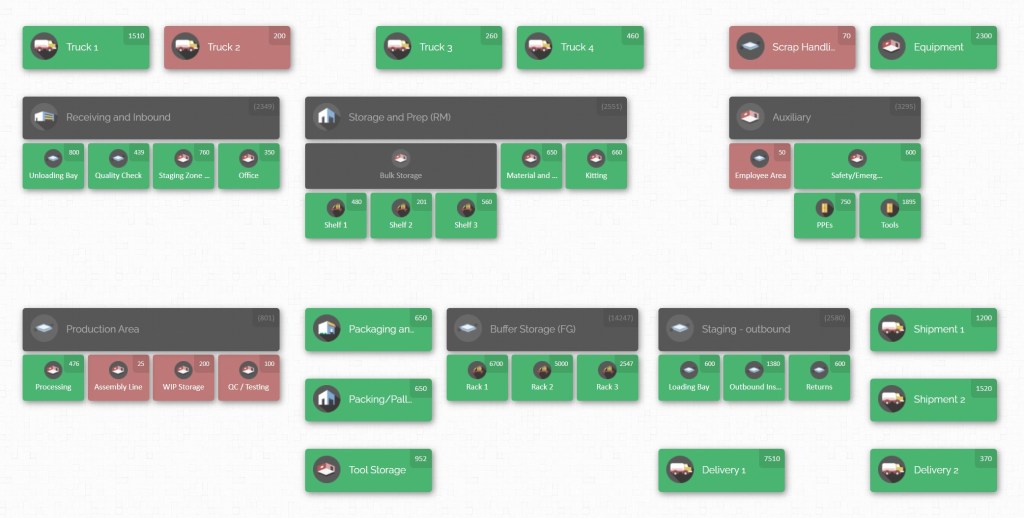
For anyone searching for inventory location management factory floor explained in practical terms, the plain-English answer is this: every part, consumable, spare, and material needs a defined home in a location structure that mirrors the real facility, and every movement between those homes must be visible to the teams who rely on that stock. That sounds simple, but on a live factory floor it changes everything. It affects walking time, replenishment speed, stock accuracy, shift handovers, audit readiness, and cross-team trust in the data.
This article explains what inventory location management is, why it matters on the factory floor, where multi-department visibility usually breaks down, and what best practices help manufacturers improve parts visibility across departments. In the middle, it also shows how CyberStockroom fits into this picture as a practical way to create shared location clarity through visual mapping, location tracking, stock organisation, and inventory visibility.
What inventory location management means on the factory floor
At its core, inventory location management is the practice of assigning stock to defined physical locations and maintaining dependable records of where each item is held. General inventory management covers the broader flow of ordering, storing, producing, selling, and restocking, but item-level and stocking-location control is where the work becomes tangible. On the factory floor, that means identifying the exact spaces that make up your inventory world: receiving, quarantine, raw material storage, tool cribs, maintenance stores, line-side shelves, supermarkets, staging lanes, quality hold zones, finished goods, and every aisle, rack, shelf, and bin inside them.
This location structure usually works as a hierarchy. A plant may contain multiple buildings, each building may contain departments, each department may contain storage areas, and each storage area may break down into aisles, racks, shelves, and bins. In warehouse terms, a storage bin is the smallest spatial unit where product can be placed, and some systems represent a product’s exact position through a combination of storage type, section, and bin. The reason that hierarchy matters is simple: when the structure is vague, people improvise. When people improvise, the location record stops being dependable.
A well-managed location system also depends on identification. GS1 standards describe barcodes as a way to encode key identifiers such as products, shipments, locations, serial numbers, lot numbers, and dates, and GS1’s location standards make it possible to identify locations down to internal sub-locations such as floors, rooms, shelves, and bins. In practice, that means a manufacturing site can stop relying on memory and vague descriptions like “back shelf near assembly” and start using a common naming and labelling convention that everyone understands.
That structure is what turns a stockroom into a controllable system rather than a collection of places where parts happen to sit. It is also what links physical stock to operational decisions. If a fast-moving consumable is assigned to a line-side location, replenishment can be planned. If a spare part is held in a maintenance cage with a clear bin address, downtime response improves. If quality hold stock sits in a visibly separate location, the risk of accidental use drops. If overflow stock is stored in a different zone but still linked to the same product record, teams can see both availability and exact placement instead of assuming the item is “out”.
That is why inventory location management on the factory floor is more than shelving and labels. It is the operating language that connects space, stock, movement, and accountability. When that language is standardised, the business gains what every manufacturing team wants: fewer surprises, faster retrieval, cleaner handovers, and stock records that can actually be trusted in the middle of a busy shift.
Why Location Management Matters on the Factory Floor

Location management affects far more than where inventory is stored. It influences how quickly teams work, how accurately stock is recorded, how safely materials are handled, and how confidently departments make decisions from the same inventory information.
Faster Access to Parts and Materials
A factory may own the parts it needs yet still lose productive time because those parts are difficult to find. Travel time, searching, re-checking, and asking other departments all add friction to the day.
Strong warehouse systems improve space usage and travel paths, while location tracking and real-time visibility help teams understand where inventory is as it moves through the operation. On the factory floor, that translates directly into less walking, fewer interruptions, and quicker replenishment to the point of use.
More Reliable Inventory Accuracy
Inventory records drift when movement is not captured at the time it happens. Cycle counting as a way to count portions of inventory regularly so discrepancies can be identified sooner. It also notes that effective cycle counting can reduce stockouts and overstocks while improving inventory accuracy.
That only works, however, when the count is connected to a dependable location record. If the system says an item is on Shelf B-3 and the team finds nothing there, the real problem is not just a count variance. It is a breakdown in location discipline.
Better Operational Decisions
When leaders work from current and accurate inventory data, they can respond earlier to shortages, overstock, or changing demand.
Current inventory visibility enables organisations to adjust production or sales plans in time. Also, stronger inventory control helps conserve cash, improve efficiency, reduce waste, and support production schedules.
On the factory floor, this means planners make better calls, purchasing avoids unnecessary expediting, and supervisors can escalate genuine shortages instead of chasing parts that are simply hidden in the wrong place.
Stronger Alignment Across Departments
Inventory location management is not owned by one role alone. Operations leaders, warehouse teams, material handlers, purchasing, and finance are stakeholders in maintaining inventory levels.
In manufacturing, that is exactly how the work behaves. The receiving team creates the first location record, stores maintains the stockroom, production consumes material, maintenance borrows spares, quality may place items on hold, purchasing replenishes shortages, and finance relies on sound inventory records.
If any of those groups sees a different version of where stock is or whether it is available, the entire process weakens.
Safer and More Orderly Storage Areas
Storage design, planning, training, secure stacking, housekeeping, and visible clearance limits matter.
Material that is badly stored or left in the wrong place creates tripping hazards, poor access, and unstable storage conditions. Good location management supports safer operations because it pushes teams to define where things belong, keep storage areas clear, and maintain visibility over what is sitting where.
Operational control and physical order reinforce each other.
Lower Costs and Better Use of Existing Stock
Inventory ties up cash and creates carrying costs. Excess stock often hides in plain sight when locations are poorly managed.
One department may treat a part as scarce while another quietly holds surplus in a corner cupboard, on a seldom-used rack, or in a staging area no longer intended for storage. Without strong location visibility, the business buys more because it cannot see what it already owns.
Better location management reduces that blind spot by making distributed stock visible across the full site, not just within one stockroom or one team’s local spreadsheet.
Greater Trust in the Inventory Record
A factory runs faster when teams believe the inventory record. If operators, technicians, and supervisors assume the system is wrong, they work around it.
They build personal stashes, keep side notes, create duplicate labels, and check “just in case” inventories outside the official record. Once those habits take hold, the business loses its shared source of truth.
Strong location control does the opposite. It gives people confidence that if the system says a part is in a specific place, that part will be there. If it is not, there is a clear process for finding out why.
Where Multi-Department Visibility Breaks Down
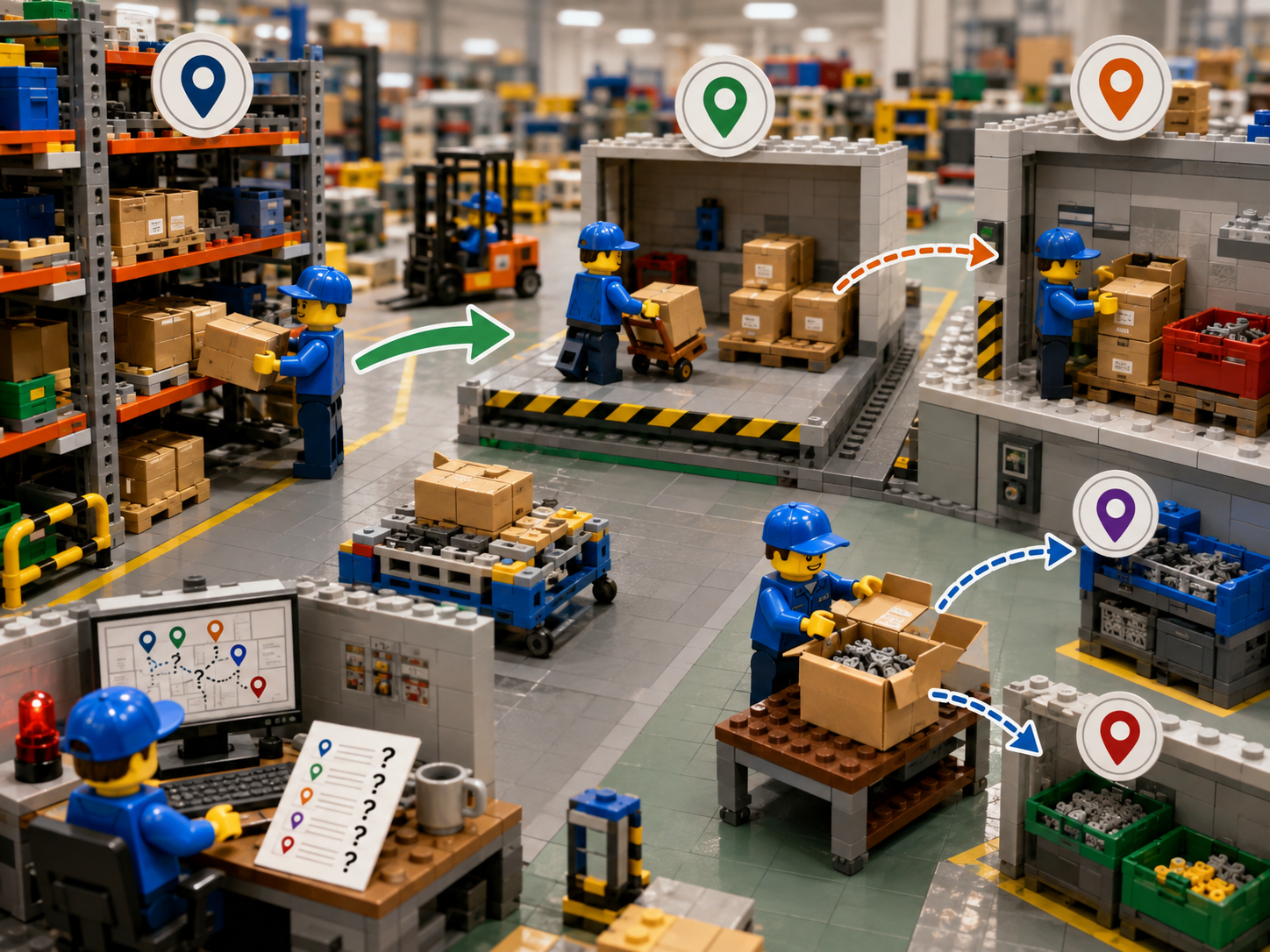
Multi-department visibility usually fails at the points where inventory changes hands. As parts move between receiving, storage, production, maintenance, quality, and other areas, inconsistent updates and unclear location practices gradually separate the inventory record from physical reality.
Inventory Moves Faster Than Records Are Updated
Most factories do not struggle with visibility because people do not care. They struggle because inventory flows across departments faster than their location methods can keep up.
A part may arrive through receiving, move into bulk storage, be transferred to a line-side shelf, get borrowed by maintenance during an urgent repair, move into inspection after a suspected issue, and end up back in general stock, all within a short window. If every one of those movements is not recorded promptly and consistently, parts visibility starts to fracture.
Infor describes warehouse inventory management as the connection between location control, movement updates, cycle counting, and structured workflows. It is a useful reminder that visibility depends on all four working together rather than on counts alone.
Too Many Touchpoints Create More Opportunities for Error
The more often a product is handled during its journey through the warehouse, the more likely it is to be misplaced or recorded incorrectly. That insight applies directly to manufacturing environments.
The more hand-offs, temporary placements, partial uses, and informal transfers a part goes through, the more chances there are for the location record to drift. Temporary storage becomes permanent by accident. Overflow stock never gets moved back. A box is opened and split across two areas, but only one location is updated.
Before long, the business has stock but not dependable visibility.
Inconsistent Naming Creates Avoidable Confusion
Item names, numbers, and descriptions must be consistent everywhere they appear because mismatches between pick slips, product labels, and storage bins lead to extra searching and picking mistakes.
On the factory floor, inconsistency spreads quickly. Purchasing may call a part one thing, engineering another, stores a third, and production may know it only by a job nickname. Add inconsistent location naming and the confusion doubles.
Workers stop trusting the label because it rarely matches the paperwork cleanly.
Siloed Records Create Separate Versions of the Truth
Parts move through multiple areas of a plant, and without clear visibility, items get misplaced or forgotten. One department may over-order while another holds surplus, and manual logs or spreadsheets easily fall out of sync.
This is one of the defining factory-floor inventory problems. Teams often create local workarounds because they need speed, but those workarounds create separate truths.
Maintenance has one count, the main stockroom has another, and production planners have a third. The result is not control. It is negotiated guesswork.
Vague Location Maps Leave Too Much Room for Searching
Some sites know roughly what buildings and rooms they have but not enough about the detail within them. The map stops at “Stores” or “Maintenance” instead of going down to aisle, rack, shelf, and bin.
When that happens, location control becomes too coarse to be useful. Surveying the space, deciding how detailed the map should be, and labelling each location clearly in the physical space to match the software.
That advice matters because a vague digital structure usually reflects a vague physical structure. If the system only knows the room, workers still end up searching within that room.
Inconsistent Workflows Make Accuracy Depend on Memory
Lean guidance explains that visual management helps people understand the standard and recognise abnormalities. Standardised work charts also show operator movement and material location in relation to the layout.
When factories lack standard work for receiving, put-away, issue, transfer, replenishment, and adjustments, transactions become a matter of personal habit. One person scans every move. Another does it later. One shift returns leftovers to reserve. Another leaves them line-side.
The location record then depends on individual memory rather than a repeatable process.
Weak Audit Routines Allow Errors to Accumulate
Businesses often rely on full physical counts after problems have already grown large enough to hurt. Cycle count exists for a reason: smaller, scheduled counts help identify discrepancies sooner.
Without that rhythm, location errors can sit undiscovered for weeks or months. A facility may think it has a procurement problem when it actually has a stock placement problem that no one has measured often enough to catch early.
Shared Visibility Needs Clear Ownership
Visibility also breaks down when no one owns the shared process.
Inventory maintenance is cross-functional by nature, but if no one defines the location structure, naming rules, transfer rules, and count cadence, departments optimise locally and the site loses coherence. One area may do an excellent job inside its four walls while another quietly works from paper or memory.
Full parts visibility across departments only becomes real when the business treats location management as a site-wide operating discipline, not as a stockroom preference.
Best Practices for Full Parts Visibility Across Departments
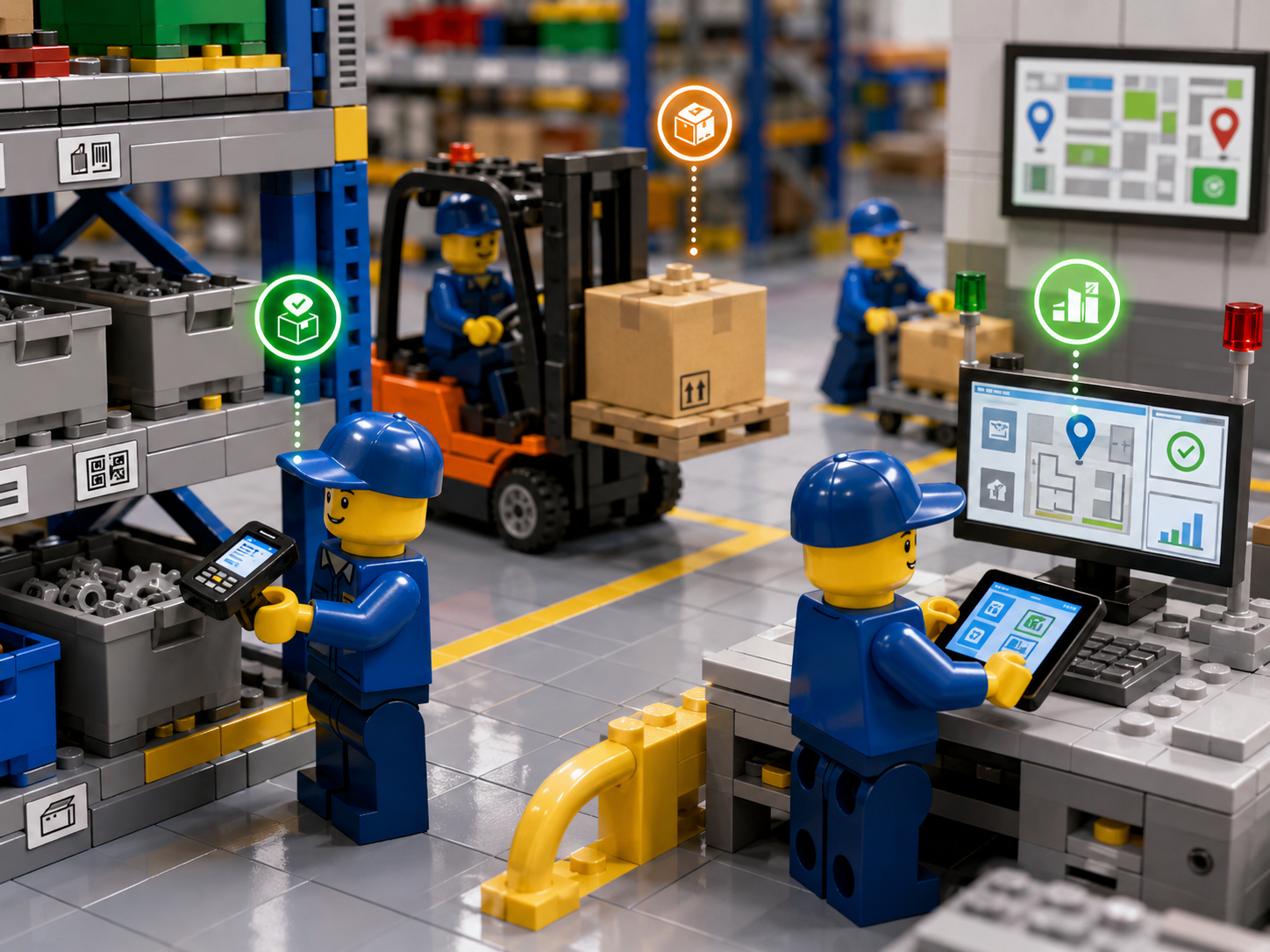
Full parts visibility depends on more than knowing the total quantity of inventory on hand. It requires a shared location structure, consistent movement records, clear physical labels, and agreed operating rules across every department that handles stock.
Build One Location Structure for the Entire Facility
Every department may have different workflows, but they should all operate within the same location language. The structure should mirror the site as it actually operates: building, department, room, aisle, rack, shelf, bin, line-side point, cage, crib, staging lane, quarantine zone, and any other storage type that matters to the operation.
Match Physical Labels to Digital Locations
A good location structure fails if the shelf, bin, or zone on the ground is not labelled in a way that workers can recognise instantly. Labels should be clear, visible, durable, and written in the same format used in the inventory record. This may sound basic, yet it is where many operations lose discipline.
Mismatches between product information and bin labels slow workers down and contribute to picking errors. On the floor, clear physical labelling prevents that mismatch from becoming routine.
Reduce Unnecessary Handling and Touchpoints
Every additional handling step creates another chance to misplace stock or skip a transaction. Site layouts, replenishment points, and put-away rules should be designed to keep the journey from receiving to storage to the point of use as direct as possible.
On the factory floor, fewer touchpoints mean fewer unofficial resting places and fewer opportunities for inventory to disappear into temporary storage.
Record Inventory Movement as It Happens
Real-time visibility comes from timely updates, not from reconstructing movements at the end of a shift. Real-time inventory visibility comes from tracking inventory as it moves into, around, and out of the warehouse. CyberStockroom supports adding items manually, by barcode scanner, or by spreadsheet, and allows products to be moved between locations and sub-locations.
When the rule is simple enough for the floor to follow and the method is quick enough to use under pressure, the system stays close to physical reality. When updates are delayed, the location record becomes a historical document rather than an operating tool.
Standardise Item Names, Codes, and Attributes
Consistent item information is especially important in manufacturing, where departments often use different language for the same part. A shared item master should define naming conventions, key descriptors, and critical attributes such as supplier, batch, size, category, or serial information.
CyberStockroom supports custom fields for products, while Oracle emphasises the importance of consistent item names, numbers, and descriptions wherever they appear.
When teams can search and filter using dependable item data, parts visibility improves well beyond the location label alone.
Make Inventory Visibility Visual
Lean guidance is clear that visual management helps teams recognise standards and abnormalities quickly. Standardised work charts also show movement and material location in relation to the physical layout.
Manufacturing teams absorb information faster when the location record reflects the environment in a recognisable way. A visual approach helps people see where stock sits, where it should move next, and which areas are becoming overloaded or under-supplied.
That is one reason visual mapping can reduce search time and improve cross-team understanding. It narrows the gap between how the system presents inventory and how people experience the work.
Use Cycle Counting to Verify Locations
Cycle counting should be treated as a location discipline, not only as a finance requirement. Smaller, regular counts help maintain accurate records and identify discrepancies early. On the factory floor, cycle counts work best when they are tied to location risk.
High-value locations, busy line-side points, shared department stockrooms, and areas with frequent borrowing should be counted more often because they are more likely to drift. The goal is not simply to confirm the total quantity. It is to verify that the quantity is in the place where the system says it is.
Establish Clear Transfer Rules Between Departments
Multi-department visibility often fails not because stock disappears, but because transfers are treated as informal favours. Maintenance borrows from stores. Production takes spare PPE from another area. Quality moves suspect material into a temporary inspection zone. Without clear rules for recording those movements, the inventory record falls behind.
The process should define what happens whenever material changes department, status, or physical use. The move may be urgent, but the transaction still needs to happen.
Separate Stock by Function and Status
Good location management is not only about knowing where stock is. It also prevents the wrong material from being used. Quarantine stock, damaged stock, returns, consumables, finished goods, and line-side inventory should not blur into one another.
When stock classes are physically distinct and clearly labelled, both safety and inventory accuracy improve.
Manage Visibility as a Shared Responsibility
Parts visibility should be governed as a multi-team process rather than owned entirely by one department. Operations, warehouse leaders, floor workers, purchasing, and finance all influence inventory health. In manufacturing, cross-team alignment should include agreed location standards, transaction rules, replenishment ownership, count responsibilities, and exception handling.
Without shared rules, each department creates its own version of what makes sense. That is where fragmented visibility begins.
Turn Location Clarity Into an Operating Habit
When these practices are applied together, parts visibility improves in a practical and measurable way. Search time falls because locations are precise. Stock accuracy improves because movements are recorded promptly. Purchasing decisions improve because hidden surplus becomes visible. Shift handovers become cleaner because the layout is common knowledge.
Most importantly, departments begin to trust the same inventory picture instead of protecting separate local records. Operational efficiency, inventory accuracy, and cross-team alignment improve together because location clarity becomes part of how work is done, not an afterthought added at stocktake time.
How CyberStockroom Supports Multi-Department Parts Visibility
CyberStockroom helps manufacturers create a shared visual view of where parts are stored, how they are distributed, and how they move across departments. By connecting inventory records to the physical layout of the facility, the platform makes it easier for receiving, stores, production, maintenance, quality, and shipping teams to work from the same location-based information.
Turn the Facility Map Into the Inventory Interface
CyberStockroom is built around a simple but powerful idea: the map becomes the interface for controlling inventory by location.
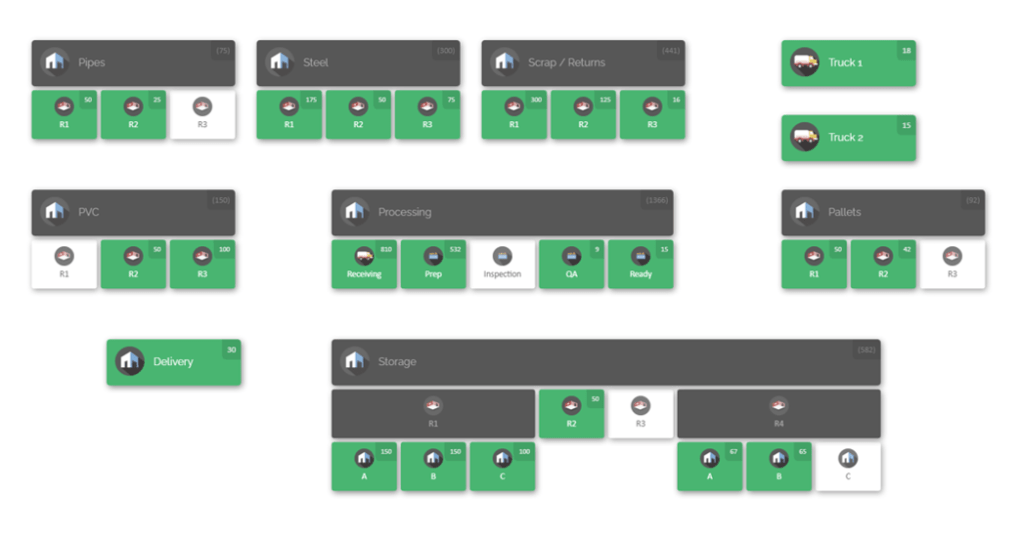
Rather than treating inventory as a long list detached from the physical reality of the site, CyberStockroom lets teams build an interactive map of their space and define locations such as rooms, racks, bins, yard zones, and staging areas directly on that map.
It is the visual mapping solution for warehouses, laydown yards, and facilities, with live maps that help teams track inventory by physical location, reduce search time, prevent lost items, and improve communication through a shared view of the layout.
For manufacturers managing parts across receiving, stores, maintenance, production, QA, and shipping, that matters because it turns spatial clarity into day-to-day control.
Map the Operation at the Right Level of Detail
One of CyberStockroom’s strongest advantages for multi-department parts visibility is its ability to represent the operation at different levels of detail.
The product pages state that users can break the business into any number of locations and sub-locations, rearrange the layout to match the way they see the business, and build maps from bins to buildings.
That means a manufacturer can reflect a multi-building plant, a single production hall, a maintenance store, or a mixed layout that includes stockrooms, staging lanes, and shared department areas, all inside one visible structure.
Instead of asking one department to translate its local naming into another department’s spreadsheet, teams work from the same mapped environment.

See Where a Product Is Distributed Across the Site
CyberStockroom also helps with one of the hardest inventory problems on the factory floor: seeing how a single product is distributed across the operation.
It offers an “X-ray” product view that lets users scan or select a product, see its distribution, locate items quickly, and assess product levels visually.
In the context of multi-department parts visibility, this is especially useful because it answers a question that planners, supervisors, and maintenance teams ask constantly: “How many of this item do we actually have, and where is it spread across the site?”
When one department is short and another holds surplus, a distribution view helps teams reallocate faster rather than reorder blindly.
Make Transfers Visible as They Happen
Location discipline is only credible if moving stock is quick and obvious, which makes CyberStockroom’s drag-and-drop transfers especially relevant.
The platform allows users to move items between locations and sub-locations and perform cycle counts and adjustments quickly. That fits the factory-floor reality where material often moves between reserve storage, point-of-use stock, inspection zones, temporary staging, and department-specific holding points.
Instead of relying on delayed notes or retrospective spreadsheet clean-up, teams can update movements inside the mapped environment as they happen.
Add the Item Details Teams Need
For item clarity, CyberStockroom supports images, barcodes, and custom fields, and allows products to be added manually, by barcode scanner, or by spreadsheet.
This matters because manufacturing parts often need more than a part number to be identified quickly. Teams may need supplier details, category, size, serial information, or a photo to distinguish one component from a similar item.
Custom fields strengthen search and filtering, while barcode support reduces manual entry and speeds up issuing, transferring, and verifying inventory.
Manage Large Inventory Changes Efficiently
CyberStockroom is also useful when a site needs to make larger changes without days of manual data entry.
Its spreadsheet-driven batch processing feature is designed to support bulk edits and transfers involving hundreds of items. That is important during re-slotting, stockroom reorganisation, line moves, plant expansions, and location clean-up projects.
These projects can quickly fall behind when the administrative effort becomes too heavy. By handling bulk changes efficiently, the business is more likely to keep the mapped structure aligned with the real facility.
Use Activity History to Improve Accountability
Another strength is accountability.
CyberStockroom’s loss and theft prevention material explains that the platform includes activity history, reporting, and audit tools. Users can filter history by user, activity type, time period, and location.
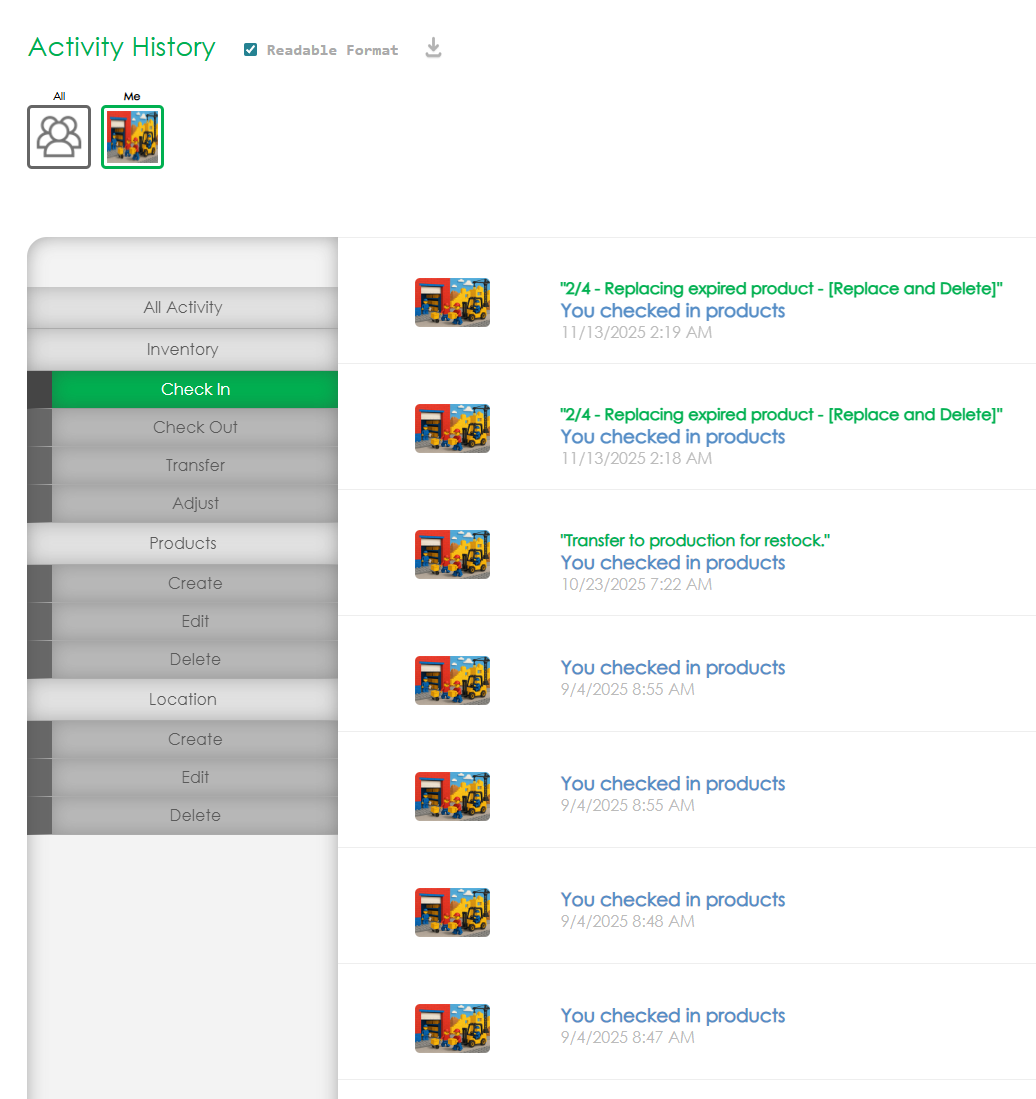
For manufacturing environments, that means a missing part does not have to remain a mystery. Teams can review what changed, where it changed, and who last interacted with the inventory.
That kind of traceable activity history supports both control and coaching. It helps managers identify recurring process problems rather than treating every missing item as an isolated incident.
Share the Same View Across Teams and Locations
Because CyberStockroom is cloud-based, it supports shared visibility across business units, departments, and locations.
Its official material describes use cases such as tracking inventory across warehouses, facilities, projects, teams, and departments, as well as mapping manufacturing workflows and production stages.
For a factory trying to align stores, maintenance, operations, and supporting teams, this means the inventory picture is not trapped inside one room or one person’s spreadsheet.
The live map becomes a common working view, which is exactly what multi-department parts visibility requires.
Stay Focused on Location-Based Inventory Control
Just as important is what CyberStockroom does not try to be.
It focuses on mapping, visibility, location tracking, stock organisation, and movement control. That focus is useful for manufacturers that do not need another layer of unrelated complexity when the real problem is limited visibility on the floor.
If one team cannot see what another team is holding, parts are difficult to find, line-side stock drifts from reserve stock, or temporary storage becomes permanent without anyone noticing, a visual location tool directly addresses the underlying issue: the gap between the real plant layout and the record people depend on.
Reinforce Better Inventory Practices Across Departments
CyberStockroom supports the best practices already discussed rather than replacing them.
It gives teams a practical way to define location hierarchies, organise stock visually, track parts by place, record material movements, review product distribution, support barcode-based workflows, attach useful item details, process large updates, and review activity history.
These capabilities help manufacturers improve parts visibility across departments while staying focused on the practical requirements of location control.

Building a rollout that sticks
The biggest mistake factories make with location management is treating it like a one-off tidy-up. They relabel shelves, move parts, update a spreadsheet, and expect the result to last. Sustainable improvement requires a rollout plan that changes how people see the site and how they execute each movement. CyberStockroom’s implementation guidance offers a sensible sequence: assess current processes, define locations, cleanse data, pilot and train, integrate scanning, monitor and adjust, communicate progress, and scale gradually. That phased approach works because it treats location management as operational change, not just data entry.
The first step is to study the current flow. Walk the path of material from receiving to final use. Look at how parts reach maintenance, line-side shelves, inspection areas, and shared department stockrooms. Ask where teams currently rely on memory, local notes, or side cupboards.
The second step is to define the location hierarchy before moving too much stock. Decide the naming rules, the granularity, and the functional zones. A good hierarchy should be detailed enough to direct someone quickly to the right place, but not so overly complex that people stop using it properly. The physical labels must then match that hierarchy visibly on the floor. CyberStockroom explicitly recommends surveying the space, deciding how detailed the map should be, and labelling each location clearly in the physical space to match the system. This is where clarity begins.
The third step is data cleansing. Duplicate part records, inconsistent naming, obsolete SKUs, and unstructured descriptions will sabotage visibility no matter how good the location design is. CyberStockroom’s rollout guidance recommends auditing the parts list, removing duplicates, merging similar records, standardising naming, and assigning unique codes before import. Oracle’s advice on consistent names and descriptions supports the same point. If the item master is messy, the map becomes a cleaner way of showing confusion, not a cure for it.
The fourth step is to pilot in one controlled area. Picking a department with real pain but manageable scope often works best, such as maintenance stores, MRO consumables, or a high-usage production support area. A pilot gives the team a way to test naming, labels, movement rules, barcode workflows, and cycle count cadence without asking the whole factory to change at once. CyberStockroom’s implementation advice recommends starting with one area or department, training staff thoroughly, using feedback to refine processes, then expanding once the process is stable. That is a sound way to build confidence and catch weak points early.
The fifth step is to define standard work around each transaction. Receiving, put-away, issue, return, transfer, replenishment, adjustment, and count all need a clear, repeatable method. Lean guidance is helpful here because it emphasises that visual management supports the standard and that standardised work charts should show movement and material location relative to the layout. When the location process is standardised, shift changes become more reliable and supervisors can see where behaviour is drifting. When it is not, every operator invents a slightly different system and visibility erodes again.
The sixth step is to set an audit rhythm that protects the new system. Cycle counts should be scheduled by risk, not by convenience. Busy shared locations need more frequent attention than stable reserve zones. Temporary locations should be reviewed so that they do not quietly become permanent. Activity history, count variances, and adjustment patterns should be reviewed for recurring causes, not only for end-of-month reconciliation. Microsoft’s cycle count guidance and CyberStockroom’s audit and history tools both support this more disciplined approach.
The seventh step is governance. Multi-department parts visibility lasts when responsibilities are explicit. Someone owns the location structure. Someone approves naming changes. Stores or inventory control owns map hygiene. Department leaders own transaction compliance in their areas. Purchasing responds to replenishment signals, but only after the site trusts the visibility. Finance benefits from the result, but operations must drive the behaviour. Microsoft’s stakeholder model makes clear that inventory maintenance is inherently cross-functional, so the governance model should reflect that reality instead of pretending one team can fix it alone.
The final step is continuous improvement. Once the system is live, the factory should resist the urge to “set and forget”. Layouts change, production mix changes, storage density changes, and fast movers become slow movers. CyberStockroom’s guidance recommends revisiting the setup periodically as layouts and processes evolve, while Lean thinking reminds us that visual systems and standard work are meant to be reviewed and improved as conditions change. A good location management system is therefore not static. It is stable enough to trust, but flexible enough to improve.
When manufacturers roll out location management in this way, the payoff goes well beyond tidier shelving. They gain faster retrieval, cleaner replenishment, more reliable cycle counts, better cross-team communication, and stronger confidence in what is actually on hand. That is the real reason inventory location management factory floor explained matters so much. It gives the factory a dependable way to connect the physical world of parts and storage with the operational world of planning, production, maintenance, and control. And once that connection is strong, visibility stops being a weekly struggle and becomes part of how the site runs every day.









Leave a Reply