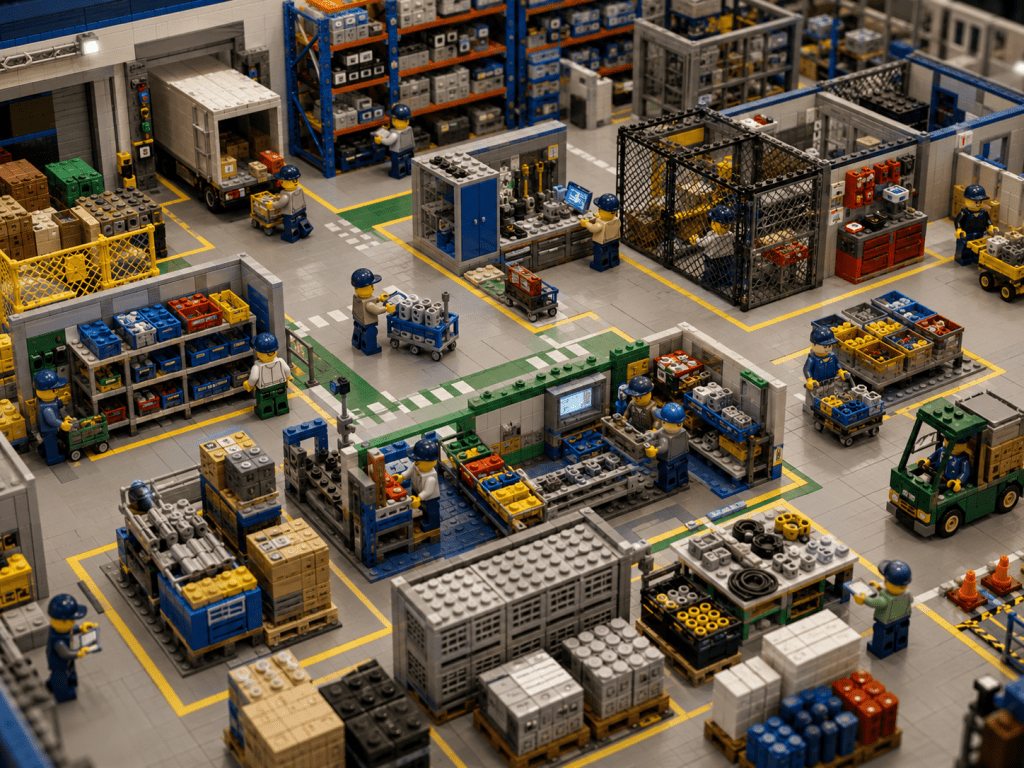
In many manufacturing plants, the same part can exist in three places at once on paper, nowhere on the shelf in practice, and in someone’s memory as the “last one we had yesterday”. Production believes maintenance has it. Maintenance believes stores received it. Purchasing believes it is already on site because the order was closed. Quality has a quarantine rack no one else checks. Engineering has a project cage with useful spares that never appear in the day-to-day conversation. The result is wasted walking, duplicate buying, avoidable stockouts, excess holding cost, and far too many urgent messages asking a simple question: “Has anyone seen this part?” Strong inventory visibility helps prevent stockouts, reduce carrying costs, and place stock in the right locations, while poor visibility creates wasted labour, excess stock, and lost output when recorded stock does not match reality. Parts shortages also continue to hit production and profit in manufacturing environments.
If you want a true live inventory view shared departments manufacturing plant teams can trust, the answer is not just to buy another system and hope people use it better than the last one. A plant-wide shared view works when the physical world and the digital view mirror each other closely enough that a supervisor, buyer, stores clerk, planner, or technician can answer the same core questions in seconds: what part is it, where is it, how much is there, who can use it, and what changed most recently. Inventory record accuracy is foundational to operational performance, and even small inaccuracies can create unnecessary cost, delayed replenishment, hidden stockouts, and unstable decisions upstream in the operation.
That is why the best plants treat inventory visibility as an operating discipline rather than a reporting exercise. They use clear location structures, visual control, standard naming, controlled movements, recurring cycle counts, and role-based ownership. Lean practice reinforces the same point. A well-organised workplace makes required tools and parts visible and their proper placement self-explanatory, while visual management makes performance conditions understandable by sight so people can tell what is missing or out of place quickly. When you apply those principles to plant inventory, visibility stops being abstract and becomes practical.
Why Shared Inventory Visibility Breaks Down Inside a Plant
Most plants do not fail at visibility because people do not care. They fail because inventory is organised around departmental convenience rather than plant-wide discoverability. Receiving thinks in deliveries and put-away. Production thinks in line-side availability. Maintenance thinks in downtime risk and critical spares. Purchasing thinks in lead times and open orders. Quality thinks in hold status. Engineering thinks in trial stock and project usage. Each view is reasonable on its own, but when those views are not reconciled into a single working model, the plant develops blind spots between functions. Inventory record inaccuracy then becomes more than a technical error. It turns into a cross-functional capability problem that affects replenishment, service levels, and cost.

The first blind spot is location ambiguity. Many plants know they have a part somewhere on site but cannot identify the exact usable location fast enough to make that knowledge operationally useful. A storeroom can be organised physically, yet still fail the practical test if only one or two experienced people know the logic. Strong storeroom practice requires that anybody can find any part, which depends on both physical location and a reliable means to find it. Visual management follows the same principle: if someone unfamiliar with the area cannot tell what is happening or what is missing, the system is not clear enough yet.
The second blind spot is transaction drift. Parts move all day in a plant. They are received, staged, checked in, checked out, transferred to a line, moved to maintenance, returned to stores, set aside for a shutdown, held by quality, or consumed in a rush job. If those movements are not recorded at the time they happen, the stock record slowly separates from reality. Research on inventory record inaccuracy shows that even small errors can nullify the benefit of shared information and create unnecessary cost. Once the record becomes unreliable, people respond by building workarounds such as extra buffers, private caches, or manual side lists, which creates even more fragmentation.
The third blind spot is false aggregation. A plant may claim to have “20 on hand”, but that number can hide several different truths. Five may be in a locked quality hold area. Four may be reserved for a planned maintenance job. Six may be spread across line-side points the stores team never checks. Three may be in a project cage. Two may still be sitting in receiving awaiting verification. In other words, a quantity without context is not a live view. Inventory visibility is not just knowing how many items exist. It includes knowing where each item is at a given time and understanding movement across locations and processes.
The fourth blind spot is treating MRO and production support inventory as secondary because it is not sold directly. In practice, MRO parts, tools, supplies, and maintenance materials are often the difference between an interruption that lasts minutes and one that runs into hours. MRO covers the upkeep of tools, supplies, equipment, and facilities required to manufacture goods, and shortages in MRO inventory can lead directly to equipment downtime, idle labour, delays, and downstream shortages. When that category is split across departments without a shared live view, the plant’s response time weakens at exactly the point where speed matters most.
The fifth blind spot is inconsistent prioritisation. Not all parts deserve the same level of attention. Some are high-value, high-risk, or critical to uptime. Others are low-value consumables. ABC classification exists to identify which items are most important from a manufacturing and inventory perspective, and ABC can be improved by pairing it with XYZ analysis so teams understand not just value, but demand predictability. Plants that ignore this distinction often end up giving the same visibility treatment to everything, which sounds fair but usually means critical items do not get the control they require.
The final blind spot is cultural. If inventory accuracy is treated as the stockroom team’s problem rather than a plant discipline, accuracy will erode no matter what software is in place. Mature operations tie visibility to routines, accountability, and shared ownership. Research on inventory record accuracy repeatedly shows that dependable results come from organisational conditions, cross-functional routines, clear roles, and a proactive approach to managing error causes, not from one-off clean-up efforts. A live inventory view succeeds when every department understands that each movement it creates also updates the truth everyone else depends on.
What a Live Inventory View Must Actually Show
A plant does not need a prettier stock list. It needs a view that answers operational questions quickly enough to change decisions. At minimum, that means the system must show item identity, current quantity, exact location, sub-location, status, and recent movement. If a technician needs a bearing, “warehouse” is not enough. If a line leader needs fasteners, “plant stores” is not enough. If purchasing needs to know whether a part is truly short, “on hand” is not enough. A live inventory view shared departments manufacturing plant teams can rely on is specific, contextual, and current. CyberStockroom’s mapping model is built around locations, sub-locations, quantities, and movement history rather than an abstract list disconnected from the physical site.
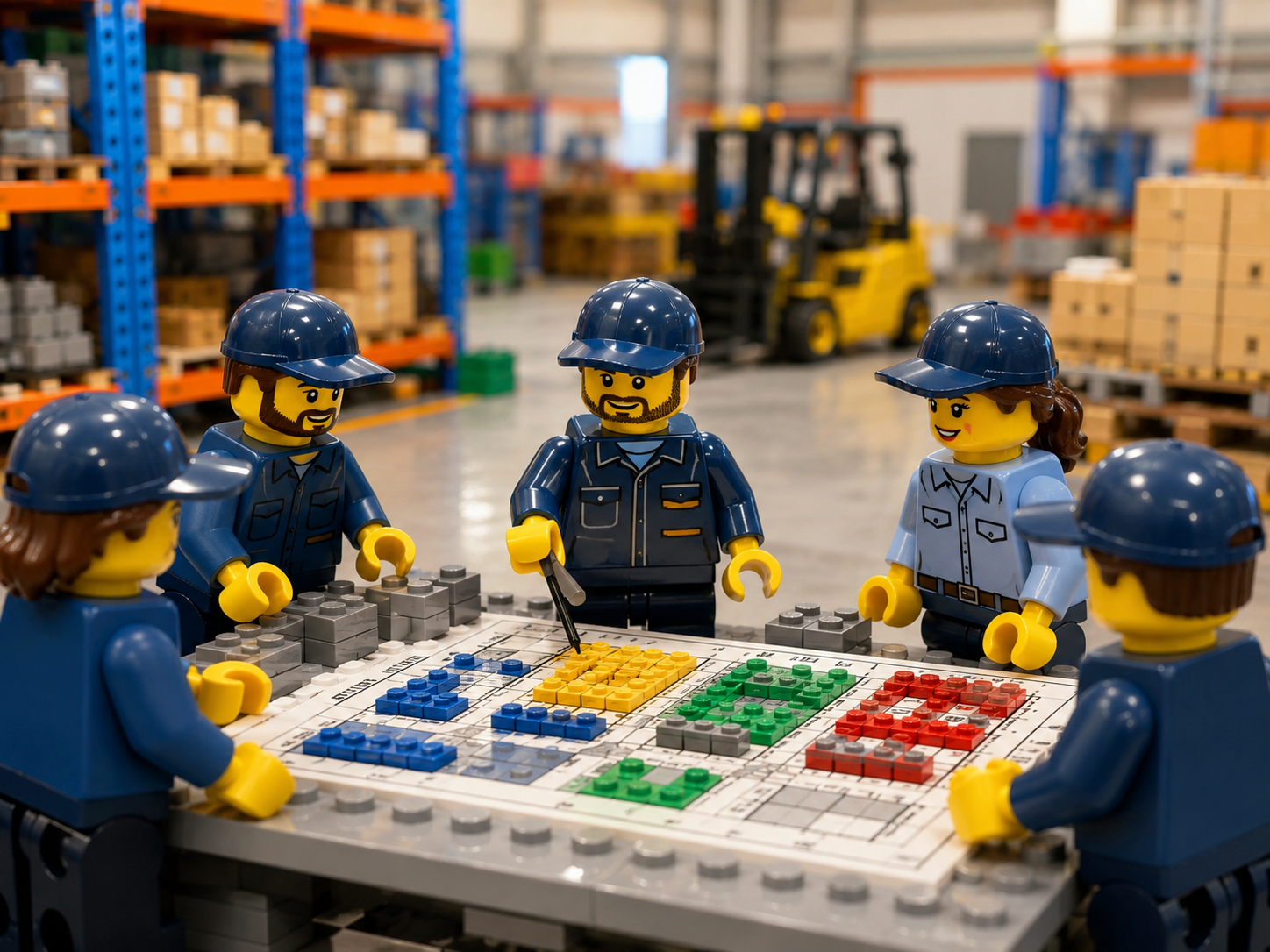
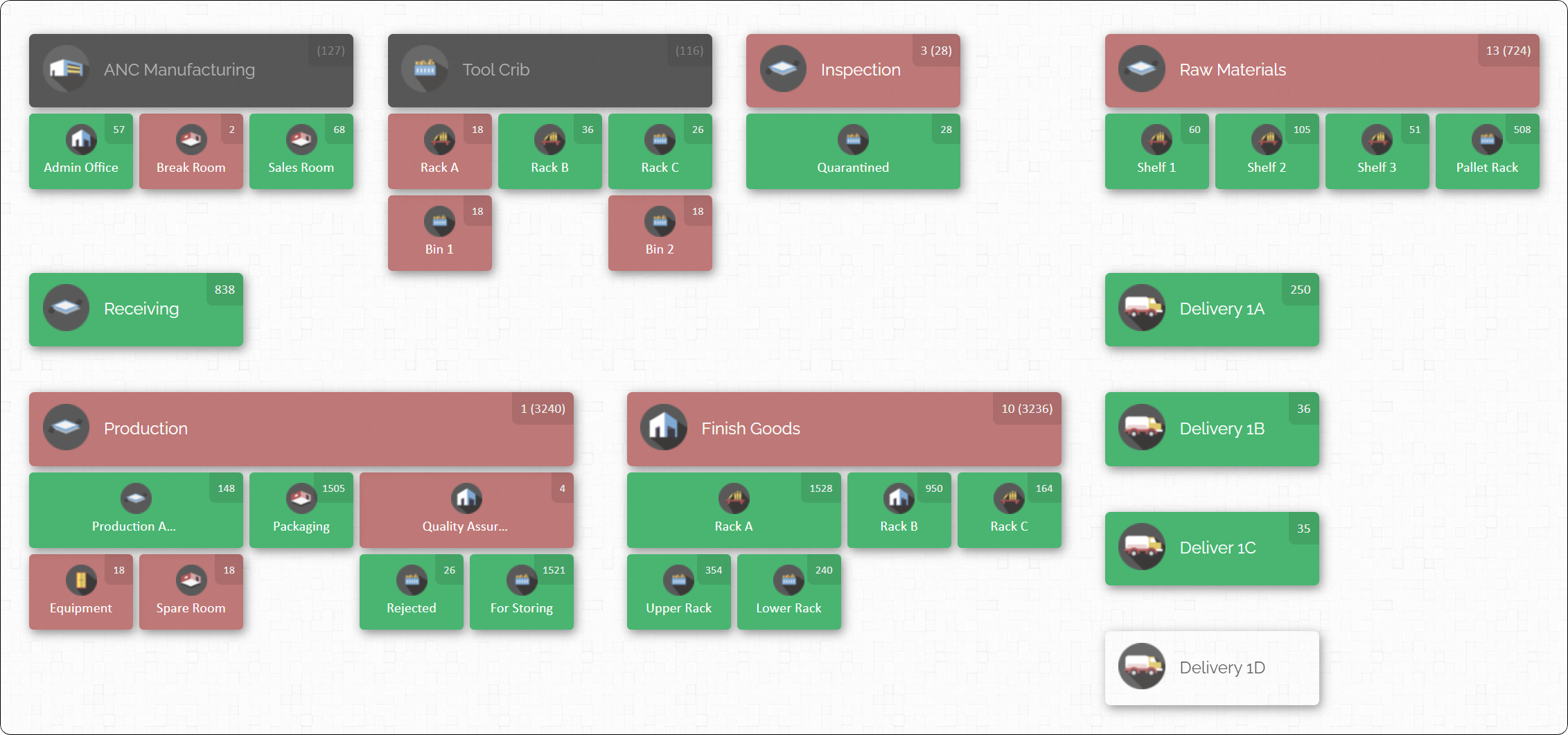
The next requirement is a clear location hierarchy. Good plant visibility follows the way people move through the site. That usually starts with the facility or building, then area, room, cage, cabinet, rack, shelf, bin, or point of use. In a more complex plant, it can also include quality zones, receiving lanes, maintenance workshops, project areas, service vehicles, or even individuals who temporarily hold stock. Inventory maps are especially effective because they can represent buildings, rooms, cabinets, shelves, bins, vehicles, temporary locations, and processes in one visual structure. When the map mirrors reality, searching falls and confidence rises.
A live view must also distinguish available stock from stock with constraints. In practical terms, departments need to know whether a part is free to use, reserved, awaiting inspection, assigned to a task, or sitting below a minimum threshold. This is where static on-hand totals fail. They hide the difference between physical presence and operational availability. Replenishment and control policies should be shaped by agreed parameters for critical items, including buffer stocks and count frequency. Visibility without status can still cause poor decisions because teams may pull from the wrong stock or assume a shortage where none exists.
Another non-negotiable requirement is standard item language. If departments refer to the same part in different ways, shared visibility collapses into duplicate records, weak searches, and unreliable counts. Plants need a naming and coding discipline that makes stock easy to identify across maintenance, stores, purchasing, and production. The fastest way to support that discipline is to pair standard part numbers with the most useful descriptive fields for your environment, such as manufacturer, supplier, category, colour, style, or other attributes that help teams recognise the right item without ambiguity. CyberStockroom supports custom fields for this reason.
A truly live view also needs a movement model, not just a balance model. In plants, inventory truth changes through check-in, check-out, transfer, return, and adjustment. When the record only reflects the end balance, departments miss the operational story behind it. Movement visibility matters because it helps teams see where stock went, when it changed, and whether a discrepancy is a counting issue, a delay in transaction entry, or a process failure. CyberStockroom’s official feature set includes tracking transfers, stock updates, and product locations in real time, supported by map activity history. That makes the view useful for both daily execution and root-cause investigation.
Finally, a live view must be visual enough that decision-makers do not need to translate it mentally before acting. This is where lean visual control matters. A strong visual workplace lets people understand conditions by sight and identify what is missing quickly. In inventory terms, that means not forcing every department to interpret buried spreadsheet rows just to answer basic location questions. A map-based inventory view, clear labels, obvious low-stock signals, and recognisable item images all shorten the time between question and action. That is the difference between “data exists somewhere” and “the plant can actually use it”.
How to Build Shared Inventory Visibility Without Slowing the Plant
Building shared inventory visibility should not make daily plant work harder. The goal is to create a live inventory view that reflects how inventory actually moves through the plant, while keeping transactions simple enough for busy teams to maintain. When the structure is clear, the language is consistent, and every department understands its role, visibility becomes part of the workflow instead of another administrative burden.
Step 1: Map the Plant as It Actually Operates
Start by mapping the plant as it truly functions, not as an old organization chart suggests it should function. Include every place inventory can legitimately sit: central stores, maintenance crib, tool room, receiving, quarantine, line-side points, engineering cage, finished goods staging, shutdown prep, project areas, satellite stockrooms, vehicles, and any controlled hand-carry stock that genuinely exists in the workflow.
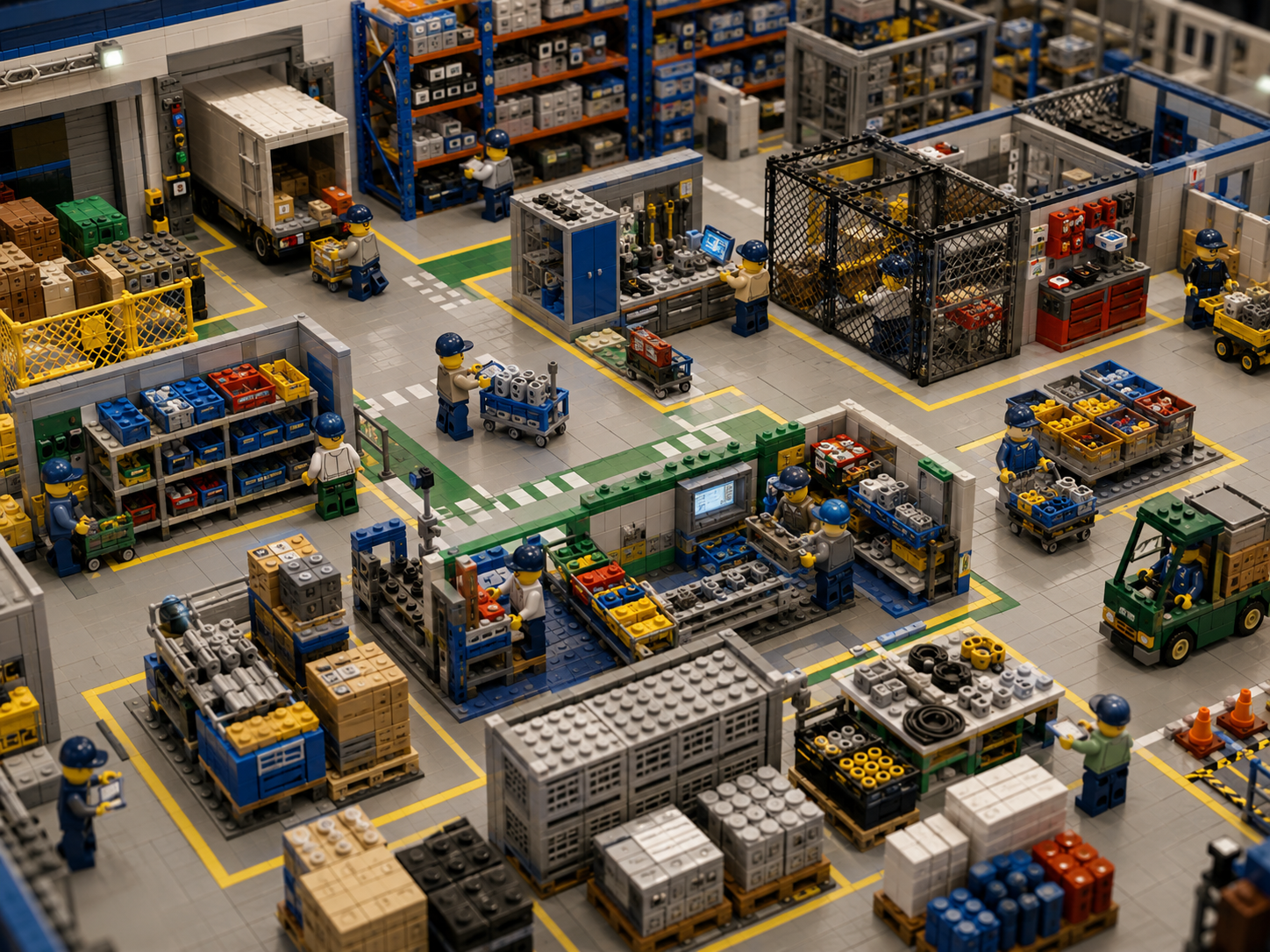
Do not skip awkward temporary areas. These are often the first places where inventory visibility breaks down. Inventory mapping works best when it includes both major locations and smaller details such as cabinets, shelves, bins, racks, cages, and other overlooked points where parts may be stored, staged, or transferred.
Step 2: Create One Location Language for All Departments
Once the physical layout is mapped, define one location language that every department can understand. Each location should have a clear name, a clear parent location, and a clear expectation for what can live there.
Avoid labels that only one team understands. If maintenance calls an area “north utilities bench stock,” stores calls it “satellite B,” and production calls it “compressor room cabinet,” the live view will be fragile from day one. A shared naming convention is not administrative fussiness. It is the foundation for accurate counting, clean transfers, faster replenishment, and reliable search.
This is where 5S thinking also becomes useful. When locations are named clearly and arranged logically, required tools and parts become easier to find, easier to return, and easier to control.
Step 3: Clean the Item Master Before Rollout
Before rolling out the visible map, clean the item master. Merge duplicate records. Clarify units of measure. Standardize critical descriptions. Make sure the same part is not listed under several slightly different names.
Then decide which product fields matter most for your plant. For some sites, manufacturer and supplier are essential. For others, line family, equipment type, storage condition, maintenance criticality, or part category may be more useful.
CyberStockroom allows products to carry custom fields, images, barcodes, and spreadsheet-uploaded data. This makes it easier to enrich product records without asking teams to rebuild everything one item at a time.
Step 4: Make Every Stock Movement Easy to Record
A live inventory view depends on movements being recorded when they happen. If a transaction takes too long, people will delay it until later or skip it entirely, especially during reactive work.
The goal is not to add more administration to the floor. The goal is to remove friction from the record. Every physical movement should have a simple matching action in the system.
CyberStockroom supports barcode-based input, scanning of products and locations, and drag-and-drop transfers between locations and sub-locations. This helps teams update the map quickly during receiving, restocking, issue handling, returns, and routine transfers.
Step 5: Define What “Usable Stock” Means by Department
Shared visibility does not mean every item becomes available to everyone in the same way. Each department may define usable stock differently.
Production may need line-ready stock. Maintenance may need job-reserved spares. Quality may need a hold status. Receiving may need an awaiting-verification state. The map and inventory process should reflect those distinctions clearly.
This is often where plants realize that shared visibility does not mean everything becomes one open pile. It means everyone sees the same inventory truth, while movement rules, ownership, and access remain controlled. CyberStockroom supports sharing the inventory map with team members and granting access permissions to specific users, which is important in a multi-department plant environment.
Step 6: Build Replenishment Visibility Into the Map
Once locations and item records are trustworthy, build replenishment visibility into the live view. Start with the items where speed matters most: fast movers, line-side consumables, critical maintenance spares, and satellite stockroom items.
Set minimum levels where they make sense. Lean methods support pull-based replenishment and visual signals for when more stock is needed. CyberStockroom’s thresholding capability supports minimum stock level monitoring and can make low-stock conditions visible on the map.
This is especially useful for point-of-use bins, maintenance shelves, and smaller storage areas that often rely on someone noticing emptiness by chance. Seeing low stock before it becomes a shortage is one of the clearest operational wins of a shared inventory view.
Step 7: Use Cycle Counting to Keep the View Accurate
A live inventory view should be supported by ongoing cycle counting, not one large annual clean-up. Regular cycle counting confirms that physical counts match inventory records, improves accuracy without stopping the operation, and helps teams identify the root causes of errors.
The purpose of cycle counting is not just correction. It is learning. If the same locations or item classes drift repeatedly, that points to a weakness in receiving, issue handling, returns, transfers, labeling, or storage discipline.
Plants that maintain a reliable live view depend on small, frequent corrections and strong routines. They do not wait for a major stocktake to discover that the record has separated from reality.
Step 8: Prioritize by Criticality, Not Noise
Not every inventory item deserves the same level of control. Some parts create far more risk than others because they affect uptime, production flow, safety, customer delivery, or repair speed.
ABC classification helps identify which items matter most to the organization, while XYZ analysis adds another useful layer by considering demand predictability. In a plant environment, this helps teams decide where to apply tighter count frequencies, clearer thresholds, stronger reservation rules, and faster replenishment reviews.
The live view becomes more valuable when the highest-risk items are also the most visible items. Otherwise, teams may spend too much effort perfecting noncritical stock while critical spares remain difficult to assess.
Step 9: Train Each Department by Role
Training should be role-specific. Stores staff need transaction precision. Production leaders need fast location checks and escalation rules. Maintenance technicians need reliable issue and return steps. Buyers need visibility into actual distribution and low-stock signals. Planners need confidence that “available” means truly available. Quality teams need clear hold and release handling.
Training should explain more than how to use the live view. It should also explain why each department’s behavior affects every other department’s decisions. A missed transfer, skipped return, unclear label, or delayed update can create confusion far beyond one team.
When plants train by role, visibility stops depending on a few experienced people. It becomes a shared operating habit across the plant.
How CyberStockroom Supports Multi-Department Parts Visibility
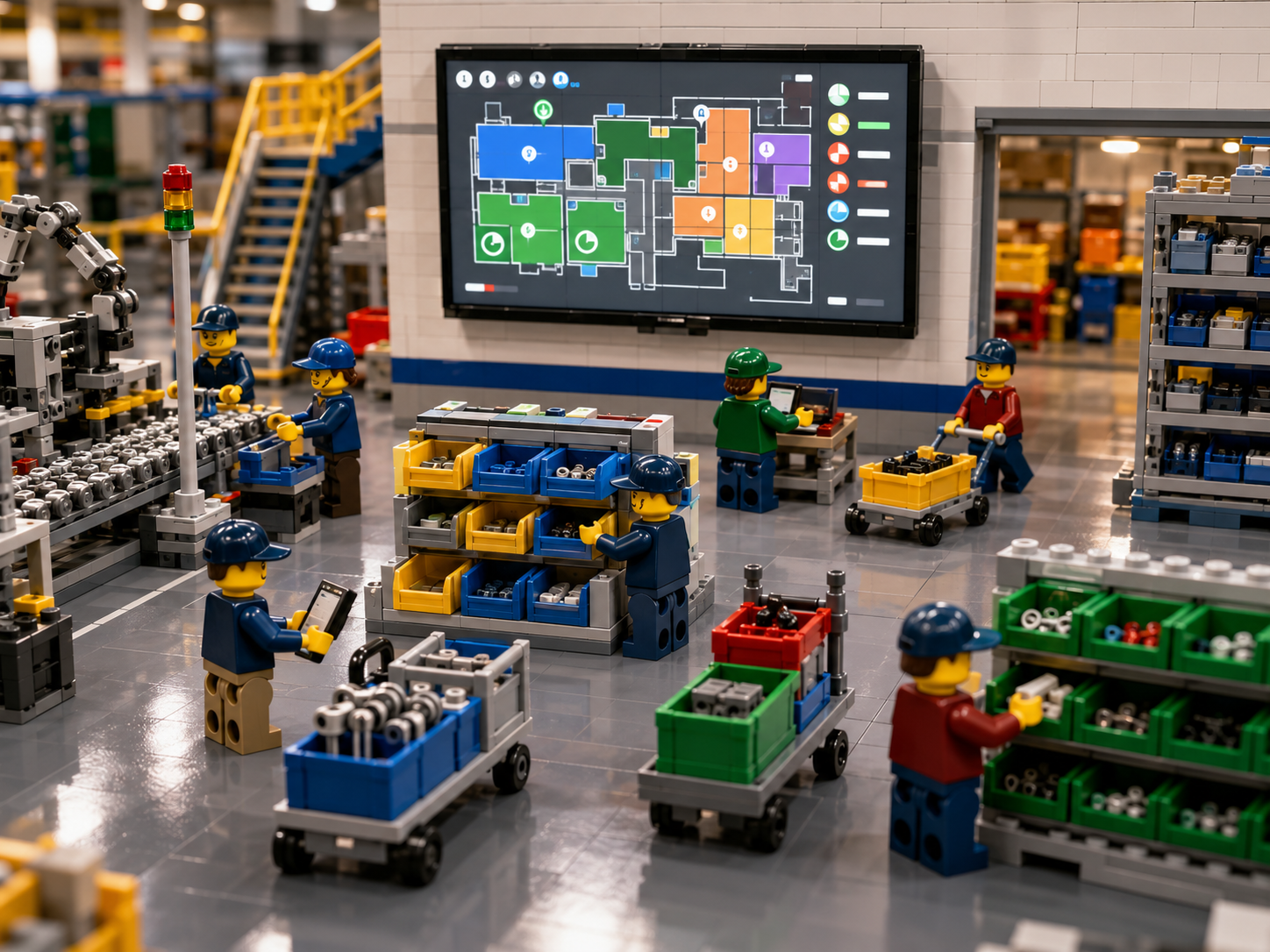
CyberStockroom fits this problem well because it is built around the practical question plants ask every day: where is the part, and what is at that location right now? Instead of hiding inventory inside a static list, CyberStockroom uses a visual map that breaks the business into locations and sub-locations and lets you arrange the layout to match the way the operation is actually seen by the people doing the work. That makes it easier to represent a manufacturing plant as a real place with stockrooms, work areas, line-side points, inspection zones, raw materials, finished goods, tools, and staging areas rather than as a flat file of item records.
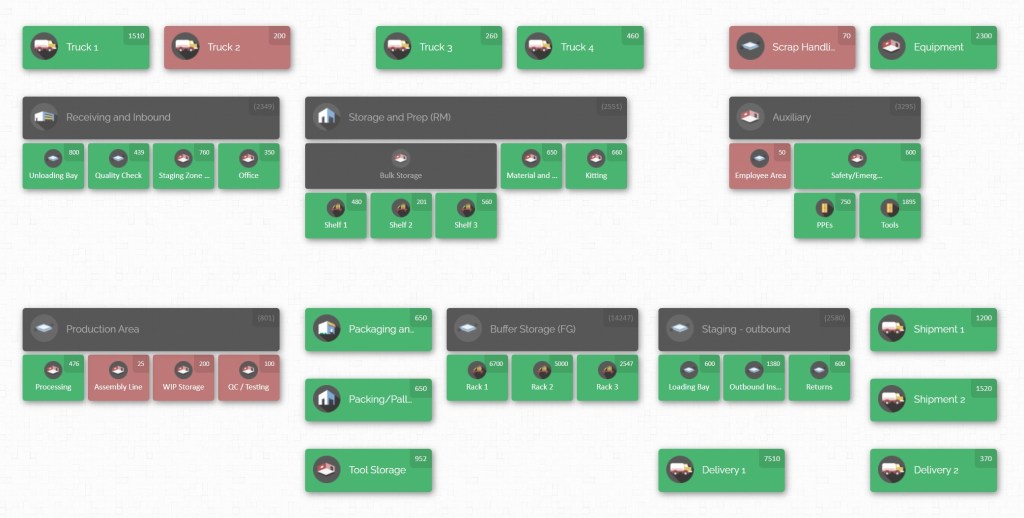
With CyberStockroom, teams can zoom into any location and view its contents directly. That matters in a plant because the difference between “in stores” and “in bin B-12 of cabinet three inside the maintenance crib” is the difference between control and guesswork. The map can reflect buildings, rooms, shelves, bins, cabinets, vehicles, and other sub-locations, giving departments a shared line of sight to stock without forcing them to walk the plant or phone around. For sites with decentralised inventory, that alone can remove a large amount of wasted search time and unnecessary duplicate checking.
CyberStockroom also supports a product-distribution view that lets users scan or select an item and see where it is distributed across the operation. For plants that carry the same fastener, bearing, seal, PPE item, or maintenance spare in more than one location, this is especially useful. It gives departments an immediate answer to the question, “Where else do we have this?” without relying on memory or multiple disconnected stock lists. In practice, that helps maintenance see what other stores hold, helps production find alternate on-site stock, and helps purchasing understand true plant-wide availability before ordering more.

Movement handling is another strong fit. CyberStockroom supports drag-and-drop transfers between locations and sub-locations, as well as check-in, check-out, and transfer activity tracked on the map and in activity history. This is important because a live inventory view is only as good as the speed and simplicity of its transaction process. If departments can move stock in the physical world but struggle to reflect the move digitally, the view goes stale. CyberStockroom reduces that gap by making movement visual and immediate, which is exactly what cross-department parts visibility requires.
CyberStockroom supports barcoding in a practical way that fits plant routines. Interfaces accept barcode scanner input, users can scan products and locations, and the platform can support fast check-ins, check-outs, and transfers through scanning tools. In a plant environment, that helps teams update stock during receiving, issue handling, returns, and restocking without depending on manual typing. The more the location and product identity can be captured in the moment, the more trustworthy the shared view becomes. That is one of the simplest ways to cut transaction delay and reduce human error in departmental hand-offs.
The platform also supports spreadsheet import, custom fields, and product images, which is valuable during rollout and cleanup. Plants rarely start from perfect master data. More often, they start from spreadsheets, existing labels, mixed naming conventions, and a handful of stock categories that need more context. CyberStockroom allows teams to upload products from spreadsheets, add custom item information, and attach images so users can identify stock more quickly and more accurately. For departments that struggle with similar-looking parts, visual identification can shorten search time and reduce picking or issue mistakes.
For ongoing control, CyberStockroom’s thresholding and real-time updates are particularly useful. Minimum stock levels can be set so teams know when items fall below agreed thresholds, and the map plus activity history provide a current view of stock movements and changes. That supports a more proactive replenishment rhythm across departments because low stock becomes visible before empty bins create production or maintenance disruption. For plants trying to turn a static record into a continuously useful operating view, that combination of visual mapping, current movement history, and threshold signals is practical and easy to understand.

Just as important, CyberStockroom lets teams share the map with specific users and assign access permissions. That means a plant can create broad visibility without losing governance. Stores can remain the owner of core stock locations. Quality can control hold areas. Maintenance can manage its own satellite spares. Production can view line-side stock and request movement without necessarily changing every quantity directly. In other words, CyberStockroom supports the central requirement of multi-department visibility: one shared view, with controlled action.
How Each Department Uses the Same View Without Losing Control
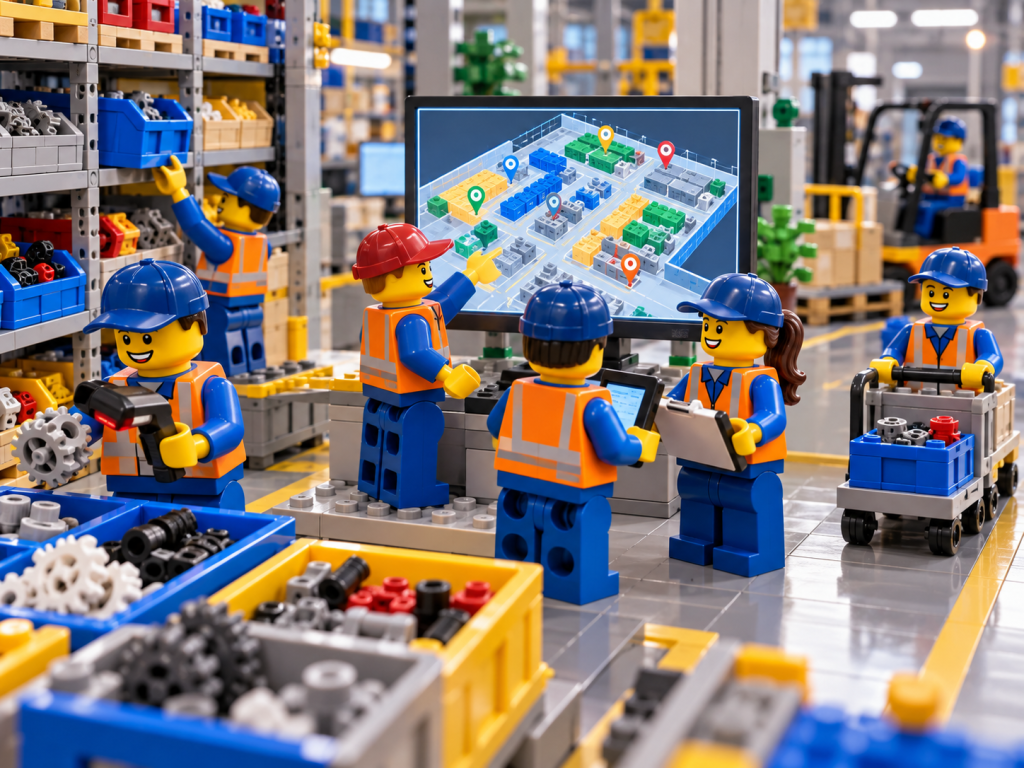
For stores and warehouse teams, the shared view becomes the operational backbone. It replaces broad location labels with exact, visual location discipline. It makes receipts, put-away, issues, returns, and transfers visible to the rest of the plant without requiring stores staff to answer the same location questions repeatedly. Because the map shows contents and quantities by location, stores can become the steward of inventory truth rather than the human search engine for the whole facility. That shift improves service while protecting stores from constant interruption.

For maintenance, the benefit is speed with accountability. Maintenance teams need confidence that when a job is planned, the required part can be located quickly and, where necessary, reserved properly. The live view should let technicians and planners see central stores, maintenance crib stock, workshop cabinets, shutdown stock, and any approved field or vehicle stock in one place. Since MRO inventory directly affects uptime, lead time, and downtime risk, maintenance gains a lot from seeing actual on-site distribution rather than relying on assumed availability. CyberStockroom’s product-distribution and location-based visibility support exactly that use case.
For production, the live view is less about ownership and more about confidence. Supervisors and line leaders need to know whether point-of-use stock, line-side consumables, and shared components are where they should be and whether replenishment needs attention. When minimums, location accuracy, and transfers are visible, production does not have to compensate by hoarding material near the line. That lowers clutter and supports better 5S outcomes. It also helps production escalate genuine shortages earlier because the conversation starts from a shared picture, not from incomplete assumptions.
For quality, the same view helps separate usable stock from restricted stock clearly. Quality-hold areas, inspection staging, quarantine cages, and nonconforming stock often become invisible to the rest of the plant because they sit outside normal stores routines. A plant-wide live view works better when those areas are visible as locations with a clear status, even if only certain users can move or release stock. Shared visibility reduces accidental pulling from restricted areas and helps purchasing and planning understand what is physically present but operationally unavailable. That distinction improves decision quality without weakening control.
For purchasing and planning, the biggest advantage is a more truthful signal. Instead of relying on one rolled-up balance that may hide distributed stock, low-stock conditions, or local surpluses, buyers can see where inventory sits and whether the problem is true shortage, poor placement, delayed transfer, or bad master data. Visibility also helps planners align count frequency, replenishment rules, and buffer decisions with actual plant behaviour. ABC and XYZ thinking are especially useful here because they connect item value and demand variability to smarter policies, rather than blanket rules that fit no one particularly well.
For engineering and project teams, the shared view prevents project stock from disappearing into the background. Trials, machine upgrades, retrofit kits, pilot builds, and one-off jobs often create shadow inventory because stock is set aside outside core stores visibility. By placing project cages, engineering cabinets, and temporary work zones on the same map, the plant can keep those locations visible without confusing them with free stock. The result is better coordination and less accidental reordering of material already on site but parked outside the normal issue flow. Inventory maps can include temporary locations specifically because real operations do not stay static.
The key point across all these departments is that shared visibility does not require shared ownership of every transaction. It requires a common model of reality. Access permissions, clear process rules, and location status allow the plant to balance openness with governance. Plants often hesitate because they assume a live shared view means everyone can touch everything. In practice, the opposite is true. The clearer the shared view becomes, the easier it is to assign proper control, because every department can see what belongs where, what is below threshold, what has moved, and what requires attention next.
How to Keep the View Accurate, Useful, and Live
Once the shared view is in place, the work shifts from rollout to discipline. Accuracy does not survive on intention alone. It survives on routines that keep the map aligned with the floor. That means clear receiving rules, immediate put-away or visible staging, disciplined issue and return logging, obvious temporary locations, and recurring checks on fast-moving and critical items. Inventory accuracy should be treated as a plant capability that shapes service, efficiency, and confidence, not as a back-office metric that only matters during month-end or audit season. Strong operations build the organisational habits that sustain accuracy instead of relying on occasional corrections.

Cycle counting should sit at the centre of that discipline. Count small portions of stock frequently enough to detect drift before it spreads. Use ABC and criticality to decide count frequency so the most important items get the tightest control. When discrepancies appear, do not stop at adjustment. Trace the cause. Was the part received to the wrong location, issued without scan, returned to the wrong bin, or moved under pressure without a transaction? The real purpose of cycle counting is finding and fixing the causes of inventory errors. Plants that use counts only to reset numbers miss the real value.
Threshold review is the next layer. Minimum levels should not be set once and forgotten. They should be reviewed against actual plant usage, downtime risk, and replenishment lead time. Fast movers, line-side consumables, and maintenance-critical spares deserve different treatment from slow, low-risk items. Visual pull signals and thresholding are particularly effective because they let departments see risk early rather than discover it at the point of failure.
Another essential practice is measuring the right outcomes. If the only metric is total inventory value, teams may “improve” the wrong things. A live plant-wide view is better judged by inventory accuracy, time to find a part, number of stock-related interruptions, count completion rate, transfer lag, threshold breaches, and the share of urgent purchases that turned out to be unnecessary because stock was already on site. Visibility supports better decision-making only when the plant measures whether people are actually finding, moving, and replenishing stock more effectively than before.
Leadership behaviour matters as much as process design. When managers ask, “What does the live view show?” before they ask people to go and search physically, they reinforce the habit. When supervisors tolerate side lists and unrecorded stock movements, they weaken it. Plants that sustain shared visibility make the system the first reference point for everyone, from stores to maintenance to production leadership. Over time, that changes culture. Departments stop protecting themselves with hidden buffers and start trusting the shared picture because the shared picture keeps proving itself right.
It is also worth revisiting the visual test regularly. Could a new supervisor understand the inventory layout quickly? Could a technician find a critical part without relying on one specific stores expert? Could purchasing identify whether a shortage is real or just misplaced stock? Could someone unfamiliar with the area tell that something is missing? If the answer to those questions starts slipping, the plant is not losing software functionality. It is losing visual clarity. That should trigger a review of labels, map layout, user habits, and location discipline before bigger accuracy problems take hold.
Closing Thoughts
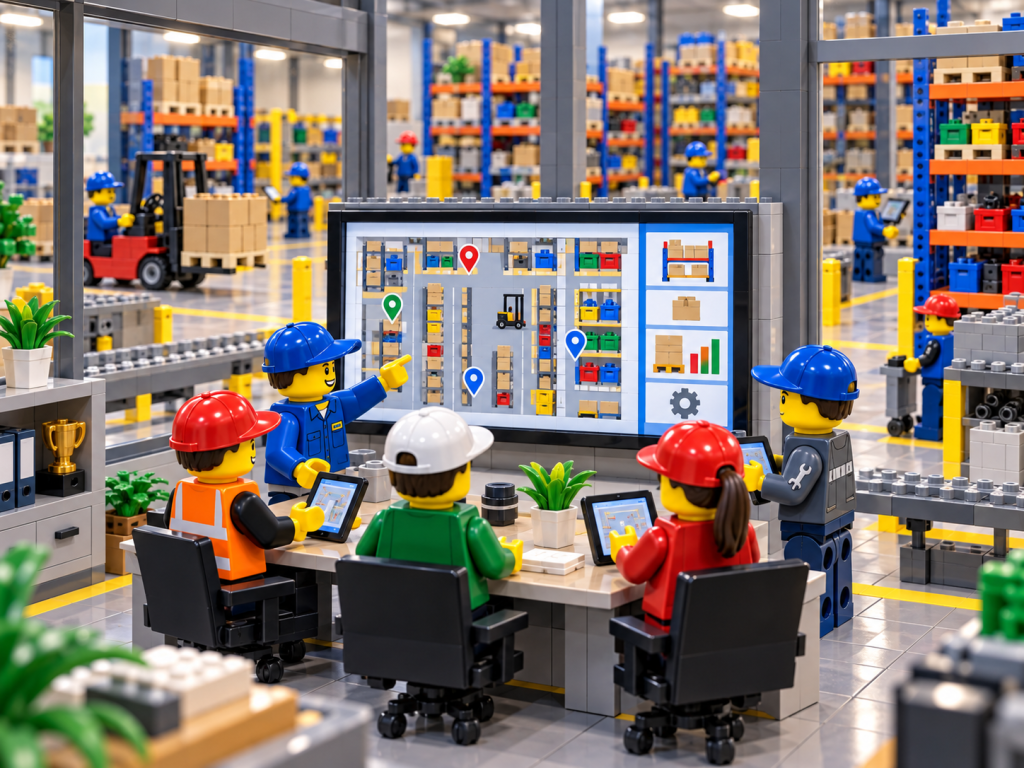
Giving every department a live view of shared inventory is not about making the stockroom look modern. It is about making the whole plant faster, calmer, and more accurate. When production, maintenance, stores, quality, engineering, purchasing, and planning all work from the same current location truth, the plant spends less time searching, less money duplicating, and less effort arguing over whether parts are really available. Visibility moves from being a reporting concept to being an operating advantage.
The plants that do this well are not necessarily the plants with the biggest budgets. They are the plants that map their real locations, standardise the language of stock, make movement easy to record, count continuously, prioritise critical items properly, and keep the visual model aligned with the floor. That is why a map-based approach is so effective. It reflects how people actually work inside a facility and turns shared inventory visibility into something every department can use.
CyberStockroom supports that way of working by letting teams build a visual map of the plant, create clear locations and sub-locations, view contents at each point, see product distribution across the site, move stock with drag-and-drop transfers, use barcodes for faster transactions, apply thresholds for replenishment visibility, and share the map with the right users under controlled permissions. In a manufacturing environment where location matters as much as quantity, those capabilities make CyberStockroom a practical way to build and sustain a shared live view.
If your goal is a live inventory view shared departments manufacturing plant teams will actually trust, start with the physical reality of your site and make it visible in a form every department can understand at a glance. Once the plant can see inventory the way it truly exists, better replenishment, stronger accuracy, faster response, and better cross-team alignment follow naturally. That is when shared inventory stops being a daily source of friction and starts becoming a genuine operating asset.







Leave a comment