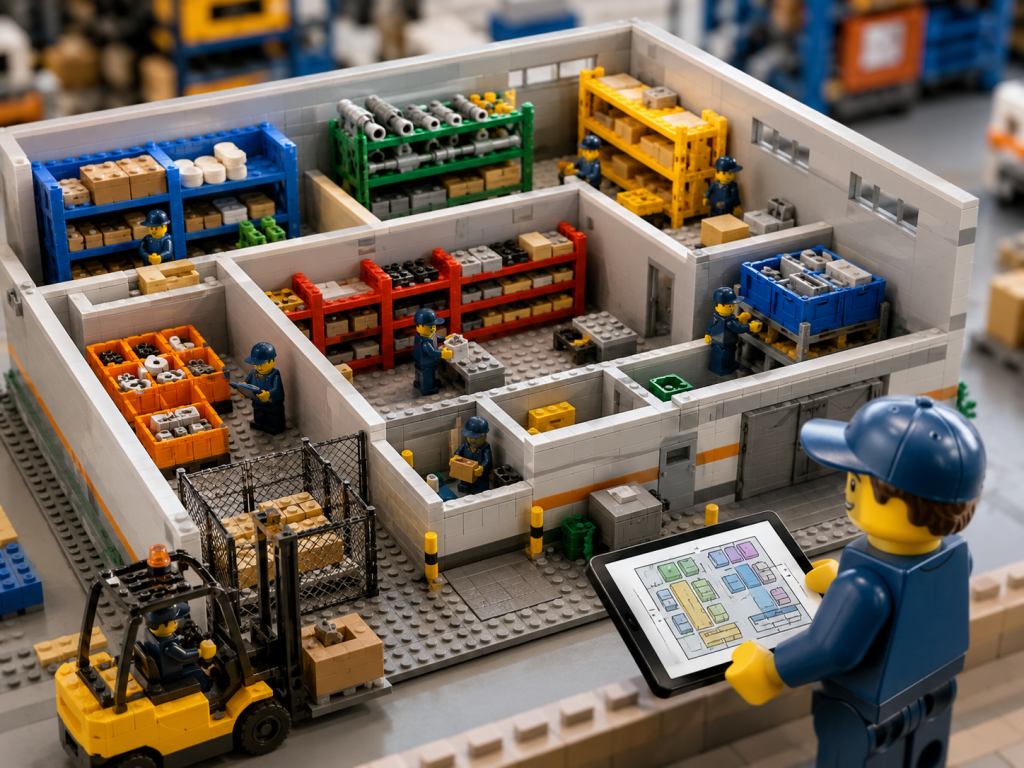
Project closeout is where a lot of hidden inventory cost finally shows itself. Materials that were bought for certainty, schedule protection, mobilisation, prefabrication, contingency, and rapid field response often remain on site after the main work is done. If you do not have a disciplined way to identify, classify, move, and reassign that residual stock, it turns into write-offs, duplicate purchases, cluttered yards, disputed quantities, and the familiar complaint that “we already had this somewhere, but nobody knew where.” A strong leftover material project closeout visual inventory system prevents that drift by turning closeout from a last-minute clean-up exercise into a controlled stock visibility process. It gives project teams, warehouse teams, procurement, maintenance, and production a shared view of what remains, where it sits, what condition it is in, and what should happen next.
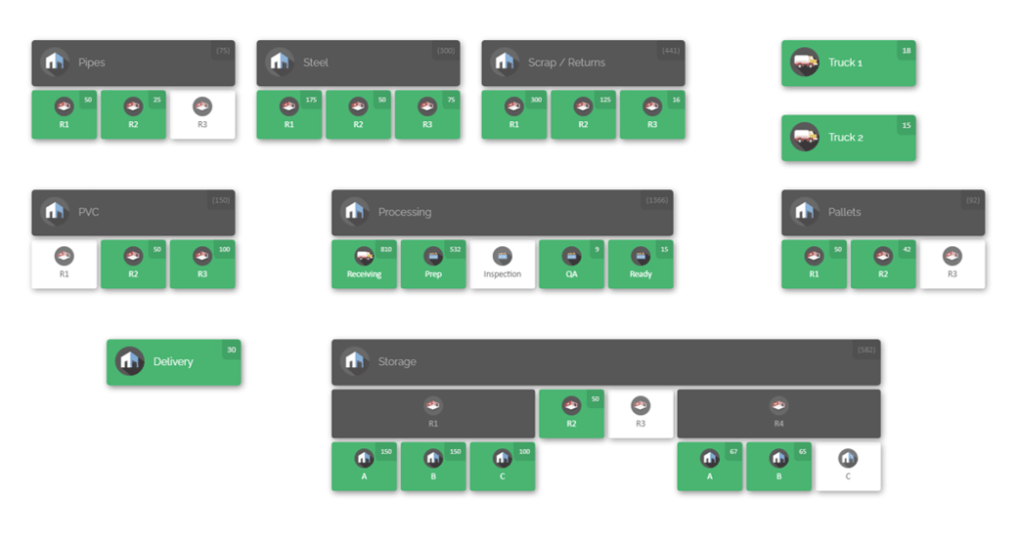
This matters even more in industrial construction and manufacturing-linked environments, where leftover materials are rarely “just leftovers”. They often become tomorrow’s maintenance spares, shutdown reserves, line support stock, project change stock, or emergency replacement parts. When that handover is weak, one department treats the material as surplus while another department raises a purchase request for the very same item. The result is not just excess inventory. It is poor parts visibility across departments, weaker cash control, inaccurate counts, longer search time, and a plant-wide habit of buying before checking. A visual inventory approach solves that by making location and status obvious enough for teams to trust the system during closeout and after it.
Why leftover materials become invisible at closeout
Closeout is complex because it pulls together outstanding work, punch items, documents, final review, payment, transfer, and archive at the exact point when teams start to demobilise and attention moves to the next job. In that environment, material control slips easily. Crews assume somebody else has logged the surplus. Warehouse teams wait for project confirmation. Procurement looks at open commitments rather than actual residual stock. Finance wants reconciliation, but the material is physically spread across yards, cages, rooms, floors, tool cribs, shipping areas, and temporary staging zones. Standard closeout guidance stresses that the end of a job contains many moving pieces and that preparation has to begin well before the last day because information and responsibilities fragment quickly if you wait too long.

Construction inventory management has the same problem on the operational side. Materials, tools, and equipment have to be coordinated between office, field, and warehouse, and inventory managers are expected to anticipate needs while still maintaining accountability and avoiding waste. Once multiple jobsites or departments are involved, the difficulty increases sharply because location, ownership, timing, and urgency are no longer held inside one team’s line of sight. That is why leftover materials often vanish at the point of highest organisational pressure: they are still physically present, but they fall outside a trusted, shared process.
Inventory accuracy suffers for familiar reasons. Records drift away from reality when people rely on manual updates, inconsistent counting methods, unclear labels, weak handling rules, and disorganised shipping or receiving practices. Just as importantly, stock does not have to be stolen to be lost. It can simply be misplaced, stored in the wrong zone, left inside a temporary project area, or parked under a description that nobody else would ever search for. That is exactly why closeout leftovers are so expensive. They occupy cash and space at the same time, while still failing to serve the people who might genuinely need them later.
A visual system works because closeout is not only a quantity problem. It is a location and context problem. Teams do not just need a line item that says there are twelve valves or four reels of cable somewhere in the business. They need to know whether those items are in the north yard, in a returned project container, on a reserved rack, in quality hold, in usable condition, and visible to production, maintenance, and warehouse staff. Traditional lists can technically store that information, but they often make it too slow to absorb during the fast decisions that happen in demobilisation, reallocation, and stock recovery. A visual layer makes that information easier to scan, easier to trust, and easier to act on.
There is also an important safety and discipline dimension. Materials handling and storage affect availability, movement flow, aisle clearance, and injury risk. Improper stacking, poor placement, and storing more than immediate operational needs in aisles or passageways create hazards as well as confusion. A good closeout process therefore cannot stop at financial reconciliation. It has to physically reorganise what remains into labelled, controlled, safe locations. In practice, the best closeout systems combine stock visibility, physical order, and clear disposition decisions so that leftovers move out of work areas and into a structured inventory environment that supports retrieval, audit, and future use.
That is why the leftover material issue is bigger than one project. If your organisation regularly finishes jobs, shutdowns, fit-outs, upgrades, expansions, or capital works, then closeout leftovers are part of your broader construction inventory management and manufacturing support model. Every project becomes either a source of hidden waste or a feed into a more accurate central stock picture. The difference lies in whether you close projects with a visual system that allows departments to see the same inventory by location, status, and ownership.
Build the visual system before the site starts winding down
The first rule is simple: do not build your closeout logic during closeout. By the time a project is winding down, you need your location map, naming rules, ownership rules, and disposition codes already in place. Warehouse management guidance consistently starts with receiving, inspection, and put-away into designated locations because system accuracy depends on location discipline from the first movement onward. If materials enter the business vaguely, they will leave the project vaguely. A leftover material project closeout visual inventory system should therefore begin the moment project stock is first assigned to project locations. Closeout then becomes a status change and movement exercise, not a detective story.
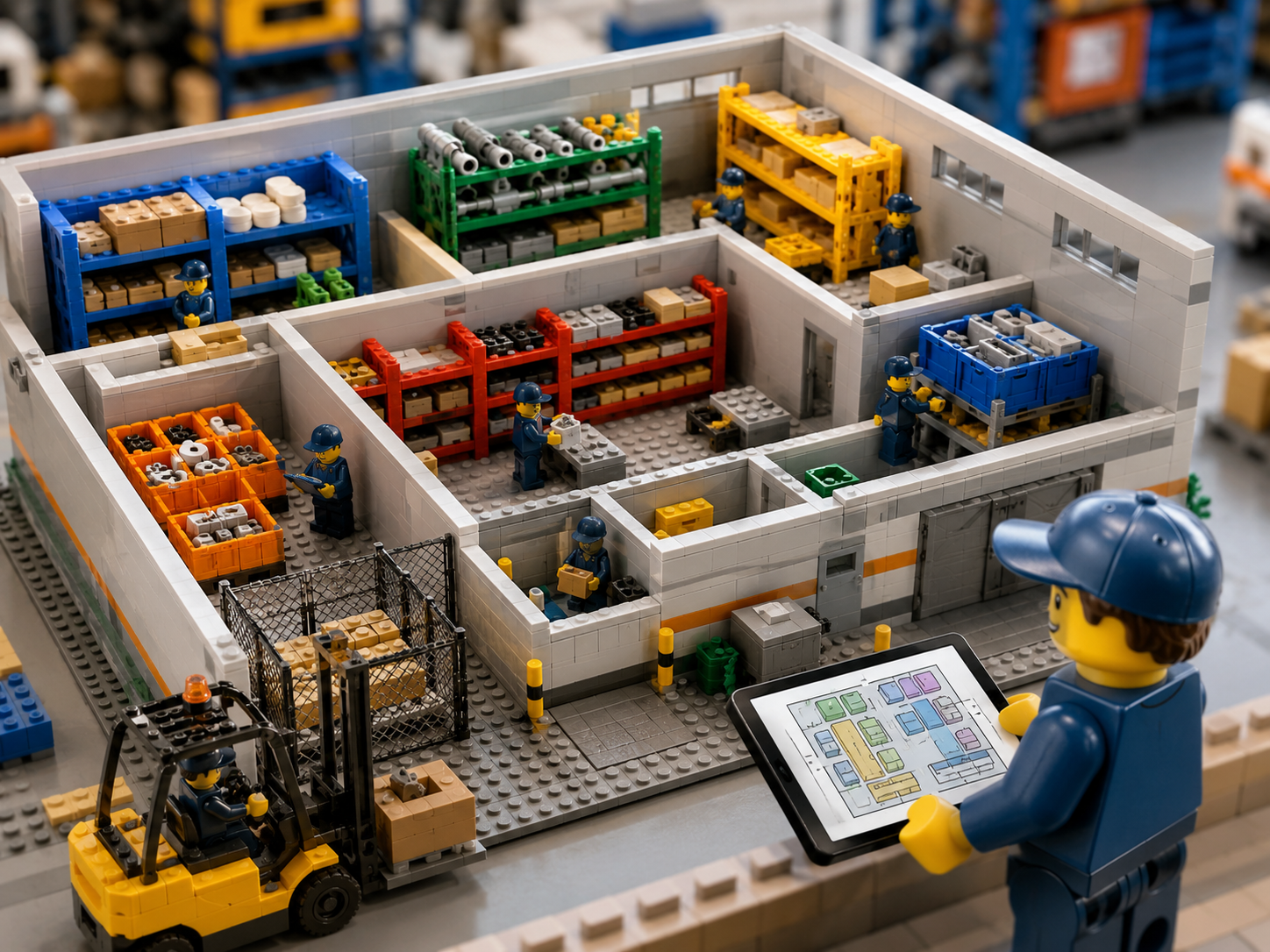
Start by defining what counts as leftover material in your operation. That sounds obvious, but it is where many organisations blur categories that should be separate. Leftover materials may include unused project stock, opened but still serviceable packs, spare assemblies, project-specific consumables, critical spares bought for schedule risk, temporary works materials suitable for reuse, and stock that was staged but never installed. It may also include materials that remain physically sound but require inspection, repacking, or relabelling before redeployment. If you do not define those categories, everything ends up under one vague label such as “surplus”, which hides the real next step.
Next, build a location hierarchy that mirrors the physical world rather than the org chart. Good visual inventory systems reflect how people search for stock in real life: site, building, room, rack, shelf, bin, container, yard bay, staging area, returns cage, quarantine area, and service stock room. CyberStockroom is expressly designed to break a business into locations and sub-locations such as buildings, rooms, shelves, bins, trucks, yards, or staging areas, and to rearrange the layout to match the way the organisation sees its own operation. That matters because leftover materials are often stranded in the “small places” that generic stock structures do not capture very well. The closer your map matches reality, the easier it is to recover value at closeout.
Within that hierarchy, create dedicated closeout-related zones before you need them. Typical zones include project active, project hold, project returns, inspection pending, reusable stock, department reserve, supplier return, salvage, and disposal pending. This is where visual management and 5S principles are especially useful. EPA guidance on 5S emphasises orderly workplaces, visual cues, labelled and colour-coded storage, red tagging of items that are unnecessary or in the wrong place, and the removal or reassignment of excess raw material. At closeout, those ideas translate directly into a disciplined separation of usable, questionable, and non-usable leftover materials. If teams cannot tell the difference at a glance, you will get contaminated counts and bad disposition decisions.
Standardise part identity before you standardise reporting. Parts visibility across departments improves when each item has one agreed description, one part number or SKU logic, one unit-of-measure rule, and one approach to supporting attributes. CyberStockroom allows custom fields on items, which can be used to carry consistent operational context such as trade, project code, material family, supplier, category, service class, or stock status. The point is not to collect more data than you need. The point is to make cross-team searches reliable. A maintenance planner, warehouse clerk, project engineer, and production scheduler should all be able to find the same item without relying on local nicknames.
Then define movement rules. Every closeout leftover follows one of a small number of pathways: remain with the project until final use, move into central stock, move into a department reserve, return to the supplier, move to inspection or quarantine, move to salvage or reuse, or move to disposal. Do not leave those routes open-ended. Set the rule that every physical move requires a paired location change in the system. That is the only way to stop “temporary” staging from becoming permanent invisibility. Visual management helps here because it reduces the friction of small location updates and keeps teams closer to standard work.
Finally, assign ownership by process stage, not by department pride. One of the biggest reasons closeout leftovers fall into limbo is that every function assumes another one has the lead. In a working visual system, responsibility is sequenced. Projects identify and segregate residual material. Warehouse validates location and count. Procurement reviews open POs and supplier returns. QA or technical authority determines whether opened or exposed goods are reusable. Maintenance or operations decides whether project leftovers should become plant support stock. Finance and commercial teams reconcile the value and disposition. That chain of responsibility needs a shared map and a shared stock status vocabulary, otherwise departments will continue to work in parallel rather than in alignment.
Run the closeout workflow from field sweep to final disposition
Once the visual system exists, closeout should be run like an operational workflow, not a vague tidy-up. Start with a closeout sweep date and a purchasing checkpoint. Before teams begin moving material physically, review outstanding purchase orders, partial deliveries, backorders, and project-specific commitments against the current map of stock already on hand. Construction inventory guidance is clear that last-minute purchases are hard to track, create weak accountability, and absorb productive labour time. At closeout, they also distort your leftover picture because teams may keep ordering for a disappearing workfront while usable stock already sits inside project locations. The earlier you freeze that uncertainty, the cleaner your final material position will be.

The next step is the physical sweep. Walk the project by zone, not by memory. Use the same structure as the map: receiving area, internal store, floor staging, yard, containers, fabrication support area, tool crib, QA hold, finished-but-unused assembly area, temporary shelves, and crew-specific stock points. Count what is there, verify condition, and assign a status immediately. Inventory accuracy improves when discrepancies are investigated and corrected as they are found, rather than being held for a later administrative clean-up. If teams postpone the status decision, they usually postpone the location decision too, which means the material remains physically present but systemically absent.
A practical status logic for closeout is usually enough if it is simple and enforced. For example, you may classify leftover materials as reusable, returnable, inspect, reserved, salvage, or dispose. The point is not the specific words. The point is that each status must lead to one predetermined destination and one responsible owner. NCDOT’s leftover-material guidance is useful here because it frames disposition as a finite decision set: retain, return to supplier, dispose, or place into inventory. That same discipline works well in private industrial operations too. If the status does not trigger a movement path, it is not operationally useful.
For reusable materials, the system should answer four questions immediately: what is it, how much is there, where is it now, and where should it live next? Many closeout processes fail because they stop after the first three. Identifying stock without relocating it into a trusted, retrievable storage plan simply creates a list of likely future loss. A reusable item should move into an approved stock location that sits inside the wider operational map and is visible to the departments that may consume it. In manufacturing environments, that often means moving leftovers into central stores, maintenance reserve, project reserve, or department-specific support stock instead of leaving them tagged inside a former project zone.
For returnable materials, the visual system should separate them early and hold them in a supplier-return zone rather than blending them with reusable stock. This sounds like a small detail, but it has a big effect on accuracy and cycle time. Mixing returnables with retained stock creates confusion over ownership and distorts on-hand counts. A returnable item is functionally already on its way out of the business, so it needs its own controlled path. Return to supplier as a distinct method of leftover-material disposition, with handling and restocking considerations. That principle scales well into commercial practice: if supplier return is likely, make the route visible, controlled, and fast.
Inspection and quarantine need the same discipline. Not every opened carton or weather-exposed product should be sent directly into usable stock, even if the quantity exists and the item appears intact. The visual system must support a controlled pause, with location and status clearly separated from general inventory. This protects inventory accuracy and parts visibility because teams do not accidentally plan against stock that is still under review. It also avoids the opposite mistake, where perfectly usable materials are scrapped because nobody wanted the effort of inspection. The key is not caution alone. It is visible caution, applied through an obvious stock status and location rule.
For salvage, reuse, and disposal, do not let the process drift into “waste later”. Source reduction, salvaging, reusing, and recycling before disposal. That mindset belongs in closeout, especially for bulky materials that consume yard space quickly. The visual system should therefore include a salvage or recycling zone that is distinct from both usable stock and scrap created by active work. When teams can see salvage as a managed category rather than a pile, they make better decisions about recovery, resale, separation, and removal timing.
Once material is moved, close the loop with documentation and archive. Closeout guidance makes clear that owners and contractors need searchable, retained records, and that the end of the project is exactly when documents are easiest to lose. Material closeout should be treated the same way as warranty and as-built closeout: it needs a record that can be found later. That means retaining the final location, final status, disposition decision, responsible owner, date moved, and any value or quantity adjustment. If the item enters reusable inventory, the system should show that it did so. If it left the business, the system should show how and when. If it stayed with the project, the map should still show its final controlled position until consumption or handover is complete.
Done properly, this workflow changes what project closeout feels like. Instead of teams scrambling to “find what is left”, they execute a known routine: identify, classify, move, verify, and archive. And because the process is visual, departments do not need to rely on long explanations to understand current status. They can see which areas still hold project stock, which materials are ready for redeployment, which items are in inspection, and which leftovers have already been absorbed back into the wider inventory picture. That is the operational core of a strong leftover material project closeout visual inventory system.
CyberStockroom for multi-department parts visibility
This is where CyberStockroom fits naturally into the workflow. CyberStockroom enables teams to build a visual map of their operation and break it down into any number of locations and sub-locations. Those locations can reflect the real structure of an industrial business: warehouse, laydown yard, room, rack, shelf, bin, container, truck, project zone, maintenance cage, or staging area. Instead of treating locations as secondary fields hidden inside records, the map becomes the working environment. That is useful at closeout because leftover materials are almost always a “where is it now, and where should it go next?” problem before they are a reporting problem.
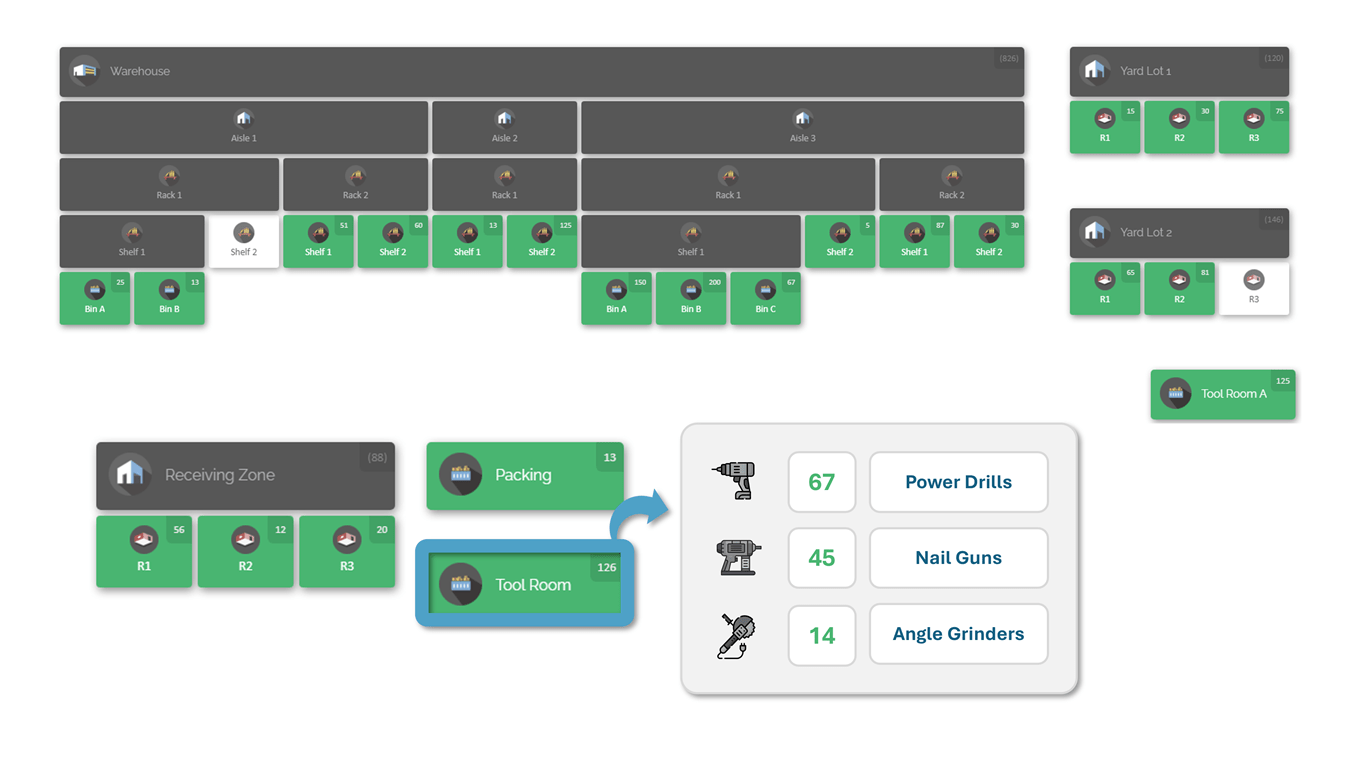
CyberStockroom also supports the closeout reality that physical movement often happens in small increments rather than one neat bulk transfer. Official feature pages describe drag-and-drop transfers between locations and sub-locations, along with cycle counts and adjustments. In practice, that matters because closeout involves many small stock moves: from floor staging to returns, from project container to central stores, from yard bay to inspection, from temporary holding to reusable reserve. If those micro-movements are hard to record, the stock picture drifts immediately. A visual transfer method reduces that friction and makes it more realistic for teams to keep the record current as they work.
One of the strongest CyberStockroom capabilities for multi-department parts visibility is its product distribution view, described in CyberStockroom materials as “X-ray vision” for products. When you scan or select a product, you can see its distribution across locations, locate items quickly, and visually assess product levels. That is especially valuable after closeout, when one leftover item family may now be spread across central stores, project reserve, line support stock, maintenance shelves, and a supplier return area. A traditional list can show those quantities, but a visual distribution view makes the spread much easier to grasp quickly, which helps both reallocation and replenishment decisions.

For multi-department parts visibility, that feature changes behaviour. Warehouse teams can see whether a stockout request is actually a visibility issue. Maintenance can check whether project leftovers have already been reclassified into service stock. Production support can see if a part exists elsewhere in the facility before requesting a new purchase. Project teams can verify whether recovered stock genuinely moved out of their area. In other words, CyberStockroom helps replace cross-department phone chasing with a shared visual answer. That is exactly the kind of cross-team alignment that closeout leftovers need if they are going to become usable enterprise inventory rather than stranded project residue.
CyberStockroom also supports disciplined stock identity inside the map. Official pages note that items can carry images, barcodes, and custom fields, and that items may be added manually, by barcode scanner, or by spreadsheet. For closeout and residual-stock management, those details are practical rather than cosmetic. Images help distinguish similar-looking parts. Barcodes support faster, cleaner updates during moves and counts. Custom fields help you preserve the extra context that often determines whether a leftover item is useful, such as material family, project code, supplier, service class, or storage condition. The goal is not to drown users in fields. It is to keep enough structured context attached to each item that different departments can interpret it the same way.
Location tracking is just as important as item data, and CyberStockroom is particularly strong there. The platform’s mapping pages describe a structure where teams can define and label spaces such as warehouses, buildings, floors, rooms, shelves, bins, yard zones, staging areas, and project-specific sections. CyberStockroom’s warehouse and laydown yard guidance also highlights nested location structures such as Yard > Container > Pallet > Bin, which is exactly the level of detail that helps prevent closeout leftovers from being “technically recorded, practically lost.” The more closely the location model mirrors the physical operation, the more trustworthy the inventory becomes across departments.
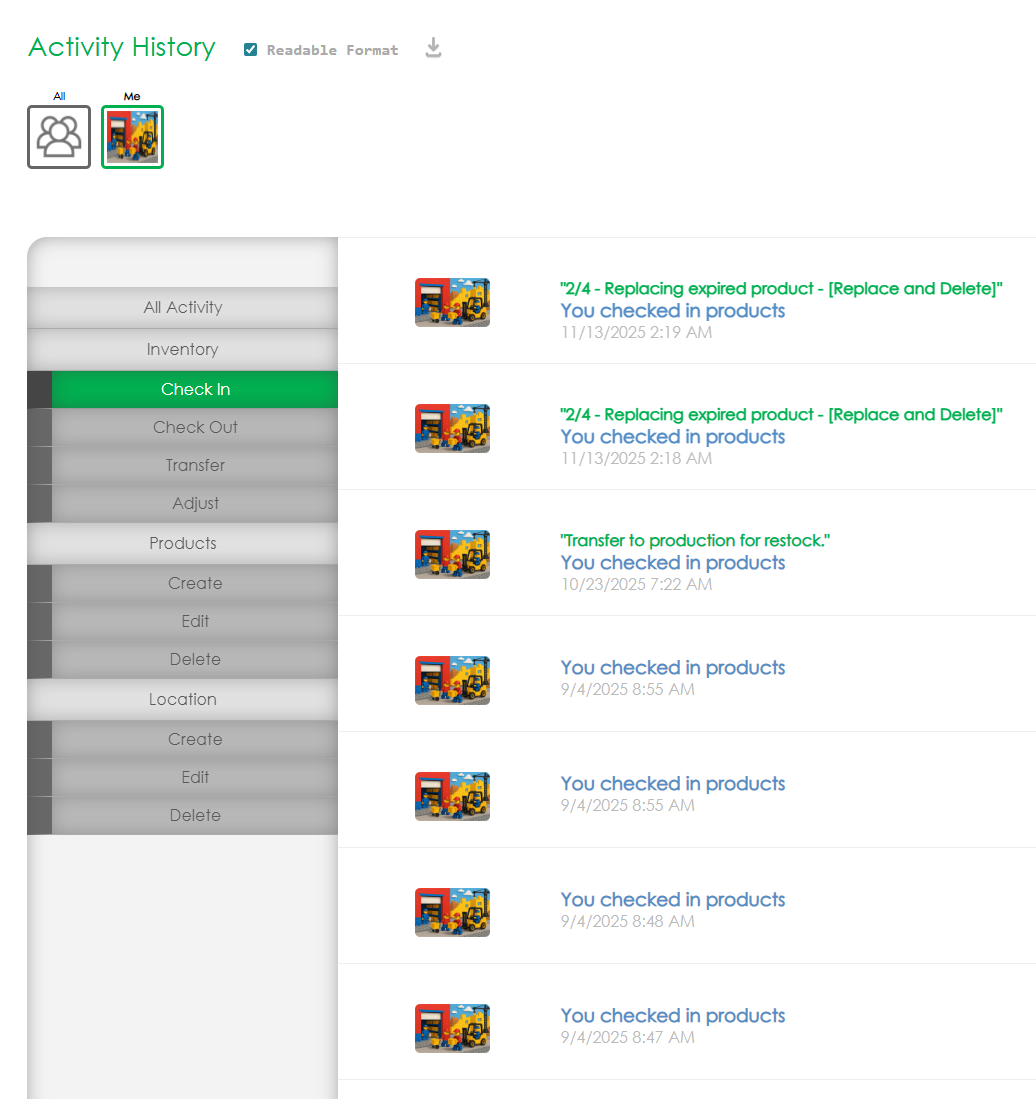
Another important closeout feature is activity history. CyberStockroom’s loss-prevention page explains that users can analyse past activity, filter history by user, activity type, timespan, and location, and export the activity history as a report. That matters because closeout disputes often centre on movement history: who moved the stock, when it was reclassified, whether it was transferred out, and which location it ended up in. Activity history gives managers a practical audit trail, but it also improves daily trust. When teams believe the movement record is visible and traceable, they are more likely to use the system consistently and less likely to resort to side-processes.
CyberStockroom also aligns well with mixed construction and manufacturing workflows because it can model not only fixed storage but also project-related and operational zones in one visible structure. Official solution pages describe mapping warehouses, laydown yards, staging areas, containers, trucks, teams, and project-specific sections, and note layouts that separate receiving, prep, QA, ready zones, or project-based yard areas. That makes it a practical fit for organisations where leftover project materials need to move into an environment already shared by stores, maintenance, fabrication support, and operations. Instead of building a one-time closeout spreadsheet and a separate ongoing stock picture, you can use one mapped structure that supports both.

The business value of that approach shows up in routine decisions. Imagine a shutdown project closes with unused bearings, couplings, seals, PPE packs, cable supports, and instrument spares. Without a visual system, they might be parked in a miscellaneous returns room and effectively disappear. With CyberStockroom, those items can be checked into designated reusable locations, moved visibly between project and department zones, and viewed by product distribution across the wider operation. Maintenance sees what is available. Production support sees if a shortage can be covered internally. Warehouse sees exactly where stock now sits. Project commercial teams can verify that material was recovered rather than abandoned. The software does not remove the need for discipline, but it makes discipline easier to apply.
That is why CyberStockroom should not be treated as a narrow closeout tool. It is better understood as the visual backbone that turns closeout leftovers into part of a broader parts visibility strategy. Use it to make project residuals visible. Use it to control stock by exact location. Use it to show product distribution across departments. Use it to make transfers easy enough that the record stays current. And use it to give warehouse, project, maintenance, and production teams one visual language for inventory location and status. When those conditions exist, leftover materials stop being the end of a project problem and become part of a better construction inventory management model.
Turn closeout into an inventory discipline, not a one-off scramble
The final step is to stop treating closeout recovery as a heroic effort and start managing it as a repeatable inventory discipline. That begins with measurement. Inventory accuracy should be tracked as the degree to which recorded stock matches the physical count, because that tells you whether the visual system is truly trusted in practice. If closeout leftovers are being captured well, you should see tighter match rates between what the system says and what the physical spaces contain. You should also see fewer instances of “found stock” surfacing after a purchase request has already been raised. Inventory accuracy guidance consistently links cleaner records with fewer stockouts, less overbuying, and better operational decisions.
Do not stop at one KPI. Closeout quality also shows up in operational measures such as search time, transfer latency, inventory value recovered from projects, write-off rate, percentage of leftovers assigned a final disposition within a target window, cycle-count variance in returns or reusable zones, and the number of emergency purchases later fulfilled from stock that was already on site. Warehouse performance guidance recommends using KPIs to identify inefficiencies that directly affect cost and customer outcomes. In an industrial environment, the “customer” is often the crew, department, or production line waiting for the part, so visibility and speed matter just as much as financial accuracy.
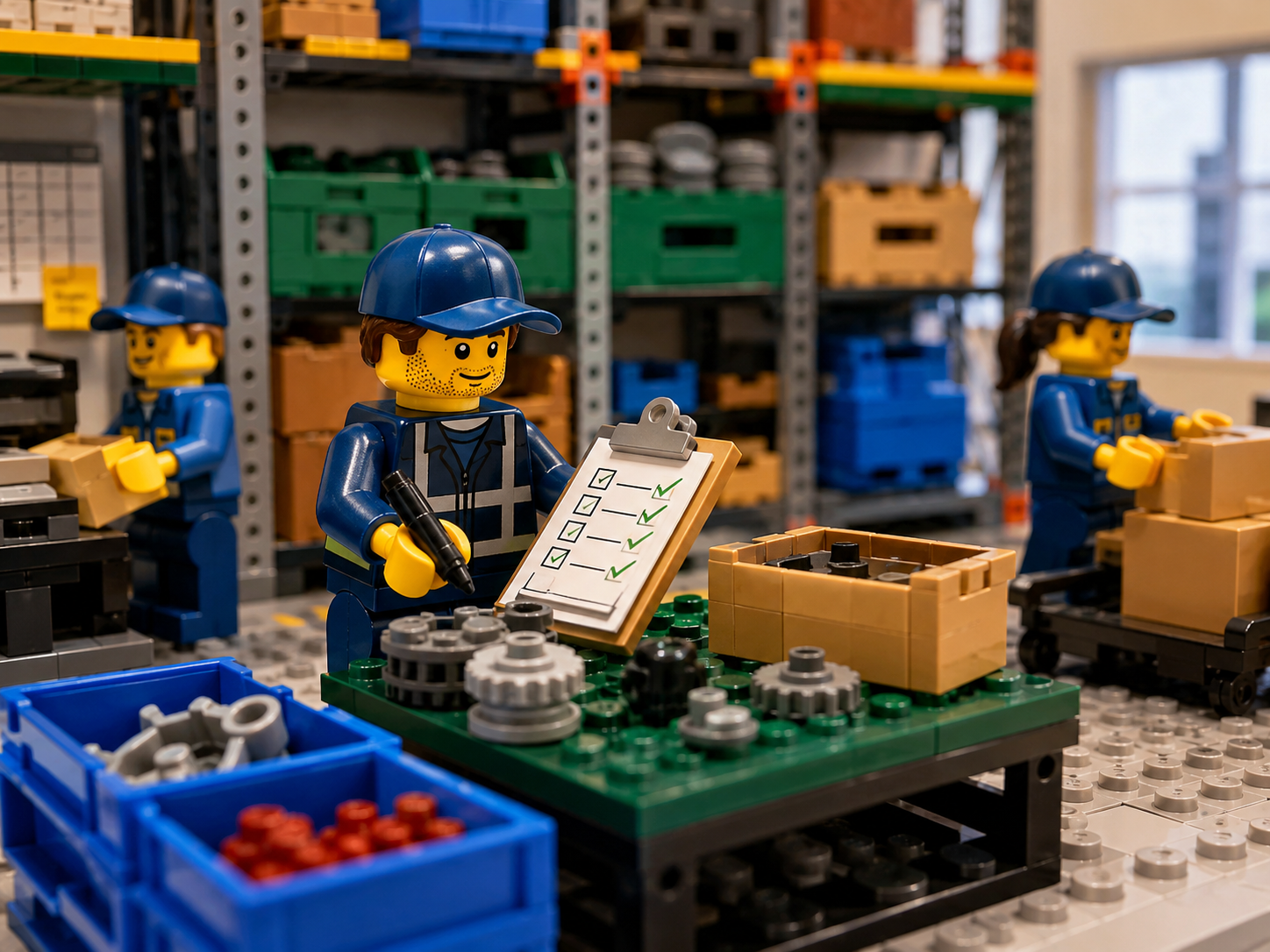
You also need regular cycle counts in the zones most likely to distort. NetSuite’s inventory accuracy guidance is particularly clear that routine cycle counts, discrepancy investigation, standardised procedures, and visible signage are among the most effective ways to improve stock reliability. For closeout-heavy operations, that means your project returns, reusable stock, inspection hold, and salvage zones should usually be counted more often than stable bulk storage. These are the locations where material changes status, changes owner, and changes intended use. That makes them high-risk for record drift and the ideal place to apply a tighter count rhythm.
The visual system should also be embedded into daily management, not left dormant between projects. Lean warehousing guidance emphasises standard work, visual management, progress boards, and simple direct flows with clear standards so teams can see problems and solve them every day. The closeout lesson is straightforward: if your map and location rules are only used at the end of a project, they will always feel like extra admin. If the same visual map is used to manage receiving, put-away, staging, transfers, and departmental stock visibility every week, then closeout becomes a normal extension of the operating model.
Make the discipline cross-functional on purpose. Visual controls, standard work documentation, point-of-use inventory, and collaboration across sales, engineering, and production staff. Your equivalent closeout structure may involve project management, warehouse operations, procurement, maintenance, production, QA, and finance. The exact departments differ, but the principle is the same: visibility improves when departments work from shared rules and shared visual signals instead of local workarounds. A leftover material project closeout visual inventory system should therefore be reviewed in cross-functional meetings, not only inside stores or projects. When all relevant departments see the same map and the same status logic, alignment improves naturally.
This is also where 5S earns its place long after the project is gone. 5S guidance explains that labelled and colour-coded storage, removal or reassignment of excess material, and sustained routines create a more orderly workplace and reduce waste. In closeout terms, that means one project’s leftovers should never have the chance to become the next quarter’s dead stock problem. Once a reusable item sits too long in a vague “temporary” zone, the chance of recovery drops quickly. Strong organisations sustain order by reviewing ageing stock, red-tagging what no longer belongs, and reallocating or removing it before it becomes invisible again.
There is a broader commercial benefit too. Construction and industrial organisations often chase savings in purchasing before they tackle visibility. Yet a surprising amount of savings comes from simply knowing what you already own, where it is, and whether another team can use it. Closeout leftovers are one of the cleanest tests of that capability because they expose the difference between not having inventory and not seeing inventory. If your closeout process repeatedly discovers usable material late, or if teams continue to rebuy parts that were recovered from previous jobs, the issue is not demand planning alone. It is visibility, location discipline, and cross-team trust in the stock picture.
The organisations that handle this well do something simple but important. They treat every project closeout as a controlled stock transition. Materials do not disappear from a finished job. They move, visibly, into the next appropriate state: central stock, department reserve, return, inspection, salvage, or disposal. The map is updated when the movement happens. The history remains visible. The destination is clear. The item can be found later without a debate. That discipline improves operational efficiency, strengthens inventory accuracy, and gives departments a shared basis for action instead of a series of local assumptions.
If you want full parts visibility across departments, project closeout is one of the best places to start. It forces the business to answer the most practical inventory questions with discipline: what do we have, where is it, what state is it in, and who can use it next? A visual system gives those answers form. CyberStockroom strengthens that system by mapping your real spaces, supporting precise location control, showing product distribution across the operation, and making stock movement traceable and easier to maintain. When you put those pieces together, leftover materials stop being an afterthought at the end of the job and become one of the clearest sources of recovered value and better inventory control in the business.









Leave a Reply