
Global supply chains have introduced persistent volatility into construction projects. Delays in steel, cement, timber and even nuts and bolts can easily derail schedules unless teams have prepared contingency plans. Material substitution planning is the practice of identifying approved alternative materials and processes in advance so that work can continue seamlessly when a specified item runs out.
This blog is a comprehensive, step-by-step guide that covers best practices (from safety stock calculations to contractual clauses), technical and regulatory considerations (quality testing, code compliance), and real-world case examples. You’ll find practical tools including a substitution workflow, request form and checklist templates, a risk matrix, and even a 12–18 month implementation roadmap (with a mermaid timeline). We also explain how visual inventory tools like CyberStockroom can simplify substitution by showing exactly where material shortfalls exist. By following these guidelines, projects can stay on time and budget even when facing unavoidable shortages.
Understanding Material Shortages in Construction
Construction teams are experiencing an era where material shortages can no longer be dismissed as “rare.” In fact, industry surveys indicate most contractors have seen significant project delays due to unavailable materials. Key factors driving these shortages include:
- Pandemic Disruptions: COVID-19 shut down factories worldwide and reduced labor availability, creating deep ripples in supply lines. Many plants in China, Europe and the US halted production, and some have struggled to catch up even years later.
- Transport and Logistics Bottlenecks: Global trucking and shipping issues (for example a shortage of HGV drivers and port congestion) mean that materials take longer to arrive. Even when a product is made, getting it to your site can be a challenge.
- Regulatory and Geopolitical Impacts: Trade policies, Brexit customs procedures and geopolitical conflicts can suddenly cut off familiar sources. For instance, tariffs or an export ban can force a contractor to look for a new vendor or material at short notice.
- Demand Surges: After lockdowns, a construction boom (and even home DIY renovations) spiked demand for common items like lumber, cement and drywall. This increased competition for stock and drove up lead times.
- Climate and Extreme Events: Severe weather can knock out production. For example, the winter 2021 freeze in Texas severely damaged petrochemical plants, disrupting plastic and insulation supply chains. Flooding at sand quarries or droughts affecting water supply can likewise interrupt material flows.
These combined pressures mean that stockouts of even routine supplies are now a daily threat. A single unavailable item (say, a special fastener or a batch of wiring conduit) can halt an entire trade on-site. In this context, planning for substitutions is a form of risk management: with the right preparation, teams can avoid costly delays and keep the project moving.
Strategies for Material Substitution Planning
Successful substitution planning is built on several pillars. The following strategies outline how to structure your approach:
Enhanced Procurement & Demand Forecasting

Be proactive rather than reactive. The first step is rigorous forecasting. Develop a detailed Bill of Materials (BOM) or material schedule that ties every phase of work to required supplies and timing. Identify long-lead items early – things like precast concrete units, custom steel sections, or specialized climate-control equipment. Once these are identified:
- Lock in Orders Early: Place purchase orders as soon as reasonably possible. This might mean ordering before final designs are 100% complete (when contracts are signed, for example). Securing stock early often comes at a modest price premium, but it is typically far cheaper than emergency procurement or idle crews.
- Over-Procure Smartly: For critical components, consider ordering a bit extra up front. This safety stock (or “just-in-case” inventory) can be stored for later use if plans change or usage increases. Calculating the correct safety stock involves estimating demand variability and lead time. A simple formula is: Reorder Point = (Average Daily Usage × Lead Time) + Safety Buffer. (For example, if you use 10 bags of cement per day and delivery takes 5 days, the basic lead-time usage is 50 bags. You might add a 20-bag safety buffer, so reorder when stock drops to 70 bags.)
- Material Banking: For materials known to fluctuate wildly in price or availability (like raw lumber or rare metals), some firms even engage in bulk purchasing during favorable market conditions – essentially “banking” inventory. This requires capital investment but can yield huge cost savings and schedule stability.
In practice, contractors find that treating material procurement as a strategic operation (with detailed forecasts and early commitments) significantly reduces the risk of running out of stock mid-project.
Supplier Diversification
Relying on a single supplier or factory for a key item is risky. Instead, build a resilient supply base:
- Multi-Vendor Qualification: For each crucial material category, qualify at least two or three reputable suppliers. For example, if only one make of switchboard was originally specified, ensure at least one or two other manufacturers’ products meet the spec as well. This way, if one plant goes offline, you have alternate sources.
- Geographic Spread: Try to source from different regions. A disruption affecting one area (say, a flood in one country) won’t shut down your entire supply if you have another source elsewhere. Large contractors often split key orders between suppliers in different countries or states.
- Strengthen Relationships: Cultivate strong, long-term partnerships with your suppliers. Vendors you trust are more likely to alert you early to shortages, and they may prioritize your orders in a crunch. Some firms negotiate frameworks or strategic partnerships that give them preferred access to stock.
- Regional Inventory Networks: If you manage multiple projects in a region, consider a shared stockpool. For example, a regional laydown yard can hold extra insulation board or HVAC equipment that can be dispatched to whichever site needs it first. This effectively creates a buffer without duplicating inventory at every site.
Diversification can also mean considering non-traditional sources: local mill operators, surplus markets, or industry cooperatives. The key is to never have “only one way in” to get something.
Approved Substitutes Protocol

Having alternate suppliers is only part of the picture. You must also define what can substitute for what. A formal substitution protocol keeps this process controlled and quality-assured:
- Set Performance Criteria: For each critical material, list the essential properties it must meet (strength, durability, chemical resistance, etc.). For example, if switching structural timber, document required bending strength and moisture content. Substitutes must match these criteria.
- Maintain a “Substitution Register”: Create an internal log or database of pre-approved alternatives. For every key item, list acceptable alternate products (with manufacturer and SKU) and note any conditions (e.g. moisture controls required, limits to usage). Update this register when new products are tested or supplier info changes.
- Documentation and Data Sheets: Gather and review technical data sheets, certificates and test reports for each potential substitute. When you propose a swap, you need to present a side-by-side spec comparison. For example, if replacing standard cement with a fly-ash mix, provide compressive strength charts, curing data and slump test results. This “apples-to-apples” documentation streamlines decision-making.
- Quality Assurance: If a substitute is unfamiliar, conduct a trial or sample installation. For instance, apply an alternate waterproofing system to a small roof section first. Perform any required on-site tests (slump test for concrete, fastener pull-out tests, etc.) to ensure real-world compliance. Contractors often specify that no substitution is used on the final work until it passes these checks.
- Approval Process: Define who needs to sign off on substitutions. Typically, this includes the design engineer or architect, and often the client or owner. Make sure your contract’s specifications include a procedure (often in Division 01) for submitting substitute requests and getting written approval. Missing this step is risky: substituting without sign-off can lead to rework or warranty issues.
In summary, treat substitution as a technical process, not just a procurement decision. Only use a substitute once it’s been verified to meet all performance and regulatory requirements. That way, you avoid replacing one problem (no stock) with another (a failed material).
Inventory Controls and Safety Stock

Effective inventory management is the foundation of substitution readiness. Adopt these practices:
- Accurate Stock Tracking: Keep real-time records of on-hand quantities at every location (warehouses, trucks, laydown yards, site bins). Use barcoding or RFID tagging to automate check-in/check-out when possible. Even simple barcode scanners that plug into laptops can greatly reduce human error. The goal is that at any moment, you know exactly how much of each material remains.
- Set Reorder Points: As noted above, establish minimum and maximum levels for each item. When stock of Material X hits its reorder point, the system alerts you to restock or consider a substitute. Modern cloud inventory tools let you automate these alerts. For example, CyberStockroom (discussed later) can email the logistics team when inventory falls below the threshold.
- Batch and Expiry Management: For items with a shelf life (paint, sealants, adhesives) or serialized parts, track expiration dates and batch numbers. Ensure first-in-first-out (FIFO) usage so nothing goes to waste. This practice also intersects with substitution: if a batch is expiring soon, you may want to use it even if it’s not the first choice.
- Centralised Bill of Materials (BOM): Link your inventory system to the project BOM or material list. When a substitution is approved for one part, have a process to update the BOM so that all related material requirements are recalculated. For example, if a substitute wall panel has different dimensions, adjust the quantities of fasteners or sealant accordingly.
- Regular Audits and Cycle Counts: Even with good systems, discrepancies happen. Schedule routine cycle counts (e.g. weekly for fast-moving items, monthly for slower ones) to catch errors early. These audits will highlight if a material truly ran out or if a tracking mistake occurred – crucial information before triggering a substitution.
By keeping inventory data precise and integrated with planning, you minimise surprises. A sophisticated inventory system with visual mapping provides the visibility to make substitution decisions confidently.
Design Flexibility and Modern Methods

Early design choices can significantly ease substitution later on:
- Specification of “Or Equal”: Where possible, include general clauses in specifications that allow any product meeting certain standards. Instead of naming a single make and model, specify performance criteria (e.g. “U-value” for insulation, CFSR rating for fire doors) and allow alternate brands that satisfy those specs. This gives you room to swap materials without full re-approval.
- Prefabrication/Modular Construction: Off-site fabrication often uses standardized materials that can be easier to source. For example, precast wall panels or prefabricated building modules may be stocked in multiple factories. If one plant is short, another might still supply. Prefab methods also reduce overall material usage through efficient cutting and less waste, mitigating shortages.
- Innovative Materials: Keep abreast of emerging or lower-demand materials that could act as substitutes. Cross-laminated timber (CLT), fiber-reinforced polymers (FRP), recycled composites and high-performance recycled bricks are among examples being adopted as alternatives to more conventional materials. Even if they weren’t in the original plan, having a shortlist of proven “modern materials” can salvage work when traditional supplies falter.
- Design for Deconstruction: In long-span projects (like bridges or large floor slabs), consider designs that allow sections to be swapped. For instance, using many smaller beams instead of one giant steel beam can mean each smaller piece is easier to replace individually. This also creates opportunities to temporarily use substitute framing members from stock while the originals are delayed.
Incorporating such flexibility at the design and construction methodology stage widens your range of options. Essentially, build substitution into your architecture and engineering strategy.
Contractual Safeguards and Risk Sharing
Beyond technical planning, manage the financial and schedule risks through contracts:
- Escalation Clauses: Include clauses that tie material cost changes to index rates or allow fair cost adjustments. For example, a contract might specify that if cement prices rise more than 10%, the contractor can submit a price change. This protects your margins if substitute materials cost more.
- Allowances and Contingencies: Use budget allowances for certain volatile materials. For instance, in a tender you might state a lump sum for “copper wiring (allowance)” with the note that exact price will be finalized on purchase. This accounts for future price changes. Ensure you track actual costs against these allowances.
- Schedule Impact Provisions: Spell out in the contract how delays from supplier shortages will be handled. A fair clause might give an extension of time for delays beyond the contractor’s control, provided the contractor demonstrates diligent procurement efforts. Avoid vague “force majeure” terms that might not cover supplier insolvency or contract breaches.
- Owner Involvement: For critical items, some projects transfer procurement risk partially to the owner. One approach is to have the owner pre-purchase certain high-risk materials (e.g. specialized finish hardware) or share in the premium for early bulk buying. Transparency about material risks during the bid stage helps set realistic expectations and can distribute the burden more evenly.
By aligning contractual terms with your substitution strategy, you ensure that choices made in the field won’t inadvertently create legal disputes or financial losses. The aim is collaborative problem-solving, not finger-pointing.
Communication and Technology Integration
Finally, ensure smooth information flow and make use of digital tools (beyond IoT buzzwords):
- Collaboration: Keep all stakeholders informed. Regularly update the project team (designers, subcontractors, client representatives) on material availability. An open line with suppliers and advance alerts from them allow you to consider alternatives sooner. Use tools like shared project management logs or Building Information Models (BIM) to coordinate changes. For example, if the BIM model is updated with a substitute item, everyone sees the change immediately.
- Document Management: Tie substitution approvals into your document control system. If you use a digital log or wiki, include a section for substitutions so that site engineers and buyers can retrieve the history of changes (who approved what and why). Some teams append all substitution correspondence to the project’s cloud folder for traceability.
- Data Analysis: Review your own data. Track which materials have been substituted or delayed in past projects. Over time, you might notice patterns (e.g. a particular part always gets ordered late) and refine your forecasts. Using analytics, adjust your supplier choices and reorder points based on historical usage trends.
In essence, treat substitution planning as an integrated business process. Teams that communicate clearly and leverage digital project tools find it far easier to adapt on the fly.
Substitution Workflow and Documentation

When a material shortage is detected, a clear procedure ensures substitutes are handled efficiently and compliantly. Below is a typical step-by-step workflow:
- Detect the Shortage: Monitor inventory and procurement closely. This could be an alert or an indicator from your inventory system (stock fell below threshold) or a red flag from the scheduler (the project needs item X next week but deliveries show zero). Identify which specification or SKU is affected and the quantity shortfall.
- Identify Potential Alternatives: Consult your approved substitution register. If a formal list exists, pull candidates from there. If not, research suitable alternatives (different brands, generic equivalents, recycled or remanufactured versions). Check quickly for basic compatibility (e.g. dimensional fit, material grade).
- Technical Review: Collect detailed info on the proposed substitute(s): product data sheets, test certificates, strength ratings, case studies, etc. Compare these against the original material’s specs. Prepare a comparison table or document showing that performance is equal or better. If significant differences exist, note them (e.g. “Substitute has 10% lower compressive strength but we increase cross-section as needed.”). Involve in-house engineers if structural or safety issues arise. If time permits, conduct an onsite test or sample assembly with the substitute.
- Cost and Schedule Impact: Analyze any implications. Does the substitute cost more or less? Does it arrive faster or slower? Document price differences and lead-time changes. Update the project budget and schedule accordingly.
- Formal Substitution Request: Fill out a Substitution Request Form (see template below). Include all gathered information: original spec, proposed alternative, supporting data, cost/schedule notes and reason for change. Submit this to the designated approvers (usually the design engineer and the client’s representative).
- Approval and Documentation: Track the request through to decision. Once approved in writing, update your project documents: revise the BOM, purchase orders and site drawings if necessary. Notify the site team of the change in clear writing (e.g. “Substitute approved: Use ACME Part # instead of Spec’d Part #”). If the substitution is rejected, quickly identify the next option or revert to original procurement strategy.
- Implementation: Order the substitute item or allocate it from stock. When the material arrives, verify it matches the approved specifications (e.g. check labels, measure properties). Use your inventory system to receive it properly. Make sure any excess of the old item is handled (returned, reused, or credited). Keep records of the transaction in your system’s activity log for auditability.
- Review and Close: After installation, inspect the work. If any issues (fit, performance) are discovered, capture them as lessons learned. Close the substitution process by filing the final documentation (including invoices and revised submittals) with the project records. This completes the loop and updates your knowledge base for next time.
This structured workflow, supported by clear forms and checklists, helps ensure nothing is overlooked. It turns substitution from an ad-hoc scramble into a controlled process.
Inventory Management Best Practices
Good substitution planning also depends on solid inventory habits. Here are some recommended practices:
- Centralised Inventory Database: Use a single source of truth for all material tracking. Avoid siloed spreadsheets by project or supplier. A cloud inventory system (even a well-organised spreadsheet can work in a pinch) should list every SKU, its description, unit of measure, and quantity at each location. In a pinch, tech tools like CyberStockroom allow mapping all this visually – but even a standardised digital log (e.g. in SharePoint or Google Sheets) can help multiple teams stay in sync.
- Barcoding and Scanning: Implement barcoded labels on products and scanned transactions. When a forklift drops off 20 steel angles, scan them to location; when the crew uses 5, scan them out. This practice ensures the system always matches the real stock. Accurate scanning prevents phantom stockouts (where records say “zero” but inventory is actually sitting on a shelf).
- Regular Cycle Counts: Instead of full annual inventory, do ongoing spot counts of critical items. For example, every week check the small parts (screws, anchors, fasteners) and every month check larger stock (boards, paint, pipe). Reconcile any differences immediately. If an item consistently shows unexplained shrinkage, investigate theft or misplacement. These counts keep your records honest and let you flag shortages before they bite.
- Cross-Project Sharing: If your company handles multiple projects, treat all inventory sites as part of one network. When one project has a shortage, look first at your other projects’ stock. A centralized inventory map or dashboard makes this easy. For example, if Site X has no more HVAC filters but Site Y has plenty, you can plan a quick transfer instead of buying new or slowing down Site X.
- Vendor-Managed Inventory: For some high-volume items (like fasteners or fuel), it may be feasible to keep vendor-run consignment stock. The supplier keeps a pallet or two on-site and invoices you only for what you use. This shifts the burden of on-site inventory from you to the vendor, and they’ll have an incentive to keep it stocked.
By making these inventory controls routine, your team creates the breathing room needed to manage substitutions without chaos. In fact, excellent inventory visibility often prevents crises by revealing impending shortages before they truly manifest.
Leveraging CyberStockroom for Substitution Planning
Tools like CyberStockroom, a cloud-based visual inventory management platform, can significantly aid material substitution workflows. Its features align well with construction inventory needs:
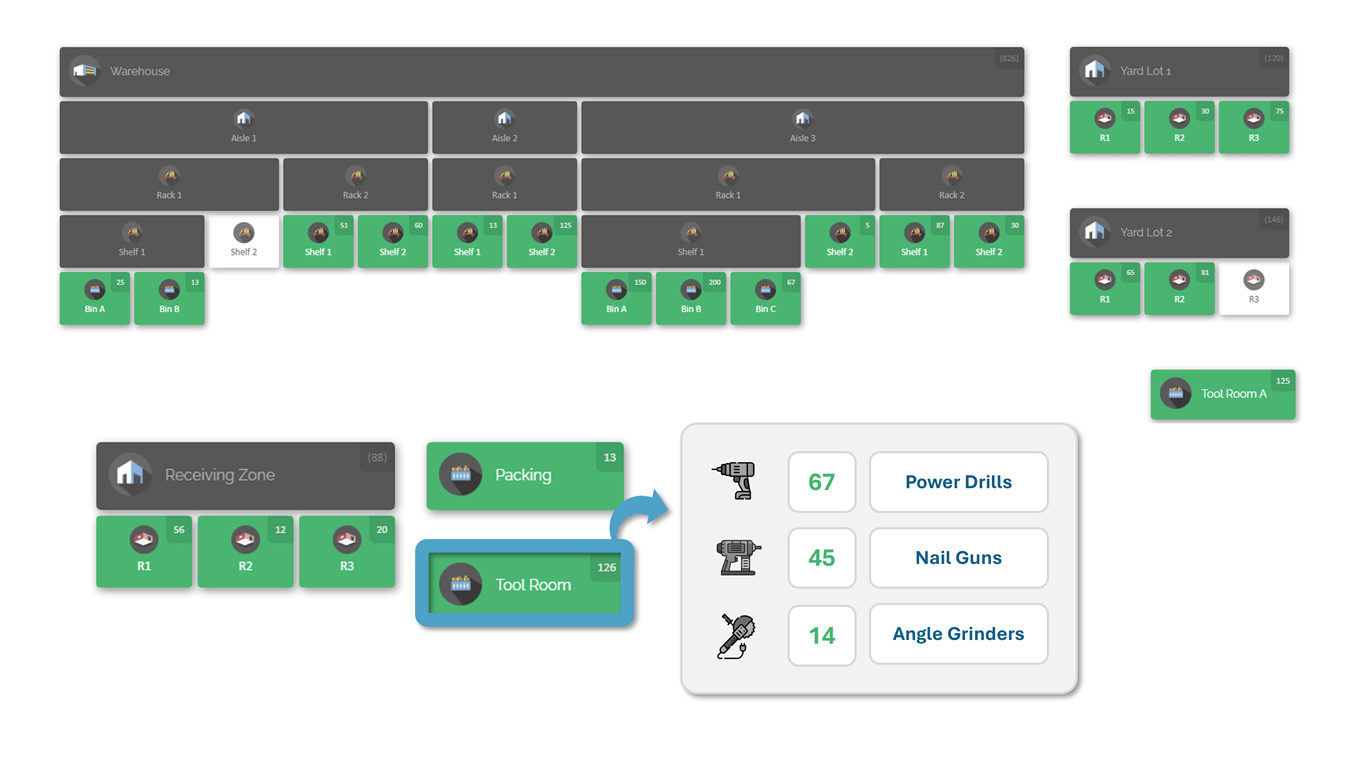
- Interactive Mapping: CyberStockroom lets you create a digital map of your entire operation – from cities and warehouses down to rooms, trucks, shelves and bins. In practice, this means you can see at a glance where every pallet or tool is located. In substitution planning, this visibility is powerful. If a site runs out of a part, the map shows exactly where the nearest stock is (even on another project). For example, a warehouse view can highlight that “Faucet Model XYZ” has 10 units in East Warehouse and 0 in Site A; a quick transfer order solves the issue.

- Real-Time Visibility and Alerts: Being cloud-based, CyberStockroom updates instantly as items are checked in or out. Project managers and purchasing staff can access live inventory data from any device. Crucially, you can set inventory thresholds (minimum levels) on a per-item basis. When a material falls below this level, the system flags it so you know to reorder or substitute. This automated alert prevents reliance on manual checks.
- Easy Transfers and Transactions: The platform has user-friendly tools for moving stock between locations. A manager can “drag and drop” quantities from one map location to another, instantly updating balances. This is extremely handy in substitution scenarios – one location’s surplus can be reallocated with a few clicks. Batch processing and barcode scanning further speed up common tasks like receiving a shipment or issuing materials to trades.
- Barcode Scanning: CyberStockroom supports printing and using barcodes for every item and location. A quick scan upon delivery or consumption can update the map without manual data entry. For example, when a batch of screws arrives, scanning its barcode into the site storeroom adds it to inventory records in real time. This reduces errors and ensures that anyone opening the map sees the correct counts.
- Comprehensive Records: Every inventory change is logged with a timestamp, user name and note. This creates an audit trail – you can instantly see who approved a substitution request, who moved the items, and even view activity history reports. In substitution planning, this traceability is crucial for accountability and lessons learned. There’s also support for adding photos and custom data fields to each product, which can be used to attach manufacturer specs or test results to a substitute item record.
- Unlimited Products and Easy Start: CyberStockroom’s pricing allows an unlimited number of SKUs, so you won’t face extra charges as you catalogue thousands of building materials. And its cloud model means you can try a free 14-day trial before committing. The onboarding process is designed to import existing inventory lists easily, so you don’t have to start from scratch.
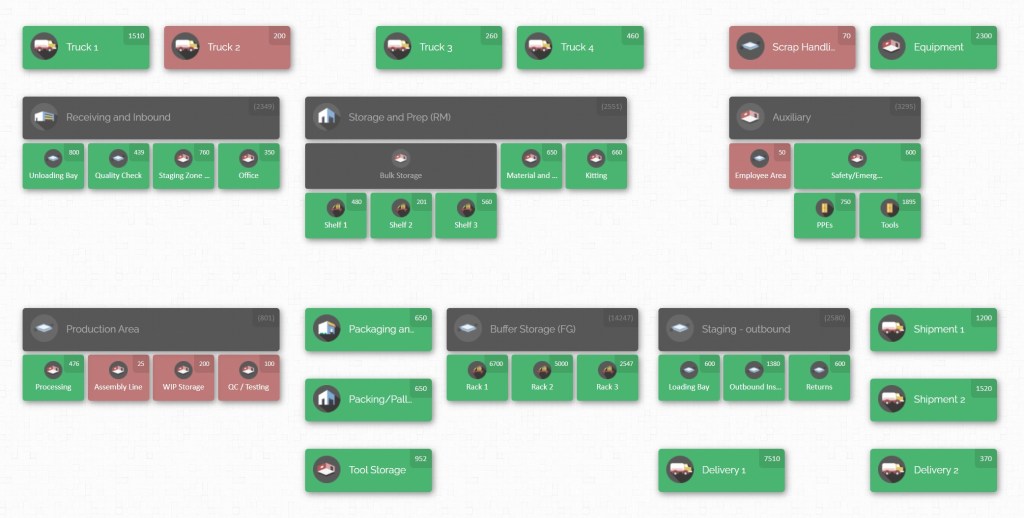
In a material substitution context, CyberStockroom essentially acts as your “traffic control.” It ensures you know which materials are available where, who has authority over them, and how they can be repurposed or reordered. Because it’s platform-agnostic and browser-based, any internet-connected computer or tablet can update and view the map. This means field engineers and procurement staff stay coordinated without worrying about data silos or out-of-date spreadsheets.

When stock does run low, CyberStockroom makes it easier to enact the plans you’ve created with the strategies above. The moment you log a substitution approval, you can move the new item into place on the map and notify your team – all in a few clicks. In short, it is a tool that aligns perfectly with proactive substitution workflows.
Risk Matrix for Material Substitution Planning
Adopting substitution strategies involves its own risks. Below is a simplified risk assessment matrix. Each risk is rated by Likelihood and Impact (High/Medium/Low) along with mitigation measures:
| Risk Scenario | Likelihood | Impact | Mitigation |
| Critical Material Becomes Unavailable | High | High | Maintain multiple suppliers, safety stock; activate substitution protocol immediately. |
| Substitute Underperforms (Quality Issues) | Medium | High | Pre-approve alternatives; require testing/certification; build sample mock-ups. |
| Regulatory/Compliance Failure | Low | High | Ensure substitute holds same UK/EN certifications; have technical reviewer confirm compliance. |
| Approval Delays (Client or Engineer) | Medium | Medium | Submit substitution requests early; have fallback second alternative; communicate proactively. |
| Inventory Data Errors (e.g. phantom stockouts) | Low | Medium | Implement strict scanning/count procedures and regular audits; cross-check before substituting. |
| Site Theft or Damage | Medium | High | Improve site security; track high-value items closely; keep minimal on-site stock and move excess to secure storage. |
| Cost Overruns due to Substitutes | Medium | Medium | Use escalation clauses; have contingency funds; document any cost changes. |
This matrix is illustrative. Each project should adjust ratings based on context. For example, if you know your project is in a high-theft area, “Site Theft” likelihood might be High. The Mitigation column reminds us that most of these risks are controllable: careful preparation and monitoring go a long way to minimise them.
Conclusion
Material substitution planning is not just a contingency – it’s a strategic necessity. By forecasting needs, diversifying sources, and defining clear substitution protocols, construction teams can turn unpredictable shortages into manageable schedule adjustments. The steps outlined here – from early procurement strategies and inventory mapping to digital workflows and contractual clauses – form a holistic approach. Using modern tools like CyberStockroom to visualise inventory across all sites provides the operational backbone, while communication and documentation ensure nothing slips through the cracks.
Ultimately, the goal is resilience. When supplies dwindle, a project with a robust substitution plan will not grind to a halt; instead, it will pivot smoothly, maintain progress, and deliver on time. Readers are encouraged to adapt the timelines, templates and best practices in this blog to their own operations. The upfront effort in planning, training and system setup pays off many times over by avoiding the costly disruptions of material shortages.









Leave a comment