
Warehouse teams often find that small misalignments turn into big losses. A pallet in the wrong bay can hide stock from the system, and a damaged board left unchecked can lead to product write-offs. In manufacturing environments, materials flow through many hands and areas – from receiving to raw stores, production lines, quality checks, maintenance, and shipping. Without clear rules and visibility, parts can “disappear” in the shuffle, causing costly delays and out-of-stock situations.
To tackle these challenges, warehouses need a comprehensive approach to pallet management. This means organizing stock by location, aligning procedures across departments, and continuously monitoring both pallet condition and inventory accuracy. The goal is full parts visibility – so that whether a part is at the production line, in a mechanic’s stores, or on quality hold, everyone knows where it is. Improvements here boost operational efficiency, shorten lead times, and help teams work together smoothly.
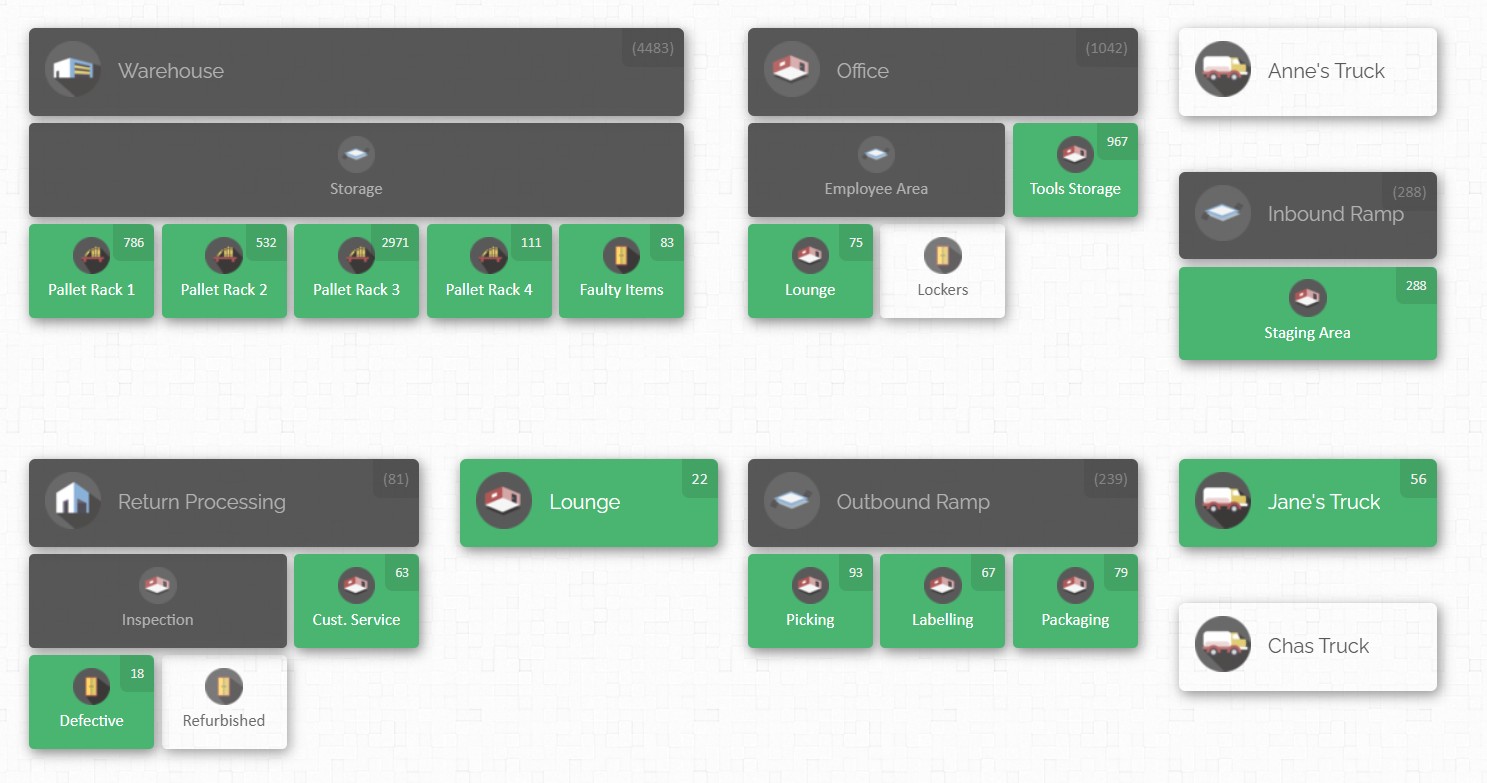
Below we set out detailed best practices, practical examples, and tools to help industrial warehouses reduce inventory loss. We also highlight how a visual inventory platform can tie it all together, making the warehouse layout and stock levels clear to any department at any time.
Why Inventory Visibility Breaks Down
- Inventory in Transit or Process: In manufacturing, a pallet of parts may leave central stores, pass through inspection, move to a production cell, and then go to a quality hold area. At each stage, if a movement is not recorded, the stock looks lost in the system. When departments work on different records, items can fall through the cracks.
- Shadow Stocking and Ad-hoc Storage: Teams often stash parts or empty pallets in out-of-the-way locations “temporarily”. Over time these ad-hoc areas become hidden storage. A maintenance crew might keep extra bearings by the machines, or production might park a half-empty pallet down an unused aisle. These hidden stashes break the single source of truth for inventory levels.
- Damaged Pallets and Racking: Damage that isn’t noticed or reported quickly can impact stock and safety. A cracked pallet or a bent racking column doesn’t always cause instant collapse – it causes gradual risk. Unstable pallets can lean or fall, damaging goods or other racks. If inspections are infrequent, early indicators of damage are missed, and the warehouse suffers hidden losses.
- Inconsistent Processes Across Departments: Each team (e.g. production, maintenance, quality, procurement, stores) often develops its own shortcuts. For example, maintenance may pull parts without a formal issue, while quality may hold released items in separate areas. Without shared standards and communication, department boundaries create blind spots.
- Lack of Real-time Tracking: Relying on manual paperwork or periodic counts means problems are only found after the fact. By the time an annual stocktake flags an issue, the opportunity to fix it cheaply has passed. Warehouses that do not continuously reconcile physical stock against records end up chasing old problems.
Together, these factors explain why inventory appears to “vanish” or why damage seems unrelated to any obvious cause. The remedy is to tighten control at every link in the process – from how pallets are stored and moved, to who is responsible when parts change hands – and to give every part’s location and condition high visibility across all teams.
Best Practices for Pallet Management
1. Standardize Pallets and Loads
- Use the Right Pallets: Ensure pallets meet size and weight standards for your racking and machinery. Whenever possible, use uniform pallets. This prevents mixing of incompatible pallets that can shift or break when stacked.
- Adhere to Load Limits: Always respect the load capacity of each pallet and shelf. Overloaded or unevenly stacked pallets are a major source of damage. Place heavier loads lower and centre the weight. This simple rule keeps stacks stable and reduces risk.
- Mark Designated Pallets: If certain pallets are for chemical or fragile materials, label them clearly. Colour-coded or labelled pallets speed up correct placement and reduce mistakes.
Implementing these standards means everyone knows what pallets to use and how to load them. This consistency alone improves stacking safety and makes storage more predictable.
2. Define Clear Storage Locations
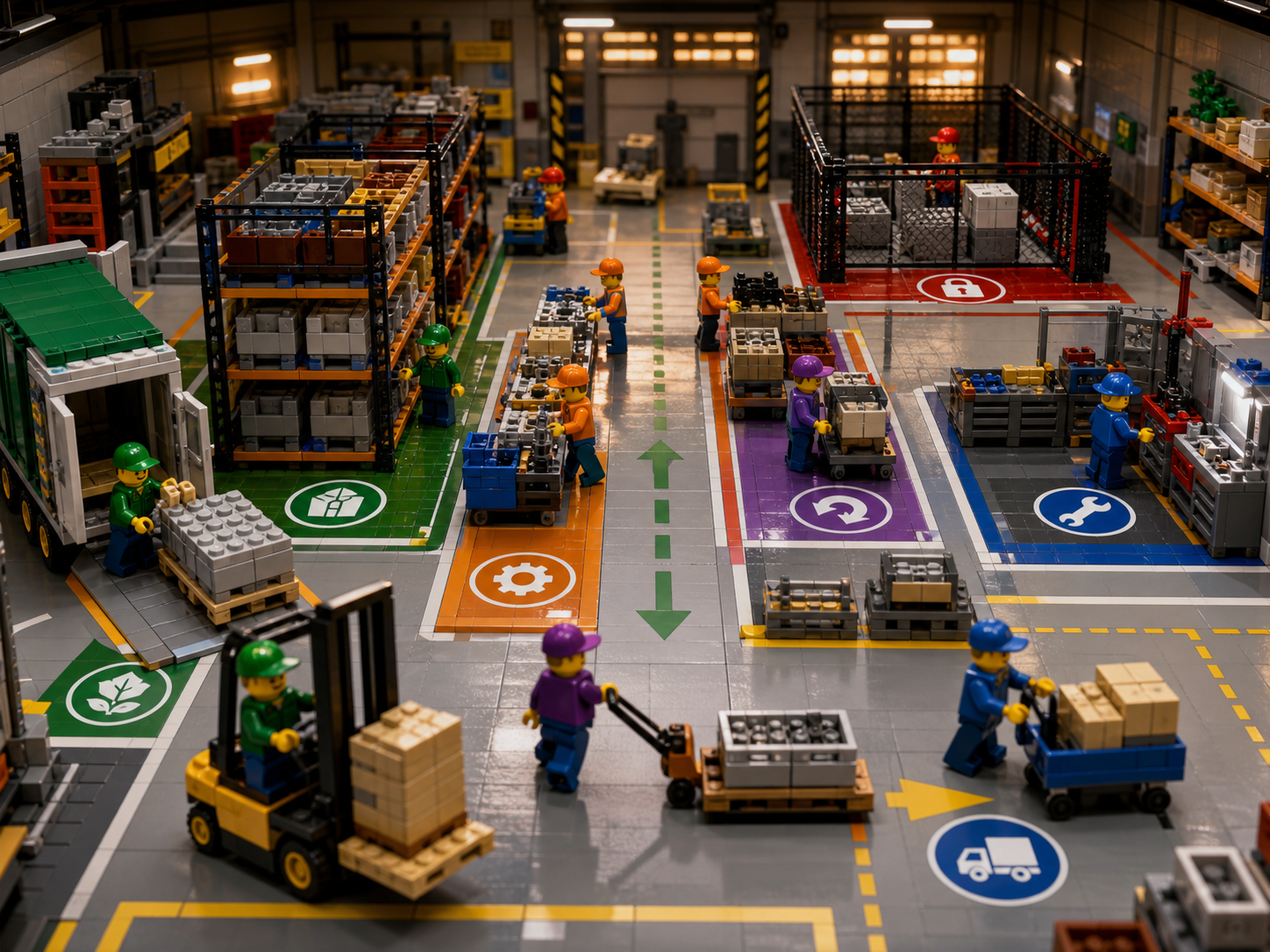
- Create a Zoned Layout: Designate and label areas for receiving, raw materials, work-in-progress, returns, maintenance stores, and finished goods. A good layout follows a flow (receiving ➜ storage ➜ production ➜ dispatch) while also isolating special areas (e.g. a Quality Hold zone or a Maintenance Staging area).
- Use Floor Markings and Labels: Clearly mark pallet locations on the floor, shelves, and rack beams. When a location is labelled (even simply as “QH-01” for Quality Hold bin 1), everyone knows where to put and find parts.
- Assign Pallet Staging Areas: Have fixed spots for empty pallets, for incoming pallets pending inspection, and for outbound pallets. This prevents pallets from being left in aisles or random corners.
- Organise by Usage: Store fast-moving inventory closer to the production lines or shipping docks, and slow-moving spares further away. Organising by velocity reduces travel time and forklift traffic.
By treating every shelf, rack bay, or bin as a “home” for some parts, the warehouse stops being a free-for-all. Visually enforcing locations helps all teams return pallets to expected spots.
3. Inspect Pallets and Racking Routinely
Regular checks are vital.
- Daily Visual Checks: At shift start or during normal operations, have operators glance at pallets and racks around them. They should spot obvious damage (splintered wood, broken boards, loose wrappers) and broken racking (bent uprights, sagging beams). If something looks unsafe, it should be flagged immediately.
- Detailed Weekly/Monthly Inspections: Schedule supervisors or safety personnel to inspect the storage structure itself. Look for overloaded beams, loose anchors, missing safety pins, or deteriorating flooring. Inspect high-traffic zones more often – these see more forklift hits.
- Remove Damaged Items Promptly: Any pallet with cracks or missing parts should be taken out of service. Likewise, clearly cordon off and repair any damaged racking. Avoid “running it until it breaks” – small fixes early avoid big collapses later.
Proper inspection routines prevent gradual damage from becoming catastrophic. When a cracked pallet or dented beam is caught early, entire rows of product and people are kept safe.
4. Streamline Receiving and Returns
How goods enter and exit the system can make or break inventory accuracy.
- Inspect at Receiving: When a pallet arrives from a supplier, don’t just clock it in. Verify that the pallet is in good condition, count and inspect parts, and move it to its rightful storage zone right away. If it needs quality approval, send it immediately to a designated hold area. This keeps the default path clear.
- Assign Ownership Immediately: Record which department or process the incoming parts belong to. If the inventory management system allows, tag it as “Production Stock” vs “Maintenance Stock,” etc. This signals later who should handle it.
- Manage Returns and Kitting: For planned jobs or maintenance kits, set up a procedure so that unused parts are returned within a day or two. Have a clearly labelled returns area. When returns go back into the main stores promptly, nothing slips out of sight indefinitely.
By front-loading inspection and routing decisions, the warehouse avoids “catching up” after inventory has been misallocated. This keeps parts flowing correctly from day one.
5. Enforce a Check-in/Check-out Process
Every time a pallet moves, it should be documented:
- Issue Protocol: When parts go to a production line or maintenance crew, require a pick or issue transaction. The worker should update the location and quantity in the system (ideally using barcode or scanning).
- Transfer Tickets or Forms: If not fully digital, use simple tickets or forms that travel with the pallet. For example, a printout with the part number and destination signed off by production ensures accountability.
- Match Physical and Digital Flow: Whenever possible, use barcode scanners or a mobile tablet in the warehouse. Scanning a pallet’s barcode at pickup and drop-off ensures the inventory system always reflects real movements.
- Audit Spot-Checks: Occasionally cross-check a few pallets by location versus record. If 90% of random checks are correct, you’re on track. If not, tighten the process or retrain staff.
This discipline means inventory data stays live. It prevents the common mistake of “someone moved that yesterday” without ever logging it. Over time, this greatly reduces missing inventory.
6. Implement 5S and Visual Controls
5S is about order, and it has tangible benefits:
- Sort (Seiri): Keep only necessary pallets and parts in each area. Remove clutter or obsolete items so that storage areas match the system.
- Set in Order (Seiton): Everything has a place. Label all racks, shelves, and bins. Use colour-coded stickers or signs if it helps (for example, blue tags for critical spares, yellow tags for slow movers).
- Shine (Seiso): A clean pallet stack area is easier to inspect and maintain. Sweep aisles, pick up broken wood, and clear away debris. Clean equipment works more reliably.
- Standardize (Seiketsu): Develop standard work for pallet handling. For example, a standard stacking pattern or a checklist for incoming pallets. This ensures consistency between shifts.
- Sustain (Shitsuke): Make these practices part of the culture. Hold training sessions on 5S principles. Recognise teams that keep areas well organised.
When locations and pallets are visually managed, anyone can walk in and see if something is out of place. A set of colored floor lines might indicate forklift lanes vs. storage lanes, preventing blockage. Clearly marked zones reduce the mental load of “where does this go?” and stop ad-hoc stacking.
7. Optimise Inventory Storage by Priority
Allocate space based on how parts are used:
- High-Usage Stock: Store fast-moving items (like frequently used machine parts or common fasteners) near dispatch or production access points. This minimizes travel and pick times.
- Critical Spares: Keep essential maintenance spares (that would stop a line if missing) in the most reliable spots – under roof, locked if needed, and always fully visible.
- Bulk Pallets: Reserve high-capacity rack locations for full pallets awaiting use, and smaller bins for picked parts.
- Obsolete or Slow Stock: Move old or rarely used inventory to the back of the storage area or a less convenient floor zone. This frees up prime space for active stock.
Planning storage by priority and usage reduces congestion and mistakes. It also helps forecast stocking levels more accurately, since popular items are easier to count and review regularly.
8. Perform Cycle Counts and Audits
Continuous auditing is key to maintaining accuracy:
- Cycle Counting: Instead of only doing an annual count, count a small portion of inventory every week. Focus first on high-value or fast-moving items, then move to medium and low. This keeps the data fresh.
- Reconcile Quickly: When a discrepancy is found, fix it right away and note the cause. If a missing pallet is found in a wrong location, update the record and, if needed, retrain on that step.
- Use the Map: If you have a visual map (like a floor plan), count by location area. For example, one week count everything in Aisle 3, next week Aisle 4, etc. This localised approach reveals if errors are concentrated in certain zones or departments.
- Track Metrics: Monitor inventory accuracy as a percentage (e.g. total matched vs. counted items). Targets should aim toward 98–100%. When accuracy dips, increase count frequency until it recovers.
Regular inventory checks make sure small errors don’t compound. Even a quick spot-check of a few pallets per shift can alert you to bigger issues.
Improving Multi-Department Parts Visibility

In manufacturing, parts rarely stay in one place or under one team’s control. To keep everyone on the same page:
- Single Truth Database: Use one inventory system for all departments. When production logs a part used, maintenance or quality should see the effect immediately. This avoids departmental data silos.
- Shared Nomenclature: Agree on part naming and codes across the business. If production calls it “Bearings – Flanged 6205” but maintenance shortens it differently, it can cause confusion. Standard labels and barcodes solve this.
- Role Definitions: Clarify who is responsible at each step. For example, stores owns incoming goods and returns processing; production owns line-side issue; maintenance owns checked-in kits; quality owns hold-release. Document these handoffs so there’s no “that’s not my inventory” confusion.
- Inter-Department Kitting: For scheduled maintenance or production jobs, create kits of parts that are prepared ahead of time. Once the kit is used, have a clear return procedure. Unused parts should come back to stores promptly with a count.
- Eliminate “Shadow” Reorders: When departments see low stock, they may unofficially borrow or duplicate orders. By giving each department some visibility (e.g. “we see your order is delayed, here’s what we have left”), you reduce this panic behaviour.
- Lean Logistics for Multiple Sites: If you run more than one facility or warehouse, map those too. Regularly share data on inventory levels and movements between sites. Deciding which location should hold spares vs moving stock depends on demand and location proximity.
By aligning departments around a common system and rules, you transform inventory management from a departmental chore into a collaborative process. Everyone knows where to look for a part, and transfers between departments become smoother, not an afterthought.
CyberStockroom: Enabling Full-Plant Visibility
CyberStockroom is an example of a visual inventory platform that brings this concept to life (without requiring technical jargon). It allows teams to build a live map of the entire operation – buildings, rooms, shelves, bins, even process stages. On this map, you can see all locations and the items stored there. For instance, a stores manager can click on the “Receiving Area” or “Maintenance Storeroom” on the map and instantly see which parts are in each bin or rack. This makes the warehouse as easy to navigate as a Google Map with pins for parts.
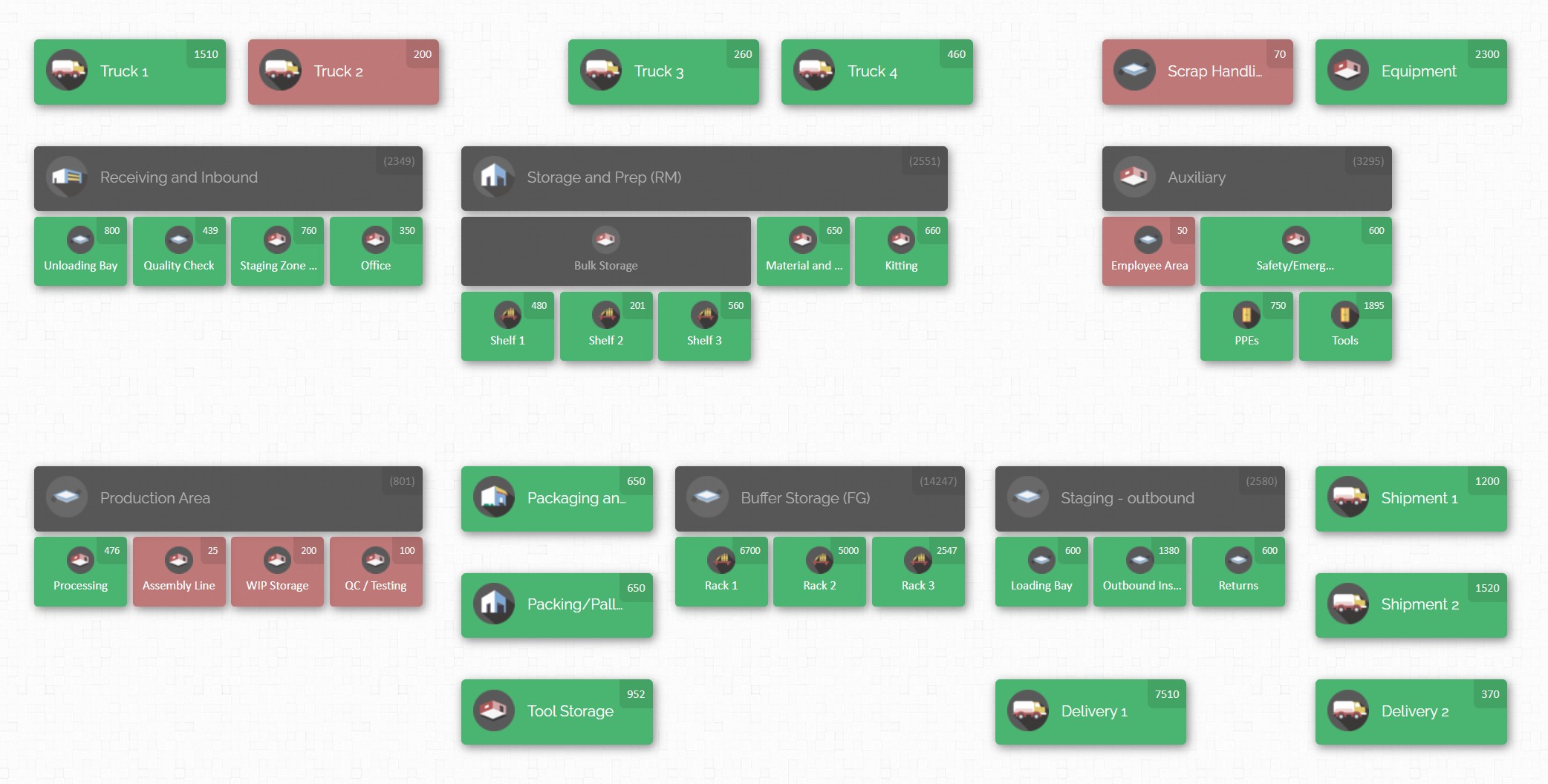
Key features that support multi-department visibility include:
- Drag-and-Drop Transfers: Moving inventory between locations can be as simple as dragging the item icon from one bin to another on the map. When Production needs a batch of bolts, a stores worker can update the map by dragging the bolts from the main store bin to the line-side bin. The system automatically logs that movement, so Maintenance, Quality, or any team can see the change instantly.
- X-ray Distribution View: If you want to know where a particular part number is across the whole plant, the map can highlight all locations of that part. Maintenance might see five conveyors’ worth of a component scattered around. This “X-ray vision” helps teams gather parts for a job without blind searching.
- Cycle Counting on the Map: Teams can conduct stock counts within the map interface. For example, a supervisor clicks on “Line-Side Zone,” selects the parts to count, and enters the actual tallies. If the count differs from the record, adjustments can be made right there, keeping data up-to-date without paperwork.

- Activity Log: Every change is tracked. You can see who moved what and when. If an item goes missing or ends up in the wrong department, you can trace back through the log. This audit trail is invaluable for cross-department accountability.
- Layered Visibility: Beyond just bins and shelves, the map can include process areas (e.g. “Inspection Bay”) and vehicles (if you have mobile stores carts). This ensures that whether a part is in a storage rack or on a tool cart on the shop floor, its status shows up on the same map.
All these capabilities mean that regardless of whether a part starts in Warehouse A or Warehouse B, or which team is currently using it, everyone is looking at the same inventory picture. In practice, this solves the classic “I thought you had it” problem. If CyberStockroom says the last six gearboxes are in Shipping waiting for pickup, Maintenance won’t send another requisition or toss stock they already believe is gone.
How it helps operations: Imagine a scenario where Production runs low on a fastener mid-shift. Instead of wasting time paging through paper or calling around, the supervisor opens the map, sees three more pallets of that fastener in the Maintenance storeroom, and immediately requests them. No stockout. Meanwhile, Maintenance sees an alert that the store dropped to threshold and can plan a reorder in time.

By making every location and part visible, a platform like this enforces many best practices automatically. Locations are fixed, transfers are recorded, stocks are shared, and data is live. Over time, the warehouse team stops wondering “where did those parts go?” and starts optimizing usage based on real insights. CyberStockroom essentially lets teams treat the whole plant layout as one big organized inventory space, rather than separate rooms in an analog pile.
Key Mistakes to Avoid
- Ignoring Day-to-Day Discipline: Letting pallets pile up in aisles, or allowing multiple “temporary” locations, quickly erodes order. Tighten rules so that even a small delay in restocking or checking stock levels is caught early.
- Treating Damage as a Nuisance: A single broken board or hit corner is not minor. It’s a warning. It’s essential to pull out and repair/replace any damaged pallet or rack component immediately. Don’t wait for a failure to enforce standards.
- Working in Silos: If each team runs its own mini-warehouse, coordination fails. Encourage cross-training so production knows a bit about stores processes and vice versa. Regular inter-department meetings can highlight process gaps.
- Skipping Small Audits: Large inventories require ongoing audits. Relying only on major annual counts means ignoring the normal error rate. Even a quick verification of a critical area every few days is better than one big once-a-year check.
- Overload and Clutter: Overstacking, overstocking, or running pallets up to full capacity can hide problems. Maintain some buffer space in racks for inspections and to avoid blocking light and sprinkler coverage.
- Poor Housekeeping: Debris and clutter invite accidents. If stray pallets or damaged materials are not cleaned up, they become obstacles. Keep aisles and pallet areas clear to maintain visibility and safety.
Avoiding these pitfalls is as important as implementing positive practices. A couple of preventable mistakes can undo weeks of gains.
Metrics and Routines to Sustain Improvements

Maintaining a high level of control requires measurement and regular processes. Consider the following:
| Key Metric | Description | Target or Routine |
|---|---|---|
| Inventory Record Accuracy | Percentage of stock items matching system vs physical count. | ≥ 98% for critical parts; check weekly or monthly. |
| Cycle Count Coverage | Proportion of inventory counted per period. | Count high-risk areas weekly, others monthly. |
| Stockout Incidents | Number of times a needed part was unavailable. | Aim for zero critical stockouts; review each incident. |
| Pallet Damage Reports | Incidents of damaged pallets or racking identified. | Encourage daily reporting; repair within 24h. |
| Order Discrepancies | Difference between ordered vs. received for pallets. | Monitor monthly; investigate each discrepancy. |
| Location Audit Findings | Errors found in random location spot-checks. | Perform spot checks daily; aim for <5% errors. |
Use these metrics to drive continuous improvement. For example, if inventory accuracy dips below the target, increase count frequency or investigate process gaps. If pallet damage is rising, enhance inspections or training.
Routine Schedule (example): Track and schedule recurring tasks to keep everyone aligned:
- Daily: Quick visual safety check by operators (aisles clear, obvious damages flagged); update any inventory movement at shift end.
- Weekly: Cycle count of a designated section or category (e.g. all fasteners or one aisle); check low-stock alerts; brief team huddle to review issues.
- Monthly: Review KPI trends (accuracy, stockouts); perform detailed rack and location inspections; adjust par levels and reorder points as needed.
- Quarterly: Audit layout and storage optimisation (move items closer to usage if patterns changed); conduct cross-department inventory meeting to resolve outstanding issues.
- Annually: Full physical inventory if required for accounting; comprehensive process review (5S audit, system upgrade planning).
Conclusion
Pallet management in an industrial warehouse is not just about wood and boxes – it’s about workflow, communication, and shared discipline. When teams set clear rules for how pallets and parts are handled at each stage, and when they make inventory data instantly visible to everyone, the warehouse becomes an enabler instead of a bottleneck. The best practices outlined here – from standardising pallets to cycle counting, and from visual mapping to cross-team processes – form a cohesive framework. Together they ensure that each part knows where to be, and each department knows how to see it.

Investing in these practices pays off in fewer shortages, fewer damaged goods, and smoother handoffs between production, maintenance, and stores. Practical tools that visualise inventory (like CyberStockroom) can accelerate these gains by putting the warehouse on a live map. The result is a well-oiled warehouse operation where downtime is reduced and parts are always available where and when needed.
Ultimately, full parts visibility across departments is both a technical challenge and a people challenge. By aligning processes, training staff, and measuring performance, an organisation builds the operational foundation that keeps the assembly lines running and the business thriving.









Leave a Reply