
When Nobody Can Say Where Anything Is
Every organization that runs laboratories eventually discovers the same uncomfortable truth: the equipment and samples it depends on rarely stay where the records say they are. A calibrated instrument gets borrowed for a project in another building, a box of retained samples migrates between freezers during a maintenance window, and a pallet of consumables ends up in a hallway storage closet because the main stockroom was full. Each of these small moves makes sense in the moment, yet together they erode the shared understanding of what the organization owns and where it lives. As a result, teams spend hours searching for items that exist, reorder items that are already on site, and delay work while they wait for answers. This guide explains how to build lab inventory visibility that holds up across buildings, departments, and freezers.
The challenge is not limited to academic or pharmaceutical research settings. Manufacturers operate quality labs beside production floors, engineering and construction firms maintain materials testing labs and retained-sample rooms, and industrial service companies keep calibration benches and reference standards scattered across several facilities. In each case, the inventory is a mix of durable equipment, temperature-sensitive samples, and everyday consumables, all owned by different teams with different habits. In practice, the more departments that touch a stockroom, the more versions of the truth exist, and the harder it becomes to answer a simple question like “where is it right now?” Building on this reality, the sections that follow focus on structure, naming, ownership, and routine, because those four elements determine whether inventory visibility lasts beyond the first month of enthusiasm.
Throughout this article, the focus stays on practical multi-building inventory tracking: how to describe locations, how to organize stock, how to keep records accurate, and how to get several departments working from one shared picture. You will see how freezer inventory management differs from shelf-based storage, why sample location tracking needs more precision than equipment tracking, and how to introduce changes without disrupting active work. Along the way, you will also see how CyberStockroom supports this work through a visual inventory map and organized location records. Whether you manage a single campus or a dozen sites, the principles are the same, and they scale well when applied consistently.
See the Layout First
Before getting into best practices, it helps to see what a well-mapped inventory looks like, because the idea of a map-based approach is much easier to grasp visually than in the abstract. A good map shows buildings, rooms, storage areas, and individual units such as freezers, cabinets, and shelving, with the items inside each one easy to find. Seeing the layout also makes gaps obvious, since an unmapped room or an unlabeled freezer stands out immediately against a clean picture of the rest of the site. As you read the sections that follow, keep this visual model in mind, because every recommendation is meant to move your records closer to it.
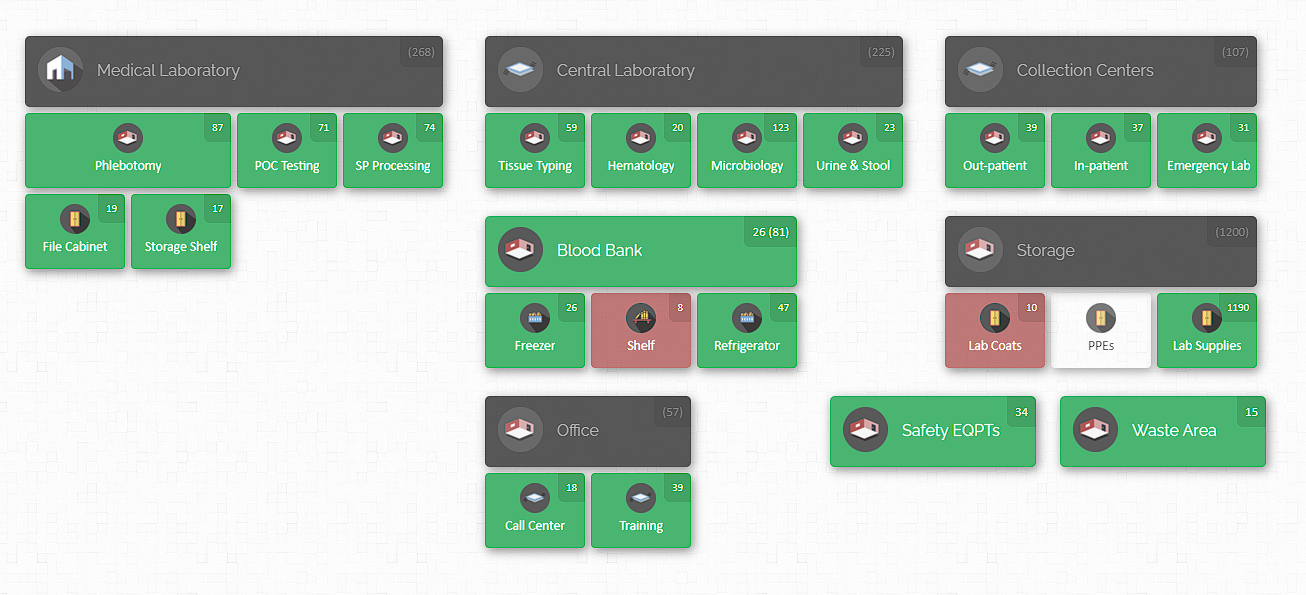
The demo map above is meant to be explored rather than skimmed, so take a moment to click through a building, open a room, and look at how storage units and their contents are organized. Notice how the structure follows the physical world, moving from the site down to the building, the room, the storage unit, and finally the item. This is the same hierarchy that the rest of this guide recommends, and it is the foundation for both fast searching and reliable accuracy. With that picture in mind, we can turn to why visibility breaks down in the first place.
Why Lab Equipment and Samples Disappear Between Buildings
Inventory rarely goes missing because of a single dramatic failure. More often, it drifts out of sight through a long series of reasonable decisions made by busy people who are focused on their own deliverables. A technician moves a centrifuge to a neighboring lab because a project needs it, intends to log the move later, and then gets pulled into an urgent test run. Weeks pass, the record still points to the original room, and anyone searching for the instrument walks to the wrong place. This pattern, repeated across dozens of items, is the most common source of lost time in multi-building operations.
A second driver is the absence of a shared language for locations. One department might call a room “Cold Storage B,” another might call the same room “the basement walk-in,” and a third might refer to it by a room number that appears on no label. When descriptions differ, searches fail even though the item is recorded correctly, and teams conclude that the data cannot be trusted. In practice, this inconsistency does more damage than missing data, because it teaches people to stop checking the records and start asking colleagues instead. Over time, knowledge shifts from the system into individual memory, which is exactly where it is most vulnerable to turnover, vacations, and reorganizations.
Physical separation compounds both problems. When equipment and samples are spread across several buildings, no one person can walk the whole inventory in an afternoon, so errors survive for months. Shared resources, such as a specialty instrument available to several departments or a freezer that holds material from multiple teams, are especially prone to confusion because each group assumes another group is keeping the records current. This is particularly true when the people who use an item are not the people who purchased it. As a result, the items with the most users often have the least reliable location data.
Finally, there is the matter of incentives. Recording a move or a transfer takes a minute, while the benefit of that minute accrues to someone else later, perhaps a colleague who needs the item next quarter. Unless the process is simple and expectations are clear, the immediate pressure of the work will always outweigh the long-term benefit of the record. Understanding this dynamic is essential, because the goal of any visibility program is to make accurate record-keeping the easiest path rather than the most virtuous one. The rest of this guide returns to that principle repeatedly.
The Hidden Costs of Poor Inventory Visibility

The most visible cost of poor visibility is wasted labor, and it is larger than most managers assume. If a technician spends twenty minutes searching for a reagent kit or a calibrated gauge, and that happens several times a week across a dozen people, the annual loss reaches hundreds of hours. These hours rarely appear in a budget line, so the problem stays invisible to leadership even as it drains productivity. In practice, the search time is only the beginning, because a stalled test or a delayed batch often triggers further delays downstream.
Duplicate purchasing is the second major cost. When a team cannot confirm that another building already holds a spare instrument, a set of reference standards, or a surplus of consumables, the safest choice is to order another one. Over a year, those cautious purchases add up to significant spending on items that sat unused elsewhere in the organization. This is especially costly for high-value equipment and specialty materials with long lead times. Better visibility lets teams check what exists across the whole organization before they buy, which turns idle stock into a resource rather than a hidden liability.
There is also a quality and continuity cost that is harder to measure but just as real. Samples that cannot be located quickly may be exposed to unnecessary handling, extended door-open times, or repeated searches through crowded freezers. Retained samples and reference materials that cannot be found when an audit, a customer inquiry, or a warranty question arrives can create serious operational and reputational problems. Building on this, the confidence of the entire organization suffers when people believe the records are unreliable, because every decision then requires manual verification.
Finally, poor visibility makes growth and change harder. When a lab moves, a building is renovated, or two departments merge, the absence of reliable location data turns a manageable project into a scramble. Teams have to rediscover what they own before they can decide what to keep, relocate, or retire. Organizations that invest in clear, organized inventory records early find that these transitions are far smoother, since the hardest part of the work, knowing what is where, is already done.
Understanding What You Are Actually Tracking
Before designing any system, it is worth separating the kinds of items that live in a lab environment, because each behaves differently. Durable equipment, such as instruments, benches, and fixtures, tends to stay in one place for long periods and moves only occasionally. Samples and retained materials are more fluid, often shifting between boxes, racks, and freezers as projects progress. Consumables, such as reagents, filters, containers, and supplies, move constantly in quantity, and their counts matter as much as their locations. Treating all three the same way leads to records that fit none of them well.
Equipment records usually need descriptive detail, such as the model, the assigned owner, and the room where the item is normally found. Because equipment moves rarely, the main risk is a stale record that nobody updates when the item finally does move. The best remedy is to make location part of the item’s identity, so that a move is recorded as a change of place rather than a rewrite of the whole record. In practice, this keeps the data clean and makes it easy to see where an instrument has been over time.
Sample tracking demands greater precision because the cost of a wrong answer is higher and the physical environment is more crowded. It is not enough to know that a sample is somewhere in a particular freezer; teams need to know the shelf, the rack, and the box in which it sits. The more levels of detail that are recorded, the less time anyone spends with a freezer door open, and the lower the chance that an adjacent item is disturbed during a search. This is why sample location tracking should be designed around the physical structure of the storage unit itself.
Consumables introduce the question of quantity, and quantity introduces the question of where the stock is divided. A case of reagent might be split between a main stockroom and two satellite labs, each holding a partial count. A useful record shows not only the total on hand but also how that total is distributed, since the distribution determines whether a team can start a task or must wait for a transfer. With these distinctions in mind, the next step is to build a location structure that handles all three item types gracefully.
Build a Location Structure That Mirrors the Physical World

The single most important design decision in any multi-building inventory is the location hierarchy. A hierarchy that mirrors the physical world allows anyone to navigate from the broadest view down to a precise spot without needing insider knowledge. For most organizations, the natural levels are the site, the building, the floor or wing, the room, the storage unit, and the position within that unit. When each level is recorded consistently, searching and browsing both become faster, and new employees can orient themselves without a guided tour.
A practical hierarchy for a lab inventory often looks like the following list of levels, which can be adjusted to fit the layout of your facilities:
- Site or campus
- Building
- Floor or wing
- Room or lab
- Storage unit, such as a freezer, refrigerator, cabinet, or shelving bay
- Position within the unit, such as a shelf, rack, or box
These levels should be treated as a template rather than a rigid rule, because some facilities need fewer layers while others need more. A small single-building lab may skip the site level entirely, whereas a large manufacturer with several plants may add a department or zone between the building and the room. The key is to choose a structure that matches how people actually describe and walk through the space, and then apply it everywhere. In practice, consistency across sites matters more than perfection at any one site, since consistency is what makes cross-building searches reliable.
It is equally important to decide where the hierarchy ends, because excessive detail can become a burden that people abandon. If recording an item requires filling in eight levels for every transaction, staff will find shortcuts that defeat the purpose. A good rule is to go as deep as necessary to find the item in one trip, and no deeper. For freezers and cold storage, that usually means recording down to the box or rack, whereas for equipment it may be enough to record the room and the bench or bay.
Once the structure is defined, take the time to validate it with the people who work in the spaces every day. Walk through a few rooms with a technician and a stockroom lead, and confirm that the levels make sense and that the labels match the language people use. This short exercise surfaces mismatches early, such as an unmarked cabinet or a room that two teams describe differently. As a result, the final structure feels familiar to users, which dramatically improves adoption.
Naming Conventions and Data Standards That Prevent Confusion
A location structure is only as good as the names that fill it, and naming is where many otherwise strong programs quietly fail. When one building is recorded as “Bldg 2,” another as “Building Two,” and a third as “B2,” searches return incomplete results and reports become unreliable. A short written convention eliminates this problem by deciding once, in advance, how every level of the hierarchy will be named. The convention does not need to be elaborate, but it does need to be followed by everyone who creates or edits a record.
Good naming rules share a few characteristics that make them easy to remember and easy to enforce. They use the labels already posted on doors, freezers, and shelves, so that the record matches what a person sees when they arrive. They avoid abbreviations that only one team understands, and they stay short enough to be typed quickly. They also include a consistent pattern for numbered units, such as freezers and racks, so that “Freezer 03” always sorts and searches the same way. When these habits are in place, the records read the same way regardless of who created them.
As a short checklist, a naming standard should answer the following questions before any records are created:
- What is the official name of each building and room, and who approves changes to it?
- How are numbered units written, including leading zeros and separators?
- Which abbreviations are allowed, and which are never used?
- How are shared or multi-owner storage units labeled so that no single team appears to own them?
Writing down answers to these questions takes less than an hour and prevents months of cleanup later. It is also useful to post the naming standard where staff will see it, and to include it in onboarding so new hires learn the same conventions from their first week. In practice, the standard becomes part of the culture of the stockroom, which is precisely what keeps records consistent over the long term. With names and structure settled, the next concern is the unique challenge that freezers present.
Freezer Inventory Management: Treating Cold Storage as a Location Hierarchy

Freezers deserve their own treatment because they combine high-value contents, strict handling requirements, and very limited physical space. Every time a door is opened, there is a cost, whether it is temperature fluctuation, lost time, or the risk of disturbing neighboring material. A freezer whose contents are recorded only as “somewhere inside” forces people to search by hand, and that search is exactly the behavior good record-keeping is meant to prevent. Strong freezer inventory management therefore begins with recording the internal layout, so that a person can reach the right box on the first attempt.
The most effective approach is to treat each freezer as a miniature version of the larger building hierarchy. The freezer itself is a storage unit, its shelves or drawers are sub-locations, the racks sit within those shelves, and the boxes sit within the racks. When each level has a consistent name, a sample record can point to a precise position, such as a particular box on a particular rack, without any ambiguity. This is especially valuable in shared freezers, where several teams store material side by side and a vague description such as “top shelf” can apply to a dozen different items.
It also helps to establish simple rules for how freezers are organized physically so that the records stay accurate. Dedicating shelves to specific teams, projects, or sample types reduces the number of moves needed and makes it easier to see at a glance what belongs where. Reserving a clearly labeled area for items awaiting disposal or transfer prevents orphaned material from accumulating unnoticed. In practice, these physical habits and the digital records reinforce each other, because a tidy freezer is far easier to describe accurately than a chaotic one.
Finally, plan for the ordinary events that change a freezer’s contents, such as a replacement, a defrost, or a consolidation of half-empty units. These events are the moments when records are most likely to fall out of sync, because many items move at once and the work is often done under time pressure. Assign a person to record the new positions as the move happens, rather than reconstructing them afterward from memory. When the freezer is mapped and its contents are organized by position, even a large relocation becomes a manageable, well-documented task rather than a source of lost samples.
Aligning Departments Around One Shared Picture
Even the best location structure fails if departments treat it as someone else’s responsibility. Quality control, research and development, maintenance, production support, and facilities each keep their own mental model of the stockroom, and each model is shaped by what that team handles most often. When these models are not reconciled, two teams can describe the same cabinet in different terms and neither realizes that the other holds the missing item. Cross-team alignment therefore starts with agreeing that there is one shared record of where things are, and that every department contributes to it.
A practical way to build that agreement is to define ownership at two levels. Each storage unit and room should have a named steward who is responsible for the accuracy of what is recorded there, while each item should have an owning team that decides how it may be used and moved. Separating these roles removes a common source of confusion, because the person who maintains a freezer is often not the person who owns the samples inside it. In practice, stewards act as the point of contact for questions about a location, and owners remain accountable for the items themselves.
Shared resources deserve special attention because they sit at the intersection of several departments. A specialty instrument used by three teams, or a common cold-storage unit holding material from many projects, will be neglected unless someone is explicitly assigned to keep its records current. Establishing a short list of shared resources and assigning a steward to each is one of the highest-return steps in the entire visibility effort. This is especially important when departments have different priorities, since shared items are the ones most likely to be moved without notice.
Regular communication reinforces these structures and keeps the shared picture alive. A brief monthly review, attended by the stewards from each department, can surface items that have moved, rooms that have been reorganized, and gaps in the records before they become problems. The meeting does not need to be long, and it works best when it focuses on a short list of exceptions rather than a full inventory review. Building on this routine, departments begin to see the shared record as a tool that saves them time rather than a chore imposed from above.
Finally, leaders play an important role by treating inventory accuracy as an operational priority rather than an administrative afterthought. When managers ask for location data in planning discussions and recognize teams that keep their records current, staff understand that the work matters. This kind of visible support is often the deciding factor between a program that fades after a few months and one that becomes part of daily operations. With alignment in place, it becomes much easier to introduce tools that make the shared picture visible to everyone.
How CyberStockroom Supports Multi-Department Parts Visibility
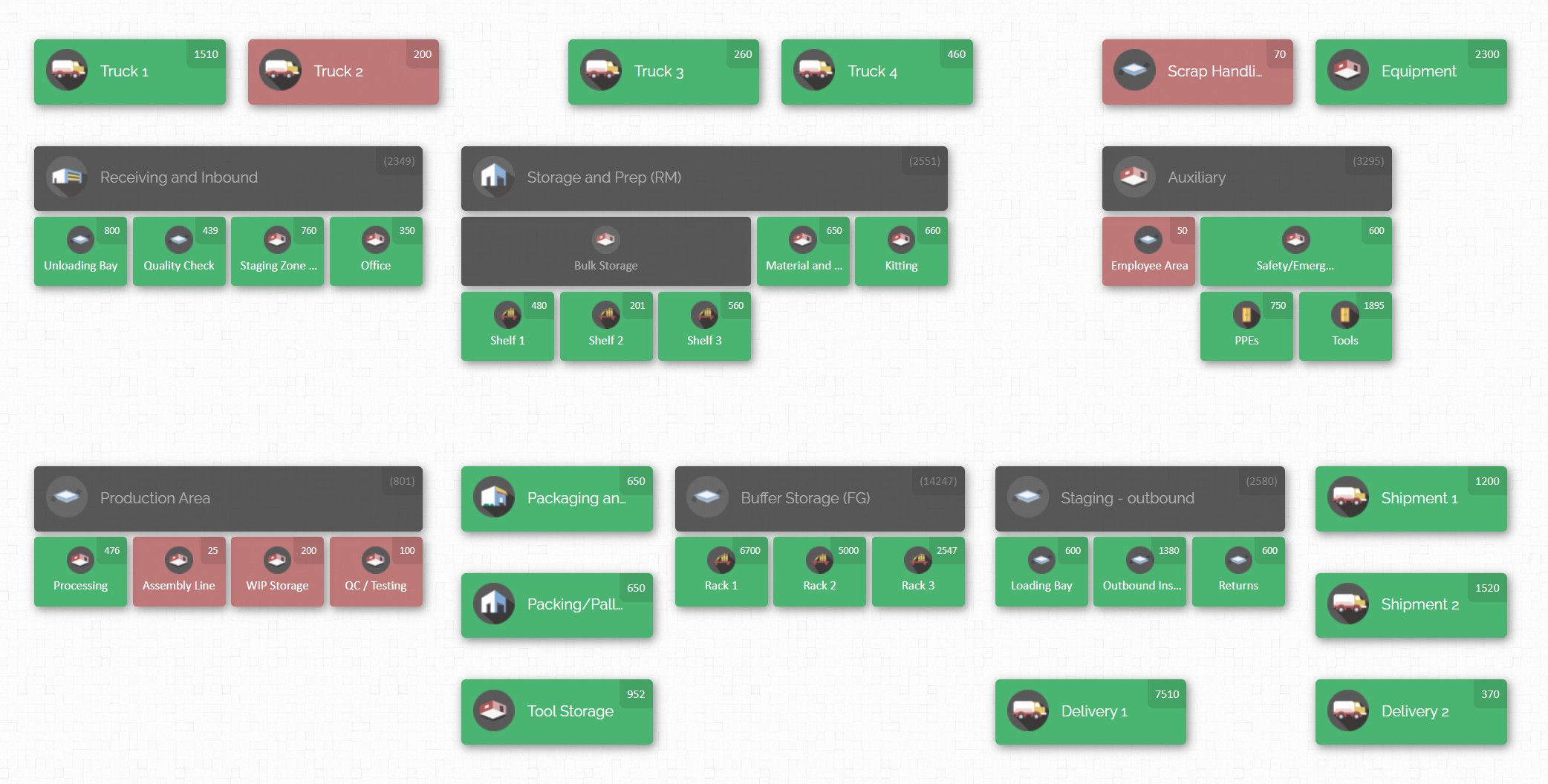
The practices described so far all depend on one thing: a single, organized place where every department can see what exists and where it lives. CyberStockroom is built around that idea, giving teams an inventory map that reflects the physical layout of their sites, buildings, rooms, and storage areas. With CyberStockroom, you can lay out your locations the way your facility is actually arranged, so that a technician opening the map sees something that matches the doors and labels they walk past every day. This directly addresses the shared-language problem discussed earlier, since everyone is looking at the same structure rather than their own private description of it.
Because CyberStockroom organizes stock by location, the hierarchy recommended in this guide translates naturally into how items are recorded and found. Teams can place equipment, samples, and supplies in specific rooms and storage units, and then browse or search to see what is held in any given place. This makes it far easier to answer the questions that consume so much time in multi-building operations, such as which freezer holds a particular set of materials or which building has a spare instrument. In practice, the answer is a few clicks away rather than a series of phone calls and walks across campus.

CyberStockroom also helps departments work from one shared picture without forcing them to give up their own organization. A quality team can keep its retained samples grouped in its own cold storage while a research group tracks its materials in a neighboring freezer, and both sets of records appear within the same overall layout. Anyone who needs to find an item can see where it sits relative to everything else, regardless of which team owns it. This is especially valuable for shared resources, where visibility across departments is the whole point and where the cost of a missing record is highest.
The location-based approach pays off most during moves, consolidations, and reorganizations. When a freezer is replaced or a lab is relocated, CyberStockroom lets teams update where items live so that the map continues to reflect reality, rather than leaving a trail of outdated entries. Updating a location is a simple, targeted change, which supports the principle that accurate record-keeping should be the easiest path for busy staff. Over time, this keeps the shared picture trustworthy, and trust is what ultimately encourages people to check the records first instead of asking around.

CyberStockroom is not meant to replace the habits and standards described in this guide; it makes them easier to sustain. Clear naming, defined stewards, and routine reviews still matter, and the map gives those practices a visible home that every department can reference. Teams that pair a well-designed location structure with a visual, organized inventory typically find that searches become faster, duplicate purchases decline, and conversations about stock shift from guesswork to fact. Building on this foundation, the next sections address the routines that keep the data accurate once it is in place.
Recording Moves, Transfers, and Handoffs
Movement is the most common cause of inaccurate inventory, so it deserves a deliberate process. Every time an item changes rooms, buildings, or storage units, the record should change with it, ideally at the moment of the move. The longer the gap between the physical action and the recorded update, the greater the chance that the update never happens. For this reason, the best processes are brief, clear, and built into the way work is already done.
A simple rule that works well in many organizations is that nothing leaves its recorded location without a corresponding update. This applies equally to a technician carrying an instrument to another lab and a stockroom lead moving a pallet to overflow storage. The rule is easy to state, easy to teach, and easy to audit, because a missing update becomes obvious the next time someone searches for the item. In practice, the habit forms quickly once staff see that accurate records save them from the searches they used to endure.
Temporary moves need particular care because they are the ones most likely to be forgotten. An instrument lent to another department for a week, or a set of samples moved to a different freezer during maintenance, can easily become a permanent mismatch if nobody records the original intent. A useful practice is to note the expected return location and date whenever an item is moved temporarily, so that it can be followed up. This small addition turns an invisible loan into a trackable commitment and prevents items from drifting indefinitely.
Handoffs between shifts, teams, and projects benefit from the same discipline. When a project ends or a person changes roles, the items they were responsible for should be reviewed and reassigned, not simply left in place. A short handoff checklist, covering where the items are, who now owns them, and whether anything needs to move, prevents orphaned inventory from accumulating. Over a year, these small routines eliminate a large share of the unexplained discrepancies that otherwise surface during counts.
Cycle Counting and Keeping Records Accurate

No process captures every change, so periodic verification is essential. Rather than shutting down operations for a full annual count, many organizations adopt cycle counting, in which a small portion of the inventory is checked on a rotating schedule. A few freezers, a handful of rooms, or a single building might be verified each week, so that the entire inventory is reviewed several times a year without disruption. This approach spreads the effort evenly and catches errors while they are still small.
The schedule should reflect risk and value rather than simple rotation. High-value equipment, irreplaceable samples, and heavily shared storage units merit more frequent checks than low-cost consumables in a rarely visited cabinet. Prioritizing in this way focuses effort where an error would be most costly and where drift is most likely. In practice, a tiered schedule, with the most critical locations checked monthly and the rest quarterly, balances thoroughness with workload.
When a count reveals a discrepancy, the response matters as much as the discovery. The goal is to correct the record and understand why it was wrong, not to assign blame, because a culture of blame discourages people from reporting problems. A quick review of the cause, whether an unrecorded move, a mislabeled box, or a naming inconsistency, often points to a process improvement that prevents the same error elsewhere. Building on this, each count becomes an opportunity to strengthen the system rather than merely to audit it.
It is also worth tracking the results of counts over time, since the trend tells you whether accuracy is improving. A rising match rate between the records and the physical inventory shows that habits are taking hold, while a falling rate signals that a process or a team needs attention. Sharing these results with department stewards keeps accuracy visible and gives teams a concrete target. When the numbers improve, it is a reminder to staff that their small daily actions add up to meaningful operational gains.
A brief supporting routine can reinforce all of this, and the following steps provide a simple pattern for each counting session:
- Select the locations scheduled for the session and notify the relevant steward.
- Compare what is physically present against what the records show for each location.
- Correct any mismatches immediately and note the apparent cause.
- Summarize the findings and share any process changes with the affected teams.
These steps are intentionally short so that they can be completed in an hour or two for a typical room or freezer. Keeping each session small is the secret to consistency, because small tasks are far easier to schedule and complete than large, disruptive audits. Over several months, the cumulative effect is an inventory that stays accurate without the periodic crisis of a full recount.
A Phased Rollout Plan for Multi-Building Inventory Tracking
Organizations often stall because the full scope of mapping every building feels overwhelming. A phased rollout avoids this by starting with a manageable area, proving the approach, and then expanding with confidence. The first phase might cover a single building or even a single department, chosen because it has an engaged steward and a clear need. Early success in a contained area builds credibility and provides practical lessons that make later phases smoother.
A typical rollout can be organized into the following stages, which can be adjusted to the size and complexity of your operation:
- Define the location hierarchy and naming conventions with input from each department.
- Map the pilot area, including buildings, rooms, and storage units, and verify the structure with the people who use the space.
- Record the items in the pilot area, starting with high-value equipment and critical samples.
- Assign stewards, set up the move and handoff routines, and begin cycle counting.
- Review results, refine the structure, and extend the approach to additional buildings and departments.
Each stage builds on the one before it, and skipping ahead usually creates rework. For example, recording items before the naming conventions are settled produces inconsistent data that must later be cleaned up. Similarly, expanding to new buildings before the pilot routines are working simply spreads the same problems across more locations. In practice, a disciplined sequence saves far more time than it costs.
Communication throughout the rollout is as important as the technical steps. Staff should understand why the change is happening, what is expected of them, and how it will make their work easier. Short demonstrations, clear written guidance, and a named contact for questions go a long way toward building acceptance. When people see that the new approach saves them from frustrating searches, resistance tends to give way to genuine support.
Finally, plan to prioritize what is recorded first, because attempting to capture everything at once rarely succeeds. Start with the items that cause the most pain when they go missing, such as shared instruments, critical samples, and high-cost or long-lead-time materials. Low-risk items can be added gradually as the routines mature and capacity allows. This focus on the highest-value inventory ensures that the benefits of visibility appear quickly, which sustains momentum for the rest of the project.
Metrics That Show Your Visibility Program Is Working
A visibility program needs measurable outcomes to justify continued effort and to guide improvement. The most direct indicator is location accuracy, expressed as the percentage of checked items found exactly where the records say they are. This single number captures the health of the entire system, and it is easy to calculate from cycle count results. Tracking it by building, department, or storage type reveals where attention is most needed.
Time-to-find is a second valuable metric, because it reflects the everyday experience of the people using the inventory. Even an informal measure, such as asking a few technicians how long it typically takes to locate a specific item, can reveal dramatic improvements after a rollout. When searches that once took twenty minutes now take two, the savings are tangible and easy to communicate to leadership. In practice, pairing this with a rough estimate of hours saved per month makes the business case compelling.
Duplicate purchasing and emergency reorders provide a third lens on performance. If teams are ordering fewer items that already exist elsewhere in the organization, it is strong evidence that cross-department visibility is working. Likewise, a decline in urgent orders for items that were actually on hand suggests that people trust the records enough to check them first. These indicators connect inventory practices directly to spending, which is often the language that resonates most with decision-makers.
Finally, consider tracking adoption measures, such as how many locations are mapped, how many stewards are assigned, and how often moves are recorded promptly. These measures show whether the underlying habits are taking hold, even before the accuracy numbers fully reflect the change. They also help identify teams that may need additional support or clearer guidance. Reviewing the full set of metrics together each quarter gives leaders a balanced view and helps direct effort to where it will have the greatest effect.
Common Mistakes to Avoid

One of the most frequent mistakes is designing a location structure that is too complicated for everyday use. When recording an item requires navigating many levels or remembering obscure codes, staff will look for shortcuts, and the quality of the data will suffer. The antidote is to keep the structure as simple as the physical space allows and to test it with real users before rolling it out. A structure that people can navigate without training is far more likely to be maintained.
Another common error is treating the initial mapping and data entry as a one-time project rather than an ongoing practice. Organizations that invest heavily in the first setup but neglect routines for moves, counts, and stewardship often find their records decayed within a year. Visibility is a habit, not an event, and it requires modest but steady attention. In practice, the organizations that succeed are those that build small, repeatable routines into the normal rhythm of work.
A third mistake is leaving shared resources without a clear steward. Because these items are used by many teams, everyone assumes that someone else is responsible for their records, and as a result nobody is. Assigning a named person to each shared instrument and shared cold-storage unit resolves this quickly and at almost no cost. This single step often produces some of the most noticeable improvements in cross-department trust.
Finally, many teams underestimate the importance of leadership support and clear communication. When staff do not understand why a change is happening or see no consequences for ignoring it, the new practices fade. Visible endorsement from managers, recognition for teams that keep records accurate, and honest feedback about results all reinforce the message that inventory visibility matters. With these pitfalls in mind, it becomes easier to design a program that lasts.
Turning Scattered Inventory Into a Shared Asset
Lab equipment and samples will always move, because that is the nature of active work across multiple buildings, departments, and freezers. The goal of an inventory visibility program is not to stop that movement but to make sure that every move is reflected in a record that everyone can trust. By building a location hierarchy that mirrors the physical world, adopting clear naming conventions, treating freezers as structured storage, and aligning departments around shared stewardship, organizations lay the groundwork for reliable lab inventory visibility. These foundations turn scattered stock into a shared asset that supports faster work, smarter purchasing, and greater confidence.
The routines that follow, recording moves promptly, running regular cycle counts, and measuring results, keep that foundation strong over time. They do not require heroic effort, only consistent attention and a clear sense of who is responsible for what. Teams that adopt them tend to discover that the benefits compound, since each improvement in accuracy builds trust, and trust encourages more people to use and maintain the records. In practice, this virtuous cycle is the difference between a one-time cleanup and a lasting operational advantage.
CyberStockroom supports this journey by giving teams a visual, location-based way to see what they have and where it lives, from the site level down to the individual storage unit. With a clear map and organized stock records, departments can work from the same picture, find items quickly, and keep their inventory aligned as their facilities evolve. If your teams are tired of searching, reordering, and guessing, now is a good time to start mapping your buildings and freezers, beginning with the shared resources that matter most. A well-organized inventory is not simply an administrative goal; it is a practical foundation for every project that depends on having the right equipment and samples in the right place at the right time.







Leave a Reply