
The Quiet Shift From Back-Office Task to Strategic Edge
For most of the last few decades, inventory was treated as a back-office concern, something the warehouse lead or the purchasing clerk worried about while everyone else focused on production, project delivery, and customer commitments. That view is changing quickly across industrial construction, manufacturing, and field service operations. Leaders are discovering that the companies winning bids, hitting schedules, and protecting margins are often not the ones with the most inventory, but the ones that know exactly what they have, where it sits, and who needs it next. In practice, this means a superintendent can commit to a start date with confidence, a maintenance planner can schedule a shutdown without a last-minute parts scramble, and a buyer can avoid paying rush freight on material that was already sitting in a different building. Inventory visibility, in other words, has moved out of the stockroom and into the boardroom conversation about competitiveness.
The reason for this shift is straightforward once you look at how modern operations actually run. Very few organizations keep all of their parts and materials in a single room managed by a single person anymore. Stock is spread across warehouses, shop floors, job sites, service vehicles, staging areas, and tool cribs, and it is touched by procurement, operations, maintenance, engineering, field crews, and finance, each with its own priorities and its own version of the truth. When those departments cannot see the same information at the same time, the business pays for it through duplicate purchases, idle crews, missed deadlines, and a steady erosion of trust between teams. As a result, the organizations that solve this problem are not just tidier; they are faster, leaner, and more reliable than the competitors who have not.
The Inventory Map
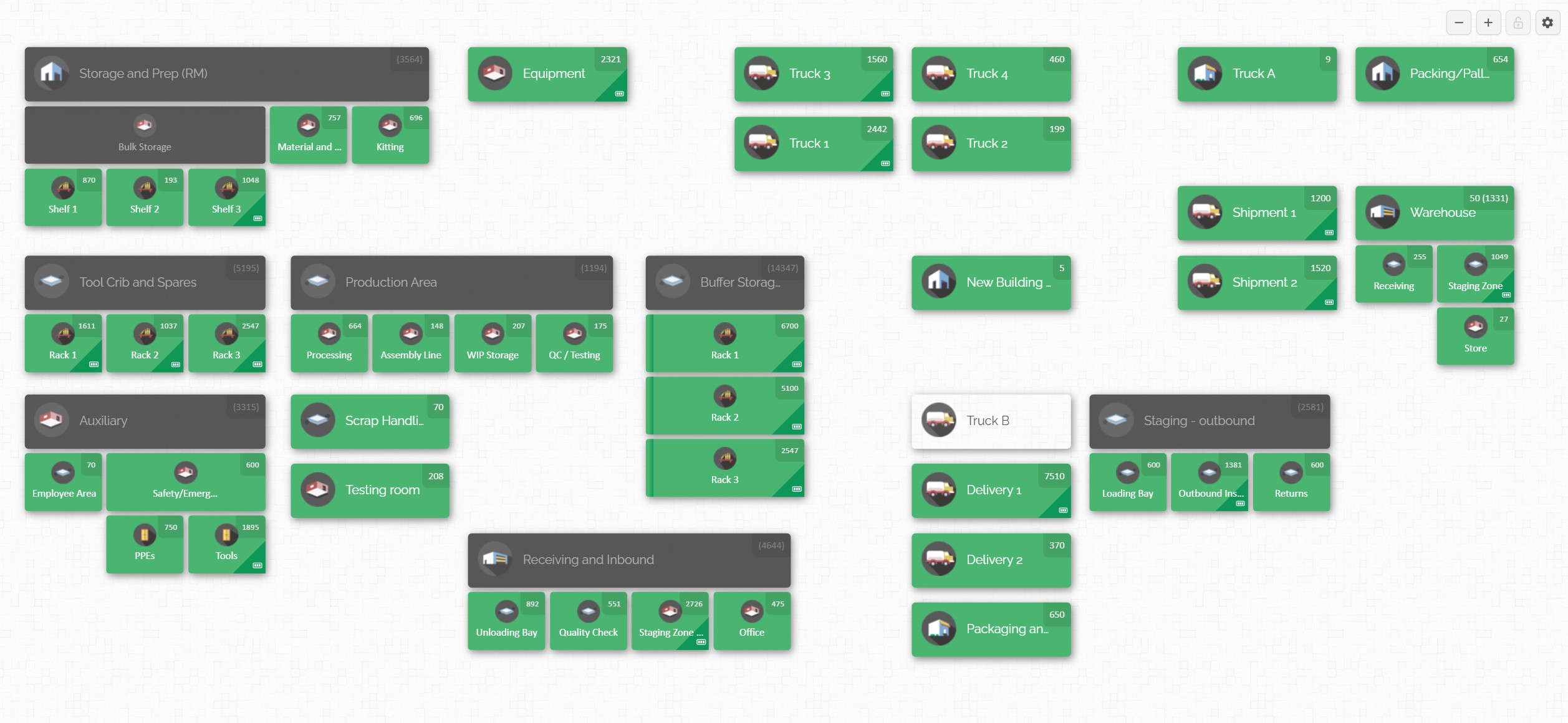
Before going deeper into the strategy, it helps to picture what shared, location-based visibility actually looks like when every department is working from the same view. The map below shows how inventory can be organized on a map by location, so anyone on the team can see which warehouse, site, vehicle, or storage area holds a given part and in what quantity. Rather than reading through rows of disconnected spreadsheets, the reader can see the physical footprint of the inventory at a glance and drill into each location for detail. This kind of view is the foundation for many of the best practices discussed throughout this article, because it turns inventory from an abstract list into something every department can recognize and act on.
As you explore the demo, notice how quickly questions that normally require phone calls or emails can be answered by simply looking. Where is the nearest stock of a specific valve or fitting? Which job site is holding surplus material that could be reallocated? Which location is running low on a critical spare? These are the everyday questions that separate a reactive operation from a proactive one, and they are exactly the questions this article will help your teams answer more consistently.
What Inventory Visibility Really Means in a Multi-Department Operation

Inventory visibility is often described simply as knowing what you have, but that definition falls short in any organization where more than one team depends on the same stock. True visibility means that every person who needs to make a decision about a part or material can see its quantity, its exact location, its condition, and its recent history without having to ask someone else. It also means that what they see is current enough to trust, so a field supervisor and a purchasing agent looking at the same item at the same moment reach the same conclusion. In a single-location shop, a knowledgeable stockroom attendant can sometimes fill this role from memory, but that approach breaks down as soon as inventory spreads across buildings, yards, trucks, and job sites. This is why visibility has to be thought of as a shared operational capability rather than the private knowledge of whoever happens to manage the shelves.
It is also worth separating visibility from simple record-keeping, because many organizations have plenty of records and still struggle to see their inventory clearly. A company might maintain a purchasing system, a maintenance log, a few departmental spreadsheets, and a paper sign-out sheet at the tool crib, and technically all of that is inventory data. The problem is that each record captures only one slice of the picture, uses its own naming conventions, and is updated on its own schedule. When a project manager needs to know whether enough cable tray is available for next week, none of those records answers the question on its own. Visibility, by contrast, is the ability to bring those slices together into one coherent, trustworthy view that anyone can use.
The Four Dimensions of Visibility
In practice, it helps to break inventory visibility into four dimensions that work together. Each one answers a different question that teams ask every day, and a weakness in any one of them undermines the value of the others. Organizations that make real progress tend to evaluate themselves against all four rather than focusing only on counts. The dimensions are:
- Quantity: How many units of a given item exist, and is that number accurate?
- Location: Exactly where is each unit, down to the building, area, shelf, bin, vehicle, or site?
- Status and condition: Is the item available, reserved, damaged, in transit, or awaiting inspection?
- History: Who moved it, when, from where, and for what purpose?
Of these four, location is the dimension most often neglected, and it is also the one that causes the most day-to-day pain in industrial environments. Knowing that the company owns forty replacement motors is of limited value if no one can say which of three warehouses, two job sites, and a service truck they are sitting in. Likewise, history matters far more than many teams realize, because it is what allows a supervisor to resolve a discrepancy, trace a missing item, or understand why stock keeps disappearing from one area. When all four dimensions are covered, visibility stops being a static snapshot and becomes a living record of how inventory moves through the business.
Why Departments See Inventory Differently
One reason visibility is so hard to achieve across departments is that each team naturally views inventory through its own lens. Procurement sees inventory as spend, lead times, and supplier commitments, while operations sees it as the material that keeps production lines or construction crews moving. Maintenance thinks in terms of critical spares and equipment uptime, field teams care about what is on the truck or at the site today, and finance views inventory as working capital and asset value on the balance sheet. None of these perspectives is wrong, but when each department keeps its own records to serve its own lens, the organization ends up with several partial truths and no shared one.
The practical consequence is that cross-department conversations about inventory often turn into debates about whose numbers are right, rather than decisions about what to do next. A maintenance planner may insist a spare is in stock because it appears in the maintenance system, while the warehouse insists it was issued to a job three weeks ago. Resolving these conflicts consumes time, delays work, and quietly teaches people to keep their own private stashes and side spreadsheets as insurance. Building on this, the first step toward competitive advantage is recognizing that visibility must be designed to serve all of these lenses from a single, shared foundation.
Inventory Visibility Benefits That Translate Into Competitive Advantage

The most important inventory visibility benefits are not abstract improvements in data quality; they are concrete changes in how fast and how reliably a company can deliver. When everyone can see the same inventory, decisions that used to take hours of searching and phone calls can be made in minutes. That speed compounds across hundreds of small decisions every week, from issuing parts to a crew to deciding whether to place a purchase order. Over time, the organization with better visibility simply moves faster than its competitors, and in markets where schedules and responsiveness win contracts, speed is a decisive advantage. It is worth examining each of the major benefits in turn, because together they explain why visibility is increasingly treated as a strategic priority rather than an administrative one.
It is also important to understand that these benefits reinforce one another. Better accuracy reduces emergency purchasing, which lowers costs, which frees capital for growth, which in turn makes the business more resilient during supply disruptions. Faster access to parts improves crew productivity, which protects schedules, which strengthens customer relationships and reputation. Because the benefits stack, organizations that invest in visibility often see returns that are larger than any single improvement would suggest. This compounding effect is precisely what turns a tactical operational fix into a durable competitive edge.
Faster Response and Shorter Delays
The first and most visible benefit is speed. When a crew on a job site needs a replacement part, or a production line goes down waiting on a component, the time spent locating that item is pure lost productivity. In an organization with poor visibility, a supervisor might call two warehouses, text a colleague at another site, and eventually send someone to physically check shelves, all before learning whether the part exists at all. With clear, shared visibility, the same supervisor can identify the nearest available unit immediately and arrange for it to be pulled or transferred. Multiply that time saving across every request in a month, and the gain in crew utilization and equipment uptime becomes substantial.
This speed also changes how a company competes for work. Contractors and manufacturers who can confidently commit to start dates and delivery windows because they know their material position are more attractive to customers than those who hedge every promise. In practice, visibility allows estimators and project managers to check availability before quoting, rather than discovering shortages after the contract is signed. That reliability builds a reputation that is difficult for competitors to match, especially when those competitors are still relying on guesswork and goodwill to manage their stock.
Lower Carrying Costs and Less Duplicate Purchasing
The second major benefit is financial. When departments cannot see each other’s inventory, they tend to compensate by buying more than they need, holding private safety stock, and placing rush orders for items that already exist somewhere else in the company. Each of these behaviors quietly inflates carrying costs, ties up working capital, and increases the risk of obsolescence, damage, and shrinkage. Shared visibility allows purchasing teams to check existing stock across all locations before placing an order, and it allows operations to reallocate surplus from one site to another rather than letting it sit idle. The result is a leaner inventory position that still supports the work, which is exactly the balance most organizations struggle to strike.
This is especially important in industrial construction, where projects often end with leftover material scattered across sites, yards, and trailers. Without visibility, that surplus is frequently forgotten, written off, or rediscovered months later after the same items have been purchased again for the next project. With visibility, surplus becomes a known, reusable asset that can be applied to upcoming work. Over a year, the savings from avoided duplicate purchases alone can justify the effort required to improve visibility.
Higher Inventory Accuracy and Better Planning
A third benefit is accuracy, which underpins every other planning activity in the business. Forecasts, reorder points, project material plans, and maintenance schedules all depend on knowing the true starting position. When records are inaccurate, planners either overcompensate by building in large buffers or undercompensate and suffer stockouts at the worst possible moment. Visibility improves accuracy because it exposes discrepancies quickly, makes it obvious when records and reality diverge, and gives teams the history they need to correct the root cause. In turn, planning becomes more precise, buffers can be reduced safely, and the organization spends less time firefighting.
Accuracy also affects credibility inside the organization. When teams trust the inventory data, they use it, which keeps it accurate, which keeps them trusting it. When teams distrust the data, they stop updating it and start relying on side systems, which makes the official data even less accurate. Visibility is therefore not just a product of good records; it is the mechanism that keeps those records good.
Stronger Cross-Team Alignment and Accountability
The final benefit is cultural, and it may be the most durable source of advantage. When procurement, operations, maintenance, field crews, and finance all work from the same view of inventory, arguments about whose numbers are right give way to conversations about what to do next. Accountability improves because movements are recorded and traceable, so it is clear who moved what and when. Collaboration improves because teams can see how their actions affect others, such as how pulling spares for a project might leave maintenance exposed. This alignment is difficult for competitors to replicate quickly, because it depends on habits and shared processes rather than on any single purchase or policy.
In practice, alignment shows up in small but meaningful ways. Weekly coordination meetings get shorter because the inventory questions are already answered before anyone walks into the room. Handoffs between the warehouse and field crews become smoother because both sides can confirm what was sent and what was received. Finance closes periods with fewer surprises because physical inventory and recorded inventory are closer together. Taken together, these inventory visibility benefits explain why leading organizations now treat visibility as a core operating capability, and they set the stage for understanding what it costs when visibility is missing.
The Hidden Cost of Fragmented Visibility Across Departments
Most organizations do not realize how much fragmented visibility costs them, because the losses are spread thinly across many budgets and rarely labeled as inventory problems. A crew standing idle for two hours while someone searches for a part shows up as labor cost, not inventory cost. A rush shipment of an item already sitting in another building shows up as freight expense. An equipment outage extended by a missing spare shows up as lost production or a delayed project milestone. Because each loss is recorded somewhere else, leadership often underestimates the true price of poor visibility, and the problem persists long after it should have been fixed.
When these scattered costs are added together, the picture changes dramatically. Teams that take the time to trace delays, emergency purchases, and write-offs back to their root cause frequently discover that a large share of them come down to one simple issue: someone could not see inventory that already existed. Recognizing this pattern is often the turning point for organizations that decide to treat visibility as a priority. It reframes the conversation from whether improving visibility is worth the effort to how much the organization is already losing by not doing so.
Common Symptoms of Poor Visibility
Fragmented visibility tends to produce a recognizable set of symptoms, and most operations leaders will recognize several of them immediately. These symptoms are useful because they make an invisible problem tangible and give teams a starting point for improvement. If more than a few of these sound familiar, visibility is likely costing your organization more than it appears. Typical warning signs include:
- Crews or technicians regularly waiting on parts that turn out to be in stock somewhere else.
- Purchase orders placed for items that are later found in a warehouse, trailer, or job site.
- Departments keeping their own private stock or side spreadsheets because they do not trust the official records.
- Frequent disagreements between teams about counts, locations, or who last handled an item.
- Physical counts that consistently differ from recorded quantities, with no clear explanation.
- Surplus material from completed projects that is never reused or is written off months later.
Each of these symptoms points back to the same underlying gap, which is that information about inventory is not flowing freely between the people who need it. Some symptoms, such as private stockpiles, are actually rational responses to poor visibility, because individuals protect themselves when the system cannot be trusted. Unfortunately, those protective behaviors make the overall picture even murkier, creating a cycle that is hard to break without a deliberate change in process. Understanding the symptoms helps teams target the right fixes rather than simply asking everyone to try harder.
How Fragmentation Compounds Over Time
The damage from poor visibility is rarely static; it tends to grow as the organization grows. Each new job site, warehouse, service vehicle, or department adds another place where inventory can hide and another set of records that may or may not match the others. What was manageable with one facility and a handful of employees becomes chaotic with five locations and multiple teams sharing the same parts. In practice, this is why many companies hit a wall as they scale, finding that informal methods that once worked well suddenly produce constant errors and delays. Growth amplifies whatever inventory habits already exist, good or bad.
Fragmentation also erodes institutional knowledge in ways that are easy to miss until it is too late. When visibility depends on a few experienced people who simply know where things are, the organization is exposed every time one of them is on vacation, changes roles, or retires. New employees take longer to become productive because they cannot find what they need without help. As a result, the cost of poor visibility shows up not only in operations but also in training time, turnover risk, and the resilience of the organization as a whole. These realities make a strong case for the structured best practices that follow.
Build a Shared Location Language Every Department Understands

The foundation of multi-department inventory visibility is a common way of describing where things are. It sounds simple, yet it is one of the most frequently overlooked steps, and its absence undermines almost every other improvement effort. In many organizations, the warehouse calls an area “Bay 4,” maintenance calls it “the back cage,” and field crews call it “where the pipe fittings go,” which means a single location effectively has three names. When records use inconsistent location names, the same item can appear to be in several places or nowhere at all, and anyone outside the original department struggles to interpret the data. A shared location language removes that ambiguity and gives every team the same mental map of the operation.
Building this language is as much about agreement as it is about structure. The goal is not to impose a rigid system designed by one department, but to create a naming and hierarchy standard that works for warehouse staff, maintenance technicians, project managers, and finance alike. That usually means involving representatives from each team in the initial design, walking the physical spaces together, and testing names against real-world questions. In practice, the best location standards are those that a new hire can understand within their first week, because that is a strong sign the system is intuitive rather than tribal.
Design a Clear Location Hierarchy
A good location hierarchy moves from the broadest level to the most specific, so that anyone can narrow down where an item is in a logical sequence. For a typical industrial or construction organization, the top level might be a region or major facility, followed by individual buildings or job sites, then areas or zones, and finally shelves, racks, bins, or containers. Mobile locations, such as service trucks, trailers, and gang boxes, should be treated as first-class locations in the hierarchy rather than as afterthoughts. When the hierarchy reflects the physical reality of the operation, people can move from a record to the actual item without guesswork. A practical sequence for building the hierarchy looks like this:
- List every place inventory can physically be stored, including temporary and mobile locations.
- Group those places into logical levels, from facility or site down to bin or container.
- Agree on a consistent naming format for each level that all departments will use.
- Label physical locations to match the names in the system exactly.
- Assign an owner for maintaining the hierarchy as locations are added, closed, or reorganized.
Once the hierarchy is in place, it becomes the backbone for every inventory record and every movement. Items are always assigned to a specific location within the structure, and movements are recorded as transfers from one defined location to another. This consistency is what allows a procurement agent in the office and a technician in the field to look at the same record and picture the same physical spot. It also makes reporting far more useful, because inventory can be rolled up or broken down at any level of the hierarchy depending on who is asking.
Make Locations Visual and Intuitive
Names and hierarchies are essential, but they become far more powerful when people can see locations in relation to one another. Many inventory problems in multi-site operations are spatial in nature, such as determining which site is closest to a crew in need or understanding how stock is distributed across a region. A list of location codes forces people to translate abstract text into a mental picture of the territory, which is slow and error-prone, particularly for people who do not work in the warehouse every day. Visual, map-based representations allow team members to orient themselves immediately and make faster, better decisions about where to pull or send material.
This is especially important for departments that are not inventory specialists. A project manager or finance analyst may not know the internal layout of a distant warehouse, but they can easily understand a view that shows where each facility and job site sits and what each one holds. Visual location context also helps during onboarding, emergency response, and cross-site coordination, because it reduces the amount of local knowledge required to participate. Building on this foundation of clear, visual locations, the next best practice focuses on ensuring that everyone relies on the same records.
Establish a Single Source of Truth With Clear Ownership
Once locations are defined consistently, the next step is making sure every department relies on the same inventory record. A single source of truth means there is one authoritative place where quantities, locations, and movements are recorded, and every team agrees that this record wins when conflicts arise. Without that agreement, even a well-designed location hierarchy will be undermined by competing spreadsheets, departmental logs, and informal notes that drift out of sync. In practice, many organizations already have the pieces of a good system but allow parallel records to persist because retiring them feels risky or politically difficult. Committing to one source of truth is the moment when visibility moves from aspiration to operating standard.
This commitment requires leadership support, because it often asks teams to give up tools they have relied on for years. A maintenance supervisor who has kept a personal spreadsheet of critical spares may be understandably reluctant to abandon it until the shared system proves trustworthy. The most effective approach is to migrate those records carefully, validate them against physical counts, and then formally retire the old versions so there is no ambiguity about where to look. When people see that the shared record is accurate and easy to use, resistance tends to fade quickly, because the shared system saves them more time than their private one ever did.
Consolidate Records Without Losing Detail
Consolidation is where many visibility projects stumble, because teams worry that merging records will strip away the details their department depends on. Procurement may care about supplier part numbers, maintenance may track equipment associations, and field teams may need notes about condition or compatibility. A good single source of truth accommodates these needs by allowing each item to carry the relevant attributes without forcing every department to manage a separate record. The key is to agree on a core set of fields that every item must have, such as name, description, quantity, and location, while allowing additional detail where it adds real value. This balance keeps records consistent without making them so rigid that departments feel compelled to maintain side systems.
The consolidation process itself should be treated as a project with a clear plan, not as a background task. Start by importing existing records from the various spreadsheets and logs, then reconcile duplicates where the same item appears under different names. Validate high-value and high-usage items first with physical counts, since these have the greatest impact on operations and finance. As a result, the organization builds confidence in the new system quickly, focusing effort where accuracy matters most rather than trying to perfect every low-value record on day one.
Define Who Owns What
A single source of truth only stays accurate if there is clear ownership for maintaining it. Ownership does not mean that one person updates every record; it means that specific roles are accountable for specific locations, item categories, or processes. For example, the warehouse lead might own the accuracy of central stock, site supervisors might own the inventory at their job sites, and fleet managers might own what is assigned to each service vehicle. When ownership is defined this way, discrepancies have a natural point of contact, and problems are resolved instead of bouncing between departments. Ownership also creates a sense of responsibility that encourages people to keep their part of the record clean.
Alongside ownership, organizations should think carefully about access and permissions. Not everyone needs the ability to edit every record, and giving broad edit rights to everyone can introduce errors and confusion. A practical model allows broad viewing access so that all departments can see inventory, while limiting editing rights to the people responsible for each area. This approach preserves the benefits of shared visibility while protecting the integrity of the data, and it sets up the next critical practice, which is controlling how inventory moves.
Enforce Movement Discipline to Protect Inventory Accuracy

Even the best location hierarchy and the cleanest single source of truth will decay quickly if inventory movements are not recorded consistently. Every time a part leaves a shelf, moves to a job site, is loaded onto a truck, or returns to the warehouse, the record must reflect that change. In many organizations, the initial data is reasonably accurate, but it degrades over weeks and months because movements happen informally and are never captured. A technician grabs a few fittings on the way out the door, a crew transfers leftover material between sites without telling anyone, or a supervisor borrows spares from another department to finish a job. Each unrecorded movement creates a small gap between records and reality, and those gaps add up until the data is no longer trusted.
Movement discipline is therefore the practice that keeps visibility alive over time. It requires making the act of recording a movement as simple and fast as possible, so that people do it naturally as part of their work rather than as an extra chore. It also requires clear expectations about which movements must be recorded and by whom, so there is no confusion about responsibility. When movement discipline is strong, the inventory record becomes a reliable reflection of the physical operation, and the benefits of visibility continue to compound rather than fade.
Record Transfers as They Happen
The single most effective habit for maintaining accuracy is recording transfers at the moment they occur rather than batching them for later. When a movement is recorded hours or days after the fact, details are forgotten, quantities are estimated, and some movements are simply never entered. Recording in real time, or as close to it as practical, ensures that the record reflects what actually happened and that other departments see the change immediately. In practice, this means giving warehouse staff, site supervisors, and field leads easy access to the shared system from wherever they work, typically through a web browser on a laptop, tablet, or desktop at the point of activity. The easier it is to record a transfer, the more consistently it will be done.
To make transfer recording dependable, many organizations adopt a short set of standard rules that every team follows. These rules remove ambiguity and make the expectations clear for new employees and experienced staff alike. They also give supervisors a simple standard to coach against when a movement is missed, which keeps corrections constructive rather than personal. Common examples include:
- Every movement between locations is recorded as a transfer from one defined location to another.
- Items issued to a job, crew, or vehicle are moved to that location in the record before they leave.
- Returns and leftover material are recorded back into a specific location, never into a general holding bucket.
- Damaged or quarantined items are moved to a designated location so they are not counted as available.
These rules may seem basic, but their consistency is what makes them powerful. When everyone follows the same rules, the movement history becomes a clear and readable story of how inventory flows through the organization. That history is invaluable for resolving discrepancies, investigating losses, and understanding usage patterns. It also reinforces accountability, because each movement is tied to the person who recorded it.
Use Audits and Cycle Counts to Close the Loop
No matter how disciplined teams are, some errors will creep in, which is why periodic verification is essential. Rather than relying solely on disruptive annual physical inventories, many organizations use regular cycle counts that check a portion of inventory on a rotating schedule. High-value, high-usage, and critical items are typically counted more frequently, while slow-moving, low-cost items are counted less often. When a count reveals a discrepancy, the movement history allows teams to trace back and identify where the process broke down, so the root cause can be fixed rather than simply adjusting the number. Over time, this feedback loop steadily improves both accuracy and process discipline.
Cycle counting is also an excellent cross-department activity. Involving site supervisors, maintenance leads, and fleet managers in counting their own areas reinforces ownership and builds familiarity with the shared system. It also surfaces practical issues, such as confusing location labels or awkward storage arrangements, that may not be obvious from the office. As a result, audits become not just a control mechanism but a continuous improvement tool, which naturally leads to the broader question of how each department should participate in the visibility effort.
Align Every Department Around the Same Inventory Picture
With shared locations, a single source of truth, and disciplined movement recording in place, the organization has the technical foundation for visibility. The next challenge is making sure each department actually uses that foundation in its daily decisions. Visibility only creates value when it changes behavior, such as a buyer checking existing stock before ordering or a planner confirming spare availability before scheduling a shutdown. In practice, this requires mapping each department’s key decisions to the inventory information they need and building simple routines that connect the two. Cross-team alignment is not a one-time meeting; it is a set of habits that become part of how the business operates.
It also helps to recognize that each department will benefit in different ways, and those differences should be communicated explicitly. Procurement will care about avoiding duplicate orders, operations will care about keeping crews productive, maintenance will care about uptime, and finance will care about accuracy and working capital. When each team sees how shared visibility solves its own specific problems, adoption becomes far easier than when visibility is presented as a generic company initiative. Framing the effort around each team’s own pain points also gives managers a practical way to measure whether their department is actually using the shared record. The following sections outline how each major department can participate and what it gains in return.
Procurement and Purchasing
For procurement teams, visibility is the most direct path to reducing unnecessary spend. Before placing an order, buyers should check the shared record across all locations to confirm whether the needed items already exist somewhere in the organization. If stock is available at another site or in surplus from a completed project, a transfer is often faster and cheaper than a new purchase. Over time, procurement can also use location-level inventory and movement history to understand true consumption patterns, which leads to better reorder points and more informed supplier negotiations. This shift turns purchasing from a reactive function into a strategic one.
Procurement also plays an important role in maintaining the quality of item records. When new items are purchased, buyers can ensure they are added to the shared system with consistent names, descriptions, and initial locations, preventing duplicates from creeping in at the source. Clear communication between purchasing and receiving ensures that incoming stock is placed in its designated location and recorded promptly. As a result, the inventory record stays clean from the moment an item enters the organization.
Operations and Project Teams
Operations and project teams are often the heaviest users of inventory, and they feel the pain of poor visibility most acutely. Project managers and superintendents should use the shared record to confirm material availability during planning, not just when work is about to begin. This allows them to identify shortages early, request transfers from other sites, and coordinate deliveries so crews are never waiting on parts. In industrial construction, it also means tracking material assigned to each job site so that leftover stock is visible and can be reused on the next project. When operations treats inventory data as part of the project plan, schedules become more predictable and less dependent on last-minute heroics.
Project teams also benefit from visibility at the close of each job. Instead of leaving surplus material in trailers, laydown areas, or connexes where it may be forgotten, teams can record it back into defined locations so it remains available. This simple discipline can recover significant value over the course of a year, especially for organizations running many concurrent projects. It also improves relationships with procurement and finance, because leftover material becomes a known asset rather than an unexplained loss.
Maintenance and Reliability
For maintenance and reliability teams, visibility is directly tied to equipment uptime. Critical spares must be available when they are needed, and maintenance planners need confidence that the parts shown in the record are actually on the shelf and in usable condition. Shared visibility allows planners to verify spare availability before scheduling work, reducing the risk of extended outages caused by missing parts. It also helps maintenance teams protect critical spares from being borrowed by other departments without notice, since movements are recorded and visible. In practice, this transparency reduces tension between maintenance and operations, because both sides can see exactly what is available and agree on priorities.
Maintenance teams can also use location-level visibility to position spares more strategically. If certain parts are frequently needed at a particular facility or site, it may make sense to hold a small quantity locally rather than relying entirely on a central warehouse. Movement history provides the evidence needed to make these decisions confidently. Building on this, maintenance becomes not just a consumer of inventory data but a contributor to smarter stocking decisions across the organization.
Field Service and Mobile Crews
Field service teams and mobile crews present a unique visibility challenge, because their inventory moves constantly. Service trucks, trailers, and gang boxes are effectively small mobile warehouses, and if they are not tracked as distinct locations, a significant portion of inventory disappears from view. Treating each vehicle or mobile container as a defined location allows dispatchers and supervisors to see what each crew is carrying and route the right technician to the right job. It also makes restocking more efficient, since the record shows exactly what each vehicle needs to return to its standard load. When field inventory is visible, first-time fix rates improve and wasted trips are reduced.
Field crews also benefit from being able to see inventory at nearby locations. If a technician needs a part that is not on the truck, knowing which warehouse or site has it, and how far away it is, can turn a lost afternoon into a quick detour. This kind of spatial awareness is one of the clearest everyday examples of how inventory visibility benefits frontline productivity. It also gives field teams a stronger sense of connection to the rest of the organization, because they can see the broader inventory picture rather than just their own truck.
Finance and Leadership
Finance and leadership teams rely on inventory data for valuation, budgeting, and strategic planning. When the inventory record is accurate and comprehensive, period-end closes are smoother, write-offs are reduced, and leadership can make informed decisions about where capital is tied up. Visibility across locations also helps leadership identify underutilized stock, slow-moving items, and opportunities to rebalance inventory between facilities. In practice, finance often becomes one of the strongest advocates for visibility once it sees the reduction in surprises and adjustments. Reliable inventory data turns a source of financial uncertainty into a source of insight.
Leadership also sets the tone for cross-department alignment. When executives and senior managers reference the shared inventory record in meetings and decisions, it signals that the record is the authoritative source and that maintaining it matters. Conversely, when leadership tolerates side spreadsheets and informal workarounds, teams quickly learn that the shared system is optional. As a result, leadership commitment is often the deciding factor between a visibility initiative that thrives and one that quietly fades, which is why choosing a system that every department can actually use matters so much.
How CyberStockroom Supports Multi-Department Parts Visibility
The best practices described so far share a common requirement: a system that every department can understand and use without specialized training. This is where CyberStockroom fits naturally into the picture. CyberStockroom is built around the idea that inventory is easiest to manage when people can see where it physically lives, so it organizes parts and materials by location on a map rather than burying them in abstract lists. That approach speaks directly to the multi-department challenge, because a buyer, a maintenance planner, a superintendent, and a finance analyst can all look at the same view and immediately understand it. Instead of asking each team to learn the warehouse’s internal codes, CyberStockroom gives everyone a shared, visual starting point.
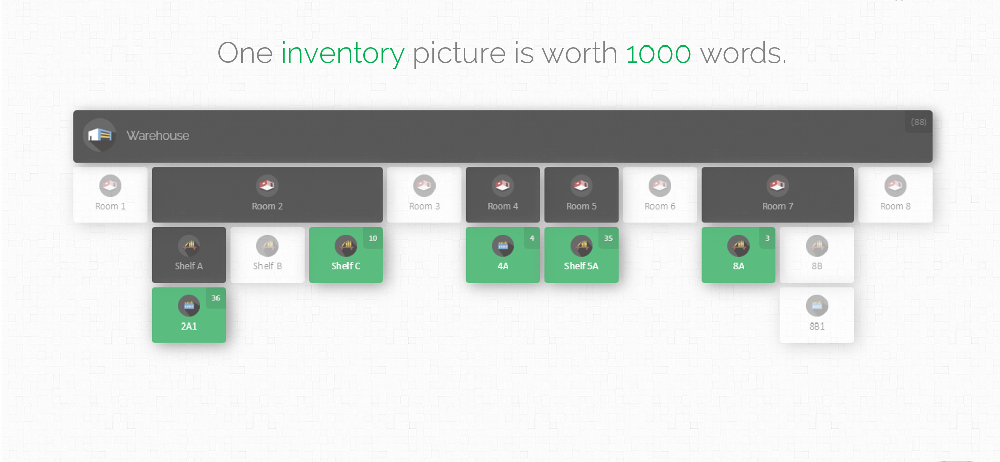
Just as important, CyberStockroom is designed to be practical for organizations that have outgrown spreadsheets but do not want the complexity of a heavyweight enterprise system. Teams can get their locations and items set up quickly, begin recording movements, and start seeing the benefits of shared visibility without a long implementation project. This matters because visibility initiatives often fail when the chosen tool is too complicated for frontline staff to use consistently. By keeping the focus on locations, quantities, and movements, CyberStockroom supports the habits that make visibility last.
A Map-Based View That Gives Every Department the Same Picture
With CyberStockroom, you can place your warehouses, facilities, job sites, yards, and other storage locations on a map, then see what each location holds at a glance. This directly supports the shared location language discussed earlier, because the map itself becomes the common reference that every department recognizes. A project manager does not need to remember which code corresponds to which building; they can simply see the site on the map and open it to view its inventory. For multi-site operations, this spatial view also makes it easy to identify the nearest available stock when a crew needs a part. In practice, the map turns inventory visibility from a specialized skill into something anyone in the organization can use.
The map view is also valuable for leadership and finance, who often need a high-level understanding of how inventory is distributed across the business. Seeing stock spread across locations helps reveal imbalances, such as one facility holding far more of an item than it uses while another site is constantly short. Those insights support smarter rebalancing decisions and reduce duplicate purchasing. As a result, the same view that helps a field supervisor find a part also helps leadership manage working capital more effectively.
Nested Locations That Match the Real Operation
CyberStockroom enables teams to organize locations in a hierarchy, so a facility can contain buildings or areas, which can in turn contain shelves, racks, bins, or containers. This mirrors the location hierarchy best practice described earlier and allows the system to reflect how the physical operation is actually arranged. Mobile locations, such as service trucks, trailers, and gang boxes, can be set up as their own locations, which keeps field inventory visible instead of letting it vanish once it leaves the warehouse. Because each item is assigned to a specific location within this structure, anyone looking at the record can trace it to an exact physical spot. That precision is what makes the record trustworthy across departments.
This structure also makes it easier to assign ownership. When each site, area, or vehicle is a defined location, it is natural to make a specific person or role responsible for the accuracy of that location’s inventory. Site supervisors can focus on their job sites, fleet managers on their vehicles, and warehouse leads on central stock, all within the same shared system. Building on this, ownership and structure reinforce each other, keeping the single source of truth accurate as the organization grows.

Movement Tracking and History That Protect Accuracy
With CyberStockroom, moving inventory from one location to another is recorded as a transfer, so the record always shows where items are now and how they got there. This supports the movement discipline best practice directly, because recording a transfer is quick and intuitive rather than a burdensome extra step. Each movement is captured in the item’s history, showing what moved, how much, from where, to where, and who made the change. When a discrepancy appears during a cycle count, teams can review that history to understand what happened and correct the underlying process. In practice, this turns the inventory record into a reliable audit trail that every department can rely on.
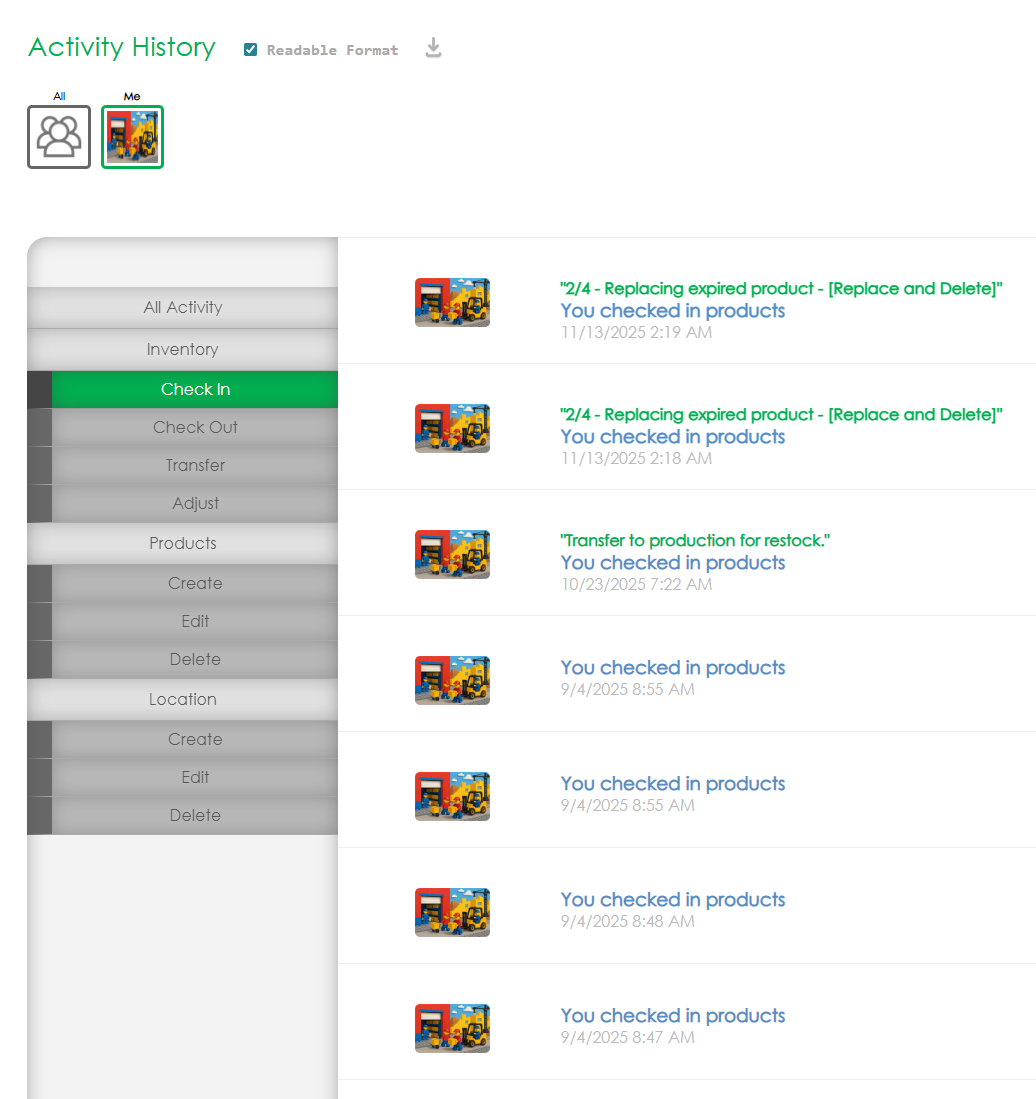
Movement history is also a powerful tool for cross-department trust. When maintenance can see that critical spares were transferred to a job site, or when procurement can see that surplus material was returned to the warehouse, conversations shift from blame to problem-solving. The history provides a shared factual basis that eliminates many of the disputes that plague organizations with fragmented records. As a result, teams spend less time arguing about the numbers and more time acting on them.
Search, Access Control, and Easy Onboarding
CyberStockroom lets team members search for items across all locations, which means a buyer checking for existing stock or a technician looking for a part can find it quickly without calling around. This search capability is central to reducing duplicate purchases and shortening response times, two of the most important inventory visibility benefits discussed earlier. Because the system runs in a web browser, people can access the same shared record from the office, the warehouse, or a job site trailer using the computers and tablets they already have. Getting started is straightforward as well, since existing records can be brought in from spreadsheets, which helps teams consolidate scattered lists into a single source of truth without retyping everything by hand.
CyberStockroom also allows administrators to control what different users can do, so organizations can give broad viewing access while limiting editing rights to the people responsible for each area. This matches the ownership and permissions model described earlier, protecting data integrity without restricting visibility. Departments that only need to look up inventory can do so freely, while those responsible for maintaining it have the controls they need. Taken together, these capabilities give organizations a practical way to put every best practice in this article into action, from shared locations to disciplined movements to genuine cross-team alignment.

Measuring Visibility: How to Know Your Efforts Are Working
Improving visibility is a significant investment of time and attention, so it is important to measure whether the effort is paying off. Without clear metrics, visibility initiatives can lose momentum, especially once the initial enthusiasm fades and day-to-day pressures return. Measurement also helps leadership see the connection between visibility and business results, which strengthens ongoing support. In practice, the most useful metrics are those that tie directly to the problems that motivated the initiative in the first place, such as delays, duplicate purchases, and inaccurate counts. When teams can see measurable progress, they are far more likely to maintain the habits that make visibility work.
The key is to keep measurement simple and focused. A handful of meaningful indicators reviewed regularly is far more valuable than a long list of metrics that no one has time to analyze. Each department should understand which metrics reflect its own contribution, so that improvement feels like a shared responsibility rather than a burden placed on the warehouse alone. Building on this, the following indicators provide a practical starting point for most industrial and construction organizations.
Core Metrics to Track
The most effective visibility metrics combine accuracy, speed, and cost, giving a balanced picture of how inventory performance affects the business. Accuracy metrics show whether the record matches reality, speed metrics show whether people can find what they need quickly, and cost metrics show whether the organization is avoiding waste. Together, they reveal whether visibility is improving and where attention is still needed. A practical set of core metrics includes:
- Inventory record accuracy: The percentage of counted items whose recorded quantity and location match physical reality.
- Location accuracy: The percentage of items found exactly where the record says they are.
- Time to locate: How long it typically takes a team member to find a requested part.
- Duplicate or emergency purchases: The number and value of orders placed for items that already existed in stock.
- Surplus reuse: The value of leftover material from completed jobs that is reallocated rather than written off.
- Stockout-related delays: The number of jobs, shifts, or maintenance tasks delayed because a part was unavailable or could not be found.
Tracking these metrics over time reveals trends that are far more informative than any single snapshot. For example, steadily rising location accuracy combined with falling emergency purchases is strong evidence that visibility is delivering value. Conversely, if accuracy plateaus or begins to slip, it signals that movement discipline or ownership may need reinforcement. Reviewing metrics by location or department can also highlight specific areas that need targeted support or additional training.
Turning Metrics Into Continuous Improvement
Metrics only create value when they lead to action, so it is important to build a regular review cadence. Many organizations find that a monthly cross-department review works well, bringing together representatives from procurement, operations, maintenance, field service, and finance to discuss results and agree on next steps. These reviews should focus on root causes rather than blame, using movement history and count results to understand where processes broke down. When a recurring problem is identified, such as a particular site consistently showing poor location accuracy, the team can agree on a specific corrective action and follow up the next month. Over time, this cadence turns visibility into a continuous improvement discipline rather than a one-time project.
It is equally important to celebrate progress. When a site achieves a significant improvement in accuracy, or when surplus reuse saves a meaningful amount of money, sharing that success reinforces the value of the effort and motivates other teams. Recognition helps shift the culture from viewing inventory recording as an administrative chore to seeing it as a contribution to the company’s competitiveness. As a result, measurement becomes not just a control tool but a way to build momentum, which leads naturally into how to roll out visibility improvements in a sustainable way.
Conclusion: Visibility as a Lasting Competitive Edge

Inventory visibility has moved from a back-office convenience to a genuine source of competitive advantage, and the reasons are rooted in everyday operational reality. Organizations that can see what they have, where it is, and how it is moving make faster decisions, waste less money, and deliver more reliably than those still working from fragmented records and informal knowledge. The inventory visibility benefits discussed throughout this article, including faster response, lower carrying costs, higher accuracy, and stronger cross-team alignment, reinforce one another and compound over time. In industrial construction, manufacturing, and field service, where schedules and uptime define success, that compounding effect can separate market leaders from everyone else. Visibility is no longer optional for organizations that want to compete on speed and reliability.
Achieving that advantage requires more than good intentions. It depends on a shared location language, a single source of truth with clear ownership, disciplined movement recording, and deliberate alignment across procurement, operations, maintenance, field teams, finance, and leadership. It also requires measurement, a phased rollout, and a culture that treats accurate inventory as everyone’s responsibility. None of these steps is especially complicated on its own, but together they create an operational discipline that competitors cannot easily copy.
Taking the Next Step
For teams ready to move forward, the most practical starting point is to identify the visibility gap that causes the most pain today. That might be field crews waiting on parts, recurring duplicate purchases, or surplus material that disappears at the end of every project. Focusing first on that problem creates an early win, builds momentum, and gives every department a concrete reason to participate. From there, the best practices in this article provide a roadmap for expanding visibility location by location and team by team.
CyberStockroom gives organizations a straightforward way to put that roadmap into action, with a map-based view of every location, nested storage that mirrors the real operation, recorded transfers with full movement history, and controlled access that keeps the shared record trustworthy. Rather than asking every department to adapt to a complicated system, it offers a visual, intuitive foundation that procurement, operations, maintenance, field crews, and finance can all use from day one. If your organization is ready to turn inventory from a source of friction into a source of advantage, exploring how CyberStockroom maps your own locations and stock is a natural next step. The sooner every team can see the same inventory picture, the sooner that visibility can start working in your favor.








Leave a Reply