
In the world of industrial operations, effective inventory management can make or break productivity and profitability. Yet many businesses fall prey to common inventory management mistakes that lead to wasted resources, production delays, or lost sales.
In fact, inefficient inventory practices cost businesses over $1 trillion globally each year in lost productivity and sales – a staggering figure that underscores how critical it is to get inventory. Whether you run a manufacturing plant, a warehouse, or a maintenance stockroom, avoiding these pitfalls is key to keeping your operations running smoothly.
1. Lack of Organization in Inventory Storage
When a stockroom or warehouse is disorganized, even the best inventory strategy will struggle to succeed. Cluttered aisles, unlabeled parts, and haphazard storage systems make it difficult for workers to find what they need and keep accurate counts. In an industrial setting, this might mean a technician spends hours searching for a critical spare part on a messy shelf, delaying repairs or production.

A lack of organization not only wastes labor time but can also lead to misplaced inventory, incorrect counts, and accidental reorders of items you already have. In short, if your physical inventory is in chaos, mistakes and inefficiencies will inevitably follow.
How to avoid it?
Implement a systematic organization strategy for your inventory. Start by assigning dedicated locations for every item – use clear labels, shelving units, and bin numbers so that every part or product has a “home.” Employ strategies like the 5S methodology (“Sort, Set in order, Shine, Standardize, Sustain”) to keep the warehouse tidy and standardized. Frequently used items should be stored in easily accessible areas, while rarely used stock can go in higher or less convenient spots.
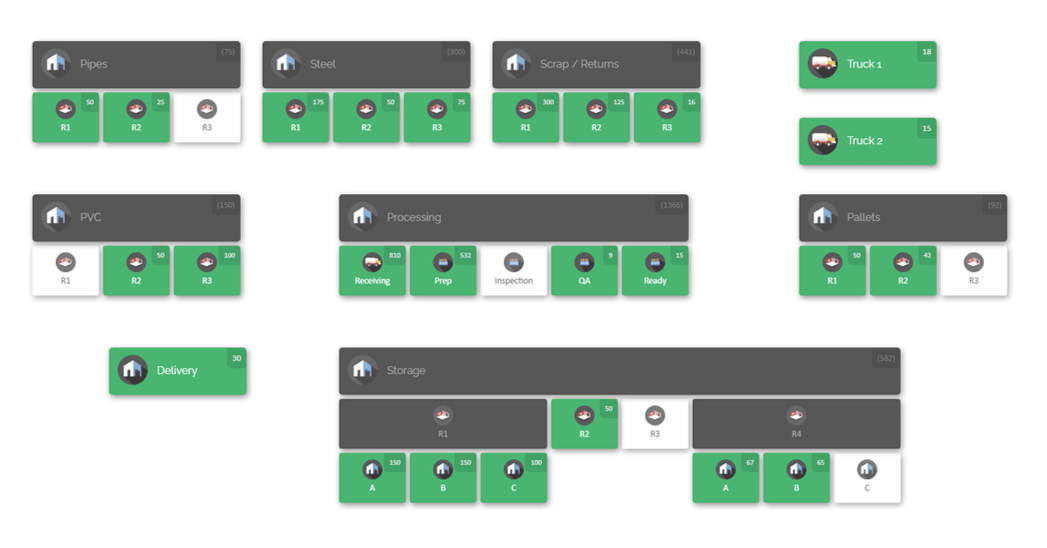
Make sure to map out your storage areas logically (for example, grouping by product type or production line) so staff intuitively know where to look. Regular housekeeping and audits of the storage area will help maintain order. Additionally, consider using an inventory management system that mirrors your physical layout – for instance, a digital inventory map can let you virtually see where each item is stored, making it even easier to stay organized and quickly retrieve items.
2. Overstocking or Understocking
Holding the wrong amount of inventory – either too much or too little – is one of the most common and costly mistakes in industrial operations. Overstocking ties up capital and consumes valuable storage space with excess product. It increases carrying costs (insurance, storage, handling) and risks items becoming obsolete or expiring before they’re used. In fact, carrying inventory comes at a price – often around 20–30% of the inventory’s value per year in storage and maintenance costs. This means that surplus stock worth $100,000 could silently be costing you as much as $25,000 annually in overhead.
On the other hand, understocking leads to stockouts – running out of parts or materials – which can halt production lines, delay order fulfillment, and frustrate customers. In industrial contexts, a single missing component can shut down an assembly line or equipment for hours or days until replenishment, resulting in expensive downtime. Striking the right inventory balance is critical: too much inventory erodes profits, while too little jeopardizes operations and sales.
How to avoid it?
The key to avoiding over- or understock situations is better inventory planning and monitoring. Start by analyzing your usage and demand patterns. Implement an inventory replenishment system using minimum and maximum stock levels or reorder points for each item: when stock falls to a defined minimum, it triggers a reorder up to the optimal level. These levels should be set based on factors like lead time from suppliers, usage rate, and safety stock needs. Regularly review these parameters – they shouldn’t be static. If you notice certain items consistently overstocked, adjust the max level down; if others keep running out, raise the safety stock or reorder point. Utilizing historical data and sales forecasts is essential for setting these levels. For example, if demand for a particular component is seasonal (higher in Q4, for instance), plan for higher stock before that peak and lower stock during slow periods.
Many companies use inventory management software that can automate alerts when an item is approaching its reorder point, ensuring you replenish in time to avoid stockouts. Just as important, avoid the temptation to over-buy simply to get bulk discounts or because of a hunch – always align purchases with realistic demand forecasts. By carefully managing order quantities and timing, you can keep inventory levels in the sweet spot: enough to meet demand (plus a buffer) but not so much that capital and space are unnecessarily tied up. Remember, inventory optimization is an ongoing process – review your stock levels and turnover rates often to continuously refine your approach.
3. Inaccurate Demand Forecasting
Forecasting demand is tricky, but ignoring it or doing it poorly can lead directly to the overstocking and understocking issues mentioned above. Many inventory problems stem from inaccurate predictions of future demand.

If you underestimate demand for a critical raw material or part, you’ll run out quickly (a classic stockout). Overestimate demand, and you’ll be stuck with piles of excess inventory that sit unused.
Industrial operations often face variable demand due to factors like seasonality (e.g. higher demand for certain equipment parts during summer), market trends, or project-based needs. For example, a manufacturer might schedule production of a product based on forecasted orders that don’t materialize – resulting in surplus finished goods and unused raw materials. Alternatively, failing to anticipate a spike in demand for a replacement part could mean maintenance teams don’t have spares when equipment breaks down. External factors also play a role: supply chain disruptions, economic shifts, or changes in customer preferences can all render your forecasts inaccurate if you’re not actively updating them. The bottom line is that poor demand forecasting causes a domino effect – either you scramble reactively to secure stock (often at higher cost) or you end up writing off obsolete inventory – both of which hurt the business.
How to avoid it?
Improving demand forecasting requires combining data, insights, and flexibility. Use data-driven forecasting techniques by analyzing sales data, usage history, and trends over multiple years. Look for patterns (monthly, seasonal, yearly cycles) to inform future projections. It’s also crucial to gather information from various sources: communicate with your sales team, account managers, or clients about upcoming needs; monitor market trends and economic indicators in your industry; and be aware of any known events (like a supplier shutdown or a new project launch) that could affect demand.
Modern inventory and ERP systems often have forecasting or demand planning modules – leverage these if available, as they can automatically factor in historical data and growth rates to project future needs. Additionally, adopt a practice of regular forecast reviews. Instead of setting a forecast once a year and forgetting it, update your forecasts monthly or quarterly based on the latest information. If you notice demand deviating from your prediction, adjust your inventory plans quickly (for instance, expedite a shipment or defer/cancel a scheduled order). It’s also wise to incorporate a degree of flexibility: maintain safety stock for items with highly unpredictable demand, and engage in scenario planning (“What if demand doubles? What if it drops by 30%?”) so you have action plans for different outcomes. By staying proactive and attuned to both data and real-world signals, you can significantly improve forecast accuracy. This, in turn, will keep your inventory levels more aligned with actual needs and prevent the painful costs of drastic overstock or sudden shortages.
4. Lack of Inventory Visibility

Do you know exactly what inventory you have on hand at each of your locations right now? If not, you’re suffering from a lack of inventory visibility, a common mistake that undermines decision-making and efficiency. This issue is especially pronounced in industrial operations with multiple storage sites, warehouses, or stockrooms.
When inventory data is siloed, outdated, or not easily accessible, managers end up operating in the dark. For example, imagine a company with several warehouses or job sites – without a centralized, real-time view of stock, the purchasing department might order a new batch of components for Plant A, not realizing that Plant B has a surplus of those same components that could have been transferred. Poor visibility often leads to redundant orders, excess inventory, and stock imbalances across locations. It can also cause delays in fulfilling orders or projects because you can’t readily locate where an item is.
In some cases, lack of visibility means surprise stockouts – you thought inventory was available because the system hadn’t been updated, but in reality the bins are empty. This not only disrupts operations but also erodes trust in the inventory data. Essentially, if you can’t “see” your inventory in real time, you can’t control it effectively.
How to avoid it?
Achieving full inventory visibility requires centralizing your inventory tracking and using technology to get real-time updates. Start by consolidating inventory data into a single system of record – ideally an inventory management software or module that covers all warehouses and storage locations. This way, any stock movement (receiving, transfers, usage, sales) is recorded in one place and reflected in on-hand quantities immediately.
Cloud-based inventory systems are particularly useful for this, as they allow multiple sites to access and update one shared database in real time. Implementing such a system means a manager in the main office can instantly see stock levels at a remote job site, for instance. In practice, this could involve using barcode scanners or mobile devices for every inventory transaction so that as soon as something is taken from a shelf or added to stock, the system updates. Another key aspect is location tracking – maintain records of not just how many of each item you have, but where it’s stored. Use location codes or even visual maps within your software to pinpoint items. With a centralized, real-time view, you can also leverage inventory transfers: if one location has excess and another has a shortage, visibility allows you to rebalance stock before placing new orders.
To maintain accuracy, make it standard procedure that all inventory activity is promptly logged. It may help to set up dashboards or automated reports that highlight inventory across all sites, so nothing is “out of sight, out of mind.” By breaking down data silos and seeing your entire inventory picture at once, you’ll avoid unnecessary purchases, reduce emergency expedites, and improve your ability to fulfill any requirement from the optimal location.
5. Using Manual Processes or Outdated Systems
In an age of automation, clinging to manual inventory processes or outdated legacy systems is a recipe for errors. Many industrial operations still rely on spreadsheets, paper forms, or old software that isn’t integrated – these methods might work when you have very little inventory, but they quickly fall apart at scale. Manual data entry (typing counts into Excel, for example) is notoriously error-prone: a simple typo or forgetting to record a transaction can throw your records off. Without automated safeguards, these mistakes accumulate.
Furthermore, outdated systems often lack real-time capabilities, meaning your inventory picture is only as current as the last manual update (which could be yesterday or last week). This lag leads to decisions based on stale data.

Consider a warehouse that updates stock levels via paper tickets turned in at day’s end – if a rush order comes in midday, staff might promise it to a client not realizing the item was already taken for another job that morning. Inefficiency is another big drawback: manual processes consume a lot of employee time (writing counts, compiling reports), and they don’t scale well when inventory volumes increase. As business grows, what used to take one person an hour now takes a whole team scrambling all day, simply to keep records straight. Additionally, older inventory systems can be cumbersome and unintuitive, leading employees to bypass them (“I’ll just keep track of these parts on my notepad because the system is too slow or hard to use”). All told, sticking with manual or out-of-date inventory management is a leading cause of inaccurate data, lost items, and productivity drain.
How to avoid it?
The solution is to modernize and automate your inventory management. Adopting contemporary inventory management software can dramatically reduce human error and improve efficiency. These systems let you scan barcodes or QR codes for each transaction (receiving, moving, shipping), instantly updating counts without manual typing. By removing manual data entry, you’ll prevent a huge portion of mistakes – one industry study found that the average inventory accuracy in businesses relying on manual methods was only around 65%, whereas automated systems can achieve accuracy levels above 95%. Choose software that fits your operation size and needs: for some, a full-featured ERP or warehouse management system is ideal; for others, a simpler cloud-based inventory app will do the job.
Key features to look for include:
- real-time updates
- user-friendly interfaces
- ability to generate reports automatically.
Cloud-based solutions are often advantageous because they require no heavy IT infrastructure and allow access from any device (so your floor staff, managers, and even remote team members see the same data). Transitioning to a new system also means standardizing processes: take the opportunity to establish clear workflows for how inventory is received, issued, and recorded using the software. Train your team on the new tools (more on training in a moment) and reinforce that the system is now the single source of truth – no side spreadsheets! While there is an upfront cost to new software and the effort of implementation, the payoff is huge. You’ll gain speed (e.g. scanning 100 items in seconds vs. entering them manually over an hour), improved accuracy, and accessible data that lets you manage inventory proactively. In short, modern tools turn inventory management from a tedious, error-ridden chore into a streamlined process where technology shoulders the heavy lifting.
Enhancing Inventory Management with CyberStockroom
Modern inventory software solutions can play a pivotal role in avoiding the mistakes outlined above. CyberStockroom is one such cloud-based inventory management platform that is specifically designed to simplify and improve inventory control – especially for businesses managing inventory across multiple locations or departments.
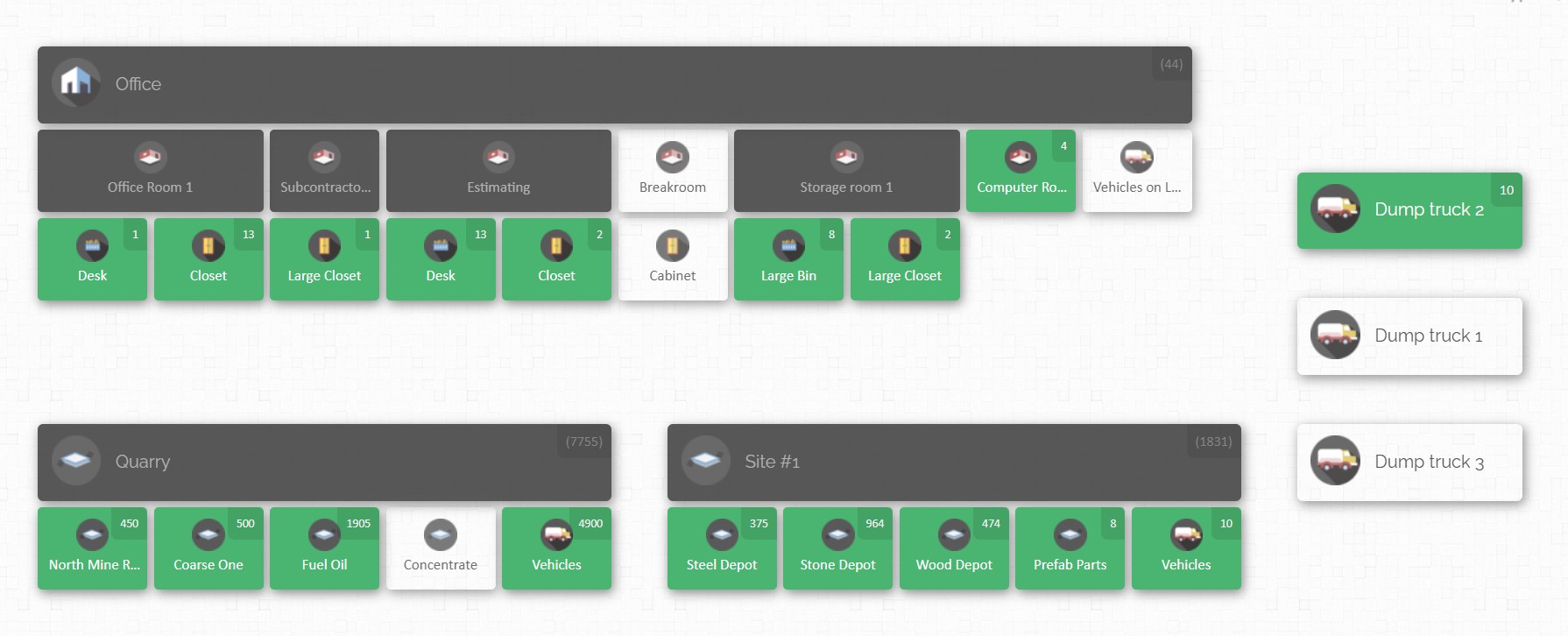
CyberStockroom’s unique approach uses visual mapping and intuitive tools to give you unparalleled oversight and ease of use. Here’s how leveraging CyberStockroom can help address many common inventory challenges:
- Visual Inventory Map for Full Visibility: CyberStockroom provides a dynamic inventory map dashboard that offers a bird’s-eye view of all your inventory locations and quantities at once. This means you can literally see where every item is stored across your warehouse, stockroom, or multiple sites. By having this clear visualization, you’ll avoid the visibility issues of mistake #4 – no more guessing where stock is or discovering too late that one site had supplies another site needed. You can click on any location on the map and instantly view its contents, ensuring that nothing stays hidden or forgotten in your inventory.
- Real-Time, Cloud-Based Tracking: Because CyberStockroom is cloud-based, all inventory data updates in real time and is accessible from anywhere. As soon as an item is added, moved, or used, the change is reflected for everyone to see. This directly combats problems like overstock/stockout surprises and data lags. With real-time tracking, your team can trust that the information on-screen is always up-to-date, enabling faster and smarter decisions (like reallocating stock or placing orders right when they’re needed). And since it’s accessible via web browser, different facilities or field teams can all work from the same live inventory data.
- User-Friendly Drag & Drop Interface: One notable feature is CyberStockroom’s focus on ease of use. The interface allows users to manage inventory with simple drag-and-drop actions – for example, to move items from one location on the map to another, you can literally drag them, which instantly updates the records. This intuitive design means minimal training is required (addressing mistake #7’s concern about complex systems and training gaps). Employees find it easy to adjust counts, transfer stock, or search for items, so they are more likely to use the system correctly rather than resort to manual workarounds. A user-friendly tool increases adoption across your team, ensuring that the inventory data remains accurate and comprehensive.
- Barcode Scanning for Accuracy: CyberStockroom supports barcoding and scanning, allowing you to check items in or out using barcode readers. This greatly reduces manual entry errors and speeds up processes like receiving shipments or conducting cycle counts. By integrating barcode scanning, CyberStockroom helps eliminate the kind of data slip-ups highlighted in mistake #5. Whether using handheld scanners or mobile device cameras, your staff can quickly log inventory movements with a scan, ensuring that your records stay accurate down to each unit.
- Collaboration and Multi-User Access: The platform is built to be used by your entire team, not just a single “inventory manager.” You can create multiple user accounts with appropriate permissions, so warehouse staff, purchasers, and managers can all interact with the inventory system as needed. This collaborative access prevents the scenario of mistake #8 where only one person holds all the inventory knowledge. With CyberStockroom, any authorized team member can get the information they need instantly (like checking stock levels or item locations), and updates made by one person are immediately visible to others. This promotes transparency and ensures everyone is on the same page.
- Reporting and Insights: In addition to its visual map, CyberStockroom offers reporting tools that help you analyze your inventory data. You can generate reports on stock levels, movements, or history, which support better decision-making and strategy. These insights address mistake #10 by enabling a data-driven approach. For example, you might run a report to identify slow-moving items versus fast-movers, helping you optimize stocking levels and reduce excess. By regularly reviewing such reports, you can continuously improve your forecasting and inventory policies.

By integrating a solution like CyberStockroom into your operations, you equip yourself with a powerful ally to avoid inventory mistakes. The software enforces best practices by design: you’ll maintain organized data tied to a visual layout, update everything in real time, and empower your team with accessible, easy-to-use tools.
The result is greater accuracy, efficiency, and peace of mind. Instead of reacting to inventory fires (missing parts, surprise shortages, or piles of unused stock), you can proactively manage inventory across your industrial operation with confidence. In short, CyberStockroom helps turn inventory management from a headache into a well-orchestrated part of your business – ensuring that the common mistakes we’ve discussed don’t stand a chance of creeping into your workflow.

6. Not Performing Regular Inventory Audits and Counts
Another frequent mistake is neglecting to audit your inventory on a regular basis. Some companies only do a full inventory count once a year (or even less frequently), often to satisfy accounting requirements. However, a lot can go wrong in the 12 months between those annual counts. If you’re not routinely verifying that the numbers in your system match what’s on the shelf, inaccuracies will grow unchecked. Small discrepancies caused by miscounts, unrecorded scrap, theft (shrinkage), or supplier errors can snowball over time. By the time you do a yearly count, you might discover large variances that have already impacted production or financials.
In an industrial context, consider a maintenance storeroom for a factory: if parts have been taken out for repairs without proper recording, the system might show “10 units in stock” of a critical spare, when in reality the bin is empty. If you only find out during an annual audit – perhaps right when that part is needed – you’re in trouble. Relying solely on infrequent counts can also lead to lengthy shutdowns; for example, pausing operations for days to count everything at year-end, which disrupts work and still may not fully catch all errors. Ultimately, skipping regular cycle counts or spot checks means running your operation with a high degree of uncertainty about your inventory’s accuracy.
How to avoid it?
Implement a cycle counting program or periodic audit schedule instead of waiting for once-a-year stocktakes. Cycle counting means counting a subset of inventory on a rotating schedule so that, over time, all items are verified without needing to count everything at once. For instance, you might count a different category of items each week, or schedule daily mini-counts of certain high-value or fast-moving SKU bins. By doing this continually, discrepancies are caught and corrected much sooner (preventing the big surprises). Prioritize counts by using the ABC method: A-items (very valuable or frequently used) get counted most often, B-items regularly, and C-items less frequently. This focuses effort where accuracy matters most.

Make cycle counting a routine part of staff duties – for example, assign warehouse workers 30 minutes each day to count a specific section. Modern inventory systems (like CyberStockroom or others) often have built-in support for cycle counting or at least make it easy to reconcile counts by scanning items and comparing to system records. Leverage those tools: scan 100% of items in a section and let the system highlight any mismatch. If any discrepancies are found, investigate immediately: find the cause (was there an unrecorded transaction? Is there a labeling issue? Theft?) and fix the record. The goal is to maintain a high level of inventory accuracy (ideally 95%+ accurate counts at all times). In addition to cycle counts, do occasional spot checks on random items, especially if an item seems to hit a reorder point unexpectedly early or if there was an unusual transaction – a quick recount can confirm the truth. By committing to regular audits, you greatly reduce the risk of operational interruptions due to surprise stock variances. Plus, when it’s time for an official annual inventory or financial audit, it will be a far smoother process because you’ve kept the data aligned with reality all along.
7. Inadequate Staff Training in Inventory Management
Even with great processes and tools in place, people can inadvertently introduce errors if they’re not properly trained. Lack of training is a subtle but serious inventory management mistake. This can manifest in a few ways: employees might not know how to use the inventory software correctly, leading to inconsistent data entry or avoidance of the system; warehouse workers might not be trained in best practices for handling and labeling stock, resulting in items put in the wrong location or mislabeled; or team members may not understand the importance of following procedures, so they take shortcuts (like bypassing the barcode scanner or forgetting to fill out a log) that compromise data accuracy. In fast-paced industrial operations, new hires or staff reassigned to inventory duties may be expected to “pick it up as they go,” which often isn’t sufficient – they could propagate mistakes out of sheer uncertainty on what the correct process is.

Moreover, if only a couple of people are fully trained and others only know bits and pieces, you’ll see high error rates whenever the experts are not directly involved. Inadequate training also contributes to low adoption of inventory systems: if the software seems complicated and people aren’t comfortable with it, they may resort to manual notes or verbal communication, undermining the centralized system. Ultimately, when staff aren’t confident and competent in inventory management tasks, the consistency and reliability of your inventory data will suffer.
How to avoid it?
Invest time in comprehensive training and continuous education for anyone involved in inventory processes. Start with the basics: develop clear Standard Operating Procedures (SOPs) for all inventory activities – receiving shipments, storing items, picking for orders or production, updating records, conducting counts, etc. Document these procedures and ensure they are easily accessible (a quick reference guide or digital document). Then, provide hands-on training for staff on both the procedures and any inventory management software you use.
Training shouldn’t be a one-time event; build it into your onboarding for new employees and offer refresher sessions for everyone periodically, especially when you update your system or processes. Make sure training covers not just “what to do” but also the why – when employees understand how accurate inventory impacts the company’s success (and their own work), they’ll be more careful and proactive. Encourage a culture where employees ask questions if unsure rather than improvising a step.
If your inventory system is complex, consider simplifying it or switching to a more user-friendly tool to reduce the training burden. Additionally, identify power users or inventory champions on the team who can support others and answer day-to-day questions on the floor. Cross-train team members in multiple roles – for instance, train a couple of people in purchasing on how to do basic warehouse inventory checks, and vice versa – so that knowledge isn’t isolated (this overlaps with the next mistake of relying on one person). Finally, evaluate the effectiveness of your training: if you still see recurring errors, find out if it’s a knowledge gap and address it with targeted coaching. Well-trained staff will handle inventory tasks more consistently and accurately, which directly leads to more reliable inventory management.
8. Relying on a Single Person for Inventory Knowledge
Does your organization have one individual who “knows everything” about the inventory – and few backups who could fill in? Over-reliance on a single person is a common pitfall, especially in smaller or family-run industrial operations, but it can affect larger ones too. While it’s great to have an inventory guru, it becomes a serious risk if all the knowledge and responsibility resides with that person alone. If they take a vacation, call in sick, or leave the company, the inventory management can descend into chaos.
We’ve heard the horror stories: the longtime storekeeper retires, and suddenly nobody else knows where items are located in the warehouse or how to use the inventory software beyond basic functions. This mistake also puts enormous pressure on the individual and creates a bottleneck – decisions and access might all funnel through them, slowing everything down if they’re busy or unavailable. Additionally, a single point of failure can lead to blind spots; even the best employee can make mistakes or overlook something, and without a second pair of eyes or collaborative process, those mistakes go unnoticed. In summary, concentrating inventory knowledge and duties on one person is high risk – it threatens continuity and often indicates a lack of systemic support for inventory management.
How to avoid it?
The remedy is to build a team approach and backup structure for inventory management. Start by ensuring processes are well-documented (as noted in the training section) so that all critical tasks and information don’t live only in one person’s head. Next, implement cross-training: have the primary inventory manager train at least one or two others in all essential duties (placing orders, updating the system, conducting counts, generating reports, etc.). This way, others can step in when needed and the operation doesn’t grind to a halt if one person is absent.
Rotate responsibilities periodically – for example, one month a secondary person could handle the cycle counts under supervision, or take the lead on updating the inventory dashboard – to give them practical experience. Encourage a culture of knowledge sharing: the primary expert should regularly brief the team on inventory status, issues, and insights, rather than keeping it to themselves. From a tools perspective, make sure more than one person has access to systems and the necessary permissions to use them.
If only the inventory manager has the login or the know-how to run a report, change that by training others and giving them access. It’s also wise to conduct trial runs of “what if Jane isn’t here?” – have the backup person do the inventory duties for a day to test that everything runs smoothly. If you discover gaps (e.g., only Jane knows the spreadsheet password or where a certain file is), resolve them. By spreading out the knowledge and tasks, you’ll not only reduce risk, but often you’ll improve the process too – multiple people can bring new ideas for efficiency and serve as checks-and-balances for each other. Inventory management, like any critical function, works best when it’s a team effort rather than a one-person show.
9. Poor Supplier Management
Inventory issues aren’t always internal; sometimes they originate from how you manage your suppliers and vendors. Poor supplier management can lead directly to inventory headaches. For instance, if a key supplier has inconsistent delivery times and you haven’t developed any contingency plans, you might frequently face late shipments that cause stockouts in your operation. Or perhaps you source a critical component from only one vendor and they suddenly have a production delay – without an alternate supplier lined up, your hands are tied as your inventory dwindles to zero.

Another aspect is communication: if you don’t clearly communicate your demand forecasts or changes to suppliers, they might not be prepared to fulfill your orders on time or in full. Quality issues are part of this too; a supplier with lax quality control might deliver a batch of parts that you end up scrapping, effectively reducing available inventory unexpectedly. In industrial operations, long lead times for specialized materials are common, so any disruption can be painful. A lack of strong relationships or agreements with suppliers means you’re reacting to problems rather than preventing them. Additionally, not negotiating favorable terms (such as consignment inventory, where you only pay when you use the stock, or vendor-managed inventory arrangements) can force you to hold more inventory as a buffer, increasing your carrying costs (because you don’t trust the supplier to replenish quickly). Essentially, if your supply side is shaky, your inventory will be too – you’ll either carry too much “just in case,” or suffer stockouts when the supplier falls through, or both.
How to avoid it?
Proactive supplier management is key. First, identify which suppliers are providing items critical to your operations and evaluate their performance – on-time delivery rates, quality levels, and communication. For those that are underperforming, consider working with them to improve or finding alternative sources. It’s generally wise to diversify your supplier base for important materials: having at least a second supplier qualified and ready can save you if the primary one hits a snag. Next, establish clear and regular communication channels with your vendors. Share your projected needs with them (forecast collaboration) so they can plan capacity – this might mean providing a monthly or quarterly outlook of your orders.
Build relationships where suppliers feel like partners; for example, scheduling periodic check-in calls to discuss upcoming requirements and any potential issues on their end. When it comes to new agreements or contracts, negotiate terms that reduce your inventory risk: if possible, negotiate shorter lead times or flexible order quantities, and explore if the supplier can hold safety stock for you at their facility. Some suppliers might agree to hold inventory on consignment or maintain a certain stock level in a vendor-managed inventory program, which means you don’t have to carry as much “just in case” inventory. Internally, link your purchasing system with inventory levels – for instance, ensure that when your inventory hits reorder points, purchase orders to suppliers are sent with enough lead time for them to deliver (this might involve setting accurate lead time parameters in your system and monitoring supplier lead time performance).
Also, have a contingency plan: know the emergency options if a supplier fails (Can you expedite from another source? Can you substitute a similar part temporarily?). By strengthening supplier relationships and planning, you’ll mitigate the risk of unexpected shortages and also avoid overstocking out of fear. Good supplier management leads to a more stable, predictable inventory flow, which in turn keeps your operations running without surprises.
10. Not Utilizing Data and Inventory Metrics
In the rush of day-to-day operations, it’s easy to fall into a pattern of “move stock in, move stock out” and not step back to analyze what your inventory data is telling you. Ignoring inventory metrics and analytics is a mistake that can cost you in missed opportunities and undetected problems. Companies that don’t track key performance indicators (KPIs) for inventory might be flying blind – you may not realize that certain items are stagnating on the shelves far longer than expected, or that your stockouts are more frequent than they should be, or that you’re spending too much on rush shipping due to last-minute orders. Without numbers to quantify these issues, they tend not to get addressed. For example, if you never calculate inventory turnover (how many times your inventory sells through in a year), you might be carrying items that turn only once a year (very slow) and tying up capital, when those funds could be used more productively.
Or consider order fulfillment rate – if you’re not measuring what percentage of orders (or production jobs) are completed without inventory delays, you might not realize how much inventory shortcomings are impacting your service levels. Another vital metric is inventory accuracy: if you don’t routinely measure the discrepancy between recorded and actual stock, you won’t know how reliable your system is or if your recent process improvements have made a difference. Essentially, not using data means you’re making inventory decisions based on gut feel or incomplete information. In the worst cases, this leads to repeating the same mistakes (overstocking certain parts, failing to stock enough of others, etc.) because there’s no quantitative feedback to inform change. In today’s industrial environment, where margins are tight and efficiency is crucial, leaving the data untapped is a competitive disadvantage.
How to avoid it?
Embrace a data-driven approach to inventory management. Determine which metrics are most relevant to your operation and start tracking them consistently. Common inventory KPIs include:
- inventory turnover ratio (cost of goods sold divided by average inventory – indicating how efficiently inventory is used)
- fill rate or service level (the percentage of demand fulfilled from stock on hand, reflecting how often you meet requirements without delay)
- stockout frequency or backorder rate
- carrying cost of inventory (as a percentage of inventory value, to monitor how much money is tied in storage)
- inventory accuracy rate (how often counts match records); and shrinkage rate (percentage of inventory lost to theft/damage)
Use your inventory management system to gather this data – many systems can generate these metrics or at least provide the raw data for analysis. For instance, you might run a report on all transactions and stock levels over a year to calculate turnover, or use built-in dashboard widgets that show current stock accuracy based on recent counts. If you don’t have software that does this easily, even a manual periodic analysis in a spreadsheet is better than nothing.
The critical part is to review these metrics regularly – say, monthly – and look for trends or outliers. Are there specific items with very low turnover (dead stock) that you should phase out or heavily discount to free up space? Is your overall turnover improving or worsening? How often did you face stockouts in the last quarter, and can you trace why? By asking these questions of the data, you can uncover root causes and areas for improvement. For example, data might reveal that one category of parts always stock out because of a supplier’s slow lead time – which you can then address by holding more safety stock or finding a new supplier. Or you may discover your carrying costs have crept up as you’ve added product lines, signaling it’s time to optimize or eliminate some inventory.
Also, use data to set targets – for instance, aim to improve inventory accuracy to 98%, or reduce stockouts to less than 2 per month – and then monitor progress toward those goals. In addition, modern systems and tools (like inventory optimization software or business intelligence dashboards) can provide advanced analytics, such as forecasting demand with greater precision or identifying correlations (e.g., certain parts that often get ordered together which you can position accordingly). In summary, by measuring and analyzing inventory metrics, you transform inventory management from a reactive task into a strategic function. Data will guide you to make smarter decisions – minimizing waste, maximizing service, and continuously fine-tuning your inventory to align with the needs of your industrial operation.
Conclusion
Inventory management in industrial operations is a balancing act that requires both attention to detail and a big-picture strategy. The common mistakes outlined above – from disorganization and bad data to poor planning and siloed efforts – have tripped up countless businesses, often at a great cost. The encouraging news is that each of these mistakes is avoidable with the right mix of best practices, team commitment, and supportive technology. By keeping your warehouse organized, maintaining optimal stock levels, forecasting wisely, and ensuring visibility and accuracy, you set a strong foundation for operational efficiency. Equally important is investing in your people through training and shared responsibility, and looking outward to manage supplier relationships and leverage data for continual improvement.
Avoiding these inventory pitfalls isn’t just about preventing problems – it’s about unlocking positive outcomes. When inventory is well-managed, industrial operations see gains like smoother production schedules, quicker fulfillment, lower costs, and happier customers. You free up working capital that was tied in excess stock and deploy it where it can grow the business. You eliminate frantic last-minute expedites and instead operate with calm and control. In essence, mastering inventory management gives your operation a competitive edge.
As you work on implementing these solutions, remember that modern tools can amplify your efforts. Solutions such as CyberStockroom (with its visual inventory maps and real-time control) can be a game-changer, helping enforce good practices and providing clarity across your entire inventory. But whether through advanced software or refined manual processes, the goal remains the same: the right inventory, in the right place, at the right time, managed by a knowledgeable team using reliable information. Achieve that, and you’ll avoid the common mistakes – and reap the rewards of a leaner, more responsive, and more profitable industrial operation. Here’s to turning inventory management from a potential Achilles’ heel into one of your organization’s strongest assets.







 CyberStockroom
Leave a comment