
The Chaos and Cost of Poor Inventory Control on Construction Sites
Picture a busy industrial construction site: crews are ready to work, but a critical tool is missing from the storage container. Workers scatter to search for it, wasting valuable time. A delivery of steel beams that was scheduled for yesterday hasn’t arrived, leaving an entire team idle. Meanwhile, piles of unused materials from a previous phase clutter the site, tying up capital and space. This job site chaos is all too common when inventory management is handled with outdated methods or not given enough attention. In fact, studies have found that an average construction worker spends around 10 minutes each day just looking for misplaced tools or equipment, adding up to a full work week of lost productivity every year. Multiply that across a project’s workforce, and the cost of disorganization becomes staggering.
The chaos isn’t just about inconvenience – it directly impacts a construction company’s bottom line and project success. Project delays, cost overruns, and safety risks often trace back to inventory issues. Missing materials can halt work, forcing expensive express shipments or last-minute runs to the supplier. Over-ordering (to play it safe) leads to stacks of surplus materials that may never get used – and as much as 30% of building materials delivered to a typical construction site end up as waste. This kind of waste isn’t just a sustainability concern; it’s money thrown away in unused inventory and disposal fees. Additionally, theft and loss plague many job sites. Equipment and materials left untracked are easy targets – contributing to over $1 billion in annual losses due to construction site theft in the U.S. alone. Every missing power drill or stolen pallet of copper wire isn’t just a write-off; it can also mean downtime while replacements are procured.
For site managers, procurement officers, and construction company owners, these problems create daily headaches. One site may be sitting on extra materials while another site across town is desperately reordering items that are actually available in-company, simply because no one has a clear view of inventory beyond their own location. Communication breakdowns between the field and the office further exacerbate the chaos: perhaps the procurement team isn’t informed in time that stock is running low, or the site crew isn’t aware a delivery arrived at the warehouse days ago. The result? Idle crews, rushed improvisations, frustrated staff, and unhappy clients.The construction industry operates on tight schedules and margins, so the urgency to solve these inventory issues is higher than ever. In this context, real-time inventory tracking has moved from a “nice-to-have” tech upgrade to an essential component of modern construction management.

Embracing real-time inventory management is about bringing order to the chaos – ensuring that everyone knows what’s on hand, where it is, and when it’s needed, at any given moment. Let’s explore why adopting real-time inventory tracking is becoming an urgent trend in industrial construction and how it can transform a messy, delay-prone job site into a well-orchestrated operation.
Why Real-Time Inventory for Construction Is a Game-Changer
Real-time inventory tracking means having up-to-the-minute, continuous awareness of your materials, tools, and equipment across all locations. In contrast to traditional methods – like pen-and-paper logs or Excel sheets updated only at day’s end (or worse, weeks later) – a real-time system updates inventory counts and locations instantly as changes occur. For the fast-moving, unpredictable world of construction projects, this immediacy is a game-changer.

Industrial construction projects are highly dynamic: materials are constantly being delivered, moved, installed, or consumed; tools are checked out in the morning and returned (we hope) by day’s end; and equipment might shift from one site to another as priorities change. With conventional tracking, by the time someone updates a spreadsheet or submits a report, the information is already outdated. Real-time tracking, on the other hand, provides a live pulse of inventory status. If a site supervisor uses five bundles of rebar this morning, the system reflects that usage immediately – so the procurement officer back at HQ sees the drop in stock right away and can reorder before it becomes a problem. When a delivery truck drops off materials on site, the inventory count goes up instantly, so everyone from accounting to the project manager knows those items are available.
This level of timeliness yields several critical benefits:
Preventing Delays and Downtime
Real-time inventory helps avoid those dreaded “wait, we don’t have that on site?” moments that cause work stoppages. By having an accurate count of critical materials and parts at all times, project managers can make quick decisions or adjustments to keep the project on schedule. For instance, if a particular size of pipe is running low, the system’s live data can trigger a prompt to arrange a transfer from another site or rush order before crews are left waiting around.
Reducing Overstock and Waste
In construction, uncertainty often leads teams to over-order “just in case,” which can result in huge piles of unused materials. With real-time tracking and better visibility, companies can move toward a leaner just-in-time inventory approach. You gain the confidence to order closer to what you actually need, knowing you’re monitoring consumption rates live. If one job site has excess bags of cement, a real-time view might reveal that surplus in time to redistribute it to another project rather than buying more. Eliminating over-ordering and catching surplus for reuse can dramatically cut waste and unnecessary expense.
Improving Multi-Location Coordination
Construction inventory isn’t in one neat warehouse – it’s spread over central yards, regional warehouses, various job sites, trucks, and even with individual crews. Real-time inventory systems shine by giving a centralized view of all those locations simultaneously. This breaks down silos between sites. Teams can see, for example, that the main warehouse has extra safety harnesses or that Site B has a spare generator that Site A needs. Instead of each site acting in isolation (and potentially double-ordering or hoarding items), the whole organization acts with shared information, which fosters efficient resource sharing and purchasing.
Accountability and Loss Prevention
When inventory updates happen in real time, there’s inherently more accountability for where things are and who has them. Every time a tool is checked out to a person or moved to a new site, the system logs it immediately. This creates a digital paper trail. Workers know that if they take out a laser level or a set of drills, it’s recorded with their name or assigned location. This tends to discourage casual loss and even theft – because an item that “goes missing” is noticed almost right away, not a month later during an audit. The result is fewer items mysteriously walking off the site. And in the unfortunate event something does go missing, you have data on its last known location and user, which helps in recovery or at least in pinpointing where things went wrong.
Real-Time Decision Making
Construction projects are a constant stream of decisions. Should we expedite an order or can we wait? Do we have enough plywood to get through the week? Which site should that new shipment of lumber go to, based on current stock? With live inventory data, decision-makers from the field to the office can make informed calls on the fly. It removes the guesswork and phone tag. A foreman can check a mobile device or laptop and answer a crew’s question in seconds (“Yes, we have those fittings, they’re showing 20 in stock at the yard”), rather than sending someone on a scavenger hunt. In meetings, supervisors can pull up real-time dashboards and immediately see if critical materials are in transit or already delivered. This responsiveness keeps projects agile and on-track even as things change.
In essence, real-time inventory tracking brings much-needed order and predictability to the inherently fluid environment of construction. It’s like having a continuously updated map of your project’s lifeblood – all the pieces and parts that make construction possible – so you can navigate challenges quickly. As industries worldwide undergo digital transformation, construction is catching up fast. Leading construction firms are now treating inventory data as mission-critical information, right alongside project schedules and budgets. Those that leverage real-time inventory tools are finding they can operate with a new level of efficiency and confidence, while those clinging to outdated methods are increasingly at risk of falling behind or getting caught off-guard by preventable problems.
From Spreadsheets to Speed: What Modern Inventory Tracking Looks Like
To truly appreciate the difference, let’s contrast old-school inventory management with a modern real-time approach:
- Traditional (Reactive) Method: A site manager might keep a clipboard log or an Excel sheet that’s updated at the end of the day (if time permits). Separate sites maintain separate records. When someone needs an item, they call around or physically check the warehouse. Monthly (or quarterly) stock counts eventually catch discrepancies. By then, missing items are long gone, and overstocked materials have gathered dust. Communication flows slowly – perhaps via emails or calls – and often errors in data entry or transcription creep in. By the time a consolidated report is made, it’s already out of date. Essentially, you’re always looking in the rear-view mirror with this approach, addressing issues only after they’ve caused damage.
- Real-Time (Proactive) Method: All inventory transactions are recorded as they happen using cloud-based software. When a delivery arrives, it’s logged with a quick barcode scan or a few taps on a tablet. When a tool is issued to a crew member, that checkout is instantly recorded against their name or assigned to a specific location (like “North Site – Tool Crib”). If a site transfers 10 lighting fixtures to another site, the system moves those items virtually from Site A’s inventory to Site B’s inventory the moment it happens. Everyone connected to the system can see these changes. Automated alerts can be set up, so if a high-value item leaves a designated area or if stock of an important material drops below a threshold, managers get notified immediately. Dashboards show a live tally of inventory by location. Audits are no longer a dreaded fishing expedition – they’re a simple matter of cross-verifying what the system says in real time. This approach means you are looking through a live dashboard, always aware of current conditions and able to act before small issues turn into big problems.
Modern inventory systems also often incorporate technologies like QR codes, barcodes, or RFID tags on materials and equipment. This doesn’t necessarily mean complex sensors everywhere – even simple scannable codes can do wonders. For example, each piece of equipment or box of materials gets a unique code. A worker with a smartphone or tablet can scan the code whenever that item moves or is used, automatically updating the central inventory. The technology itself is not science fiction; it’s practical and accessible – leveraging cloud databases and ubiquitous mobile devices to keep information flowing.

By using devices and software instead of paper, you eliminate a ton of human error (no more illegible handwriting or forgotten log entries), and you make updates instantaneous.
Another hallmark of modern systems is their accessibility. Since data is cloud-based, a project executive in the main office and a foreman out in the field can equally access the same real-time information. Permissions can be set so each role sees what they need. But gone are the days of information bottlenecks, where only one person “back at HQ” could pull together inventory data. Now, any authorized person, anywhere – whether on a laptop in a site trailer or on a phone on the actual construction deck – can get the info they need on the spot. This democratization of data ensures that the people who need answers (like “Do we have item X and where is it?”) can get them without delay.
It’s also worth noting how user-friendly interfaces have evolved. Early inventory software could be clunky, but newer tools recognize that many construction professionals aren’t full-time data analysts – they need something intuitive. Some systems use visual dashboards or even map-based interfaces (more on that shortly) that feel more natural for people used to dealing with physical layouts and locations. The easier and more visual the system, the more likely the team will actually use it consistently – which is crucial for getting the benefits. After all, the best system is only as good as the accuracy of the data put into it, so making the input and retrieval of information painless is a top priority.
In summary, modern real-time inventory tracking turns inventory management from a tedious, error-prone chore into a streamlined, proactive process. It shifts the mindset from “firefighting” crises (missing parts, last-minute stockouts, surprise surpluses) to preventing those fires in the first place. For construction companies seeking to improve efficiency and stay competitive, this shift is transformative. Now, let’s look at a concrete example of how such a system can be implemented, and how it directly addresses the chaos we described earlier.
Bringing Order with a Visual Twist: How CyberStockroom Helps Tame Job Site Chaos
In the realm of real-time inventory tools, one innovative solution making waves in the construction industry is CyberStockroom. CyberStockroom is an inventory management platform designed with exactly these construction challenges in mind, and it takes a unique visual approach: instead of just spreadsheets or lists, it uses an interactive inventory map to give you a bird’s-eye view of everything you own, across all locations.

Let’s explore how a tool like CyberStockroom can bring order to the chaos and improve your inventory tracking in practical ways:
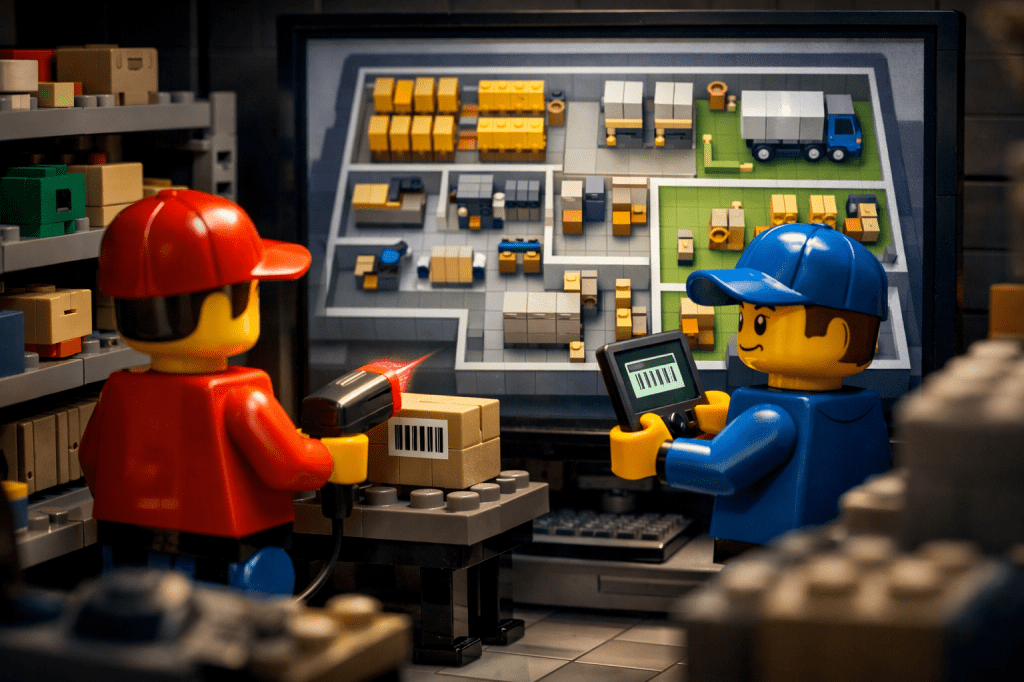
- A Bird’s-Eye View of Every Location: CyberStockroom’s signature feature is its customizable inventory map. Think of it as a digital floorplan or layout of all your inventory locations – not just warehouses, but everywhere you keep stuff: the main warehouse, each jobsite, storage yards, even individual containers or trucks. On this map, you place icons or markers for your inventory items in their respective locations. At a glance, you can see that Generator #3 is currently at Site B, the pallet of HVAC ducts is in Warehouse A, and Laser Level #2 is in Joe’s truck on Route 5. This visual layout makes it immediately clear where things are. For teams spread across multiple sites, this is a game-changer. No more blind spots or reliance on phone calls; anyone on the team can open the map and literally see which site or crew has what. This directly attacks the multi-location coordination problem: if Site X needs a certain tool, they can check the map and realize “Oh, Site Y nearby has one not in use – let’s borrow it” instead of buying a new one. The map can be toggled or zoomed, so you can dive into a specific location’s details or zoom out to see the whole company’s inventory universe.
- Instant Updates with Scanning: CyberStockroom is a cloud-based system that updates instantly as inventory moves. It supports easy input methods like barcoding or QR code scanning. In practice, this means when a team member checks an item in or out, or transfers something between locations, they can just scan a code (using a handheld scanner or even a smartphone camera) and the system will update the inventory count and move the item’s icon on the map to its new spot in real time. For example, imagine a pallet of concrete mix being moved from the warehouse to Jobsite C: the warehouse clerk scans it out to Jobsite C, and immediately that pallet’s representation jumps from the warehouse section of the map to the Jobsite C section. Everyone now sees that update – no waiting for end-of-day reports. This instantaneous recording eliminates lag in information and greatly reduces errors. Human memory or delayed data entry is no longer a weak link; the system logs the transaction on the spot. As a bonus, CyberStockroom keeps an audit trail of who moved what, when, and where, which boosts accountability. If something goes missing, you can quickly trace its last scan and location, solving mysteries before they become project threats.
- Assigning Items to People or Teams: One clever feature aimed at cutting down loss is the ability to assign inventory to specific people or crews. In CyberStockroom, you can, for instance, mark that Crew B currently has the concrete mixer, or John Doe checked out a laser level this morning. Those items will show on the map as being “with” that person or team until they’re returned. This creates a culture of accountability – tools and equipment are no longer just floating in the ether of the job site; they’re on someone’s radar. Knowing that a system is tracking who last had the $5,000 surveying equipment tends to make folks more careful with it. And if an item isn’t returned or is misplaced, you have a starting point (the last assignee) to follow up with. Over time, this feature can significantly reduce shrinkage (loss/theft) because there’s a digital log deterring would-be “borrowers” from making things disappear. It also helps with maintenance – if something breaks, you know who was using it and can get details on what happened.
- Seamless Site-to-Warehouse Coordination: CyberStockroom breaks the wall between field and office by letting warehouse managers and site supervisors work off the same real-time data. Suppose a crew on site needs extra safety helmets from the central store – instead of calls and uncertainty, the supervisor can see on the system that 50 helmets are available at the warehouse, then create a transfer request in the system or mark them for that site. The warehouse manager sees that in real time and prepares the shipment. Everyone is literally on the same page (or rather, the same screen), which slashes miscommunication. Because it’s cloud-based, even a manager on a tablet in the field can do this. The key is that no matter where you are – office, site, traveling – you can get to the live inventory info, which is vital for quick decisions. The platform thus ensures that procurement, warehouse, and site teams are all looking at one source of truth. This greatly streamlines processes like reordering and transferring stock, ensuring nothing falls through the cracks due to location-based silos.
- Tracking Moving Assets (Trucks and More): Construction inventory isn’t all stationary in a depot; a lot of it is constantly moving (think of service trucks, or kits of tools that travel between sites). CyberStockroom accounts for this by letting you treat even vehicles or mobile units as inventory locations. For example, you could have a location on the map for “Truck #7” and assign various tools or parts to that truck. If Truck #7 drives over to a new site, you’ll know exactly what inventory came with it (because on the map you’ll see those items under Truck #7’s profile). This way, even roaming assets are tracked. It tackles that scenario where something gets left on a truck or moved off-site and then everyone forgets about it. With a live system, if a tool was last seen on a specific truck, the map still shows it there until scanned elsewhere – so it won’t be forgotten. Managing these mini mobile warehouses (which every contractor’s truck essentially is) becomes much easier when you have visibility. It also helps when wrapping up a project: you can ensure all tools assigned to that site or crew are scanned back in and not accidentally left behind.
- Ease of Use and Adoption: A fancy system is useless if your team won’t use it. CyberStockroom shines here by offering a visual, intuitive interface. The map-based layout is naturally understandable (many of us are visual thinkers, especially when working with physical spaces). Instead of deciphering rows on a spreadsheet, crews can literally see the “virtual warehouse or site” on screen. It also features drag-and-drop simplicity – moving items on the map is as easy as dragging an icon from one spot to another, which updates its database location accordingly. This kind of simplicity lowers the training barrier. In the construction world, not everyone is a computer geek, and they shouldn’t need to be. CyberStockroom’s design acknowledges that, making it so straightforward that even non-technical staff can pick it up quickly. And with built-in onboarding support and documentation, companies have help in getting started.
All these features directly address the pain points we discussed earlier. If we revisit the chaotic scenarios: with CyberStockroom, the missing tool at the start of the day would have been logged to whoever last had it – and the supervisor could see that it’s, say, still on Truck #3, or was never returned from Site X, enabling them to solve the issue quickly (or even better, prevent it by reminding returns the night before). The delay waiting on steel beams would be mitigated by the alert that stock was low or that a delivery was pending – everyone would know the status in advance. Surplus materials at one site wouldn’t languish unnoticed; they’d be visible on the company-wide map, prompting someone to utilize them elsewhere or adjust orders.

CyberStockroom is just one example (and one we’ve highlighted because of its construction-focused features), but it embodies the direction the industry is heading. By leveraging such a tool, construction companies can turn inventory management from a constant source of headaches and losses into a well-orchestrated part of their operations. It’s about moving from chaos to clarity – using technology to make sure that the right materials and tools are in the right place at the right time, with minimal waste and confusion.
Urgency and Trends: The Time to Act Is Now
The push for real-time inventory tracking in construction isn’t just a fleeting fad – it’s part of a broader trend of digital transformation in construction (sometimes dubbed Construction 4.0). For years, construction lagged behind other industries in tech adoption, often relying on manual processes and gut feel. But the past few years have seen a noticeable shift. Faced with razor-thin margins, skilled labor shortages, volatile material prices, and supply chain disruptions (some exacerbated by global events like the pandemic), construction firms large and small are recognizing that better management of resources can make the difference between profit and loss on a project.

Inventory management, in particular, has gained attention as an area ripe for improvement. Industry reports and thought leaders now frequently cite real-time tracking and inventory optimization as top opportunities for improving productivity in construction. The urgency comes from concrete metrics: if a company can reduce material waste by even a few percent and prevent a couple of delay days on each project, the savings over a year are enormous. Also, clients are becoming more schedule-conscious and penalties for delays are common in contracts – meaning the cost of an avoidable delay (like waiting for parts that should have been on site) is higher than ever. Companies that have adopted modern inventory systems are seeing fewer surprise shortages, faster project completion, and better cash flow management by not overspending on excess inventory. These success stories put pressure on competitors to modernize or risk being left behind.
Another trend driving this change is the increasing expectation of data-driven decision making. Younger project managers and site engineers are coming in with the mindset that information should be accessible and in real time (after all, in daily life we track everything from our pizza delivery to our Uber in real time – why not construction materials?). This cultural shift means that clinging to the old ways could also make a company less attractive to new talent. Embracing inventory tech is often part of a larger initiative to digitize project management (alongside things like project scheduling software, BIM for design, and field communication apps). It all ties into a more efficient, transparent way of doing business.
From a global perspective, countries around the world are investing in infrastructure and industrial projects, and they’re looking for efficiency gains to deal with limited resources. Whether it’s a megaproject in the Middle East or a local construction firm in Southeast Asia, the challenges of inventory mismanagement are universal – and so are the benefits of solving them. We see construction technology conferences highlighting inventory solutions, and more case studies emerging of firms that cut costs and improved timelines by using real-time tracking. In short, the industry is at a bit of a turning point: those who adapt quickly will reap the rewards of less chaos and more control, and those who don’t may find themselves drowning in the costs of avoidable mistakes and inefficiencies.
Crucially, adopting a real-time inventory system doesn’t have to be an overwhelming, all-at-once overhaul. Many companies start with a pilot program on one or two projects to test the waters, train a small group of staff, and iron out any kinks. Once they see the benefits – perhaps the pilot project finishes with significantly less material waste and no major inventory crises – it becomes much easier to roll out across the organization. This phased approach is part of the trend too: learning and scaling up, rather than a risky big bang. And modern solutions like CyberStockroom are often subscription-based and cloud-hosted, which means lower upfront costs and the ability to scale usage up or down as needed. That lowers the barrier to entry compared to older enterprise software.

Conclusion: Building a Future Without Inventory Chaos
Inventory management may not be the most glamorous aspect of construction, but it is fundamental to project success. When inventory is in chaos, projects suffer – it’s as simple as that. Conversely, when inventory is well-managed in real time, it has a cascading positive effect: projects run smoother, teams work more efficiently, costs are controlled, and stress levels drop across the board. Real-time inventory tracking gives construction professionals something incredibly valuable: control and visibility in an environment that is otherwise full of surprises.
Imagine a construction world where you never have to halt work because “we thought we had that part, but we don’t”. A world where surplus materials are spotted early and reallocated, not thrown into a dumpster at the end of the job. Where tools are easily located and accounted for, rather than a source of blame games. This isn’t a fantasy – it’s achievable today with the right tools and processes. The technology has matured and proven itself in the field, showing that even long-standing challenges like multi-site coordination and theft prevention can be tackled effectively.
For site managers, procurement officers, and construction company owners reading this: the time to modernize your inventory practices is now. The cost of inaction isn’t just measured in wasted dollars on a balance sheet; it’s seen in the faces of crews standing idle, in the frantic phone calls to suppliers for emergency orders, and in the piles of unused materials that signal missed opportunities. On the flip side, the benefits of real-time inventory tracking manifest in very tangible ways – faster project completion, fewer budget surprises, and a calmer, more prepared workforce that can trust the system they use.
Adopting a solution like CyberStockroom or a similar real-time inventory platform is more than just buying software; it’s about fostering a culture of proactive management and continuous improvement. It might require some changes – training the team, updating procedures – but the payoff is a construction operation that runs with the precision of a well-oiled machine rather than the seat-of-the-pants scrambling that too many have accepted as normal.
In the end, industrial construction doesn’t have to be synonymous with chaos. By harnessing real-time inventory tracking, you transform inventory from a liability into a strategic asset. Materials and equipment are always in the right place at the right time, waste is minimized, and everyone from the field to the office can focus on building and executing, not firefighting inventory issues. In a competitive industry facing ever-growing demands, this is how you stay ahead: work smarter, build smarter, and leave the chaos behind. The buildings and infrastructure you create are planned and executed with great care – it’s time to manage the things that build them with the same level of attention. The tools to do so are here, and the best-run construction projects of the future will be those that embrace real-time inventory management today.






 CyberStockroom
Leave a comment