In today’s fast-paced manufacturing world, what you don’t see can hurt you. Many factory operations suffer from blind spots in their inventory – missing parts, inaccurate counts, or items stashed in the wrong corner. The result? Assembly lines grind to a halt while workers scramble to find a needed component, or a critical part gets re-ordered because the team didn’t realize it was already in stock. These scenarios happen more often than most operations managers would like to admit. What’s worse, the true costs of these inventory visibility issues often remain hidden. It’s not just about a misplaced widget; it’s about lost production time, wasted labor, tied-up cash, and even lost customers. In this blog, we’ll shine a light on the hidden costs of poor inventory visibility in manufacturing – and explore how better visibility can turn this around.

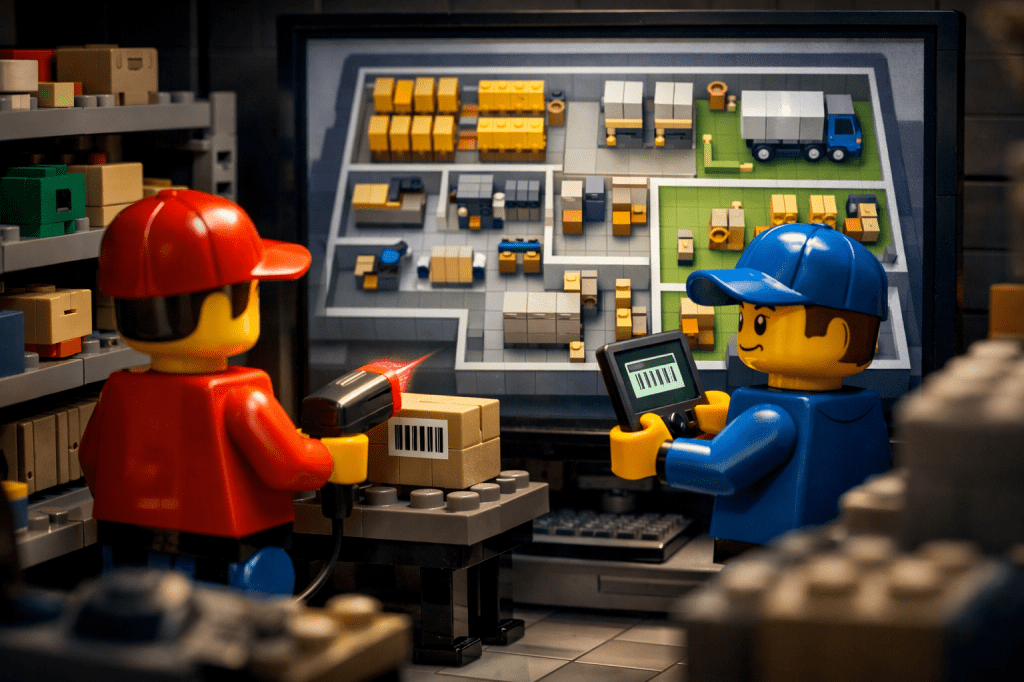
To truly understand the impact of inventory visibility, it helps to visualize your inventory. Imagine having a live map of your factory’s inventory: every part, raw material, and finished product shown exactly where it is in real time.
What Is Inventory Visibility (and Why Does It Matter)?
Inventory visibility refers to the ability to track and monitor inventory levels and item locations in real time across your operation. In a manufacturing context, this means knowing exactly what materials, components, and products you have on hand, where they are stored or in use (on the production line, in the warehouse, at a workstation, etc.), and in what quantities. High visibility also extends to knowing what’s on order and what’s in transit between locations. In short, it’s having a clear, up-to-date window into your inventory at all times.

Why is this so important for factories and manufacturing plants? Because manufacturing inventory is complex. Unlike a simple retail stockroom of finished goods, a factory handles multiple inventory types: raw materials, work-in-progress (WIP) items, spare parts, sub-assemblies, and finished goods. These items move around constantly – from receiving docks to storage racks, from storage to the assembly line, from one work center to another, and eventually out the door as finished products. If you don’t have good visibility, keeping track of all these moving pieces becomes a nightmare.
Many manufacturers today still rely on fragmented systems or manual processes for tracking inventory. Different departments might use separate spreadsheets or outdated software that don’t talk to each other. Warehouse staff might conduct infrequent manual counts, and production teams might keep their own tallies. This siloed, out-of-date approach leads to inaccurate data and a lack of real-time insight. In fact, industry surveys have found that over half of businesses have inventory accuracy below 80% – meaning their records are missing or misreporting more than one-fifth of their stock. That’s a huge information gap. When data is wrong or delayed, managers are essentially flying blind.
Effective inventory visibility matters because it underpins every aspect of operations. If you know exactly what you have and where it is, you can schedule production with confidence, reorder materials just in time, and fulfill customer orders without delay. You can avoid overstocking shelves with surplus parts, and simultaneously avoid running out of critical components. Essentially, good visibility lets you optimize inventory levels – not too much, not too little – and react quickly to changes on the factory floor or in customer demand. It’s the foundation of efficiency and agility in manufacturing.On the flip side, poor inventory visibility creates a ripple effect of problems. Small data blind spots can snowball into big headaches. Let’s dig into those hidden costs lurking beneath the surface when factories lack clear visibility into their inventory.
Hidden Cost #1: Wasted Time and Labor
One of the most immediate (but often overlooked) costs of poor inventory visibility is the sheer amount of time and labor wasted looking for things. Think about how often workers in a plant spend minutes or hours hunting down a part or material that isn’t where it’s supposed to be. If your inventory records say a component is in Aisle 5, Bin B – but it’s actually not there – someone has to comb through other bins or storage areas to find it (if it’s there at all). This scavenger hunt is expensive. Your highly trained machine operator or warehouse technician might be spending a chunk of their day walking the floor or rifling through shelves instead of adding value on the line.
Consider a simple example: If an operator spends 10 minutes searching for a needed part for a machine, and this happens a dozen times a day, that’s 120 minutes (two hours) of lost productivity in a single shift. Multiply that by multiple workers and multiple days, and the labor cost of “search time” skyrockets. In many factories, it’s not unusual for workers to spend 20% or more of their time just looking for inventory or verifying stock levels. Given that manufacturing labor is a significant cost (around 20% of revenue on average for manufacturers), those lost hours equate to serious money down the drain.
It’s not just the direct time lost – it’s also the opportunity cost. While your team members are busy hunting for missing items or double-checking if something is in stock, they are not assembling products, not processing orders, not performing quality checks, and not doing other productive tasks.
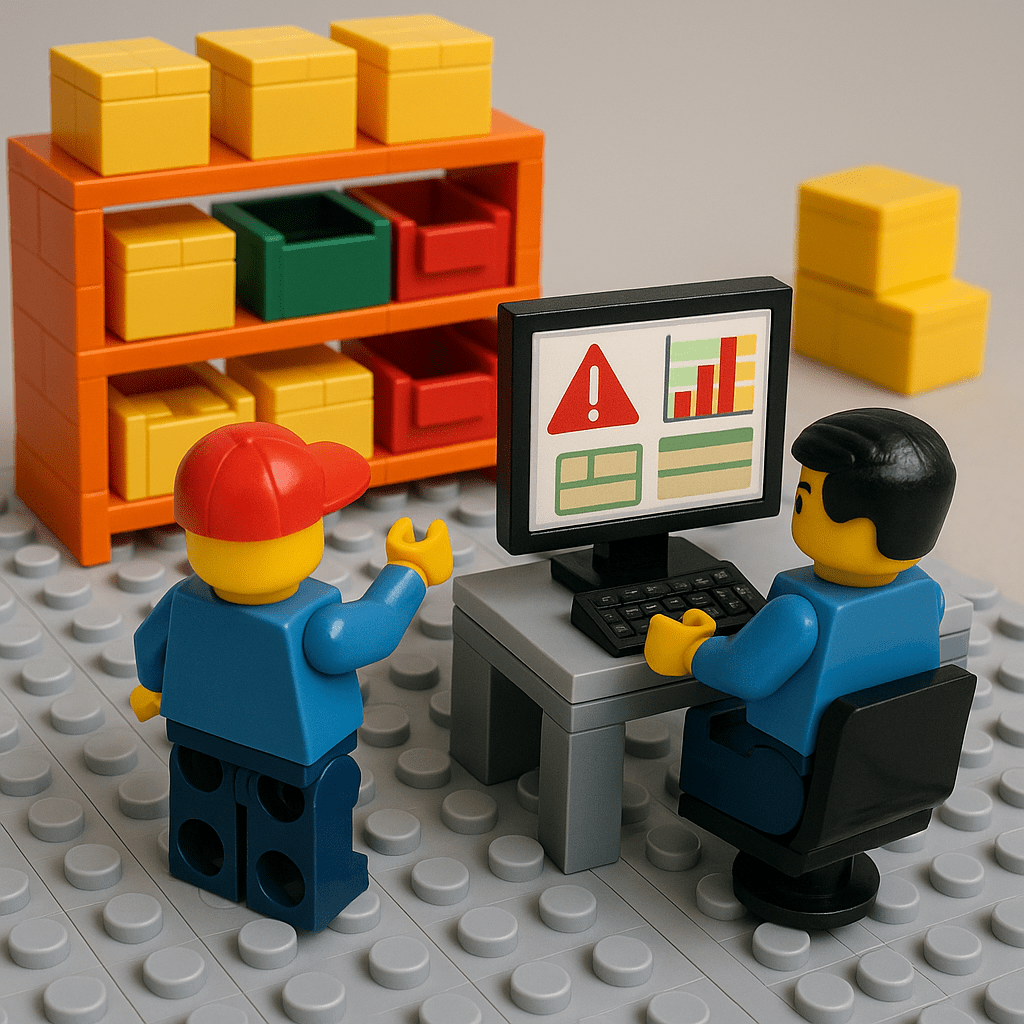
The whole operation can slow down as a result. If a technician on an assembly line can’t find a part and has to call a supervisor, who then pulls another worker to help search, now you’ve got multiple people sidetracked. Poor inventory visibility creates these kinds of domino effects in labor utilization.
Additionally, when there’s low confidence in the inventory system, managers often compensate by allocating even more labor to manage inventory manually. You might assign extra staff to do frequent cycle counts, or to keep paper logs of parts as a backup. Those tasks wouldn’t be necessary with a reliable, real-time view of inventory. In essence, you’re paying people to do redundant work (or work that a good system could handle automatically).
Over time, wasted labor due to inventory issues doesn’t just hurt the bottom line – it also hurts employee morale. Few things are more frustrating for an operator or warehouse worker than constantly dealing with disorganized stock and unreliable records. It feels like running in circles. This frustration is another hidden “cost” (see Hidden Cost #5 for more on the human factor), but it starts with visibility problems. In summary, every minute lost to searching for parts or fixing inventory discrepancies is a minute of production you never get back. Poor visibility quietly siphons away your team’s productivity, and the dollars tied to it, day after day.
Hidden Cost #2: Production Delays, Stockouts, and Missed Sales
When inventory visibility is lacking, stockouts – running out of needed materials or parts – become a frequent and costly occurrence. In a factory setting, a single missing component can halt an entire production line. Picture this: an assembly line is ready to build your product, orders are queued up, workers are at their stations, but a tiny $2 fastener or a specific gasket is nowhere to be found in inventory. Maybe the system showed there were 100 in stock, but those pieces are actually misplaced or already used up. Now the whole line is down until that part is located or a replacement shipment arrives. This kind of unplanned downtime is incredibly expensive. You’re still paying workers and overhead while machines sit idle, and you might be delaying delivery to customers.

The hidden cost here includes all the ripple effects of that downtime. There’s the immediate lost production output – every hour the line isn’t producing is lost revenue. Then there’s overtime and rushed production later on to catch up for the delay, which drives up labor costs further.
Often, to recover a late order caused by a stockout, companies will pay premium shipping or expedite fees to get the missing part delivered ASAP, or to ship the finished product faster to the customer. Those expedited logistics costs add up quickly and eat into profit margins.
Stockouts don’t just hurt your internal efficiency; they can also lead to missed sales and unhappy customers. If you manufacture products to order or maintain a tight delivery schedule, running out of a component means you might miss a customer deadline. For example, if a machine builder can’t ship a finished machine to a client because a single sub-component was out of stock, that’s a delayed sale and possibly penalties for late delivery. In industries like automotive or electronics, being late can harm your reputation and may incur contractual fines. Even if you’re not selling directly to end customers, stockouts in your factory can delay your shipments to distributors or retailers, ultimately leading to lost sales downstream.
There’s also an opportunity cost element: if your production line is down when it could have been producing sellable goods, you’ve lost the opportunity to make and sell more in that period. For high-demand products, stockouts effectively put a cap on your sales volume. Competitors might step in to fill the gap if you can’t deliver on time, causing a longer-term loss of business.
What causes these stockouts in the first place? Poor visibility is often a culprit. If your inventory tracking is inaccurate or not real-time, you might think you have enough of a part when in reality you don’t. Without clear visibility, reorder points are missed and purchasing is reactive rather than proactive. Manufacturing teams often discover a shortage at the worst possible time – when the part is needed now – instead of having seen it coming. All because the data wasn’t there or wasn’t trusted.
Finally, let’s not forget customer satisfaction. In the manufacturing supply chain, a failure on your end can cascade to your customers. If you deliver products late due to a stockout, your customer might miss their sales window or stall their own production. This weakens trust. If it happens too often, customers may start looking for alternate suppliers who are more reliable. It’s hard to put a dollar figure on reputation damage, but it’s very much a real cost.
In short, poor inventory visibility raises the risk of stockouts, and stockouts are an expensive problem to have. They trigger production delays, emergency fixes, higher operating costs, and potential revenue loss – both immediate and long-term. Manufacturers thrive on consistency and reliability; stockouts undermine both, in very costly ways.
Hidden Cost #3: Excess Inventory and Carrying Costs
Ironically, in trying to avoid stockouts, many factories swing to the opposite extreme – keeping excess inventory “just in case” there’s a shortage. This might seem like cheap insurance against running out, but it carries its own hidden costs. When you don’t have a clear view of what inventory you truly need and what you already have, it’s easy to over-order or keep too much safety stock on hand. All that excess material sitting on shelves comes with a price tag.
First, consider the carrying costs. Every unit of inventory in storage incurs costs over time. You need space to store it (and warehouse space is not free – in fact, global warehousing costs have been rising year over year). You might need to pay insurance for it. There’s also the cost of capital: money spent on inventory is money that’s not being used elsewhere in the business. Some estimates put total inventory carrying costs at around 20–30% of the inventory’s value per year. That includes storage, handling, insurance, depreciation, and opportunity cost of capital. So, if you have $1 million in excess stock that you don’t actually need immediately, it could be costing you up to $200-300k annually just to hold it.
Excess inventory often ties up working capital that could be invested in more productive ways – upgrading equipment, R&D for new products, hiring staff, or other growth initiatives. Instead, that capital is languishing in a pile of parts that gather dust. For small and mid-sized manufacturers especially, cash flow is the lifeblood of operations. Too much money tied up in inventory can strain cash flow, forcing you to take loans or miss other opportunities. It’s like having money stuck in a vault – it’s there, but you can’t use it effectively.
There’s also the issue of obsolescence and spoilage. In manufacturing, some materials or components have a shelf life or can become outdated. Electronics parts can become obsolete as technology advances; chemicals or adhesives might expire; certain raw materials might degrade over time. If you bought way more than you needed because you didn’t have good visibility (or because you panicked after a stockout), you run the risk of having to write off expired or obsolete stock. That’s a direct hit to the bottom line – essentially throwing money away. Similarly, products sitting too long might get damaged or suffer from environmental conditions (rust, moisture, etc.), leading to scrap.
Even for non-perishable items, design changes or engineering updates can suddenly make your excess stock irrelevant. For instance, if you change a product design and no longer need a particular component, all the extra you had stored are now useless – dead stock. Companies with poor inventory visibility often discover stashes of such obsolete items in corners of the warehouse, a painful reminder of money wasted.
Furthermore, having more inventory than needed can reduce warehouse efficiency. Cluttered storage areas mean workers have to sift through unnecessary stock to find what they actually need. It can lengthen picking times (tying back to wasted labor). You might even end up renting additional storage space or expanding warehouses to accommodate surplus goods, which is a significant expense driven purely by inventory bloat.
Why does poor visibility lead to excess? Because without accurate, real-time data, purchasing managers and planners err on the side of caution. If you’re not 100% sure what’s in stock or when the next shipment is coming, the instinct is to order extra “just to be safe.”

It’s understandable – nobody wants a line to stop for lack of a part – but it’s a band-aid solution that creates a new problem. Over time, that safety stock piles up beyond what’s actually required for buffer.
In a well-optimized operation with good visibility, you can trust the data to tell you the minimum and optimal stock levels. You can implement just-in-time ordering or lean inventory principles confidently, without the fear that data gaps will leave you high and dry. But until you reach that level of trust, many factories continue to carry more inventory than necessary, quietly draining resources.
Hidden Cost #4: Errors, Inaccuracy, and Quality Issues
Poor inventory visibility and management can also lead to a higher rate of errors in your operations – and those errors can be very costly. When information about inventory is unclear or incorrect, mistakes are bound to happen on the factory floor and in the warehouse.
One common type of error is picking or using the wrong part. In a manual or chaotic inventory system, two different parts might be stored in look-alike bins, or a replacement part might have a slightly different ID that isn’t well distinguished in the records. If workers can’t easily verify they have the right item, they might grab what they think is right and send it to the line. Using an incorrect component in production can result in quality defects or even safety issues in the final product. At best, the mistake is caught during quality control or assembly, meaning that batch has to be reworked or scrapped – which wastes materials and labor. At worst, the faulty product could slip through to the customer, leading to returns, warranty claims, or damage to your brand reputation. None of those outcomes are cheap.
Another error scenario involves miscounts and data entry mistakes. Say your team conducts a hurried inventory count or manually logs items in a spreadsheet. It’s easy to transpose numbers or misread a label, especially if hundreds of parts are involved. If the data gets entered wrong (e.g., recording 500 units instead of 50, or vice versa), that error could propagate through your planning.
You might drastically over-order because you thought stock was low, or not order at all because you thought you had plenty. These human errors are more likely and more frequent when people are dealing with complex, non-visual data tracking. And each error has a cost – either immediate (ordering too much, or production downtime from running out unexpectedly) or downstream (customer issues, etc.).

Poor visibility also makes lot tracking and quality control harder. In regulated manufacturing sectors (like aerospace, automotive, or food production), you often need to track lots or batches of materials for safety and compliance.
If there’s a recall or a quality problem with a certain batch of raw material, can you quickly locate all affected inventory and products? Without a clear system, it might be a scavenger hunt to figure out which bins or subassemblies contain that lot number. The risk here is twofold: you might miss some defective items (incurring liability or safety risks), or you might have to recall or discard a much larger quantity of product “just in case” because you aren’t sure which ones used the bad batch. Either way, it’s costly.
Additionally, lack of precise inventory data can cause errors in production planning. For example, if the system shows you have enough material for a production run, you’ll start that run – only to discover halfway that you’re short. Now you have a half-finished batch and machines set up for a product you can’t complete. Switching a production line over to a different product or pausing it and then restarting later all incur setup time and inefficiency. Those are indirect losses stemming from an initial inventory error.
Scrap and rework are major waste categories in manufacturing, and inventory issues often contribute to them. Using the wrong components, letting materials expire unnoticed, or damaging items because they weren’t stored properly (since no one realized how full the storage area was) all lead to scrap. Reworking products to fix issues caused by wrong or missing parts uses additional labor and materials that ideally shouldn’t have been needed.
Ultimately, a lack of visibility means a lack of accuracy. If you can’t see clearly what you have, it’s nearly impossible to maintain high accuracy in inventory records. And when records are off, decisions made from those records will be off the mark too. Mistakes become more frequent and almost expected, and a culture of double-checking and firefighting prevails. Employees might develop workarounds like keeping personal notes or hoarding a secret stash of parts at their workstation (just because they don’t trust the system to have it when needed). While that might solve a short-term issue, it further messes up the official inventory counts, creating a vicious cycle of inaccuracy.All these errors and quality problems erode profitability in ways that aren’t always immediately visible on financial statements. They show up as higher operational expenses, customer returns, and lower yield. Over time, if not addressed, they can seriously hurt a factory’s competitiveness. In quality-critical industries, a few high-profile mistakes can even cost future contracts. Therefore, ensuring inventory visibility and accuracy is not just about counting parts – it’s about maintaining the quality and reliability of your entire operation.
Hidden Cost #5: Reactive Workflows and Employee Stress
A less tangible but very real cost of poor inventory visibility is the impact it has on workflow and employee morale. When you lack a clear handle on inventory, your whole operation tends to shift into a reactive mode. Instead of executing well-laid plans, teams spend a lot of time reacting to problems – chasing down shortages, expediting orders, firefighting last-minute issues. This reactive workflow hides costs in the form of inefficiency and stress.
For operations managers and planners, low visibility means constant uncertainty. It’s hard to confidently plan production for the week when you’re not 100% sure all required materials will be available. So, managers often end up making last-minute adjustments – changing the production schedule on the fly because a needed part didn’t arrive, or swapping one job for another because you discovered you’re short on a component. Frequent schedule changes are inefficient; they can increase machine setup times and confuse the workforce. Plus, the time managers spend juggling and re-juggling plans is time not spent on more strategic tasks.
Employees on the floor feel this too. Think of a purchaser or inventory control specialist who spends days (or nights) constantly tracking down where things went, or expediting shipments from suppliers because an unexpected need arose. It’s a stressful juggling act, and over time it leads to burnout. Warehouse staff might have to do emergency cycle counts or “all-hands” inventory recounts to locate discrepancies. Production workers might be asked to switch tasks or stay late to make up time when parts arrive. All of this chaos can be traced back to not having reliable, visible information from the start.

The morale cost is significant. Working in an environment where you’re always behind the curve can be demotivating. Talented employees want to feel in control of their work and proud of hitting targets. If targets are missed due to factors that could have been prevented with better systems, it becomes frustrating.
Team members may start to feel like no matter how hard they work, these inventory issues will sabotage their efforts. That can increase turnover – another hidden cost, since hiring and training new employees is expensive and disruptions from turnover can hurt productivity further.
Moreover, without proper visibility, communication overhead increases. How often do people have to call, email, or meet just to figure out the status of inventory? “Do we have this part in stock? Can you check in the other warehouse?” – These communications chew up time. Different departments (purchasing, production, sales) might each maintain their own version of inventory data. Synchronizing that information and resolving conflicts becomes a regular chore, consuming management attention.
The lack of a single source of truth can even lead to internal conflicts. Sales might blame production for not fulfilling an order on time, production blames purchasing for not getting the parts, purchasing blames lack of information or supplier issues – and around it goes. While some healthy tension between departments is normal, chronic inventory problems can create a culture of finger-pointing or mistrust among teams. That kind of culture is toxic in the long run and certainly not conducive to efficiency or innovation.
In a smoothly running factory, a lot of the work is proactive. You plan, you schedule, and things run largely as expected, with the occasional surprise. But in a factory struggling with inventory visibility issues, the default state becomes reactive. People start each day not entirely sure what fire they’ll have to put out by noon. That unpredictability is exhausting and can lead to mistakes (as discussed earlier), creating a vicious cycle of stress and error.
It’s important to recognize this human and organizational cost. It might not show up as a line item like “expedited shipping fees” or “scrap cost,” but it manifests in lost potential – projects not pursued because the team is too busy cleaning up inventory messes, creative improvements not made because everyone’s bandwidth is spent reacting, and a general drag on the company’s growth. Operations managers, especially, feel the weight of this. Instead of focusing on optimizing and improving the factory, they spend their days troubleshooting inventory problems that shouldn’t have occurred in the first place.
All told, a lack of inventory visibility creates an environment of uncertainty and stress. The hidden cost is a less efficient organization and a team that’s not operating at its best. Conversely, when visibility is high and processes are under control, teams can shift from reactive to proactive – and that’s when true operational excellence and continuous improvement can flourish.
CyberStockroom: A Map-Based Solution for Inventory Visibility
So far, we’ve painted a picture of the problems caused by poor inventory visibility – but how do you fix it? This is where modern technology and tools come into play. One innovative solution that directly tackles inventory visibility challenges is CyberStockroom, a map-based inventory management platform. Let’s discuss how a tool like CyberStockroom can help factories overcome these hidden costs and regain control over their inventory.
Visual Inventory Mapping
Unlike traditional inventory software that shows you rows and columns of data, CyberStockroom introduces a visual approach. It allows you to create a virtual map of your entire facility – from warehouses to production areas, storage rooms to loading docks. Every inventory location is represented on this map (think of it like a floor plan or blueprint overlaid with inventory info).

You can zoom in on a particular room or zoom out to see the whole factory’s inventory at once. This visual dashboard means that at any moment you can literally see where everything is. Need to find a particular part? Instead of digging through databases, you click on the map location and see what’s inside. The advantage here is intuitive clarity – as the saying goes, a picture is worth a thousand words. For operations managers and teams on the floor, this reduces the time to find items dramatically. You can point to “Shelf A in Section 3” on a map and know that’s where the item is, rather than wandering the aisles.
Real-Time Tracking
CyberStockroom is a cloud-based system that updates inventory data in real time. When items are received, moved, or used, the changes reflect immediately on the map and in the inventory counts. This addresses one of the root causes of hidden costs: outdated information. With real-time updates, everyone from the warehouse picker to the production planner is looking at the same live data. If a part gets consumed on the line, the quantity on hand goes down instantly in the system – no waiting for end-of-day reconciliation. This way, the next person who needs that part won’t be misled by an outdated count. Automation and scanning tools integrate with CyberStockroom as well. For instance, it supports barcoding, so staff can scan items in and out, ensuring accurate record-keeping with minimal effort. By using barcode scanners or even mobile devices, the system logs inventory movements without manual data entry, reducing errors.
Drag-and-Drop Simplicity
Managing inventory across multiple locations or sub-locations becomes easier with CyberStockroom’s drag-and-drop interface. If you transfer stock from Warehouse A to Warehouse B, you can simply drag the item icon on the map from one location to another. The system will adjust the inventory counts accordingly. This kind of user-friendly design means your team actually uses the system consistently (which is critical – even the best system is useless if employees find it too complicated to bother with). CyberStockroom emphasizes ease of use so that updating inventory is not a chore. The result is better data discipline: when it’s easy to update, people do it promptly, and that keeps the visibility high.

X-Ray Vision for Products
One particularly powerful feature is the ability to select any product and immediately see every location where it’s stored and how many units are at each location. It’s like giving you x-ray vision into your inventory distribution. Suppose you have a critical component that’s used in multiple product lines and stored in different areas. With CyberStockroom, you can click on that component in the system, and the map will highlight everywhere it resides – maybe 50 in the main stockroom, 20 at a sub-assembly area, and another 30 in a secondary warehouse. This is hugely beneficial when you’re trying to avoid a stockout; if one location is running low, you can quickly see if another location has surplus that can be reallocated.
Reduction of Search Time
By providing precise location info and a bird’s-eye view, CyberStockroom slashes the time workers spend searching. If a technician needs a part, they can check the map first and go straight to the correct bin or room. This directly tackles Hidden Cost #1 (wasted labor). Less wandering means more time on productive work. And because everything is labeled and visual, new employees can get up to speed faster on where to find things, which improves training efficiency and reduces dependency on the “tribal knowledge” of veteran workers.
Preventing Stockouts and Overstock
CyberStockroom helps set up and monitor stock levels and thresholds. Because it’s continuously updated, you can establish alerts or at least easily spot when an item’s quantity falls below a certain point. The visual nature might even make it obvious – e.g., an icon might change color when low. This early warning allows purchasing or production planners to replenish before a stockout occurs. Moreover, seeing all inventory across various locations can highlight if you have more than enough of something. It becomes easier to identify excess inventory because the map might show full shelves of a part that’s not being used as fast. Managers can make informed decisions to reduce overstock, like halting further purchases of that item or reallocating it to where it’s needed. Essentially, CyberStockroom provides the real-time data needed to implement just-in-time and lean inventory principles effectively, thus addressing Hidden Cost #2 and #3 (stockouts and excess).
Improved Accuracy and Accountability
With features like user permissions and activity tracking, CyberStockroom creates a sense of accountability. Every movement of inventory can be logged – who moved it, when, and where. This reduces instances of “mystery loss” or shrinkage because you have a trail for where things go. It also deters any potential internal theft or misuse (touching on loss prevention) since the system is watching the inventory. For accuracy, because the system is user-friendly and real-time, the inventory records become much more reliable. When you have confidence in the data, you eliminate the need for constant manual recounts and the errors that come with frantic last-minute inventory checks. In effect, CyberStockroom can significantly improve inventory accuracy, which means less errors and surprises (tackling Hidden Cost #4 directly).
Accessible Anywhere
Being a cloud-based tool, CyberStockroom is accessible on any internet-enabled device – your desktop at the office, a laptop on the shop floor, or even a tablet or smartphone when you’re off-site. (It doesn’t require a special mobile app; you can simply log in through a web browser.) This flexibility means an operations manager can check inventory status from home at night or while traveling, and floor workers can carry a tablet to update inventory on the go. In practical terms, this keeps everyone on the same page. There’s no delay in communication because the info doesn’t live on a single computer or in someone’s notebook – it’s in the cloud for authorized team members to see. Collaboration between departments (purchasing, production, sales) improves since all can refer to the same live inventory map, reducing miscommunication and finger-pointing (addressing parts of Hidden Cost #5).

In summary, CyberStockroom directly targets the pain points we’ve discussed:
- It makes inventory visible and understandable through visual maps.
- It updates continuously, so data is always current.
- It simplifies the process of tracking and moving inventory, so employees actually use it (ensuring the data stays accurate).
- It helps predict and prevent issues like stockouts and overstocks by giving clear oversight of inventory levels everywhere.
- It saves time and reduces stress by eliminating the guesswork and manual effort in tracking inventory.
For an operations manager, adopting a tool like CyberStockroom can feel like putting on night-vision goggles in a dark room – suddenly all the obstacles and hidden items that you used to trip over are clearly visible, and you can navigate the terrain with confidence.
The investment in such technology often pays for itself quickly through labor saved, downtime avoided, and inventory optimized. While CyberStockroom is one example (and one we’re proud of, given its focus on ease-of-use for factories), the broader point is that leveraging modern inventory management software designed for visibility can transform your operations. It turns inventory management from a constant headache into a strategic advantage.
Tips for Operations Managers to Improve Inventory Visibility
Improving inventory visibility isn’t just about software – it also involves adopting the right practices and processes.

Here are some best-practice tips for operations managers looking to enhance visibility and avoid the hidden costs we’ve outlined:
- Centralize Your Inventory Data: Ensure that all inventory information flows into one central system or database. Avoid the silos where production has one list, procurement has another, and the warehouse a third. A single source of truth (like a unified inventory management system) is critical. This central system should be updated in real time or near-real time, so everyone trusts that it reflects the current state of inventory.
- Implement Barcode Scanning (or RFID): Use automatic identification tools to track inventory movements. Barcodes are a proven, cost-effective way to do this – each item or bin gets a barcode, and staff use handheld scanners to quickly record transactions (receiving, moving, issuing to production, etc.). This greatly reduces human error compared to typing in SKU numbers or writing things on paper. RFID tags are another option for certain use-cases (they can even track items without direct line-of-sight scanning), but they involve higher cost and infrastructure. The key is to choose a technology that fits your operation and to use it consistently.
- Standardize Processes (and Train the Team): Develop clear procedures for how inventory is handled and recorded. For example, establish a standard process for receiving materials (with proper labeling and immediate entry into the system/map), for issuing parts to the line (scanning out of stock so the system updates), and for handling scrap or returns. Training is vital – everyone from storeroom clerks to machine operators should know how to use the inventory system and why it’s important to keep it updated. Emphasize that accurate data helps everyone do their job better (and makes their day less chaotic). When new employees join, make inventory management habits part of their onboarding.
- Maintain Regular Cycle Counts: Instead of relying only on an annual (or semi-annual) full inventory count, adopt cycle counting. This means counting a subset of items on a regular, rolling schedule (e.g., a few items each day or week) to catch discrepancies early. Cycle counts keep your records aligned with reality continuously and are less disruptive than a full shutdown to count everything. If your system has a map or categorizes inventory, you can cycle count by area or by critical items first. Use cycle count results to identify problem areas – if certain items are frequently off, investigate why (perhaps a process issue or theft).
- Use Data Analytics and Reporting: Leverage inventory data to get insights. A good system will let you run reports on inventory trends – like items that haven’t moved in X months (potential excess stock), or average stockout frequency for key parts. Monitoring Key Performance Indicators (KPIs) such as inventory turnover, fill rate (how often customer orders are completely fulfilled), and inventory accuracy percentage can guide improvements. When you notice a KPI slipping, you can take action (maybe certain suppliers are causing delays, or a particular shift needs more training on logging usage). Data-driven decision-making is far more effective than gut feeling, especially as your operation grows.
- Improve Supplier and Supply Chain Collaboration: Sometimes inventory visibility issues extend beyond your four walls. If you can, integrate or share data with suppliers and customers about inventory and demand. For example, if your supplier can see you’re burning through a certain material faster, they might adjust their production to ensure you don’t run out (vendor-managed inventory is one concept here). Similarly, understanding your customers’ demand patterns better can help you plan inventory accordingly. While not every supplier will be open to collaboration, even simple steps like communicating your usage forecasts or establishing consigned inventory (supplier-owned stock at your site that you draw from) can buffer against surprises.
- Regularly Review and Optimize Stock Levels: Inventory visibility is not a one-and-done task; it’s a continuous improvement area. Schedule periodic reviews of your inventory policies. Are your reorder points and safety stock levels appropriate, given the current demand and lead times? Has something changed in your manufacturing process that requires more of one part and less of another? Use the visibility you have to adjust these parameters. Many modern systems can even suggest optimizations (like “you haven’t used this part in 6 months, consider phasing it out” or “this item stockouts frequently, consider raising the minimum stock”). By tuning your inventory levels, you’ll reduce both stockouts and excess over time.
- Plan for Exceptions: Even with great visibility, unexpected events happen – a sudden spike in orders, a supplier delay, etc. Develop an exception management plan. For instance, define what happens if a stockout is imminent: who is authorized to expedite shipping, can an alternative part be used, is there a backup supplier? Knowing these plans won’t directly improve daily visibility, but it means when an issue arises, your team can respond calmly and effectively, minimizing cost impact. Often, the stress and cost explode when people are caught off guard. Good visibility should mean fewer surprises, but being prepared for the rare ones is wise.
By following these best practices in tandem with leveraging the right tools, operations managers can dramatically improve inventory visibility. The result will be a more streamlined, proactive, and resilient operation. You’ll find that when inventory is under control, everything else – from production scheduling to customer deliveries – falls into place much more smoothly.

Turning Visibility into Value
Inventory might not be the most glamorous part of manufacturing, but it’s undoubtedly one of the most impactful. As we’ve explored, the hidden costs of poor inventory visibility in factories are far-reaching – sapping productivity, tying up capital, disrupting production, and straining both customer relationships and team morale. These are costs that often don’t show up in a straightforward way on a balance sheet, yet they are very real and can be the difference between a thriving operation and one that’s constantly playing catch-up.
The good news is that these problems are solvable. The first step is simply recognition – understanding that what may have been dismissed as “the cost of doing business” (like occasional stockouts or a bit of excess inventory in the corner) can actually be systematically addressed. With the right mindset, companies can shift from reacting to inventory issues to proactively preventing them.
Technology, like CyberStockroom’s visual inventory mapping or other modern inventory management systems, is a powerful enabler in this shift. By providing real-time visibility and user-friendly tools, such solutions illuminate the dark corners of your operations. When you can see clearly, you can manage effectively. The factory floor transforms from a zone of uncertainty (“I think we have those parts…”) to one of confidence (“I know we have those parts, and I know exactly where they are”).
However, even the best tools require a commitment to process and culture. It’s about building a culture of accuracy and accountability – where every team member understands the importance of updating the system and following procedures, and where managers continually use the data to improve decision-making. Over time, this culture pays huge dividends. Instead of firefighting, your team can focus on improving – optimizing workflows, reducing lead times, finding cost savings, and increasing throughput. Essentially, better inventory visibility frees up the organization to focus on growth and innovation rather than troubleshooting.
For operations managers, the benefits of enhancing inventory visibility are both immediate and strategic. In the short term, you’ll likely see fewer panicked moments and more smoothly running shifts. In the long term, you’ll notice better financial performance – lower carrying costs, more reliable delivery performance, and possibly even improved sales because you can promise and meet tighter turnarounds. Moreover, by eliminating many of the hidden costs we discussed, you improve your factory’s competitive edge. In an industry where margins can be thin and customer expectations high, that edge can be crucial.
In closing, think of inventory visibility as the foundation of your manufacturing house. If the foundation is solid and well-laid, everything built atop it – production efficiency, quality control, customer satisfaction – stands strong. If the foundation is weak or full of cracks (i.e., blind spots and inaccurate data), you’ll constantly be repairing the structure. Investing time and resources to strengthen that foundation is not just an operational fix, it’s a strategic move that positions your factory for success.
Don’t let poor inventory visibility be the hidden leak that drains your profits. Shine a light on those dark shelves and dusty corners. With clarity comes control, and with control comes the ability to turn inventory management from a cost center into a value driver. The tools are available, the best practices are known – and as an operations leader, the ball is in your court to make the change. The payoff – in saved costs, smoother operations, and happier customers and employees – is well worth it.






 CyberStockroom
Leave a comment