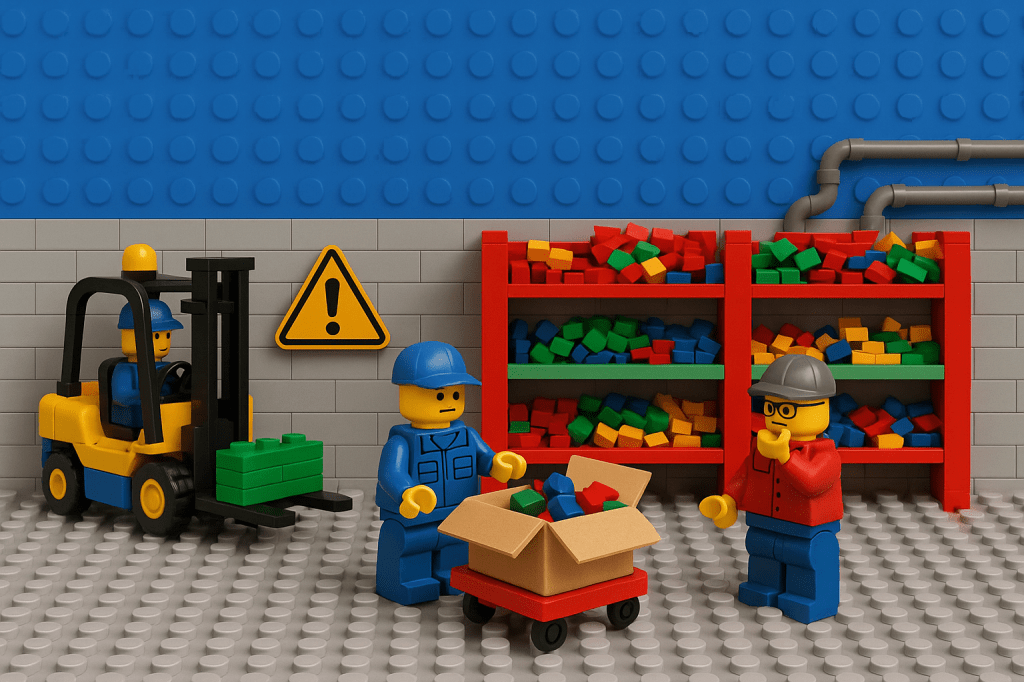
In the fast-paced world of manufacturing, time is money – and nothing wastes time (and money) faster on a factory floor than not being able to find the right part or material when you need it. If you’ve ever had to halt production because a component was unexpectedly missing, you’ve felt the pain of poor inventory visibility.
Inventory visibility in manufacturing means knowing exactly what you have in stock and where it is at any given moment. When this visibility is lacking, a host of hidden costs can quietly erode your operation’s efficiency and profitability.
In this article, we’ll break down the hidden costs and risks of poor inventory visibility – from production delays to stock problems and wasted labor. The goal is to give you practical insight to help you improve inventory control in your manufacturing business.
The Cost of Not Knowing Where Your Inventory Is
Tracking inventory isn’t just about counting parts—it’s about having the visibility to manage and deploy those parts effectively. Without real-time inventory visibility, manufacturers face hidden costs and risks that can quietly chip away at efficiency and profitability.

1. Production Delays and Downtime
One of the biggest consequences of poor inventory visibility is production delays.
- Imagine a key component shows as “in stock” in your system—but no one can actually find it.
- The production line stalls while employees search or wait for a replacement.
- This creates expensive downtime—machines idle, operators wait, and nothing gets produced.
Even a few minutes of downtime can cost thousands in some industries. And the ripple effects are just as damaging:
- Order fulfillment delays
- Frustrated workers
- Missed delivery deadlines
- Dissatisfied customers
Large manufacturers have lost significant revenue simply because parts couldn’t be located quickly on the factory floor.
2. Overstock and Stockouts
Poor inventory visibility can lead to both overstock and stockouts—two costly problems:
Overstock:
- When inventory data is unreliable, companies often order “just in case.”
- This leads to piles of unused inventory collecting dust.
- Excess inventory ties up capital, eats up warehouse space, and risks obsolescence.
Stockouts:
- On the flip side, inaccurate counts can make you think you have parts that you don’t.
- A production run could be halted by a missing $5 component.
- Stockouts often force you into:
- Costly overnight shipping
- Last-minute supplier expedites
- Lost sales or broken customer trust
Example: One electronics company had to delay a major shipment due to a missing part, resulting in:
- Emergency shipping fees
- Overtime labor costs
- An unhappy client
Whether it’s overstock (money stuck on a shelf) or stockouts (missed opportunities), both are expensive—and preventable.
3. Labor and Operational Inefficiencies
In factories with poor inventory systems, time is wasted every day.
- Employees spend hours looking for parts or tools that “should be there.”
- Valuable production time is lost while workers hunt through shelves and bins.
- Labor costs rise as more time (or extra staff) is needed to make up for lost productivity.
Manual tracking methods—like clipboards or outdated spreadsheets—introduce even more problems:
- Human error leads to inaccurate records
- Delays in updates create confusion for the next shift
- Inefficiencies become baked into daily operations
One machinery company discovered that its technicians were spending up to 20% of their workday just looking for parts. That’s one full day lost every week.
4. Financial Impact on the Bottom Line
All of these issues—delays, overstock, stockouts, and wasted labor—ultimately affect your bottom line:
- Downtime means you’re paying for labor and machines that aren’t producing.
- Overstock represents money spent with no return—and comes with additional carrying costs (storage, insurance, obsolescence).
- Stockouts result in lost revenue, costly rush orders, and dissatisfied customers.
- Quality issues can arise if subpar substitutes are used when the correct part is unavailable.
Companies with poor inventory visibility face:
- Shrinking profit margins
- More write-offs
- Higher operating expenses
On the flip side: Those that invest in better tracking systems often see:
- Fewer errors
- Less wasted labor
- Higher customer satisfaction
- Stronger financial performance

Gaining Visibility with Technology: Introducing CyberStockroom
Solving inventory visibility issues in a factory often comes down to having the right tools and systems in place. One such tool designed for modern manufacturers is CyberStockroom – a cloud-based inventory management platform built to give your team real-time visibility and control over every item in your stock.
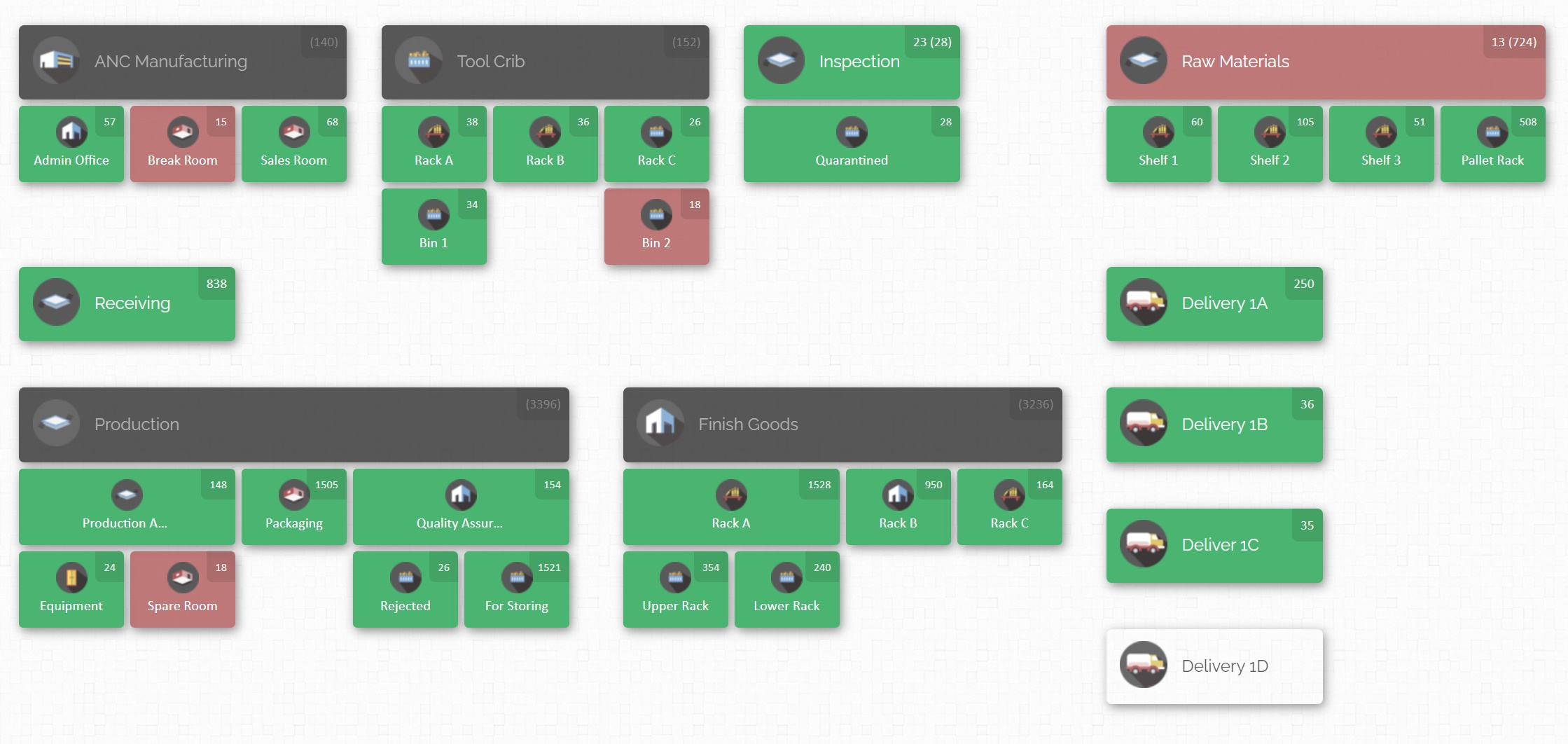
In plain terms, CyberStockroom acts like an always-up-to-date map of your inventory, so you’re never in doubt about what you have or where it’s located. It directly addresses the pain points we discussed above by providing features that make it easier to track, find, and manage inventory across the whole factory (and even across multiple facilities).
By replacing clunky spreadsheets or outdated manual methods with a live digital system, errors are reduced and the days of “I can’t find this part” become a thing of the past. The result is that your factory team spends less time firefighting inventory issues and more time doing actual productive work.
How does CyberStockroom improve inventory visibility and reduce errors?

At the heart of CyberStockroom’s approach is a concept called the Inventory Map – essentially a visual representation of your warehouse or factory floor that shows where every product is stored. This gives you a bird’s-eye view of stock levels and locations in a way that spreadsheets can’t match.
Every time a part is moved, used, or received, the change is recorded in real-time on this map, so everyone sees the same up-to-date information. This real-time tracking means no more time lag between something happening on the floor and it being reflected in your system.
CyberStockroom also emphasizes ease of use for the team: instead of complex codes or endless lists, employees interact with a visual dashboard. They can literally click on a room or bin on the screen and see what’s inside, or search for a part and instantly see where it is.

This empowers even newer staff to find items quickly without needing a veteran’s memory of where things are stashed. By making inventory data transparent and accessible, decision-making also improves – managers can trust the data and plan purchases or production schedules confidently, knowing the inventory figures are accurate.
In short, CyberStockroom turns inventory management from a tedious, error-prone chore into a streamlined process, giving factory teams the tools to stay organized and ahead of problems. As one user put it, having such a system makes it “very easy to find parts” when needed and to seamlessly check in and check out items from inventory – a far cry from the old days of rifling through racks and hoping the count was right.

Key Features of CyberStockroom for Manufacturers
CyberStockroom comes with several features and use-cases tailored to improve inventory control in manufacturing. Here are some of the most relevant ones that can empower your factory team:
- Visual Inventory Map: The core of CyberStockroom is a dynamic inventory map that mirrors your actual factory layout. It provides a visual dashboard of all your inventory locations – from the main warehouse down to individual production line stations. At a glance, you can see what each area contains and stock levels in each location. This bird’s-eye view makes it easy to spot if a certain section is running low on parts or if materials are in the wrong place. Essentially, it answers the vital question: “How many of what do we have, and where?” without digging through spreadsheets. Each location on the map can be customized to match your real-world layout, so the software fits your factory’s unique setup.
- Real-Time Tracking: CyberStockroom updates inventory data in real time as transactions happen. If a worker pulls 50 units of a component for assembly, the system reflects that deduction immediately; if a delivery of raw materials arrives, it’s logged and visible to everyone right away. This real-time inventory tracking ensures that what you see on the screen is always the current truth on the floor. The benefit is obvious – no more guesswork or time spent reconciling data at day’s end. Managers and employees can trust that the information is up-to-the-minute, which is crucial for fast decision-making in a busy manufacturing environment.
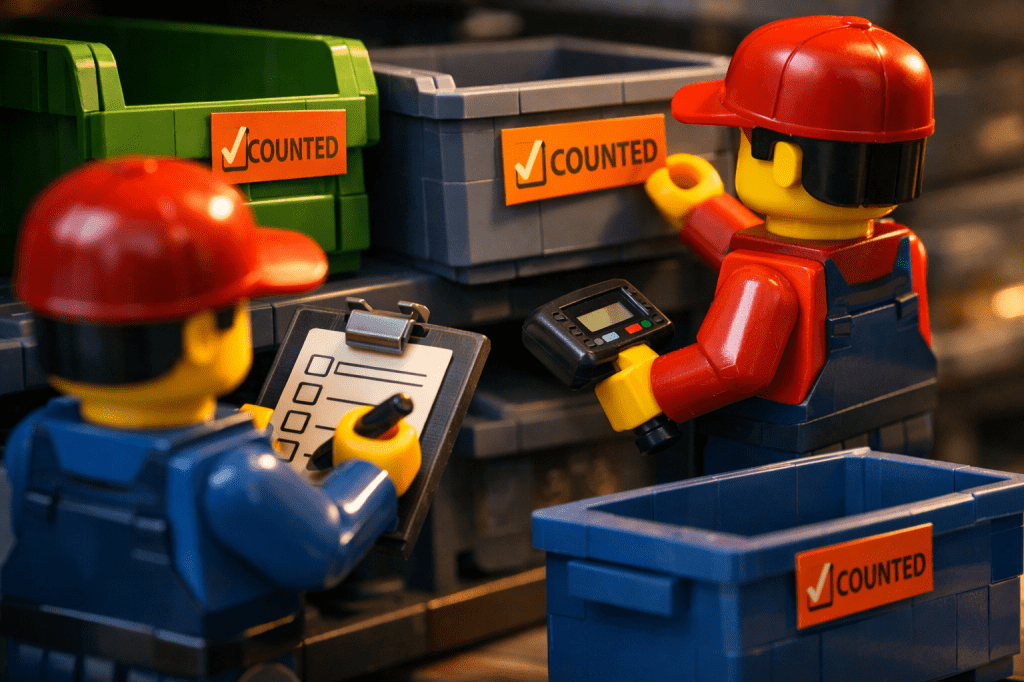
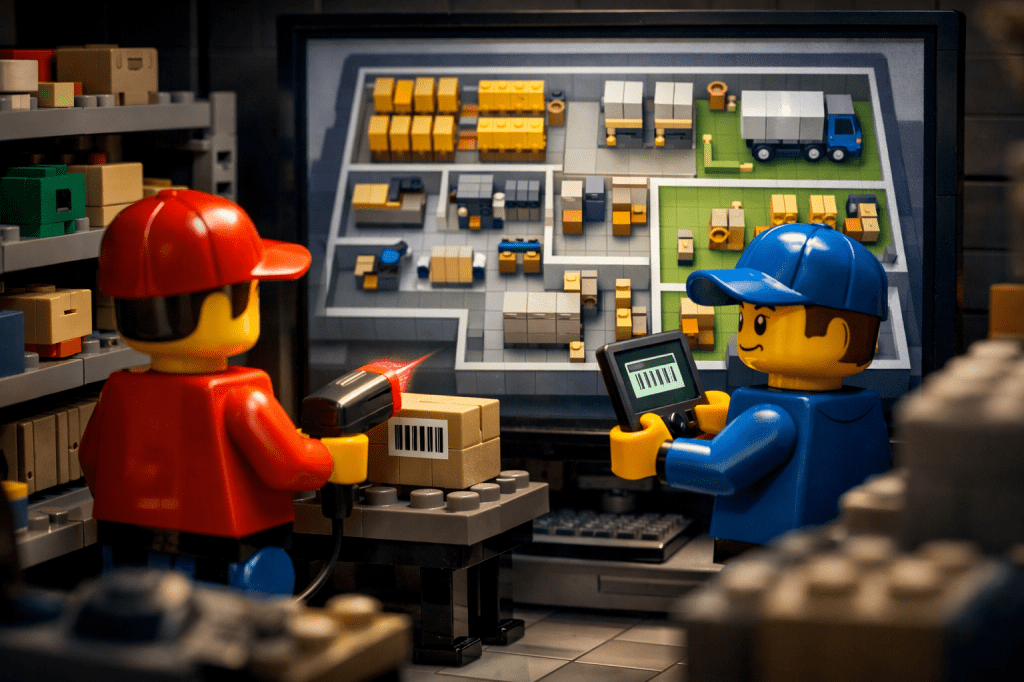
- Check-In/Check-Out System: Keeping track of parts, tools, or supplies as they move in and out of storage can be challenging. CyberStockroom includes a check-in/check-out feature to log when items are issued to production or returned to stock. For example, if a technician checks out a specific tool or a batch of components for a job, the system records who took it, when, and where it’s supposed to go. This creates accountability and a clear usage trail. It’s especially useful for high-value tools or consumables that you want to monitor closely. Instead of tools “walking away” or materials being used without record, everything is accounted for. Users have found this makes it simple to manage inventory transactions – one user noted that with CyberStockroom, it’s “very easy to check in and check out stuff from inventory,” with barcode scanning making the process quick and error-free.
- Visual Location Control (Drag-and-Drop): Manufacturing setups change over time – you might re-organize the floor, add new storage racks, or relocate a parts bin. CyberStockroom’s visual interface isn’t just for viewing; it lets you actively manage locations and stock with intuitive actions like drag-and-drop. Need to move 100 units of a component from Warehouse A to a smaller inventory cage near Line B? Simply drag the item on the map from one location to another, and the inventory counts adjust accordingly. This visual location control makes inventory upkeep far easier and less error-prone. It mirrors the physical movement of goods in a digital way, so the system stays synced with reality. The ability to reconfigure location layouts in the software also means your inventory system can adapt as your factory grows or processes change.
Each of these features is designed to tackle the exact problems that poor visibility causes. With a real-time inventory map and easy transaction logging, CyberStockroom helps ensure that you no longer encounter nasty surprises like “out-of-stock” shocks or mysterious pallet piles of excess parts.
Your team can find what they need faster, update inventory on the fly, and trust that the data is accurate. The overall effect is a significant reduction in errors and delays: parts don’t go “missing” because their locations are clearly tracked, and nothing is accidentally over-ordered or under-ordered because you have full visibility into stock levels.
Summary
Inventory might not be the most glamorous part of running a factory, but it is truly the lifeblood of your operations. As we’ve seen, the hidden cost of poor inventory visibility in manufacturing is paid in many ways – through lost production time, bloated stock that ties up cash, emergency fixes for stockouts, and inefficient use of your workforce. These issues can quietly chip away at your profits and productivity until they become big headaches.
The encouraging news is that you can take action. Improving inventory control in manufacturing is very much achievable today with the right strategies and tools. Start by evaluating your current inventory processes:
- Are you still relying on manual logs or outdated systems?
- How often do discrepancies occur?
You might identify quick wins like more frequent cycle counts or better organizing of the stockroom. But to truly solve the visibility problem, consider leveraging technology designed for the task. Modern solutions like CyberStockroom give factory and inventory managers a powerful advantage – real-time visibility and control that preempt problems before they happen.
Ultimately, strong inventory visibility means you and your team spend less time reacting to problems and more time driving the business forward. Instead of dreading the next surprise stockout or discovering a hidden cache of obsolete parts, you’ll have confidence that you know your inventory. And that confidence goes a long way in manufacturing, enabling smoother production schedules, happier customers, and a healthier bottom line.
Ready for a change?
Don’t let poor inventory visibility continue to be a silent drain on your factory’s resources. Take the steps to shine a light on those dark corners of your stockrooms. If you’re curious about how better inventory tracking can make a difference, I invite you to learn more about tools like CyberStockroom – see how an inventory map and real-time tracking could work in your own operation. You can even explore a demo or free trial to experience firsthand how it empowers teams on the factory floor.
By investing a bit of time in improving your inventory system today, you’ll save countless hours and dollars down the line. After all, when it comes to manufacturing success, visibility into your inventory means visibility into your future growth.






 CyberStockroom
Leave a comment