
In today’s fast-paced market, customers expect businesses to keep their promises – that product will be in stock, the order will ship on time, and the purchase will match the description. In practice, every promise a business makes about availability and delivery is backed by its stock records. Inventory accuracy – having the right quantity of each item in the right place – is the foundation of that trust. When inventory records match reality, businesses can fulfill orders on time, avoid cancellations, and maintain customers’ confidence. If records are wrong, even by a little, it can cascade into missed sales, frustrated buyers, and damaged reputation. In short, precise stock control is not just an internal efficiency metric; it directly shapes customer satisfaction.
Accurate inventory data means you can keep your promises. On the other hand, frequent out-of-stocks or last-minute backorders break trust. As one industry study noted, a business with unreliable stock records risks overpromising and underdelivering – a quick route to customer churn. Every order that goes unfilled on time is a hint that inventory accuracy needs work. By contrast, companies with well-controlled inventory routinely delight customers with on-time, error-free deliveries. In fact, managers often link inventory precision to repeat business: when customers know a retailer has reliable stock levels, they’re more likely to return. This relationship – between inventory accuracy and customer loyalty – means that stock control is as much about your customers as it is about your warehouse.
The Cost of Inaccuracy: Lost Sales and Frustrated Customers
Inventory errors may seem like a back-office issue, but they have very public consequences. Imagine a customer ordering an item online because the website showed 5 in stock – only to be told it’s on backorder after paying. Or walking into a store looking for “one more” of an item, but finding the shelf empty. These experiences generate instant dissatisfaction. Every time a promised shipment is delayed or cancelled, a customer’s trust takes a hit. In today’s world of social media and instant reviews, a single negative experience can echo loudly.
Inventory inaccuracies hurt revenue and customer sentiment in multiple ways:
- Missed sales and stockouts: When products are not where your system thinks they are, customers leave empty-handed. A popular study found that stockouts are one of the top reasons shoppers abandon a retailer or shop elsewhere. Each out-of-stock item is a missed opportunity – and a customer likely lost.
- Order cancellations and delays: If the picking or packing team discovers a missing item, the order must be delayed or cancelled. Delays frustrate buyers, and cancellations often result in negative reviews or cart abandonment. Even a 1% error rate can translate into hundreds of lost orders in a year.
- Excess returns and rework: Inaccurate inventory can also lead to shipping errors, such as sending the wrong item or quantity. Such mistakes typically result in returns or exchanges. Returns not only eat into margins, they annoy customers. A return process is rarely a satisfying experience, and customers may feel reluctant to reorder from a store that got them the wrong product.
- Rampant overstock: On the flip side, if records overstate demand, retailers may carry too much stock. While customers aren’t directly angry about overstock, the hidden costs (tying up capital, warehousing fees) mean the business has less budget for customer service or innovation – indirectly affecting the experience.
Every inventory mix-up costs time and money that could instead be invested in improving service. Studies show that businesses with poor inventory management pay far higher carrying costs – up to three times more than best-in-class peers. Those extra costs often force cutbacks elsewhere, potentially impacting customer-facing areas.
Ultimately, the promise of “in-stock guaranteed” or “next-day delivery” hinges on inventory accuracy. When stock records are precise, businesses can confidently offer short lead times and accurate availability. That builds customer confidence. In practice, every customer satisfaction metric – on-time delivery rate, fill rate, perfect order rate, etc. – is tied to how well stock is controlled. Conversely, a high backorder rate or frequent “out of stock” notices almost always trace back to inventory issues. Ensuring up-to-date, trustworthy inventory data is therefore a critical part of keeping customers happy and loyal.
What Causes Inventory Inaccuracies?

Understanding how stock records get out of sync is the first step to fixing them. Common culprits include:
- Human error in data entry: Manual counting and typing are prone to mistakes. A miskeyed quantity or a mislabelled SKU can throw off the system. For example, if a picker scans “10” instead of “100” or forgets to record returned items, the recorded stock is wrong. Over time, these small errors accumulate into large discrepancies.
- No regular audits or cycle counts: Some businesses rely only on annual physical inventories. If an error isn’t caught for a year, it compounds, and subsequent counting becomes harder. Frequent cycle counting (counting small batches of items on a rotating schedule) helps catch errors early, but it’s often skipped if staff are under pressure.
- Poor warehouse organization: When products are stored haphazardly or shelves are mislabeled, items get misplaced. A misplaced box of widgets might never be found, but the computer still thinks it’s there. Cluttered aisles, unlabeled bins, or ad-hoc storage cause confusion. Effective slotting (assigning fixed or optimized slots for each SKU) can prevent this, but without it, even diligent staff can put items in the wrong place.
- Outdated tracking systems: Using spreadsheets or outdated software that only syncs nightly means the system never reflects the real-time situation. Any sales or receiving done in between updates will create errors. Modern customers expect up-to-date info, and only real-time systems can provide that.
- Multi-channel selling issues: Businesses selling through multiple channels (website, marketplaces, physical stores) can oversell if those channels don’t share inventory data. For example, selling the same widget on an eCommerce site and in-store requires instant sync; failure to sync leads to double-selling and disappointed buyers.
- Shrinkage and theft: Lost, damaged, or stolen goods create invisible inventory losses. Without vigilant security and auditing, items can leave the shelves undetected. Inventory shrinkage might be minor per incident, but over months it can account for significant stock discrepancies (the shrinkage rate is itself a key metric of control).
No business is immune to these challenges. Even the best-run warehouse will never maintain 100% accuracy all the time. According to industry benchmarks, achieving around 90–95% accuracy is considered very good; anything less indicates room for improvement. Low-performing companies can drift into the 60–70% range, where the effects on customers become painfully visible.
Key Metrics and KPIs
To manage inventory accuracy, it’s essential to measure it. Useful metrics include:
- Inventory Accuracy Rate: The percentage of items for which on-hand counts match recorded counts. Typically calculated as (counted items matching record / total counted items)×100. This KPI directly reflects how well your system mirrors reality.
- Fill Rate (Service Level): The percentage of customer orders fulfilled immediately without delay. A high fill rate usually means inventory records and stock levels support demand, which correlates strongly with customer satisfaction.
- Stockout Rate / Backorder Rate: Measures how often items are unavailable when needed. For example, backorder rate = (orders delayed due to out-of-stock / total orders)×100. High stockout rates point to inventory planning issues and hurt customers directly.
- Shrinkage Rate: The percentage loss of inventory due to theft, damage, or errors. Calculated as ((recorded stock – actual stock) / recorded stock)×100. A rising shrinkage rate signals security or process problems that can undermine both accuracy and profits.
- Cycle Count Accuracy: Tracks discrepancies found during cycle counts. It helps diagnose problem areas. (For instance, if every count in one aisle is off by 10%, investigate that section’s process.)
- Perfect Order Rate: The share of orders delivered on time, complete, and error-free. While broader than inventory alone, it’s often used as a proxy for overall operational quality and customer satisfaction. A lower perfect order rate usually flags inventory issues among other factors.
Monitoring these metrics on dashboards or reports helps you catch trends early. For example, a declining inventory accuracy rate might warn of accumulating counting errors. A falling fill rate means customer orders aren’t being met – a red flag. Many companies use real-time analytics and alerts to track these KPIs. The highest-performing businesses even tie inventory metrics to financial goals or team incentives, ensuring everyone treats stock control as a priority.
Best Practices for Precise Stock Management

To bridge the gap between reality and your stock records, adopt a combination of people, process, and technology practices. Key strategies include:
- Use a Modern Inventory System: Ditch error-prone spreadsheets. Invest in an inventory management or warehouse management system (WMS) that updates stock in real time. Cloud-based platforms synchronize data instantly across devices and locations, so everyone sees the same numbers. Ensure the system can be used on mobile devices or scanners so that updates happen at the point of activity (receiving, picking, shipping).
- Implement Barcode or RFID Tracking: Automate data capture. Whether it’s barcodes on boxes or RFID tags on pallets, these technologies drastically reduce manual entry. Every time an item is scanned on receipt, move, or shipment, the inventory levels adjust automatically. This prevents typos and lost paperwork. Even simple smartphone scanners or barcode wands can greatly boost accuracy with little training.
- Regular Cycle Counting and Audits: Instead of only annual counts, schedule ongoing cycle counts. For example, count a section of the warehouse every week so that the entire inventory is audited over a quarter. Use ABC analysis to decide frequency: count high-value/fast-moving items (A-list) most often, medium items (B-list) moderately, and slow-movers (C-list) less frequently. When counts are automated (using handheld scanners or mobile apps) and discrepancies are immediately investigated, errors are corrected before they blow up.
- Standardise Receiving and Shipping Processes: Establish clear procedures for every inventory transaction. For example, when goods arrive, they should be scanned and put away following a set workflow. When orders ship, every picked item must be scanned out. Consistent steps, checklists, and operator training prevent ad-hoc shortcuts that cause mistakes.
- Accurate Location Labelling and Warehouse Organisation: Mark every aisle, shelf, bin, and rack clearly. Misplaced items are a major source of error. Consider adopting a “fixed storage” approach (each SKU has a defined spot) or use a smart layout strategy (slotting) where high-demand items are closest to packing stations. A tidy, logical layout also speeds up operations: less time wandering means fewer picking errors.
- Train and Audit Your Team: Even with great systems, people need proper training. Make sure staff understand the importance of each scan and count. Conduct occasional spot checks (mystery audits) to ensure procedures are followed. Encourage a culture where accuracy is rewarded: employees should feel accountable for the integrity of inventory data.
- Data-Driven Reorder Points: Set reorder triggers using historical sales data and lead times. Too often, businesses restock based on guesswork. Automated reorder alerts ensure that fast-selling items are replenished before stockouts occur. This maintains availability while avoiding unnecessary overstock.
- Use Safety Stock Wisely: Maintain a small buffer of critical items to absorb demand spikes or supplier delays. But keep it calculated – excess buffers become dead stock. Combine safety stock with good forecasts to strike the right balance.
- Integrated Planning and Forecasting: Involve inventory systems in demand planning. If possible, integrate sales data and forecasts so that inventory recommendations adjust automatically. While forecasting isn’t perfect, using past trends and seasonality helps avoid chronic understock or wasteful overstock.
- Continuous Improvement with KPIs: Regularly review your accuracy and other inventory KPIs. If, for example, the shrinkage rate creeps up, investigate causes (theft, breakage, etc.). If certain items always have errors, focus counting efforts there. Use your metrics to guide process tweaks.
By combining these practices, a business creates multiple checks on accuracy. Think of it as layering shields: if one process allows an error through, another catches it. Over time, these best practices do more than just improve numbers – they streamline operations. Workers spend less time searching and correcting mistakes and more time fulfilling orders quickly. In effect, good inventory control is a force multiplier for customer satisfaction and efficiency.
Technology and Tools for Better Inventory Control

Beyond process, technology is a critical ally in keeping stock accurate. Today’s inventory tools go far beyond paper logs or simple spreadsheets:
Warehouse Management Systems (WMS)
A WMS is a central platform that manages stock and warehouse operations. It enforces receiving and shipping workflows, supports cycle counts, and often provides dashboards. Modern WMS can run on tablets or rugged handhelds, scanning barcodes and updating in seconds. This eliminates double-entry and makes real-time updates ubiquitous. Some WMS also integrate with order management systems so that sales automatically reduce stock, and replenishment orders can be automated.
Cloud-Based Inventory Software
Cloud solutions allow multi-site companies to share data seamlessly. For example, a retail chain can track stock in all stores and warehouses on the same platform. Cloud tools typically require no onsite servers, so updates or new features are instant. Because data is centrally hosted, teams anywhere can check stock levels on their phones or PCs. Having one source of truth prevents the “I have 2 here, you have 5 there” confusion common with disparate systems.
Barcode and QR Scanning
As mentioned, even simple barcode systems greatly cut errors. Barcodes can be printed for products and locations alike. Workers just scan a shelf or bin barcode when putting away or taking out stock, and the system knows exactly which location and SKU are involved. Many inventory apps support QR codes, which can encode more info or be scanned more quickly. The goal is to remove manual counting entirely wherever possible.
RFID (Radio-Frequency Identification)
RFID tags and readers take automation a step further. In a fully RFID-enabled environment, entire pallets or boxes can be counted as they pass by a reader, without unpacking. This technology is especially useful for high-value assets or very high-volume items. RFID gives “x-ray” visibility, often achieving near 100% counts automatically. It’s an investment, but for some businesses (especially large warehouses or libraries, hospitals, etc.) it dramatically shrinks the gap between records and reality.
Data Analytics and AI
Advanced systems can flag anomalies – for example, if sales are high but stock isn’t moving, or vice versa. Analytics tools can alert managers to investigate. Some platforms even use machine learning to predict where errors are likely, or to optimize stock levels. This is more cutting-edge, but even basic reports on cycle count variances or item-level accuracy help managers focus resources.
In practice, technology must complement good processes. A fancy system won’t fix poorly trained staff. But without technology, human error multiplies. For instance, an ISM survey found that leading technologies for accuracy are ERP software and barcode scanners. In fact, companies with dedicated warehouse IT (WMS, scanning, RFID) report far better accuracy than those without.
One emerging concept is the inventory map – a visual dashboard of your stock locations. Rather than a text-based report, an inventory map displays a floor plan or site map dotted with items. Users can click on a shelf or cabinet and immediately see what’s in it. Tools like CyberStockroom focus on this visual approach. We’ll explore this in the next section as a specific example.
A Visual Edge: Inventory Mapping
Imagine walking into a warehouse and seeing a digital blueprint of it on your laptop – you could instantly identify where every item is located. That is the idea behind an inventory map. It’s like Google Maps for your warehouse or store. Every room, shelf, bin, or even vehicle becomes a “pin” on a map that you can click or hover over for details.
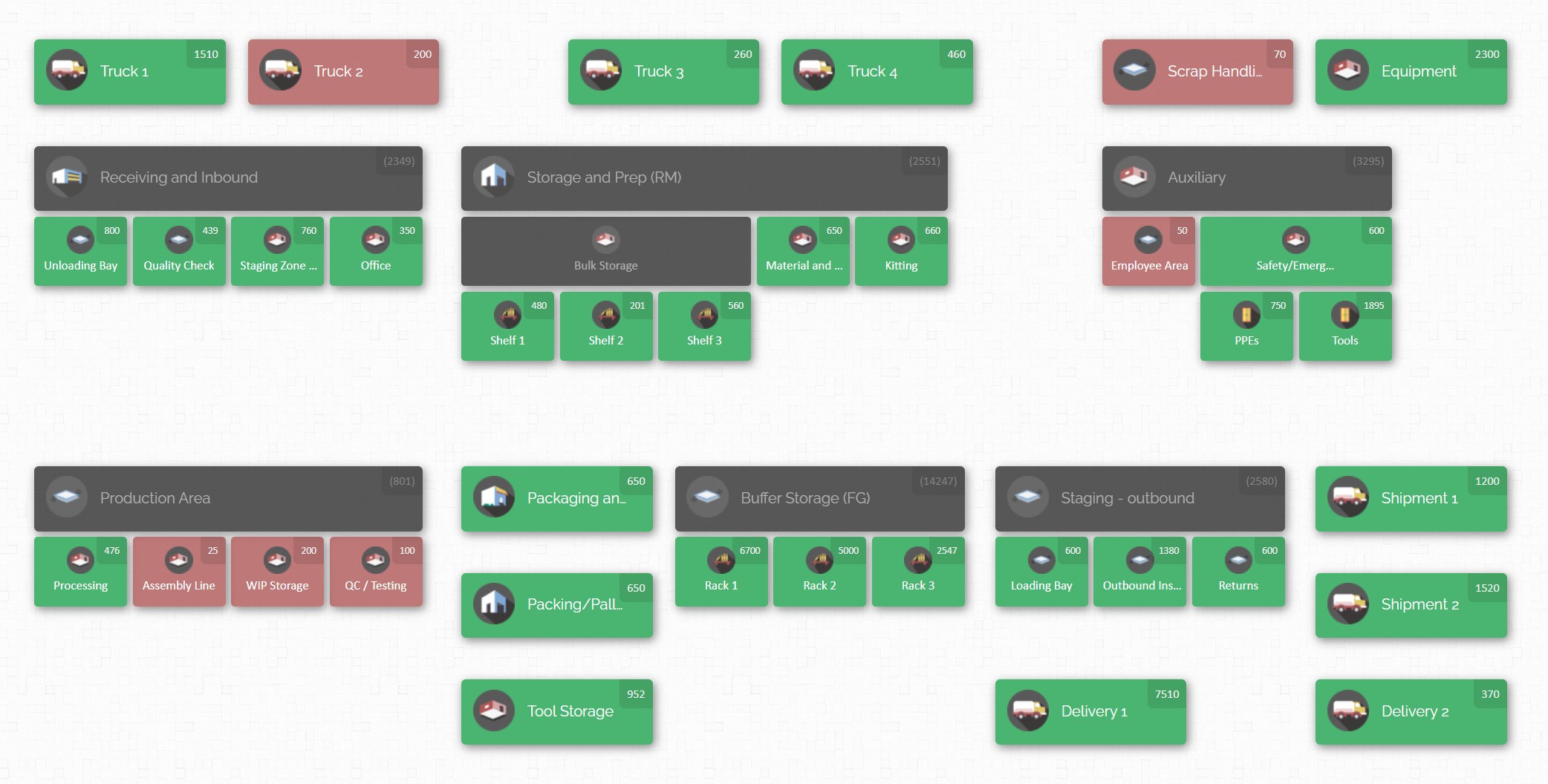
Inventory mapping provides bird’s-eye visibility. Instead of toggling between spreadsheets, managers simply look at a schematic and see red or green dots, quantities, and item photos. This visual context is powerful. For example, if a product appears to be in two locations simultaneously, you’ll spot the conflict right away on the map. Likewise, a highlighted low-stock alert on a map location screams for replenishment.
Key advantages of visual mapping include:
- Quick item location: New or temp workers can find parts faster. They no longer ask “Where is widget X?” because the map shows it. This reduces picking errors and speeds order fulfilment.
- Instant audits: When performing counts, auditors can navigate the map to choose which bin or shelf to count. The map can even log counts, updating quantities as you tap them in. Each count is automatically linked to the correct location on the map.
- Better space utilisation: Seeing the layout helps reorganize efficiently. You can redesign shelving or shift items on the map during slow hours, and the system records it. Well laid-out maps lead to fewer misplaced items and optimized flow.
- Cross-location awareness: If your business has multiple sites (stores, warehouses, service trucks), mapping makes them all visible in one interface. You can drill down from a high-level “X-ray” view to a specific aisle. This holistic visibility is hard to achieve with lists.
- Engagement and training: Many people are visual learners. A map-based system can be more intuitive than text lists. Staff often find it easier and less error-prone to click on a picture of a shelf than to interpret a code like “A1-03-Bin07”.
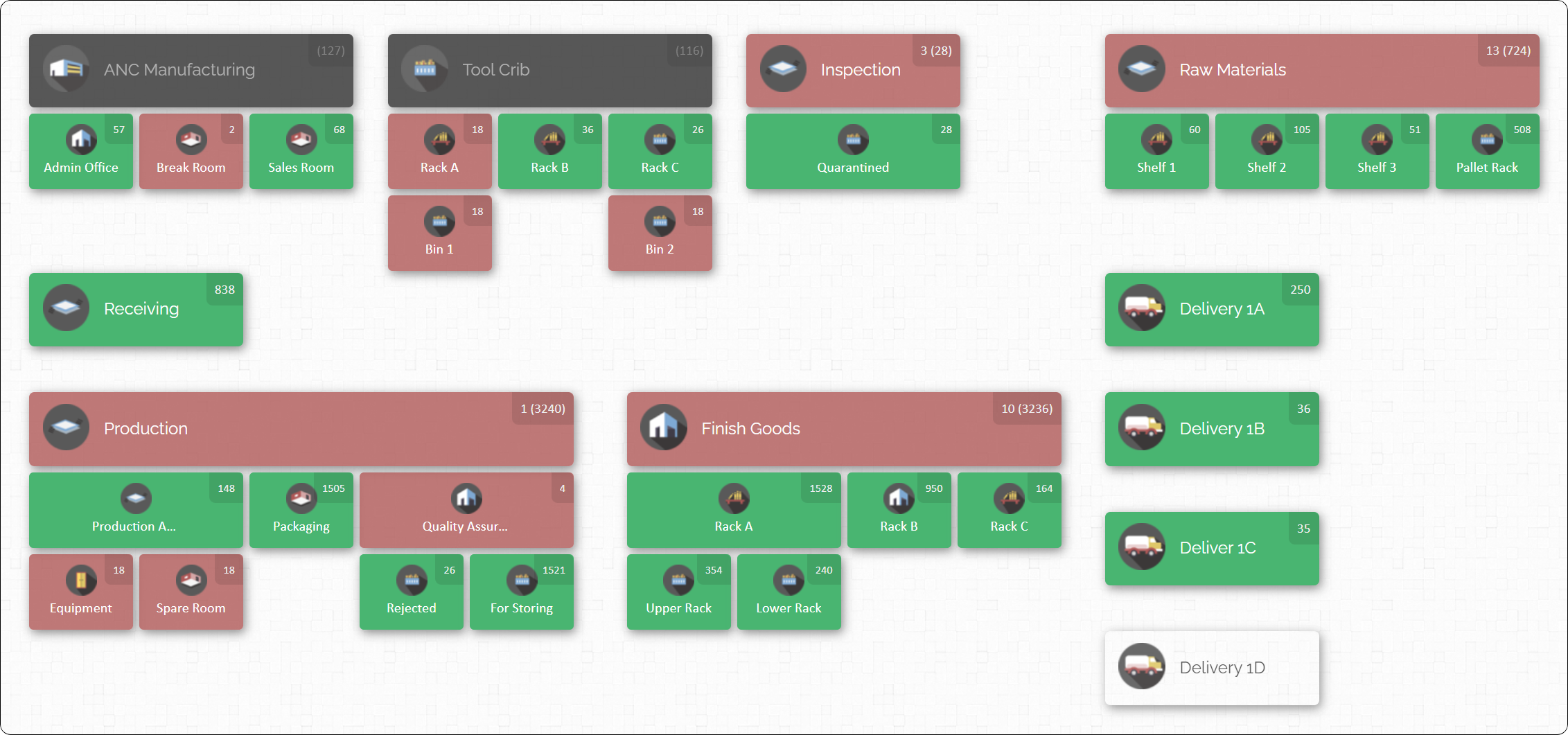
For instance, a hypothetical warehouse map might show multiple rooms, each with shelves labeled A, B, C, etc. Clicking on “Shelf A” might reveal 50 units of Item 123 and 20 of Item 456. If the map indicates 70 and you count 50, you see the discrepancy immediately. You can even drag and drop a count correction on the map. The result is that inaccuracies are visually caught and corrected on the spot.
The figure above illustrates this concept: an inventory map created with CyberStockroom. The blue diagram shows rooms, shelves, and vehicles, with icons for items. Such a map makes it obvious at a glance what’s where, eliminating guesswork. In short, inventory mapping transforms stock control from a chore of spreadsheets into an intuitive visual process – and that often leads to fewer mistakes.
CyberStockroom: Visual Inventory for Accuracy

One concrete example of mapping in action is CyberStockroom, an inventory management platform built around visual maps. CyberStockroom embodies many of the best practices above: it’s cloud-based, supports barcode scanning, enforces processes, and most importantly offers an interactive inventory map of your entire operation. Here’s how it aligns with smart inventory control:
Customizable Visual Maps: CyberStockroom lets you build your warehouse, storeroom, or shop layout and divide it into any number of locations and sub-locations. Each bin, shelf, or vehicle can be created on the map. Once built, the map is live: clicking a location shows the items and quantities there. This central “bird’s eye view” means managers can instantly verify what’s where. When receiving new stock, it can be digitally dropped into the correct bin on the map. For operators, this visual approach makes picking and stocking far more straightforward.
Drag-and-Drop Transfers: Physically moving inventory (e.g. moving 5 units of a widget from Shelf A to Shelf B) is reflected immediately. In CyberStockroom, the user simply drags the items from one map location to another. This keeps records automatically up to date without manual entry. The drag-and-drop interface effectively eliminates many counting errors: if inventory moves, so do the electronic counts, in real time.
Barcode and Scanning Support: CyberStockroom fully supports barcode scanning. Staff can scan each item on receipt or shipment, and the map updates accordingly. Barcodes are also placed on bins: a quick scan of a location on the map shows its contents. This automation removes manual typing and ensures that every unit checked in or out is recorded correctly.
Cycle Counting Made Easy: The platform provides tools for cycle counting. You can select a map location or product and do a count right in the system. CyberStockroom can then highlight discrepancies (if you count 95 of an item that the map says 100, it flags that). The intuitive map means auditors don’t count “by memory” – they see what they expect and can adjust it on the spot. This streamlines regular audits, making high-frequency cycle counting feasible.
Real-Time Visibility: Because it’s cloud-based, CyberStockroom gives real-time stock levels to everyone. Warehouse staff, sales teams, and even remote partners all see the same, up-to-date map. No more confusion over whether the website should list 10 or 15 in stock – it’s always the latest number. For customers, this means what they see or hear from sales is accurate.

Adaptable to Any Industry: While inventory mapping might sound like a warehouse tool, it’s versatile. CyberStockroom has been used in varied sectors – laboratories, automotive shops, retail stores, food services, and even on boats or trucks. Any business that has inventory spread across a facility (or even a vehicle) can map it. For instance, the map example above even includes delivery trucks as “locations.” This means a service company can track parts in their van or a manufacturer can track components across the plant. In all cases, the benefit is the same: instant knowledge of stock location.
Custom Fields and Images: CyberStockroom allows adding custom fields (like serial numbers, batch numbers) to items. It also lets you attach product images.

The net effect of using CyberStockroom is to put best-practice tools directly into the hands of users. Instead of relying on memory or static lists, staff navigate a map and scan items. The visual cues make errors stand out. For example, if Shelf 12 shows no inventory on the map but the clerk finds items there, that’s immediately obvious – something was out of sync. Conversely, every item they place goes onto the map, updating the records. In user surveys, many CyberStockroom customers praise how much faster and more reliable their stock checks have become.
In summary, CyberStockroom is a practical implementation of inventory mapping. It consolidates inventory visibility, movement, and counts into one intuitive interface. For businesses focused on accuracy and customer satisfaction, such a tool is a powerful enabler. It helps ensure that the promise made at the checkout – “we have it in stock” – can actually be kept.
The Business Benefits of Accurate Inventory

When inventory accuracy is high, tangible benefits follow throughout the organization. Some key outcomes include:
- Higher Customer Loyalty: Accurate stock means fewer disappointed customers. Satisfied customers lead to repeat sales and positive word-of-mouth. For online retailers especially, accurately displaying stock levels prevents cart abandonment. In brick-and-mortar, it keeps shelves full of what customers want, avoiding lost visits. Over time, this consistency builds trust in the brand.
- Cost Savings: Reduced carrying costs and waste. As noted earlier, poor inventory leads to inflated stock holding. By tightening accuracy and demand planning, capital is freed up (less money stuck in slow-moving items) and spoilage/waste is minimised. Also, less money is spent on emergency shipping or overtime to fix inventory mistakes.
- Increased Efficiency: Warehouse and shopfloor productivity rises. When workers spend less time chasing inventory or correcting errors, they can fulfill orders faster. This can translate into faster delivery times and better labor utilization. Some businesses report that improving accuracy reduces pick/pack times by double-digit percentages.
- Better Financial Control: Accurate inventory feeds into precise accounting. Inventory is a major balance sheet item. Overstating stock inflates profits, understating it hides them. Accurate records ensure financial reports and forecasts are reliable, avoiding nasty surprises or audit issues later.
- Competitive Advantage: In industries where speed and availability are key (e.g. e-commerce, just-in-time manufacturing), outstanding inventory practices can become a differentiator. If your operations can promise tight delivery windows because stock is always correct, customers will take notice.
- Data-Driven Growth: With solid inventory data, businesses can analyze trends, plan promotions confidently, and negotiate with suppliers effectively. For example, knowing true stock levels and lead times allows for smarter bulk purchases or drop-shipping arrangements. Essentially, accurate inventory supports smarter decisions at every level.
Overall, every penny saved on wastage or every extra sale captured via avoiding a stockout contributes directly to the bottom line. And critically, it guards the company’s reputation for reliability.
Conclusion: Delivering on Inventory Promises
In an era of rapid fulfillment and discerning customers, inventory accuracy is a strategic imperative. It underpins your ability to meet demand, uphold delivery promises, and maintain customer trust. By tracking the right metrics (accuracy rate, fill rate, etc.) and committing to best practices (barcoding, cycle counts, optimized layout), businesses can dramatically raise their stock accuracy. The payoff is significant: fewer lost sales, more on-time shipments, and ultimately happier customers.
Tools like visual inventory mapping bring these practices to life. A solution such as CyberStockroom takes the abstract notion of “knowing what’s on the shelf” and turns it into a clear, interactive map. The result is a tangible boost in accuracy: errors stand out on the map, data is updated instantly, and teams move efficiently. As one satisfied manager put it, with the right system, “we work at a fast pace and need answers right away – and there is where [visual inventory] comes in handy.”
Keeping promises through stock control is an ongoing process. It means continually auditing your processes, training your team, and using technology to support your goals. The effort is well worth it: when your records are rock-solid, customers get the experience they expect and your business enjoys steadier growth. In short, accurate inventory is not just good practice – it’s a key driver of customer satisfaction and long-term success.







 CyberStockroom
Leave a comment