In many organizations, inventory management, finance, and procurement operate in separate spheres, each focused on its own priorities and metrics. The inventory team worries about stock levels and operations, procurement concentrates on supplier deals and timely purchasing, and finance zeroes in on budgets, costs, and working capital. When these teams work in silos, miscommunication and misaligned objectives can creep in – often with costly consequences.
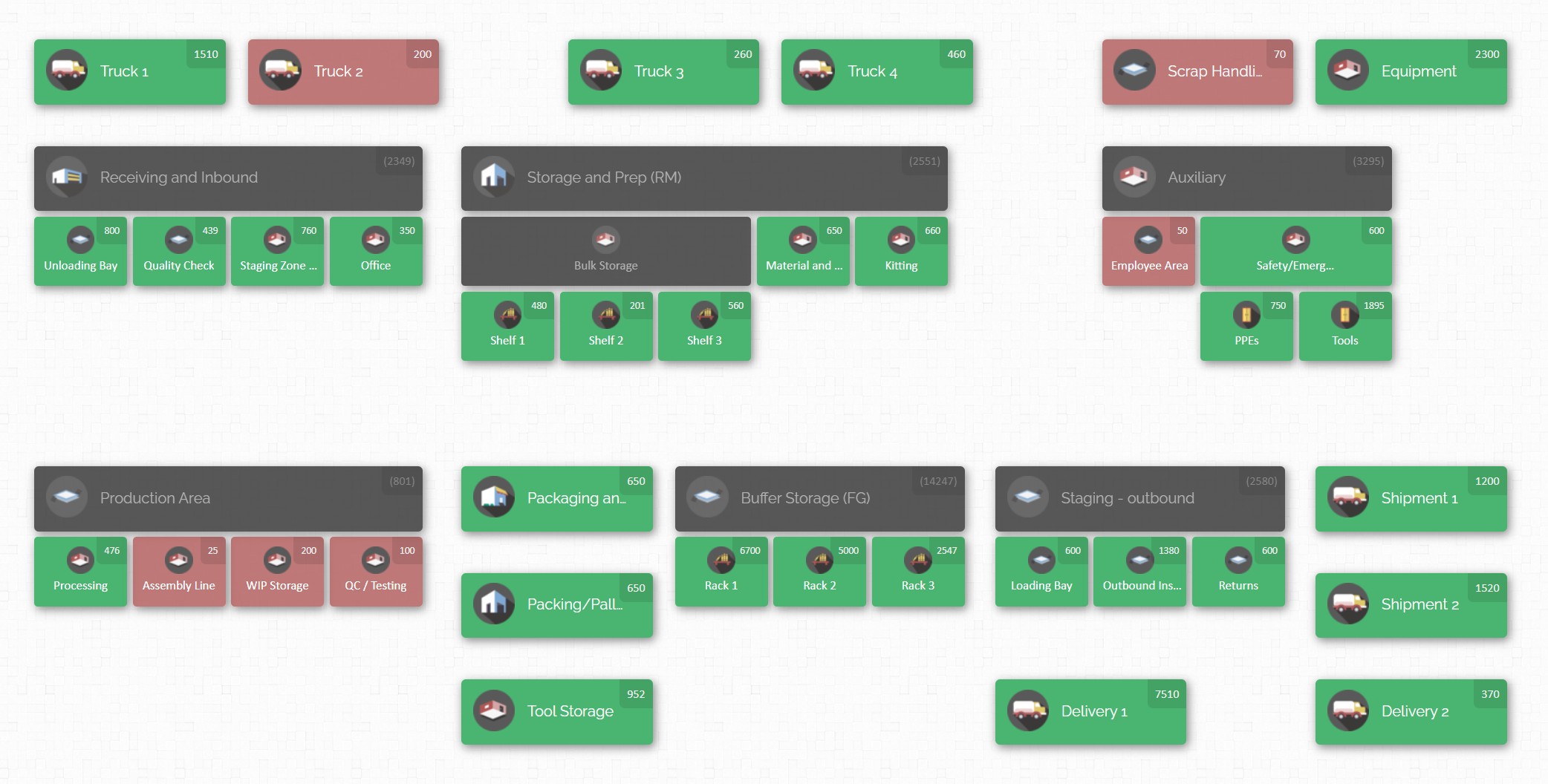
Breaking down these silos isn’t just a nice-to-have goal; it has become a critical strategy for businesses aiming to streamline their supply chains and improve overall performance. How can companies foster better inventory collaboration with finance and procurement?
The High Cost of Siloed Operations
When inventory management, finance, and procurement don’t collaborate, the organization as a whole feels the pain. Siloed operations lead to a host of problems that can damage efficiency, inflate costs, and hinder decision-making. Let’s look at some common issues that arise from a lack of alignment:
Misaligned Purchasing and Stock Levels: In a siloed setup, procurement might order large quantities of a product to secure bulk discounts, unaware that the warehouse is already overflowing (or that demand is lower than expected). The result? Excess inventory tying up cash and storage space. Conversely, procurement may under-order critical items if they don’t have visibility into inventory trends, leading to stockouts that disrupt operations and sales.
Strained Cash Flow and Working Capital: Finance departments often aim to minimize inventory on hand to reduce holding costs and free up working capital. Without input from inventory managers or procurement, this can turn into blanket edicts to cut inventory spending. If done in isolation, such cuts might inadvertently starve the supply chain – for instance, halting purchases of components that production urgently needs. The company “saves” money on paper in the short term, but may lose far more from halted production lines or unfilled customer orders. On the other hand, if procurement over-buys or inventory managers hoard stock as a buffer, cash flow suffers as capital is locked in unused stock. These push-and-pull dynamics illustrate how disconnected decisions wreak havoc on financial health.

Emergency Costs and Inefficiencies: A lack of coordination often surfaces as operational emergencies. Imagine an inventory planner realizing a key item is about to run out after finance has frozen the procurement budget. The remedy might be an urgent last-minute order at expedited shipping or premium price rates – blowing the budget and incurring rush fees. Such emergency purchases are far more expensive than planned sourcing. Additionally, without synchronization, duplicate efforts and redundant data entry abound. Procurement and finance might maintain separate records of purchase orders, inventory might use its own spreadsheets – leading to discrepancies, manual reconciliation work, and costly errors. Time and resources are wasted when teams spend hours cross-checking data or correcting mistakes that an integrated system or process would prevent.
Stockouts and Lost Sales: Perhaps the most visible impact of silos is when inventory levels fail to meet actual demand. If procurement isn’t alerted early enough about a forecasted spike in demand (say, a big sale or seasonal surge), it might not source additional stock in time. The inventory team then faces stockouts, backorders, or production stoppages. The company could lose revenue from missed sales opportunities and even damage its reputation with customers due to poor availability. Such lost sales and customer dissatisfaction are hard to quantify on the balance sheet, but they have long-term financial consequences. It’s not just about too little stock either – sometimes procurement might negotiate a great deal on materials that don’t actually have customer demand, resulting in obsolete stock that eventually gets written off. In both cases, silos between teams mean the left hand doesn’t know what the right is doing until it’s too late.

Excess Holding Costs and Waste: Silos can just as easily cause overstocking as understocking. Without coordination, procurement may not realize the inventory team already has months of supply sitting in a regional warehouse, and they place a new order anyway. Now the business has excess inventory. The finance team, looking at quarterly reports, may be alarmed at the money tied up in idle stock and the increased expenses (insurance, storage, security) associated with holding so much product. Moreover, some inventory – especially in industries like technology, food, or pharmaceuticals – can spoil or become obsolete. Siloed planning could mean buying more than can realistically be sold or used before expiration. The company may eventually have to discard or heavily discount old stock, directly hitting the bottom line. These are avoidable losses that stem from poor cross-departmental visibility.
Fragmented Data and Decision Blind Spots: In siloed environments, each department often relies on its own systems and data. Finance might use an accounting system, procurement tracks purchase orders in a procurement tool or emails, and inventory uses spreadsheets or an inventory management system that finance doesn’t access. With data fragmented, no one has a complete, real-time picture of the truth. Procurement might base decisions on outdated inventory reports, or finance might close the books not realizing an in-transit shipment incurred extra fees. These blind spots can lead to surprises during audits or reporting – like discovering inventory write-downs or unaccounted costs well after the fact. In short, the organization lacks a single source of truth, making it hard to make confident, informed decisions. This can also breed a culture of finger-pointing (“We didn’t know about that shipment cost – nobody told us!”) which further erodes trust between teams.


Silos don’t just create internal frustrations; they have tangible financial effects. Whether it’s the cost of rush orders, the opportunity cost of lost sales, higher carrying costs, or productivity lost to duplicate work and fire-fighting, the price of keeping these departments walled off is steep. Recognizing these pain points is the first step – the next is understanding how much better things can be when finance, procurement, and inventory management work in unison.
Why Inventory, Finance, and Procurement Must Collaborate

Aligning inventory management with finance and procurement is not only about avoiding problems – it’s about actively driving improvement across the business. When these departments collaborate effectively, the company can unlock significant benefits. Here are some key advantages of breaking those silos:
- Complete Visibility and Informed Decision-Making: Collaboration ensures that everyone is working from the same up-to-date information. With shared data on inventory levels, orders, and forecasts, decisions become data-driven rather than guesswork. Finance can see real-time inventory status and upcoming procurement needs, so they aren’t blindsided by large purchases or stock write-downs. Procurement gains insight into consumption rates and warehouse capacity, enabling smarter sourcing decisions (like shifting orders to use up existing stock elsewhere). And inventory managers get visibility into financial constraints and supplier lead times, helping them plan more accurately. This end-to-end visibility means the team can collectively respond faster to changes – whether it’s a sudden spike in demand or a supply disruption – with confidence and clarity.
- Optimized Inventory Levels (Goldilocks Stock): When finance, procurement, and inventory are in sync, companies can maintain optimal inventory levels – not too much, not too little, but just right. How? Through joint planning and shared goals. For example, finance and inventory might agree on a target range for inventory turnover or days of stock on hand that balances service levels with cost. Procurement then plans purchases to keep stock within that sweet spot, neither overstocking nor risking stockouts. With everyone aligned on what “optimal” looks like, businesses reduce excess stock (freeing up cash and cutting storage costs) while also reducing stockouts (protecting revenue and customer satisfaction). Essentially, inventory becomes a lever for efficiency rather than a constant tug-of-war between departments.
- Improved Cash Flow and Cost Savings: A key benefit of alignment is better financial performance through cost control and cash flow management. When procurement timing and order quantities are planned in consultation with finance, purchasing can be timed to coincide with healthy cash flow periods or to take advantage of supplier discounts without straining the budget. Finance, seeing the full pipeline of planned purchases and inventory needs, can allocate budgets more accurately and avoid blanket spending freezes that harm operations. Fewer emergency purchases and rush fees (because things were anticipated) translate directly into cost savings. Moreover, by collaborating on vendor terms (for instance, procurement and finance together negotiating payment terms that improve cash flow), companies can hold onto cash longer or reduce financing costs. Aligning these teams essentially helps turn inventory into the right kind of investment – money well spent, at the right time, for the right return.
- Faster Cycle Times and Higher Efficiency: When departments work in lockstep, processes simply flow faster. Consider the procure-to-pay cycle: if procurement and finance share systems or at least have an integrated workflow, purchase orders, approvals, and payments don’t sit waiting for someone in another silo to re-enter data or chase down information. This streamlining eliminates redundant administrative work (e.g., dual data entry in separate procurement and accounting systems) and speeds up everything from ordering to vendor payment. That efficiency can lead to early payment discounts and stronger supplier relationships too. Similarly, inventory counts and valuations can be instantly accessible to finance for monthly close-outs, reducing the scramble at period-end. In short, cross-functional alignment cuts out the latency and lag that siloed operations introduce, allowing the business to be more agile and responsive.
- Better Supplier and Stakeholder Relationships: Collaboration doesn’t stop at internal teams – it also extends outward to partners and stakeholders. When procurement and finance are aligned, suppliers benefit from consistent communication and timely payments, which in turn can lead to preferential treatment or better terms for the company. For instance, a supplier is more likely to offer a volume discount or rush a shipment in a crisis if they know the company is organized and reliable (no lost POs, no late invoices due to internal chaos). Internally, other stakeholders like the sales team or project managers also feel the positive effects. Sales can trust that inventory will be available as promised because the supply and finance chain behind it is coordinated. Executives get more reliable forecasts and fewer unpleasant surprises in quarterly results. Overall, breaking silos fosters a sense of teamwork that permeates beyond these departments, creating a more unified organization working toward shared objectives.
- Data-Driven Strategy and Continuous Improvement: Perhaps one of the most strategic benefits is the ability to harness combined data for big-picture planning. When finance, procurement, and inventory share information, the company can start analyzing holistic metrics that connect operational performance to financial outcomes. For example, they might track how improving supplier lead times (a procurement metric) reduces inventory holding days and increases cash turnover (a financial metric). With these insights, the leadership can identify opportunities to refine strategy: maybe invest in better demand forecasting tools, renegotiate certain contracts, or adjust safety stock policies. This cross-pollination of data and ideas leads to continuous improvement. It also helps align everyone with the broader business strategy – inventory decisions are made not just in service of the warehouse or production, but in service of profitability and growth targets set by leadership. In essence, collaboration turns inventory management from a back-room operational task into a strategic function that actively supports the company’s financial and competitive goals.
In summary, when inventory management teams join forces with finance and procurement, the organization operates with one brain instead of three isolated ones. The payoff is seen in leaner operations, stronger financial metrics, happier customers, and a more nimble supply chain. Collaboration transforms inventory from being a point of contention into being a bridge that links supply chain activities with financial success.
Strategies to Align Inventory Management with Finance and Procurement

Achieving this kind of cross-department harmony doesn’t happen automatically – it requires deliberate changes in processes, culture, and tools. Below are several actionable strategies and best practices to help break down silos and align inventory, finance, and procurement teams. Think of these as guideposts for fostering collaboration:
- Establish Shared Goals and KPIs: Start by ensuring all teams are aiming for the same targets. Define common objectives that everyone can rally behind – for example, an inventory turnover rate to improve cash flow, or a service level (fill rate) to maximize sales. By aligning key performance indicators (KPIs), such as “reduce total inventory by X% without increasing stockouts” or “achieve cost savings of $Y through optimized purchasing,” finance, procurement, and inventory managers can measure success in a unified way. This eliminates conflicting incentives (like procurement rewarded solely for cost savings while inventory is rewarded for high stock availability – a recipe for conflict). Instead, create joint accountability. If everyone knows that the goal is, say, to maintain 95% fill rate with minimal excess stock, each department can adjust their actions to support that outcome. Regularly review these KPIs together in cross-functional meetings so that progress and challenges are transparent to all.
- Foster Open Communication and Cross-Functional Meetings: Communication is the antidote to silo mentality. Set up regular touchpoints where inventory, procurement, and finance teams can share updates, concerns, and plans. This could be a monthly S&OP (Sales and Operations Planning) meeting or a weekly check-in on inventory status and upcoming purchases. The key is to create a forum for dialogue. In these meetings, encourage team members to speak in terms that others can understand – avoid only finance jargon or supply chain jargon. Over time, each group will gain a basic fluency in the others’ concerns (for instance, inventory planners learn about budget cycles, and finance analysts learn why safety stock is needed). Open communication builds trust; procurement will be more likely to alert finance about a big purchase in advance, and finance will be more likely to explain a budget change rather than imposing it suddenly. Also consider cross-training staff or rotating liaisons between departments. When someone from finance spends a day with the warehouse team, they get a new appreciation of operations (and vice versa). Such initiatives break down the “us vs. them” mindset and replace it with a collaborative culture of problem-solving.
- Implement Integrated Planning and Forecasting: Truly aligning these functions means syncing up planning processes. This might involve integrating the demand forecasting, inventory planning, and budgeting processes into one holistic cycle. For example, during annual budget planning, involve inventory and procurement leaders in discussions alongside finance. Use sales forecasts and inventory optimization models to drive purchasing budgets rather than having finance set an arbitrary cost limit that doesn’t reflect demand realities. Many companies are evolving traditional S&OP into IBP (Integrated Business Planning), which explicitly incorporates financial projections into supply chain plans. In practice, this could mean that when the inventory team forecasts needing 20% more stock next quarter (due to a new product launch or seasonality), that plan is immediately run through a financial projection for cash requirements and approved jointly by finance. By co-creating plans, you ensure that purchasing and inventory decisions are made with financial outcomes in mind from the start – there’s no “throwing it over the wall” to finance after the fact. Additionally, align procurement’s strategic sourcing plans with inventory strategy: if the company is aiming to reduce storage costs, maybe procurement looks for more Just-in-Time delivery arrangements or local suppliers to shorten lead times. Integrated planning like this ensures everyone is prepared and working off the same playbook.
- Create a Single Source of Truth for Data: One of the most practical ways to unite teams is through technology. Ditch the isolated spreadsheets and invest in systems that integrate inventory, purchasing, and financial data or at least communicate with each other. This could be an ERP system that links procurement orders with inventory receipts and financial ledgers, or a dedicated inventory management software that finance and procurement can access for reports. The goal is real-time, shared visibility. When an inventory count is updated or a new purchase order is issued, everyone concerned should be able to see it (with appropriate permissions) without waiting for an emailed report days later. A unified platform prevents the “multiple versions of the truth” problem. It also reduces manual work – for example, when procurement creates a PO in a connected system, inventory levels and financial commitments could update automatically, eliminating double entry. If a full ERP integration is too complex, even simple solutions like a shared dashboard or cloud-based spreadsheets that pull data from each department can help bridge gaps. Modern cloud platforms often offer dashboards and alerts (like low-stock alerts or budget threshold warnings) that can be shared between teams, prompting action from the right department at the right time. In summary, use technology to tear down the data silos, so that all players are looking at the same scoreboard in real time.
- Standardize Terminology and Metrics: Often, misalignment occurs simply because each team speaks a different language or measures different things. Spend time to standardize definitions and metrics across finance, procurement, and inventory. For instance, define what “cost savings” means: finance might define it as reducing total spend year-over-year, while procurement might define it as negotiating a certain percentage off vendor list prices. Agree on one definition and how it’s calculated, then use it uniformly. Similarly, ensure everyone understands inventory metrics like carrying cost, reorder point, or service level, and how those translate to financial outcomes. Develop a simple glossary if needed so that when someone says “safety stock,” everyone knows how that factors into cost and risk. Standardized reporting can help here – if all departments receive a shared monthly dashboard that includes key metrics from all sides (inventory turns, stockouts, procurement savings, budget variance, etc.), it reinforces that these numbers matter to everyone. This common language reduces confusion and aligns perceptions. It’s much easier to collaborate when, for example, procurement and finance both interpret a “5% reduction in carrying costs” in the same way and see their respective roles in achieving it.
- Align Incentives and Roles: People naturally focus on what they’re measured and rewarded on. To encourage collaboration, review the incentive structures and performance metrics for each team. If the inventory manager’s bonus depends solely on keeping high stock availability, they might overstock; if the procurement manager is only judged on cutting costs, they might buy the cheapest product in bulk even if it’s not needed yet; if the finance controller is praised only for under-budget spending, they might indiscriminately cut expenses. Try to incorporate shared incentives that reflect company-wide objectives (like profitability, customer satisfaction, or working capital targets). For example, make a portion of the procurement team’s evaluation tied to inventory efficiency and a portion of the inventory team’s evaluation tied to cost management or budget adherence. This encourages them to work together instead of at cross purposes. Additionally, clarify roles so that there’s less territorial friction. Who owns decisions around inventory levels – is it a joint sign-off between operations and finance after input from procurement? Laying out these responsibilities in a RACI matrix (Responsible, Accountable, Consulted, Informed) for key activities can eliminate ambiguity. Everyone then knows when they need to collaborate versus when they simply need to inform others of a decision.
- Embrace a Collaborative Culture (Lead from the Top): Finally, none of the process changes will stick if the company culture doesn’t support collaboration. Leadership must champion the “one team” mentality. Executives should emphasize that inventory, finance, and procurement share accountability for outcomes like cost of goods sold, customer service levels, and working capital efficiency. Celebrate wins as a team: if inventory optimization frees up cash, recognize both the finance analysts who identified the opportunity and the inventory/planning folks who made it happen. Likewise, treat failures or challenges not as opportunities for blame but for learning together. For example, if an unexpected stockout occurs, analyze it across departments: was the forecast off, was procurement late to order, did finance delay funding? Use it as a case study to improve the process, not to point fingers. Encourage transparency – it should be safe for someone in any team to raise a concern (“We’re running low on X part and our budget is tight; can we find a solution together?”) without fear. A culture of trust and teamwork makes all the structural strategies above truly effective. It turns collaboration from a forced exercise into a natural way of working. When employees see leaders from finance, supply chain, and procurement cooperating closely and respecting each other’s expertise, they’ll mirror that behavior. Over time, this cultural shift is what really keeps the silos from building back up.
By implementing these strategies, organizations can gradually erode the walls between departments. The goal is to create a seamless flow of information and workflow from the point an inventory need is identified, to the purchasing decision and financial approval, all the way through to fulfillment and accounting. It might sound like a lot of change, but even small steps (like a weekly huddle or a shared Google Sheet of key stats) can start making a difference. And one powerful catalyst that can accelerate this alignment is the right technology – which brings us to an important tool in the silo-busting arsenal.
CyberStockroom: Enabling Collaborative Inventory Management
Technology plays a pivotal role in aligning teams, and CyberStockroom is a prime example of a modern inventory management platform designed to break down silos. CyberStockroom is a cloud-based inventory management software with a unique visual mapping approach that can serve as a “single source of truth” for inventory information. In this section, we’ll discuss how CyberStockroom’s features and philosophy support collaboration among inventory, finance, and procurement teams.
Visual Inventory Mapping for Shared Understanding
One standout feature of CyberStockroom is its inventory map – a visual dashboard that represents your business’s locations and sub-locations (warehouses, stores, stock rooms, vehicles, etc.) and shows exactly where items are and how many you have at each spot. This map-based interface is more than just eye candy; it creates a common visual language that anyone in the company can grasp quickly.
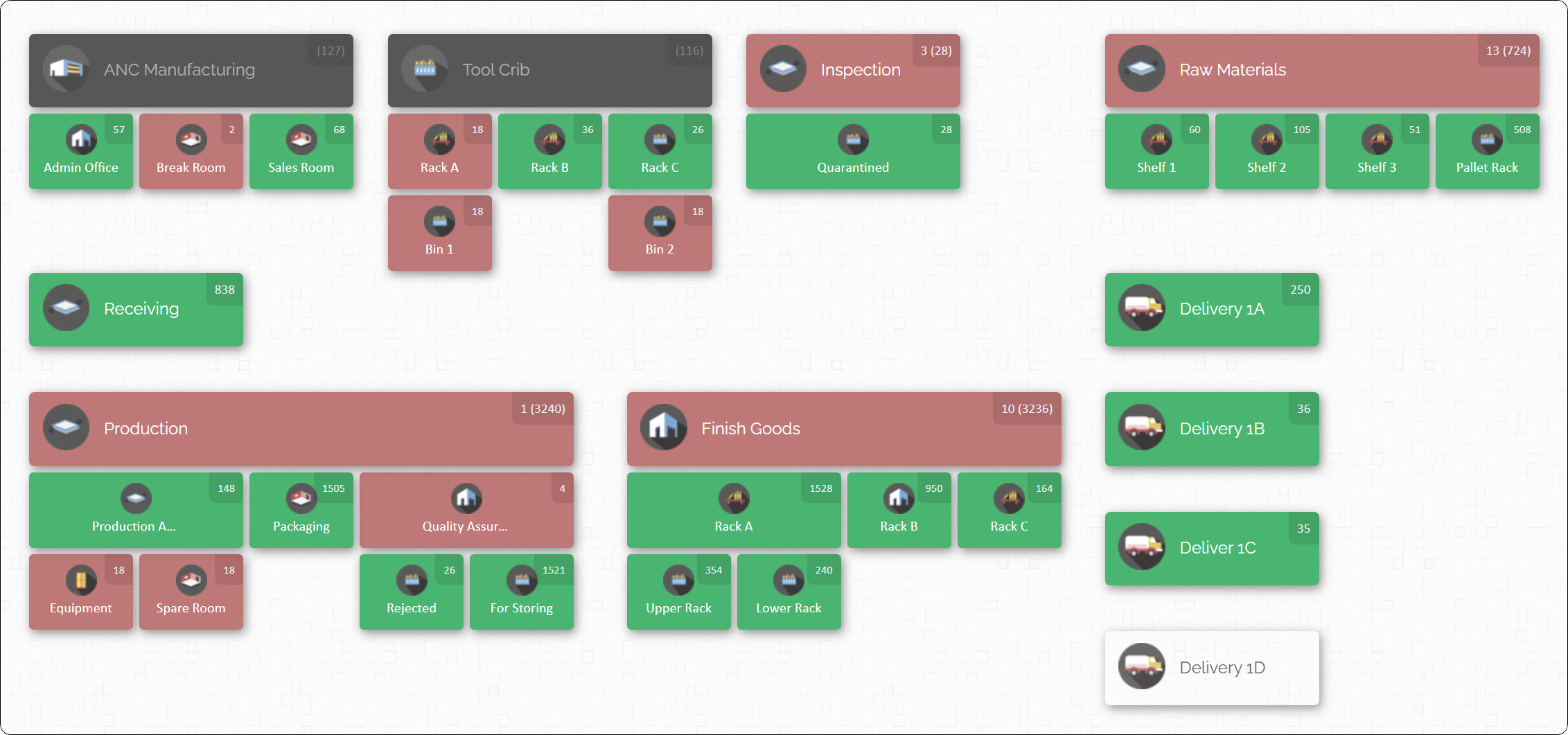
A procurement officer or a finance manager might not be intimately familiar with warehouse layout or item SKUs, but show them a map, and they immediately get the picture. The visual approach turns complex inventory data into an intuitive format. This means during cross-functional meetings, teams can literally be “on the same page” by looking at the CyberStockroom map. It’s much easier to discuss inventory positions, transfers, or shortages when you can point to a location on a shared map and see what’s happening there in real time. In essence, CyberStockroom helps translate inventory metrics into a business context that non-warehouse folks find accessible – bridging communication gaps and aligning understanding.
Real-Time, Cloud-Based Updates
CyberStockroom being cloud-based means that all authorized users (whether they’re in the warehouse, at the corporate office, or on the go) see the latest inventory information at all times. This real-time visibility is crucial for finance and procurement alignment. For example, as soon as the inventory team logs a stock adjustment or a transfer between locations, that update is visible to anyone else who has access. A procurement planner could be watching the levels of critical components and get instant feedback through the system when stock falls below a threshold – prompting a timely reorder before a crisis hits.
Meanwhile, the finance team can rely on CyberStockroom’s data when calculating inventory value or projecting cash flow needs, knowing it’s up-to-the-minute accurate. There’s no waiting until end-of-week reports or chasing emails for the latest numbers. Everyone seeing changes as they happen fosters a proactive approach: finance might notice inventory creeping up and flag the cost implication, or inventory managers might alert procurement about slow-moving stock that could affect future purchasing plans. The cloud accessibility also means these teams don’t even have to be in the same building – a regional finance manager can log in and check the inventory status of a distant warehouse themselves, rather than playing telephone through multiple people. This level of transparency and immediacy keeps all parties aligned and responsive.
Multi-Location Control and Collaboration
For organizations managing inventory across multiple sites, CyberStockroom’s map and multi-location control is a game-changer. It allows the concept of transfer before purchase – meaning, if one location is overstocked on an item and another is running low, the teams can identify that through the map and move inventory internally rather than buying more. This is a direct collaboration win: inventory and procurement can coordinate to redistribute stock and avoid unnecessary spend, which finance will always appreciate.
The software supports drag-and-drop transfers, so moving items between locations in the system is easy and immediately reflected in stock counts. Such capability encourages a mindset of shared ownership of inventory across the company. Instead of each warehouse or store operating in isolation (and perhaps over-ordering “just in case”), CyberStockroom makes it natural to work as a network. Procurement can oversee global inventory at a glance and optimize orders accordingly – maybe delaying a purchase because another location has surplus that can cover the need. Finance, seeing that inventory is being balanced and not ballooning overall, gains confidence that money is being used efficiently. Essentially, CyberStockroom provides the infrastructure for collaboration: it breaks the physical silo (“this is my stock here and I only care about my site”) and replaces it with a holistic view.
Role-Based Permissions and Accountability
Collaboration doesn’t mean lack of control – in fact, good collaboration often requires clear controls. CyberStockroom incorporates role-based permissions and an audit trail of inventory activities. This means each department can get access to what they need without compromising sensitive operations. For example, you might give finance read-only access to inventory valuations and reports, while procurement personnel have access to create or approve stock transfers and purchase entries, and warehouse staff have full operational access to check items in and out, update quantities, etc.
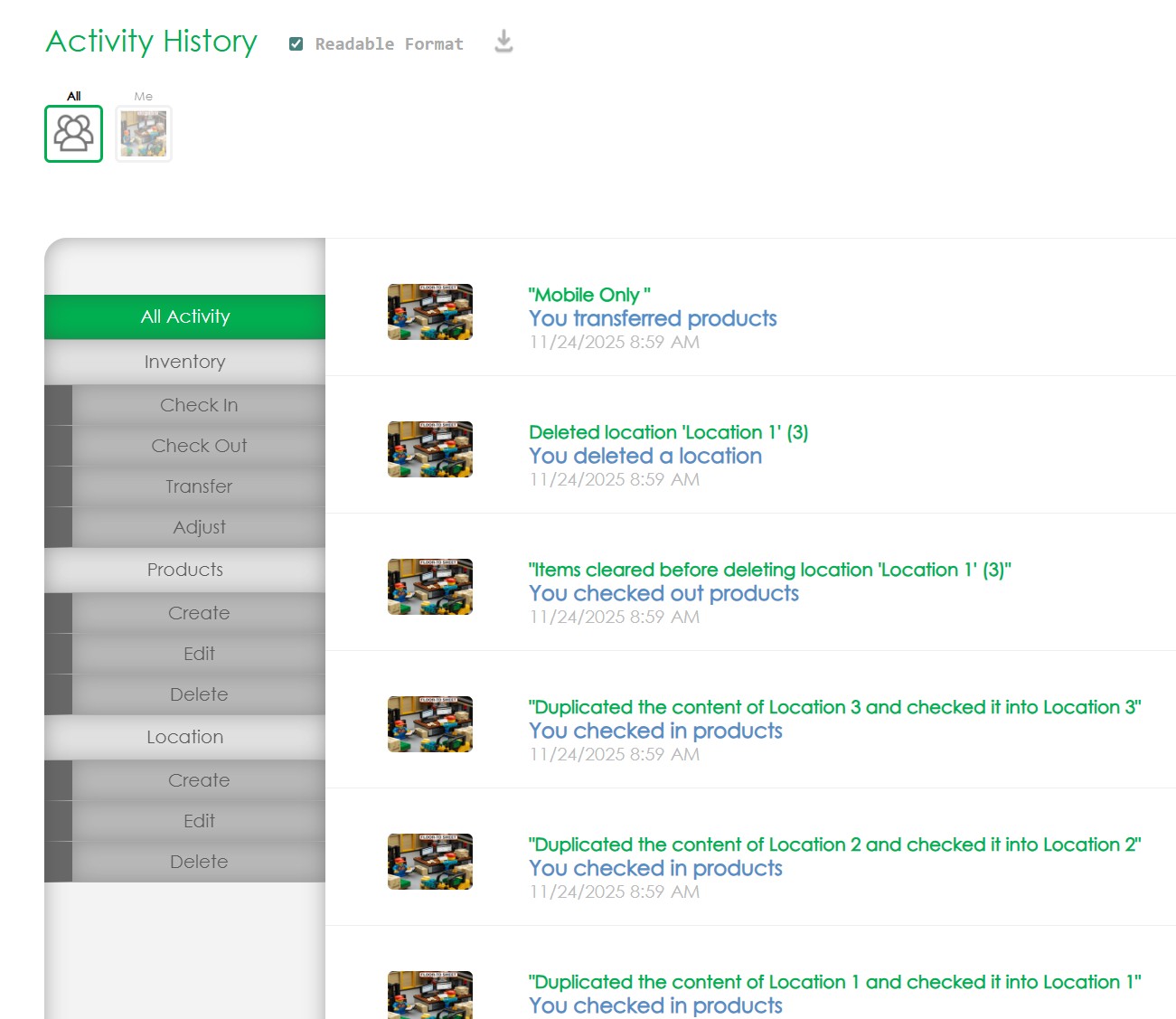
By tailoring permissions, everyone can engage with the system in a way that fits their role. Importantly, every change – whether it’s moving stock, adjusting a count, or editing an item detail – is recorded in a detailed activity log. That log can be filtered and audited by user, action, time, and location. This feature builds trust: finance can audit how inventory was used or why a certain adjustment was made, and inventory managers can pinpoint who approved a transfer or a disposal. Having a transparent record prevents the “blame game” and finger-pointing that sometimes occur between departments when numbers don’t match. It’s all in the system for anyone with permission to verify. This capability underscores that CyberStockroom isn’t just about software – it’s about creating a shared accountability framework. Everyone is working off the same system, and the system keeps track of what’s happening, making collaboration both easier and more disciplined.
Ease of Use and Onboarding
Finally, a tool only helps align teams if all teams actually use it. CyberStockroom is built with an intuitive interface (visual maps, drag-and-drop, etc.), which lowers the barrier for non-technical users to adopt it. A finance person, for instance, might shy away from complex warehouse management software, but the map interface and straightforward reporting in CyberStockroom make it user-friendly. The software also offers personalized onboarding and even data import services (converting spreadsheets into the system’s maps), which means a company can get up and running quickly without months of tech integration. This is crucial because to break silos, you want your tool to start adding value as soon as possible. The faster everyone is on the same platform, the sooner you realize the collaborative benefits. CyberStockroom’s team-based features encourage usage by multiple stakeholders – for example, notifications or alerts can be sent to relevant people (a procurement manager gets an email when stock of a critical item falls low, or a finance analyst gets an alert when inventory value exceeds a set threshold). These kinds of features actively involve each department in inventory management in a constructive way, rather than keeping it as the sole domain of the warehouse team.

In summary, CyberStockroom provides a common platform that naturally aligns the work of inventory managers, procurement officers, and finance teams. By making inventory data visual, real-time, and accessible, it dissolves many of the barriers that traditionally kept these roles apart. Whether it’s preventing overbuying, speeding up response times, or simply getting everyone to agree on the numbers, CyberStockroom is built to foster the collaboration that modern supply chain integration demands. It turns inventory management into a shared responsibility and a transparent process – exactly the environment needed to break those silos for good.
Building an Integrated Supply Chain for the Future
Aligning inventory, finance, and procurement is a major step toward a fully integrated supply chain – one where all parts of the business work in concert to achieve strategic goals. Breaking internal silos prepares your organization to better handle external challenges and opportunities as well. Let’s zoom out and consider the bigger picture and future outlook:
In today’s fast-paced business environment, supply chain integration is often what separates industry leaders from the rest. Integration means information flows freely not just within the company, but also with suppliers, customers, and other partners. When your inventory management, procurement, and finance teams are aligned, you’ve essentially created a cohesive internal supply chain team. This foundation makes it much easier to extend collaboration outward – for example, working closely with key suppliers on forecasts and delivery schedules (because internally, you’ve got finance on board to support strategic supplier agreements), or aligning with sales and marketing on promotional events (because you can confidently plan inventory and budget for a big sale knowing all parties internally are synced up).

The future is likely to bring even more data-driven decision-making and automation to inventory and procurement processes. Organizations that have eliminated silos will be in a better position to leverage advanced technologies. Consider predictive analytics or AI-driven forecasting: these tools can analyze patterns in sales, inventory levels, and financial data to predict demand spikes or optimal reorder times. If finance, inventory, and procurement are working in unity, they can jointly trust and act on these AI-driven suggestions (for instance, increasing stock on a predicted high-selling item) because they’ve built a culture of making decisions together based on data. A siloed organization might ignore such insights or bicker over them (“Our system says to buy more now” vs. “We don’t have budget for that”), whereas an integrated team can respond quickly and cohesively. In other words, breaking silos not only solves today’s problems, it future-proofs the organization for the next wave of supply chain innovation.
Another aspect to look forward to is improved resilience and risk management. The past few years have shown how global disruptions – from pandemics to trade issues – can wreak havoc on supply chains. Companies that navigated these disruptions best were often those with strong cross-functional collaboration. When inventory, finance, and procurement align, they can collectively develop contingency plans, such as maintaining strategic safety stocks, diversifying suppliers even if it means short-term cost increases (a decision easier to make with finance’s buy-in), or rapidly reallocating resources when a crisis hits. They can run “what-if” scenarios together: what if a key supplier fails? What if demand drops suddenly? Because the teams are integrated, these scenarios can be evaluated with input from all angles and a balanced decision can be made. This kind of agility is almost impossible in a siloed setup where each department would scramble to protect its own interests. Thus, an aligned internal supply chain is inherently more agile and resilient, turning potential chaos into manageable situations.
Furthermore, integrating these functions contributes to a stronger financial strategy and corporate governance. Inventory and procurement activities have a huge impact on the balance sheet and income statement – from cost of goods sold, to inventory assets, to cash flow from operations. When finance is deeply involved and aware of what’s happening in supply chain operations (and vice versa), the company can better manage things like working capital and capital expenditure. For instance, decisions on whether to invest in more warehouse capacity, or to enter a long-term contract with a supplier, will be made with a holistic view of financial returns and operational needs. The finance team can incorporate inventory projections into financial forecasts, giving more accurate guidance to stakeholders. It also means compliance and audit processes are smoother: with transparent records of inventory and purchasing, financial audits or compliance checks find a clean trail of documentation. This level of organizational alignment boosts confidence among investors, auditors, and executives that the company is well-managed and all parts are moving in the same direction.
Supply chain integration as a concept often extends beyond just inventory, procurement, and finance – it includes sales, operations, logistics, even IT and R&D for some businesses. Aligning the trio we focused on is often the starting point and core of this broader integration. Once these departments collaborate effectively, it becomes contagious; other teams see the success and start to adopt similar integrated approaches. A truly integrated supply chain means breakdown of all internal barriers: information silos, process silos, and even cultural silos. It encourages an environment where cross-functional teams tackle problems together, share tools and data, and align incentives with overall business performance.
As businesses grow and the market evolves, maintaining this alignment will be an ongoing effort. It’s not a one-time project but a continuous journey. Regularly revisiting the alignment strategies (goals, communication, systems, etc.) is important to ensure they adapt to new conditions. Perhaps new software will come into play, or organizational restructures will occur; through it all, keeping the principle of collaboration front and center will guide decision-makers to set up new workflows that continue breaking silos rather than creating new ones.

Conclusion: From Silos to Synergy
Breaking down silos between inventory management, finance, and procurement transforms how a company operates. It’s about moving from a fragmented approach to a synergistic one, where each function amplifies the effectiveness of the others. Instead of tug-of-war between “spend less” and “stock more,” the organization finds the right balance that achieves both availability and efficiency. Instead of surprises and blame, there’s transparency and joint problem-solving.
The journey to alignment might require changes in mindset, the adoption of new tools, and persistent effort in nurturing collaboration. But the rewards – in cost savings, improved cash flow, higher service levels, and better strategic agility – make it undeniably worthwhile. Companies that have successfully aligned these departments often find that inventory is no longer just an operational necessity; it becomes a strategic asset. Inventory data becomes a shared resource that drives strategy, procurement becomes a value-creator rather than just a cost center, and finance evolves from the “budget enforcer” to a proactive partner in growth.
For any business still stuck in siloed habits, now is the time to act. Start with small steps: get the key people in a room together to talk openly, pick one or two metrics to align on, try out a cloud tool that everyone can access, and build from there. Celebrate early wins – maybe the first time a stockout is averted because a procurement manager spotted a low level in the system and ordered in advance, or the first time finance reports a more accurate cash flow forecast thanks to real-time inventory data. These wins build momentum and buy-in.
Ultimately, aligning inventory management with finance and procurement is about creating a unified team that drives the business forward. It’s about ensuring that the company’s left hand (operations) always knows what the right hand (finance) is doing, and vice versa, with procurement linking the two. When that unity is achieved, the business is more resilient, efficient, and primed for growth. Silos belong in the past; the future belongs to organizations that replace them with connections. By breaking silos and encouraging collaboration, companies can turn potential friction into fuel for success – achieving a level of operational excellence and financial performance that would be impossible for any department to reach on its own.
In the end, inventory collaboration with finance and procurement exemplifies the old adage: the whole truly becomes greater than the sum of its parts. Through teamwork, shared technology, and aligned goals, you transform your supply chain into a powerhouse of integration – delivering value not just within departmental walls, but across the entire enterprise. Here’s to breaking down the silos and watching your business thrive in the synergy that follows.







 CyberStockroom
Leave a comment