
In the world of industrial construction, even a small inventory mistake can snowball into a major problem. Picture a large construction site where crews are ready to work, but a critical component – say, a bundle of steel beams or a pallet of fasteners – is missing. Work grinds to a halt as everyone scrambles to locate the missing pieces or arrange a last-minute replacement.
Unfortunately, scenarios like this are all too common. Keeping a construction project on schedule and within budget often comes down to one unglamorous but essential factor: inventory management in construction projects.

Industrial construction projects are massive undertakings involving thousands of parts, materials, and tools moving between warehouses, laydown yards, and active jobsites. From structural steel and concrete to specialized valves and heavy machinery, the sheer volume of “stuff” to manage is staggering. When this inventory isn’t managed effectively, it creates a ripple effect of delays and added costs. In fact, studies have found that the average construction worker spends nearly an hour each week – adding up to an entire work week per year – just searching for missing tools or materials. That’s lost productivity that no project manager wants to budget for. And it’s not just small items going missing; construction site theft alone is estimated to cost hundreds of millions (if not billions) of dollars a year, as valuable equipment and materials vanish from poorly secured sites. Every missing or misplaced item means downtime, and every delay puts the project’s timeline and budget at risk.
So how can industrial construction projects stay on track amid this chaos? The answer lies in better inventory management. By taking a proactive, organized approach to tracking construction materials and equipment, project teams can dramatically reduce delays, avoid waste, and keep jobs running smoothly. In this blog, we’ll explore the common inventory management challenges that often derail projects and discuss practical solutions to solve them.
The High Stakes of Inventory Management in Construction
Inventory might not be the first thing people think of when assessing why a construction project falls behind, but it is often a hidden culprit. Poor inventory management can create a domino effect of problems on a jobsite.

Consider some of the consequences that arise when materials and tools aren’t where they need to be:
- Schedule Delays: Construction operates on tight schedules. If a crew is missing a critical material (like steel beams for a structure or pipes for plumbing) due to a stockout or a delivery mix-up, that phase of work can’t proceed. One delayed task can push back the entire project timeline. It’s telling that in one industry survey, a vast majority of contractors reported project delays, with material shortages and missing items being a primary cause.
- Cost Overruns: Delays caused by inventory issues often translate into extra costs. When workers are on site but standing idle waiting for materials, the project is burning money with no progress to show for it. Or, if a needed item isn’t on hand, companies might pay a premium for expedited shipping or last-minute sourcing. On the flip side, ordering excess “just in case” inventory ties up cash and can lead to waste if materials aren’t used.
- Lost Productivity: As mentioned, workers spending time hunting for tools or materials is a major productivity drain. Imagine a foreman sending two crew members on a scavenger hunt across a sprawling jobsite to find a specific piece of equipment. That’s two skilled workers pulled away from productive tasks. Those lost minutes each day accumulate into hours of unproductive time each week.
- Safety and Quality Risks: Disorganized inventory isn’t just a schedule issue – it can be a safety hazard. Cluttered laydown yards or tool cribs make it harder to find things and easier to have accidents. Rushing to make up for lost time can also tempt crews to cut corners, potentially impacting quality. For example, using the “wrong” material as a substitute because the right one isn’t available can compromise the project’s integrity.
- Staff Frustration and Low Morale: Constantly dealing with missing equipment or materials can be extremely frustrating for the crew on the ground. It creates a sense of chaos. If workers feel the project is disorganized, morale drops and with it the willingness to go the extra mile. In contrast, when everything is well-organized and available as needed, crews can focus on their work with confidence.
In industrial construction, these stakes are even higher. Projects like refineries, power plants, or large manufacturing facilities involve extremely complex supply chains and logistics. A delay in one component (for instance, a specialized valve or an electrical transformer) can have outsized impact, potentially holding up multiple trades and even affecting dependent projects. The bigger and more complex the project, the more critical it is to have tight control over inventory to avoid these cascading issues.
Common Inventory Management Challenges (That Derail Projects)
Why is managing inventory in construction so challenging? It helps to identify the key problems that tend to crop up on jobsites and warehouses.

Here are some of the most common inventory management challenges that can throw a project off track:
- Inaccurate Inventory Counts: One pervasive issue is simply not knowing what you truly have on hand. Many construction firms still rely on manual tracking or spreadsheets, which are prone to human error and quickly become outdated. It’s all too easy for a spreadsheet to say there are 50 bags of cement in the yard when in reality only 30 are left (perhaps the rest were used but not logged). Inaccurate counts lead to nasty surprises – either discovering a shortage when it’s too late or over-ordering materials because the system didn’t show existing stock. Both scenarios waste time and money.
- Lack of Real-Time Visibility: Construction inventory is often spread across multiple locations – central warehouses, regional storage yards, and numerous active jobsites. Without a centralized, real-time view, materials tend to “disappear” from one location and reappear in another without proper tracking. For instance, a pallet of fixtures might be moved from the warehouse to Site A, but if Site B’s manager isn’t aware, they might assume those fixtures are still available for them and not reorder in time. This lack of visibility and communication between locations causes confusion, double purchasing, or critical items not being where they’re needed.
- Unpredictable Demand & Change Orders: Construction projects are dynamic. Plans change, designs get modified, and schedules shift due to weather or unforeseen issues. This makes it hard to forecast inventory needs perfectly. You may suddenly need more of one material sooner than anticipated, or you might end up with a surplus of another due to a scope change. Without flexible inventory planning, companies either scramble to meet increased demand (risking stockouts) or they overstock materials “just in case” (leading to unused leftovers). Both understocking and overstocking are problematic – one causes delays, the other inflates costs and storage needs.
- Theft and Losses: Unfortunately, theft is a major problem on construction sites. Valuable tools, equipment, and materials are tempting targets, especially on large industrial sites where keeping an eye on everything is difficult. But theft isn’t the only way inventory “disappears” – items also get lost or damaged in the hustle of a busy site. The impact is twofold: there’s the direct cost of replacing the item, and the indirect cost of project delays. If a crucial piece of equipment goes missing right before it’s needed, work might have to stop until a replacement is found. Furthermore, frequent losses point to a lack of accountability – if no one knows who had that generator last, it’s hard to prevent it from happening again.
- Siloed Systems and Poor Communication: Often, different parts of a construction organization use separate systems (or none at all) to manage inventory. The purchasing department might have procurement software, the warehouse might use Excel, and field supervisors might be texting or calling about needs. When these channels aren’t integrated, information falls through the cracks. A classic scenario is materials that arrive on site but weren’t communicated to the site crew – so they sit unused because no one knew they had arrived. Or the opposite: the site runs out of something because the warehouse assumed there was plenty and never sent an update. These communication gaps can easily lead to delays or double handling of materials.
- Inefficient Manual Processes: A lot of construction inventory management is still done the old-school way: hand-written notes, clipboard checklists, and spreadsheets updated at the end of the day (if at all). These manual processes not only consume extra labor time, but they’re also slow. By the time the inventory data is updated, it may already be stale. Manual methods make it tough to keep up in a fast-paced project environment. They also make reporting and analysis more difficult – it’s hard to spot trends or problem areas when data is incomplete or scattered in notebooks. Inefficiencies like these ultimately delay decision-making. For example, if it takes days to compile how many of a certain part are left across all sites, you might miss the window to reorder in time.
These challenges are not isolated; they often occur in combination, compounding the issues. An inaccurate count in a spreadsheet (Challenge #1) coupled with a communication gap (Challenge #5) means a site believes they have materials that are actually sitting in a warehouse unaccounted. Or unpredictable demand (Challenge #3) plus inefficient manual tracking (Challenge #6) can result in being caught off-guard by a sudden stockout.
The good news is that each of these challenges can be addressed with the right approach. Construction companies worldwide are recognizing that solving inventory issues is key to keeping projects on track. In the next section, we will look at concrete strategies to improve inventory management, streamline operations, and mitigate these common problems.
Strategies to Keep Your Construction Inventory on Track
Improving inventory management isn’t just about cutting losses – it’s about enabling your projects to run like well-oiled machines. By adopting some best practices and smart technologies, industrial construction projects can significantly reduce the chaos around inventory.

Here are several effective strategies to keep your inventory under control and your project on schedule:
- Centralize Inventory Tracking with Technology: The foundation of better inventory management is a single source of truth for all inventory data. Instead of spreadsheets or notebooks, use a digital inventory management system that everyone – from the warehouse manager to on-site supervisors – can access. Modern inventory software allows you to log all materials, tools, and equipment in one place, often cloud-based so it’s updated in real time. This centralization means if a pallet of rebar is transferred from the warehouse to a jobsite, the system reflects it instantly for all to see. No more guessing or making phone calls to track down materials; the information is at your fingertips.
- Implement Real-Time Updates (Barcode & QR Scanning): To maintain accurate counts and locations, it’s critical to update inventory as things happen. Barcoding or QR code labels on materials and equipment make it easy for crews to scan items in and out. For example, when new materials arrive on site, a quick scan with a handheld scanner or mobile device can add them to the inventory system. When tools are checked out in the morning or returned at day’s end, scanning them updates their status and location. Real-time tracking drastically cuts down on data entry errors and ensures your inventory records reflect reality on the ground. It also creates a usage log, so you know exactly who has what and when – greatly improving accountability.
- Perform Regular Audits and Cycle Counts: Even with technology, periodic physical counts are invaluable for catching discrepancies. Many companies conduct cycle counts, where a different subset of inventory is verified each week or month, rather than waiting for a yearly stocktake. By routinely auditing small sections (say, one storage container or one category of tools at a time), you can spot and correct errors early. These regular audits keep your data accurate and build trust in the inventory numbers. Plus, the process often uncovers issues like why certain items are frequently missing or if a particular crew needs more training on checking items in/out.
- Forecast and Plan for Demand: Construction project managers should work closely with procurement teams to anticipate needs based on the project schedule and past usage rates. Using historical data and supplier input, try to forecast the materials you’ll need for each phase of the project (with some buffer for surprises). This might involve implementing just-in-time delivery principles – scheduling materials to arrive right before they’re needed rather than stockpiling too far in advance. Good forecasting helps avoid both the dreaded “we’re out of X!” crisis and the opposite problem of drowning in surplus inventory. It also means engaging suppliers as partners: communicate your project timeline and critical delivery dates, so they can help you stay on track.
- Improve Communication Between Warehouse and Site: Inventory management isn’t just a technical exercise; it’s also about communication. Establish clear processes for how inventory requests, transfers, and updates are communicated between teams. For instance, if a site realizes they will finish a certain material earlier, there should be a quick line of communication to the warehouse or purchasing to adjust the next order. Consider having brief check-in meetings or using shared chat channels where site managers and warehouse supervisors update each other on needs and inventory status. The goal is to eliminate the “I thought you had it / I thought you were sending it” misunderstandings. When everyone is working off the same real-time data and communicating proactively, you can dynamically adjust to changes without losing momentum.
- Enforce Accountability and Training: All the best processes and tools won’t help if the people using them aren’t on board. Make inventory management a part of the team culture. Train your staff on any new system or procedure – show field crews how to scan items or log usage, and explain why it matters. Create simple check-in/check-out routines for tools and equipment, and make individuals or teams accountable for the gear they use. When crews know that every drill or generator is being tracked, they’re more likely to take care of it and return it properly. Accountability measures (like requiring a name against every equipment checkout) can significantly reduce lost items and theft. Additionally, celebrate the wins: if your new system prevented a delay or quickly found a missing item, share that success with the team. It reinforces the value of good inventory practices.
By implementing these strategies, construction projects can create a more controlled and responsive inventory management process. Think of it as moving from a reactive mode (“Where’s that part? We need it now!”) to a proactive mode (“We know what we have, where it is, and what’s needed next week”). Not only does this reduce stress for everyone involved, but it also has tangible results: fewer work stoppages, more accurate budgeting, and a smoother path to project completion.
Next, let’s look at how technology can tie all these practices together. In particular, we’ll explore a tool that embodies many of these principles – providing a visual, real-time approach to inventory that is particularly well-suited for the construction industry’s challenges.
How CyberStockroom Helps Keep Projects on Track
One of the modern inventory management solutions designed with construction and field operations in mind is CyberStockroom. It’s an inventory management platform that takes a unique visual approach to tracking your materials and equipment.
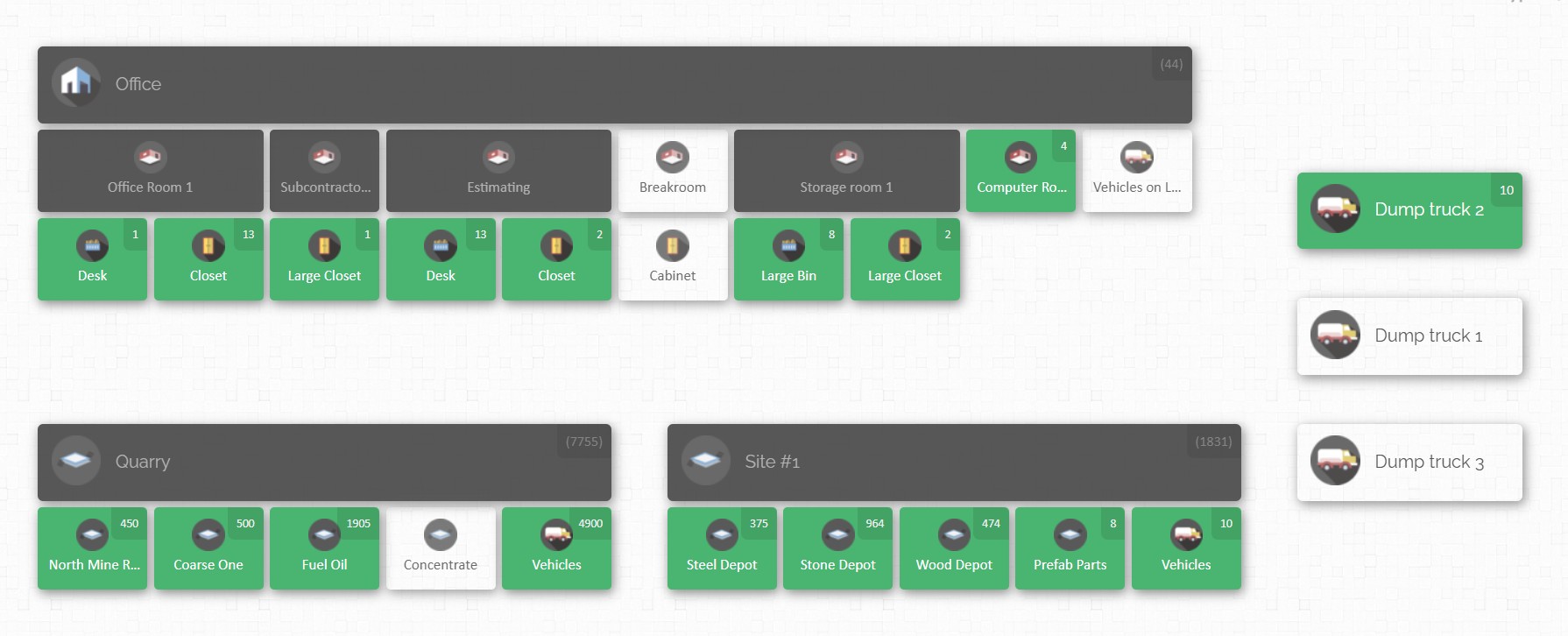
In the context of industrial construction projects, CyberStockroom addresses many of the challenges we’ve discussed by offering an intuitive way to see and control your inventory across multiple locations. Here’s how CyberStockroom can make a difference for your construction projects:
- Interactive Inventory Map: At the heart of CyberStockroom is a map-based interface. Instead of looking at endless rows on a spreadsheet, you have a bird’s-eye view of your entire operation. You can create a virtual map that mirrors your real-world layout – whether it’s a warehouse, a laydown yard, or multiple job sites. Every location (building, yard zone, storage trailer, floor of a structure, etc.) can be depicted on the map. This means if you want to know where a particular item is, you literally click the location on the map and see what’s inside. The map updates in real time, so it’s like having a live snapshot of your inventory’s whereabouts. This visual approach is incredibly helpful on large sites: for example, you might map out a construction site into zones (north sector, south sector, etc.), storage containers, and tool cribs. CyberStockroom’s map lets you instantly see, say, that Generator #2 is in the North sector container, while the electrical conduit pieces are stored near the East gate laydown area. No more wandering the site or calling around to find things – the map shows you exactly where everything is supposed to be.
- Real-Time Multi-Location Visibility: CyberStockroom is cloud-based, meaning all your data is centralized and accessible from anywhere. If you have multiple project sites and a central warehouse, CyberStockroom ties all those together into one unified dashboard. Transfer 100 lighting fixtures from the warehouse to Site B? Just drag and drop them on the map from one location to the other, and the system records the move instantly. Everyone with access can now see that those fixtures are en route or have arrived at Site B. This real-time visibility across locations prevents a ton of headaches. Teams in the field know what’s coming their way, and managers back at the warehouse or office know what inventory is at each site at any given time.
- Barcode Scanning and Rapid Updates: To streamline the process of updating inventory, CyberStockroom supports easy data entry including barcode scanning. When new materials arrive, you can scan them into the system, and when items are used or moved, a quick scan updates their status. The platform is designed to be user-friendly so that even crew members who aren’t tech-savvy can record transactions without hassle. The goal is to make updating inventory as simple as a few clicks or scans, ensuring that your digital inventory reflects reality on the ground. This reduces the lag between something happening (like a tool being checked out to a crew) and your records showing it – which, as we discussed, is crucial for accuracy.
- Audit Trails and Accountability: Every movement or change you make on the CyberStockroom map is logged. That means you have a built-in audit trail of what happened to each item, who moved it, and when. Over time, these logs become incredibly useful. If something goes missing, you can trace its last known location and the last person who handled it. If there’s a discrepancy in counts, you can review the history of additions and removals. This level of accountability helps deter theft and misuse – it’s much harder for a piece of equipment to just “walk off” the site when the system shows exactly who had it last. Moreover, the audit logs are handy for compliance and reporting. On complex industrial projects, you might need to report inventory usage to stakeholders or regulators (especially for expensive equipment or consumables). CyberStockroom essentially prepares that documentation for you as part of its normal operation.
- Drag-and-Drop Simplicity: A standout feature of CyberStockroom is how intuitive it is to use. Moving inventory in the system can be as easy as dragging an item from one location on the map to another with your cursor. Need to allocate 20 concrete barriers from the laydown yard to the west side of the site? Just drag them to the new zone on the map. This visual drag-and-drop action performs the transfer in the system, adjusting the counts in both locations. The simplicity matters because it encourages adoption – team members are more likely to engage with an inventory system that’s easy to understand at a glance. CyberStockroom’s interface looks more like a simple planning tool rather than a complex database, which means field teams can pick it up quickly.
- Location-Based Organization: CyberStockroom lets you break your project down into as many sub-locations as needed. In an industrial construction scenario, you could have a map hierarchy such as: Warehouse -> Project A -> Site Compound -> Container 3 (with each of those being a level in the map). Or within a high-rise building project, you could map Building -> Floor 5 -> Electrical Room. This flexible structure means you can mirror however your team thinks about the site. Each location or sub-location can hold specific inventory items. The advantage here is that it brings a level of organization that’s immediately understandable. Rather than a generic list that says “50 pipe fittings (somewhere in the project)”, you’d see “Floor 5 Electrical Room: 50 pipe fittings”. This clarity saves time and frustration.
- Alerts and Stock Levels: While the visual map is the star, CyberStockroom also allows setting thresholds and alerts for inventory. For example, you can set it to alert you when your stock of a certain item falls below a defined quantity. This way, you get proactive warnings – maybe you’ll get an alert that you only have 5 bags of epoxy left between the yard and the site, which is below your safety stock of 10, signaling it’s time to reorder. These alerts help prevent surprise shortages. Additionally, having clear stock levels visible on the map (e.g., each location might show a count of key materials) means supervisors can glance at a zone and see if supplies are running low or if there’s an overstock that could be moved elsewhere.
- Cloud-Based and Secure: Because CyberStockroom is cloud-based, you don’t need special servers or to be at a specific computer to use it. Project managers can check inventory from the head office, a site supervisor can open it on a laptop or tablet in the field, etc. The data is synced in real time. The benefit of a cloud system in construction is that it accommodates the mobile nature of the work; wherever your team goes, the inventory info goes with them.
In short, CyberStockroom brings order to the inherent chaos of construction inventory. It gives you a real-time, interactive command center for all your materials and assets.

By adopting a tool like this, you’re effectively implementing many of the best practices we outlined in the previous section: you’re centralizing data, getting real-time updates, improving multi-location communication, and holding people accountable – all through one platform. The result is that project managers and site teams spend far less time worrying about “where’s that part” and more time focusing on building.
From Chaos to Control: The Benefits of Better Inventory Management
When you strengthen your inventory management, whether through improved processes, technology like CyberStockroom, or (ideally) both, the positive impacts on your construction projects are significant. Companies often find that once they get a handle on inventory, many other aspects of project execution fall into place. Here’s a recap of the major benefits and why they matter:
- Projects Stay on Schedule: The most visible benefit is fewer delays. With the right materials available at the right time and place, work can progress without interruption. Better inventory management means that tasks aren’t put on hold waiting for parts to arrive or tools to be found. Over the span of a long industrial project, avoiding even a few days of delay can save huge amounts of labor and prevent the domino effect of rescheduling multiple subcontractors.
- Cost Savings and Budget Control: Avoiding rush shipping fees, preventing over-purchasing, and reducing idle labor time all have a direct effect on the bottom line. Effective inventory control helps keep the project on budget. Money isn’t wasted on duplicate orders for something you actually already had, and you’re not paying people to stand around. Plus, by reducing theft and loss through better tracking, you save the cost of replacing those items. These savings can be reallocated to other project needs or even improve your profit margin.
- Enhanced Productivity: Think about the cumulative time savings when workers always know exactly where to find what they need. That 10 minutes here and 15 minutes there, once eliminated, means more actual work is getting done each day. Crews can maintain their momentum on tasks instead of constantly stopping to search for things or run to the warehouse. When inventory is well-organized, foremen can plan the day’s work more efficiently, staging the needed materials in advance because they know what’s on hand. The whole operation runs more smoothly, which often means better quality work and the ability to tackle more projects over time.
- Improved Morale and Professionalism: There’s a less tangible but very real benefit to having an organized project: the team’s morale. Workers and supervisors alike feel more confident and less stressed when they aren’t perpetually firefighting inventory problems. It creates a professional atmosphere – the project is seen as well-managed, which makes people take pride in their work. When a crew shows up and everything they need is ready and available, it sends a message that their time is valued and that the company has its act together. Happy crews tend to be more productive and safer, and they’ll go the extra mile when needed.
- Better Decision Making: Having accurate, real-time inventory data allows project managers to make informed decisions quickly. For example, if a supplier falls through on a delivery, knowing exactly what you have in backup stock and where it is means you can pivot plans effectively. Or if a certain material is running low, you can decide whether to redistribute from another site or find an alternate supplier, based on actual data, not guesswork. Good inventory management also provides historical data that’s useful for future project planning and negotiations with vendors (e.g., understanding consumption rates or seasonal patterns in material usage).
- Risk Mitigation: Ultimately, many of the risks that threaten a construction project – delays, cost overruns, safety incidents related to rushed work, unhappy clients – are mitigated when inventory is under control. The project becomes more predictable. Even external challenges like supply chain disruptions are easier to manage because you have clear visibility into your needs and current stock. If something goes wrong, you’ll catch it sooner (like noticing a delivery didn’t arrive on time) and have contingency plans ready. This resilience is crucial in industrial construction where the stakes are high and things don’t always go as planned.
In conclusion, getting a handle on inventory management is one of the smartest moves an industrial construction firm can make to ensure project success. It’s about creating a stable foundation – quite literally having all the building blocks in the right place at the right time – so that skilled tradespeople can do their jobs without unnecessary holdups. While inventory management might have once been an afterthought delegated to a few individuals with clipboards, today it needs to be a core project management function supported by modern tools and a culture of accountability.
Staying on track is no easy feat in construction, but by taming the inventory chaos, you remove a huge variable that often derails projects. Whether it’s through systematic best practices or leveraging an innovative solution like CyberStockroom’s inventory map, investing in better inventory management pays off in projects that are delivered on time, on budget, and with far less stress. In an industry where margin for error is slim, this kind of operational excellence can set you apart from the competition and ultimately lead to more successful builds and happier clients.
Start by evaluating your current inventory processes – identify the biggest pain points, and take the first steps to address them. Even small improvements (like organizing a laydown yard with clear labels, or introducing a simple checkout log for tools) can yield immediate benefits. From there, you can scale up to more comprehensive solutions. The key is to recognize that every hour not lost to searching for stuff, and every dollar not wasted on redundant inventory, is an hour and a dollar that can go into actual construction progress. By keeping your inventory management on track, you keep your whole project on track – and that’s something everyone on the team, from the execs to the folks on the ground, will appreciate.








 CyberStockroom
Leave a comment